Latest Episodes
Ready to Listen?
Loading content...
Loading content...
Please wait while we load the show details and episodes.
If there was a definitive discography of classic albums, what should be in it? Hosts Mark Fraser and Chris Cusack, plus the occasional guest, discuss and dissect perceived classic albums to decide which albums would make this list. We also interview amazing artists, do genre deep dives and throw a journalistic lens on musical topics you might not know much about.
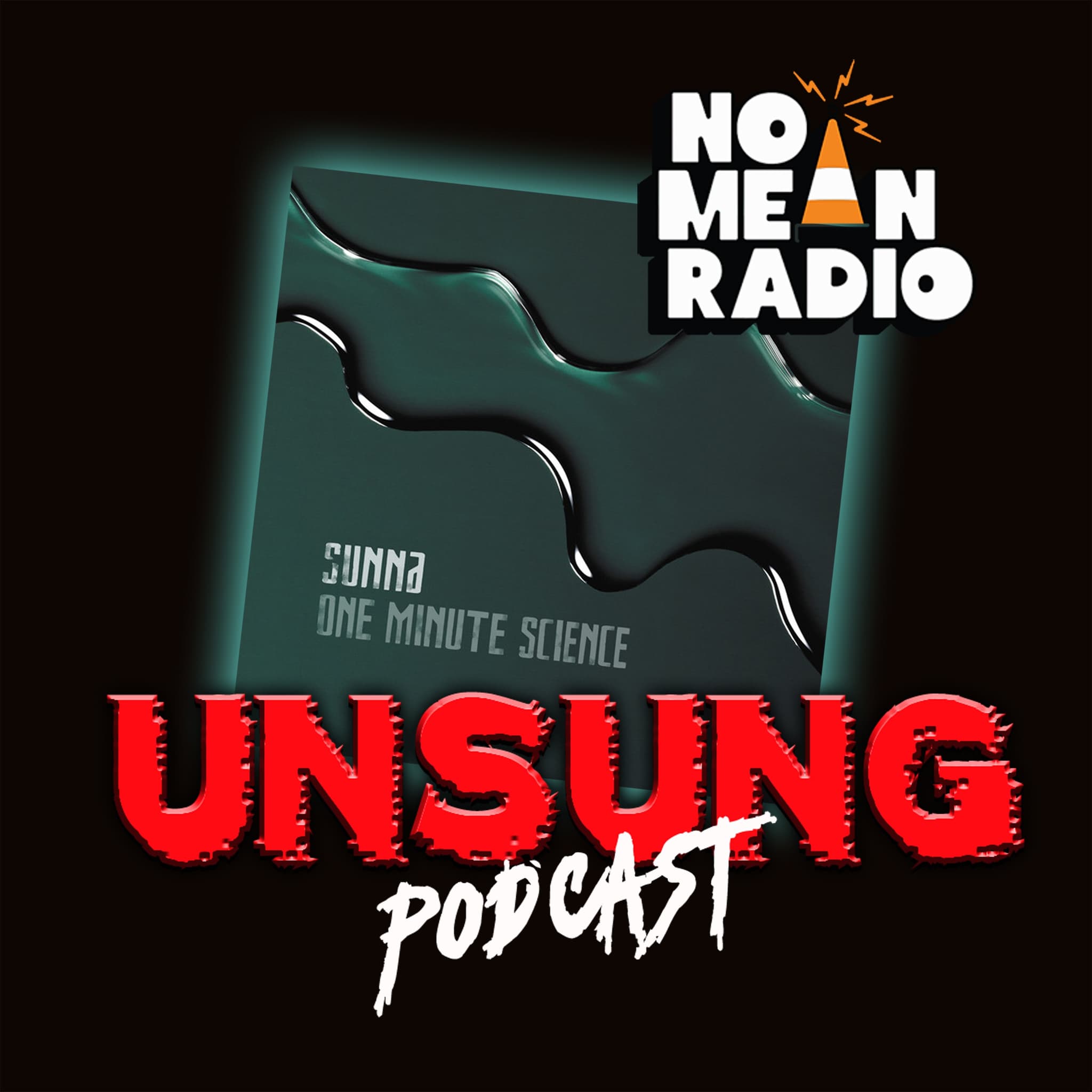
For about 8 and a half years, our former (and beloved) co-host Dave had been mulling over doing this album. Then one day, out of the blue, he messaged us: I'm coming in I want to talk about One Minute Science by Sunna. In another timeline, we'd have gotten this out of the way a long time ago. Hell, Chris almost suggested it himself. And yet here he was, unprompted, reopening a wound he'd apparently been carrying since he was fourteen. One Minute Science came out in 2000, and on paper it shouldn't have needed anyone's courage. Sunna were a Bristol grunge (?)/electronic rock(?)/industrial metal (?)/nu metal (?) band with a genuinely unlikely pedigree: the album was produced by Neil Davidge, Massive Attack's long-term studio partner, and frontman Jon Harris reputedly played on Mezzanine itself. They signed to Melankolic, the label Massive Attack half-owned, then to Astralwerks in the States, and eventually toured with Smashing Pumpkins, A Perfect Circle and Vast, and picked up Best New Band at the Kerrang Awards in 2001. Lead single Power Struggle found itself on the Hollow Man soundtrack and they even almost had a song from their second album appear on the soundtrack to Spider-Man 2. A fate the film industry's collective good sense narrowly spared everyone. This was, by any measure, a band with momentum. But it didn't pan out. The album stalled at 151 in the UK charts, the press treated it as an inconvenience to be filed under nu metal and dismissed, and Sunna never really recovered - three more records, increasingly hard to find, never on Spotify, cover art that gets worse with each release. One reviewer's verdict at the time, that if Sunna were foreboding and menacing then so were Creed and Bush, turned out to be a pretty efficient way of ending a career. So why the secret almost nine-year fandom? We get into it properly this week, with...mixed results. Dave defends the record as a load-bearing piece of his adolescence, uncompromising and strange even now. Chris tries, valiantly and with increasing desperation, to make a case for the production doing the heavy lifting. And Mark - hearing it stone cold for the first time in his life - declares it not just bad but the worst thing he's heard on this podcast in very nearly nine years of doing it. Grim. Nobody comes out of this one agreeing with anybody else. Which is exactly how this podcast used to be, back in the days of yore. Everyone's got a record like this. The question is whether you'd admit it on air. Timestamps 00:00 Introduction 04:04 The Sunna Reveal: Dave's Unprompted Text After 8.5 Years 08:11 One Minute Science, Sunna & First Impressions 11:03 The Massive Attack Connection: Neil Davidge & Mezzanine 12:38 Band History: Chillum, John Harris & the Bristol Scene 18:47 Drummer Departures & Mark Richardson's Near Miss with Feeder 19:30 Jon Harris's Accident-Prone Years, Kenya & the Exorcism Story 21:00 Genre Confusion: Nu Metal, Post-Grunge & the UK Scene Comparisons 28:00 DJ Flatline, Bristol Trip-Hop DNA & the Hollow Man Cameo 29:00 The Spider-Man Near-Miss & the Hulk Screening Anecdote 30:07 The Press Reviews: "Tool to Travis" and Getting Savaged 32:11 The Worst Album Art in Music History 35:26 The Follow-Up Records: Two Minute Terror, Third Pin & Global Morning 42:00 Standalone Singles: Swimming with Snakes & Sentiment Attacked 43:26 Track-by-Track Begins: I'm Not Trading & the Production Debate 1:05:10 Dave's Conclusion: A Flawed Nostalgic Safety Blanket 1:07:55 Chris's Conclusion: The Racist Uncle Defence 1:10:36 Mark's Verdict: "The Worst Thing I've Heard on This Show" 1:14:00 Bush, Nickelback & Finding Mark's True Hated Genre 1:17:00 Wrap-Up & Sign-Off
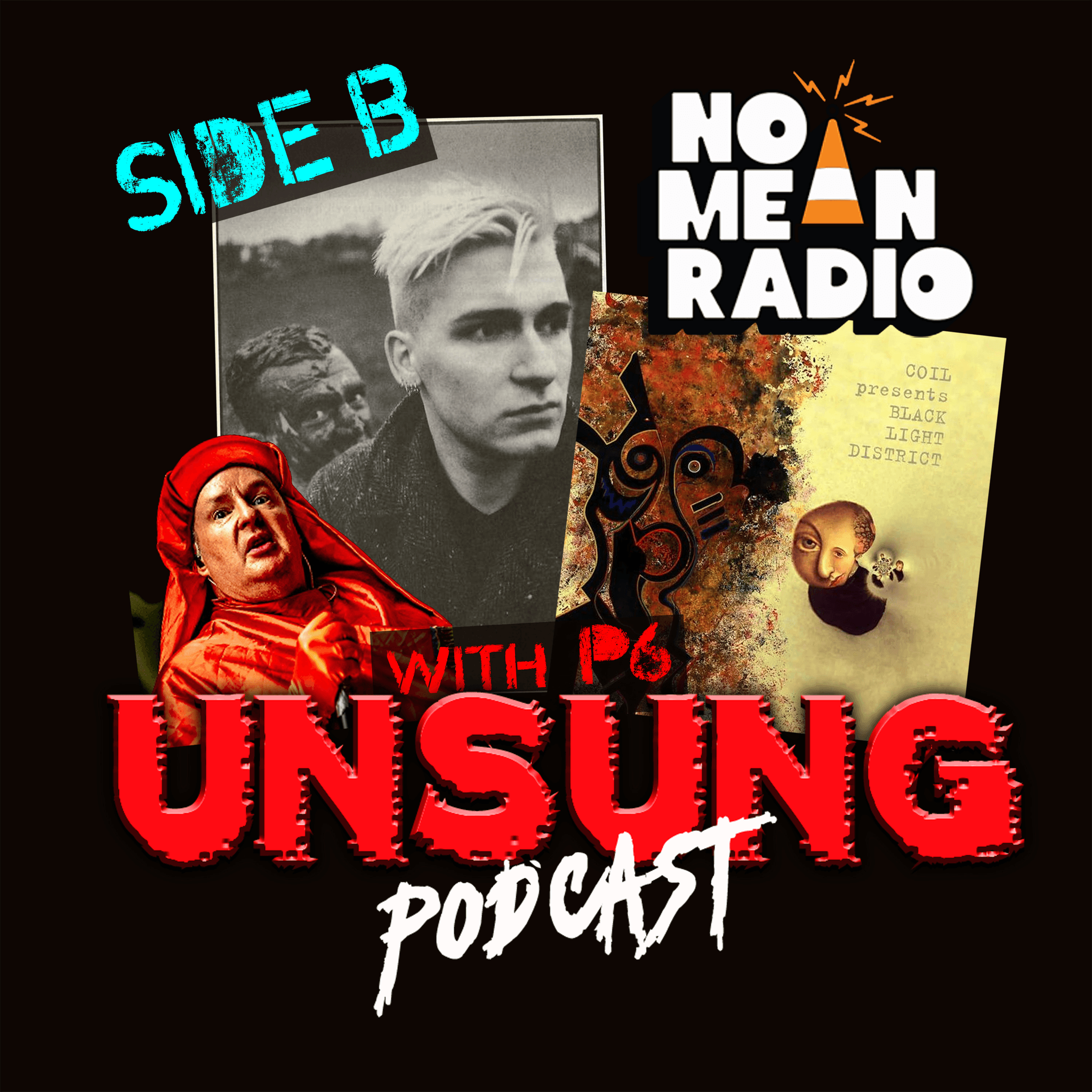
Last time we admitted defeat in our attempts try to summarise a fifty-plus album discography. This time our play P6 turns up with an actual diagram (which you can see right here) and we spend an hour and a half trying to work out whether that's a genuinely useful map or just a very elegant way of saying "it's complicated." We get into what actually meant when they called one period of their music “solar music” and the other “moon music”, both to themselves and to people writing about them afterwards. We begin with Scatology and then go into a long stretch on Coil as a queer band specifically: not queer-adjacent, not later reclaimed as queer, but a band who were writing directly out of the AIDS crisis while the gay mainstream press was too frightened to touch them. We talk about the rejected Hellraiser score, Clive Barker's actual bowels, and how a soundtrack too creepy for a horror franchise ended up as one of the most bootlegged, most fought-over corners of their catalogue. We get into Trent Reznor giving them free run of a New Orleans studio for their aborted album Backwards, the slow drift into drone and ritual with Time Machines, and the posthumous artefact economy that's grown up around the band. There's a lot of Coil in this episode that isn't really music in any conventional sense; arguably a lot of it is more like documentation. Documentation of a relationship, of a pandemic that was devastating their community, and of two people slowly working out what they were for. Whether that makes the later, harder-to-love records worth the effort is something we argue about without really resolving. We’d say give it a go anyway – you might find something you love. Chapters 00:00 – Welcome back, and the state of the venues in Glasgow 00:04 – Phil's solar/moon diagram, and the pivot point of Horse Rotorvator 00:07 – Scatology as manifesto: no personality cult, just "this is us" 00:12 – Defining solar vs moon in Coil's own terms 00:16 – "Kill a queer for Christ": the hostility Coil were writing against 00:20 – Coil as a queer band, not a queer-adjacent one 00:24 – The AIDS pandemic as the actual subject of the solar period 00:27 – Why Coil succeeded where Frankie Goes to Hollywood and the "gay icons" of the 80s didn't 00:31 – The Spanner case, outlaw community, and the limits of gay respectability 00:35 – The artefact economy begins: box sets, reissues, and "picking at the corpse of Coil" 00:36 – The rejected Hellraiser score and Clive Barker's bowels 00:44 – Love's Secret Domain, clubbing, and ecstasy as a response to the fear of touch 00:48 – Derek Jarman, the Sisters of Perpetual Indulgence, and Phil's own ordination 00:55 – Into moon music: The Angelic Conversation and the shift toward mysticism 00:57 – Trent Reznor, free studio time, and Nine Inch Nails' debt to Horse Rotorvator 01:02 – Membership shifts: Danny Hyde, Drew McDowell, and Thighpaulsandra 01:04 – Black Light District and the "dank, downbeat" transitional period 01:14 – Moving toward live performance and the birth of Coil's occult stage identity 01:19 – Balance's addiction, Funeral Music for Lady Diana, and the Foxtrot testimony 01:26 – Post-9/11 visuals, prisoners, and a return to transgression on stage 01:27 – Closing thought: boredom, labour, and what it cost to make this music
If you've been tuned into the news around the Scottish grassroots music scene at any point in the last few weeks, you'll likely have seen there's been a bit of controversy brewing around King Tut's Wah Wah Hut in Glasgow and their owners, DF Concerts. Following a piece published in The Bell, where numerous people spoke out about the poor terms that King Tut's offers to emerging artists, various corners of social media were ablaze with righteous fury. It prompted DF to threaten to take The Bell to court, and also saw The Herald get in on the action. So we think it's fair to say that this is a blaze that might be threatening to run amok. The terms that King Tut's offers has been something of a known issue in the Scottish music community for a number of years, and whilst there are certainly reasons for small artists to be aggrieved (reasons which we share), the matter is not quite as clear cut as The Bell article would have you think. On this week's episode we draw from our own experiences as musicians and promoters to try to give a more complete picture of the issue. We also do a wee exercise where we map out whether putting on gigs yourself is more cost effective, using examples of the rates offered by many venues in Glasgow to paint a picture of what the costs of running a show yourself actually are. Which ultimately leads us to ask a few questions: is what King Tut's offer fair? Is it just better to put on gigs yourself? And if King Tut's parent company, DF Concerts, used their corporate backing to pay artists more, what might be the outcome of that on the wider grassroots scene as a whole? If you like this episode please consider subscribing to our Patreon at www.patreon.com/unsungpod
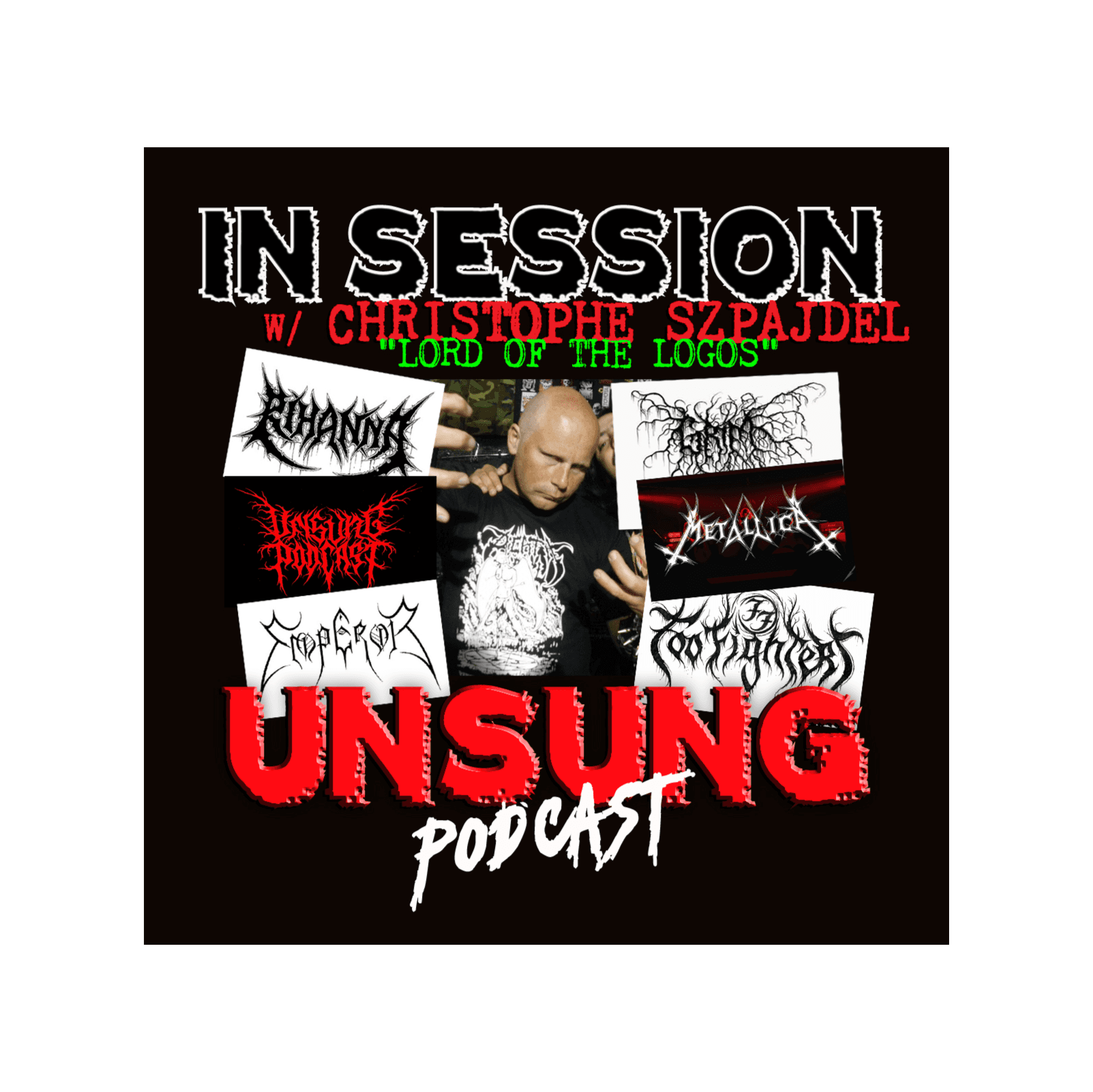
You might think you don't know Christophe Szpajdel's work. You almost certainly do. The Emperor logo. The Metallica Mankind clip. The Rihanna lettering that went a hundred feet high at the MTV VMAs. If you've spent any time near heavy music, his hand has been on things you've stared at without knowing his name. This week we sit down with the man known as Lord of the Logos — Belgian-born, Devon-based, currently on shift at the Co-op — to talk about a career that has produced somewhere between 10,000 and 15,000 logos, and counting. We get into his early years doodling in school notebooks in Liège, the Art Nouveau obsession that underpins everything, and how a chance encounter on the Tube ended with his work displayed at one of the biggest awards shows on the planet for £500 — a fee he only learned was for Rihanna after he'd already quoted it. We cover the Emperor logo that defined his reputation, the Metallica commission that required him to draw at Heathrow five hours before a flight to Japan, and the Foo Fighters Christmas jumper that was a mutilation of his work, and what he did about it. We also discuss the readability question that divides the scene, the three-month creative block triggered by a South Korean band, his forestry degree and why nature sits at the centre of everything he makes, and the political stance on Ukraine that has cost him ten logos in one go. The question running through all of it: how does someone this prolific stay original? Highlights 00:00 Intro 01:00 Meet Christophe Szpajdel — Lord of the Logos 04:00 Logo Count and the Goal of 20,000 by 2030 06:00 The Process Explained 09:00 The Unsung Logo and Chris's Tattoo 10:00 Background: Belgium, Poland, Ukraine, Devon 11:00 The Co-op Day Job and Why It Works 13:00 Side Projects: Murals and the Polish Calendar 17:00 Musical Influences: Kiss, Motörhead, Celtic Frost 19:00 First Logos and Early Career 21:00 The Emperor Logo 25:00 Chilean Influence: Rick Zuniga 26:00 Nature, Art Nouveau, and the Forestry Degree 28:00 Best Work Comes from Anger or Obsession with Death 29:00 Symmetry, Creative Block, and the Client Problem 33:00 Live: Working Through the Drag Logo 38:00 The Readability Debate 43:00 The Rihanna Story 47:00 Metallica at Heathrow 53:00 The Foo Fighters Bootleg Response 54:00 The Mandy Soundtrack 57:00 AI and Market Saturation 59:00 Ukraine, Politics, and the Russian Flatmate 01:02:00 Losing Ten Logos Over a Political Stance 01:03:00 Black Metal, Church Burnings, and Forbidden Fruit 01:08:00 The Trump/Putin Artwork 01:09:00 The Books: Lord of the Logos, Archaic Modernism, Oracles in Black
In our previous episode, we went deep into the history of Cabaret Voltaire and their importance to UK industrial and, latterly, dance music. Now, we follow the trail we laid therein by taking a journey through the band's extensive discography, really fleshing out how they went from a Sheffield attic in 1973 to a Patagonian field site recording lizards for David Attenborough. Along the way, we take in televangelists, voodoo, Charles Manson samples, Velvet Underground covers, a near-miss with Todd Terry, and a Taylor Swift pressing-plant mix-up that turned a forgotten ambient track into a viral curiosity decades later. Phil Eaglesham (aka P6 - ex-Stretchheads and De Salvo, current OMO frontman) returns to bestow upon us his encyclopaedic knowledge of the band and British industrial music. We start in 1974 with the lo-fi bedroom experiments of Cabaret Voltaire 1974–76, work through the rough-edged early Rough Trade EPs, the spring-reverb wilderness of Three Mantras and Voice of America, the cult monument that is Red Mecca, and the band's stylistic pivots through Hai!, 2x45, The Crackdown, Micro-Phonies, The Covenant, the Sword and the Arm of the Lord, Code, and beyond. We also pick at the more controversial late chapters, including the major-label years, the slightly-too-late acid house pivot, and Richard H. Kirk's solo reactivation of the name. Along the way, we explore the band as a video production company that happened to make music; their roles as curators and tastemakers via Double Vision; the Burroughs-and-televangelism worldview that made them frighteningly prescient about Reagan-era Christian nationalism; and their unsung debt to Black American music and dub. Chris also offers a wider reflection on what it means to lose the egoless purity of your earliest creative work as ambition and industry pressures take hold. We get deep in the weeds talking about the producers they worked with (Flood, Adrian Sherwood, John Robie, Marshall Jefferson); the labels (Rough Trade, Some Bizzare, Virgin, EMI, Mute); their collaborators and contemporaries (DAF, Wire, Throbbing Gristle, Clock DVA, Soft Cell, New Order, The Shamen); and the bands that lifted from them wholesale (Nine Inch Nails, Ministry, The Rapture, White Zombie, and a generation of Glasgow acts you've heard but can't quite place). It all culminates in us taking a closer look at Eight Crepuscule Tracks, a record that Phil thinks is their best and a very pure statement of what the band can and did achieve. We also settle upon what is perhaps the most important lesson to be gleaned from the Cabs' music: the importance of never compromising on your vision. By entering the belly of the beast and somehow remaining intact, they became one of the rare bands in this corner of music history whom nobody has a bad word for. Highlights 00:00 Intro 01:18 Welcome Back, Phil 02:46 1974–76: Egoless Experimentation 04:51 Bedroom Records 06:30 Extended Play and DAF 07:37 The Velvet Underground Cover 08:26 Nag Nag Nag 10:20 Van With a PA 11:38 Three Mantras 12:24 Mix-Up 14:50 William Burroughs 16:48 Voice of America 19:35 Peter Care and Double Vision 21:41 Red Mecca 24:25 Encyclopaedia Bands 27:36 Hai! 29:36 2x45 in New York 32:07 Sheffield's Family Tree 32:55 Chris Watson Leaves 36:16 The Crackdown 42:23 Micro-Phonies 46:38 Covenant, Sword and Arm of the Lord 49:48 Drinking Gasoline 51:45 Code 54:58 Listen Up and Reissues 57:12 Groovy, Laidback and Nasty 1:00:15 Body and Soul 1:03:56 Shadow of Fear 1:04:51 The Taylor Swift Accident 1:08:27 Richard Kirk's Death 1:14:50 Bus Shelter Bashes 1:19:58 Sincerity vs Seriousness 1:25:00 Debt to Black Music 1:29:00 Eight Crepuscule Tracks 1:51:00 Why Everyone Loves Cab Vol 1:58:36 Coming Soon: Coil?!
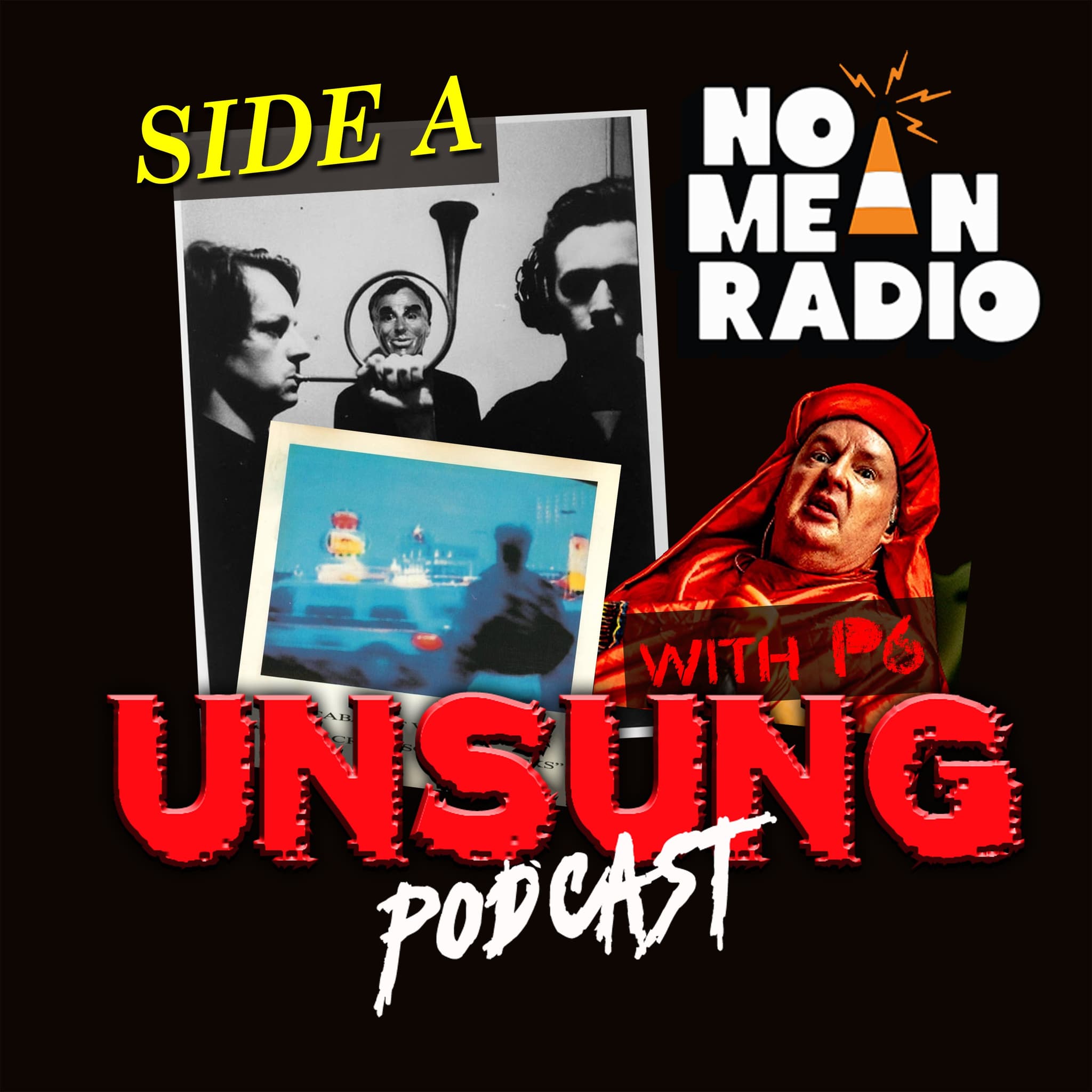
Cabaret Voltaire are no one thing. Depending on which corner of the internet you found us from, you might know them as the caustic Sheffield noise act who preceded post-punk, the sinister electro-industrial outfit with a penchant for evangelical samples and anti-fascist agitprop, or the dancefloor-adjacent act who fetched up on Factory's Belgian satellite label and made something close to club music. You're all correct. This week, we have a guide. Phil Eaglesham — P6, former front person of Stretchheads and De Salvo, current singer in OMO, musical walking tour operator, man of broad and alarming musical learnings — is here to help us navigate one of the most complex and wilfully uncommercial bands to come out of the UK, via their transitional compilation Eight Crepuscule Tracks. We trace the band's origins in a Sheffield attic in 1973, chart their debts to dub, Black American music, and the sci-fi soundscapes that shaped a generation of working-class ears, and make the case that Cabaret Voltaire — despite their apparent difficulty — were one of the most industrious and fundamentally political bands of their era. We also get into their time at Western Works Studio, which functioned less like a recording facility and more like the gravitational centre of an entire Sheffield scene; their complicated relationship with Rough Trade; and their connections to Joy Division, Lydia Lunch, Clock DVA, and the bands that would become the Human League and ABC. Along the way, Phil brings original artefacts including a signed 1979 TG/Cab Vol/Rema Rema poster from Tottenham Court Road, and the original 12-inches the album is built from. We also ask what would have happened to Cabaret Voltaire without punk — and conclude they'd likely have ended up an academic footnote rather than a foundational text. Highlights: 00:00 Intro 03:56 Meet Phil Eaglesham 07:47 P6 — The Name and the Character 09:29 Queer Identity in the Industrial Scene 12:55 Pseudonyms and Rockism 17:44 Cabaret Voltaire: The Basics 22:32 Sheffield, Western Works, and the Scene 25:18 Rough Trade, The Fall, and Being Prolific 29:10 Working-Class Roots and Industrial Culture 32:33 Sci-Fi Soundscapes and Electronic Prehistory 35:11 Musique Concrète to Cab Vol: How Close Were They? 36:13 Dadaism, Situationism, and Confrontational Art 38:40 Punk's Effect on Audiences (Not Just Music) 40:11 The Counterfactual: Cab Vol Without Punk 41:43 Black Music, Funk, and the DNA Nobody Talks About 43:39 New Wave, No Wave, and New York Connections 46:29 Factory Records, Crépuscule, and the Belgian Connection 47:49 Original Artefacts: Posters, 12-Inches, and History 50:31 Why Eight Crepuscule Tracks? 52:54 Looking Towards Next Week and Outro
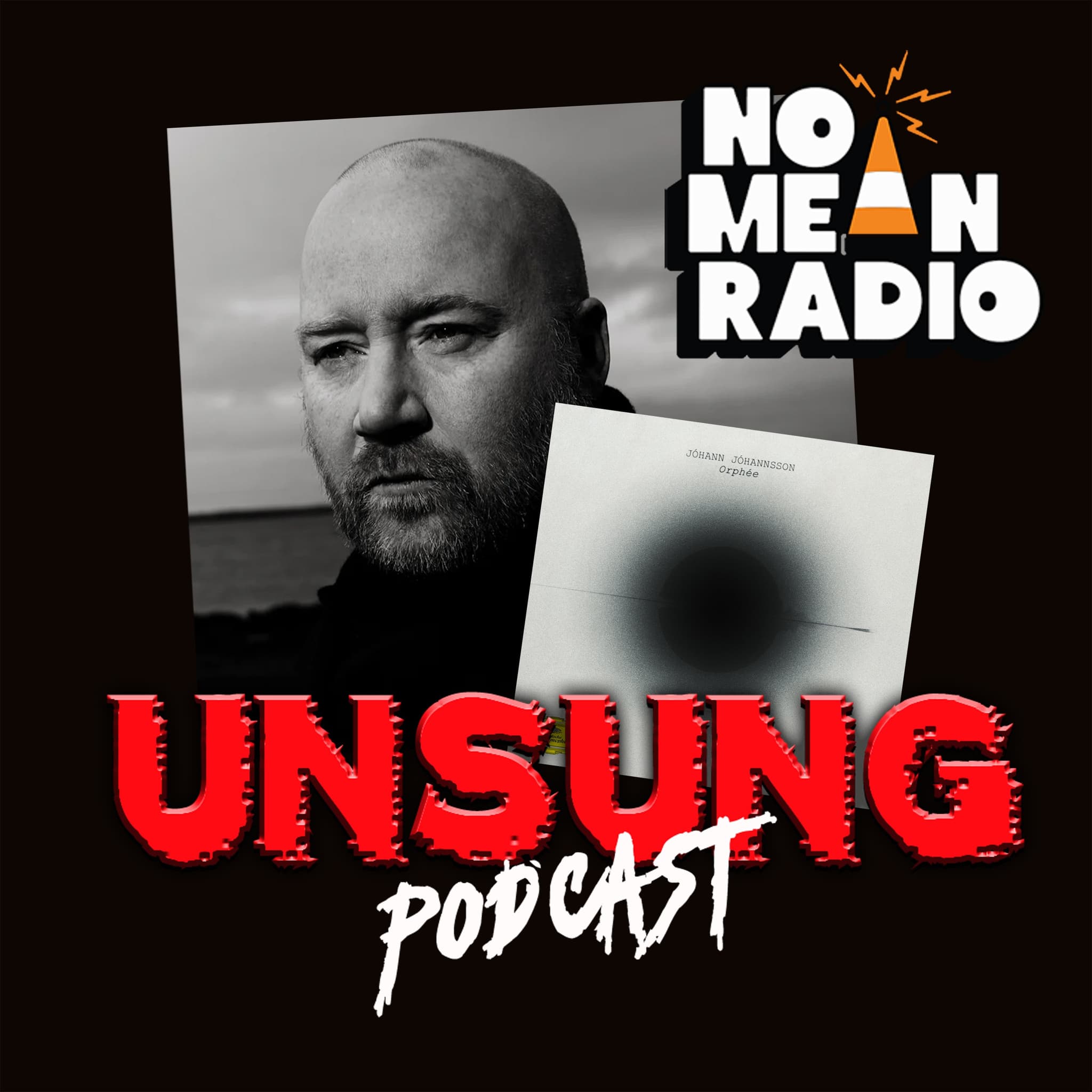
We don't often cover classical or neoclassical music, as it’s a wee bit out of our wheelhouse. But that doesn’t mean we don’t enjoy it—often, our entry into that world is via film soundtracks. Jóhann Jóhannsson is a perfect example, having scored some of the most iconic films of the last 20 years. However, that’s only part of the story. Jóhannsson also released a series of acclaimed solo records; this week, we’re focusing almost exclusively on that solo output, while also providing an account of his life, his key cinematic works, and his tragic passing in 2018. We chart his path from early days in indie bands to the cross-genre think tank Kitchen Motors, and his meteoric rise as a composer for films like Prisoners, Sicario, Arrival, and The Theory of Everything (for which he won a Golden Globe and earned an Oscar nomination). From there, we take a closer look at his solo discography, including IBM 1401: A User’s Manual (built from his father’s vintage computer recordings), Fordlandia, and the short-film soundtrack And in the Endless Pause There Came the Sound of Bees, as well as posthumous releases like Gold Dust. We cap things off with a discussion regarding his death and the question of whether the pressures of Hollywood played a role in his demise, before focusing exclusively on his 2016 masterpiece, Orphée. 00:00 Intro 03:56 Meet Jóhann Jóhannsson 07:47 Early Life And Indie Bands 09:29 Labels And Influences 12:55 Chris' Hildur Guðnadóttir Facebook Scam Story 17:44 Solo Albums Breakdown 22:32 IBM 1401 Masterpiece 25:18 Fordlandia And Later Works 29:10 Film Breakthrough And Awards 32:33 Blade Runner Score Rejected 35:11 Blade Runner Score Shakeup 36:13 Zimmer Versus Vangelis 38:40 Jóhann Interview Clues 40:11 Who Made The Call 41:43 mother! And The Scrapped Soundtrack 43:39 Experimental Sound Design 46:29 Final Projects And Legacy 47:49 Last And First Men 50:31 Posthumous Releases 52:54 Death And Tributes 55:39 Did Hollywood Kill Him 58:48 Orphée Album Deep Dive 01:08:32 Why His Music Matters
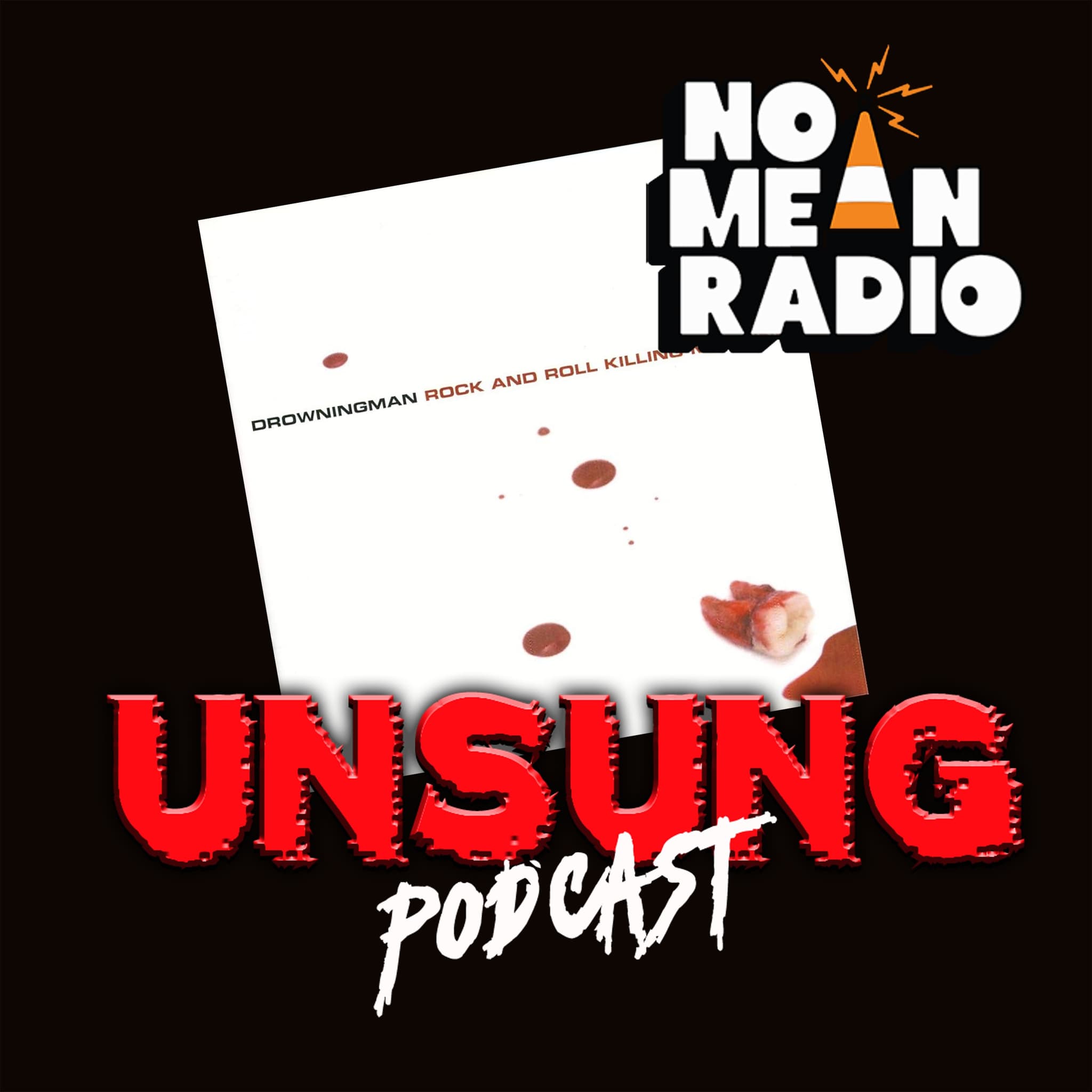
This week, we're talking about two things we think are quite interesting. First off, we chat about the early mathcore/metalcore band Drowningman and reflect on why they never quite reached the heights of their peers, such as Converge and The Dillinger Escape Plan—bands they often found themselves touring with in the late 90s and early 00s. While that story is compelling in itself, Drowningman can also count themselves among the artists who tried to sabotage a contractual obligation to a record label. As the story goes, they hit the studio with Kurt Ballou (Converge, God City Studios) to record a very weird album, tentatively titled Best Album Ever. The record was never officially released; it was allegedly created with the sole intention of being purposefully bad in order to satisfy, and terminate, their two-album contract with Revelation Records. In the end it never saw the light of day. This got us thinking about other artists who have tried to escape their contractual obligations. We use this lens to take a wee sojourn into the annals of music history, unearthing stories of several big-name artists who tried, and sometimes succeeded, in doing something similar. We hope you enjoy! Highlights: 00:00 Intro 01:27 Skipping the Discourse 01:56 Viral Bands Debate 02:59 Patreon Pitch 05:37 Awkward Party Exits 06:17 Meet Drowningman 08:19 Origins and Scene 12:00 Early Releases Breakdown 16:07 Rock and Roll Killing Machine Era 21:07 Later Records and Fadeout 24:47 Did They Deserve Bigger 27:05 Contractual Obligation Albums 35:38 Ozzy Contract Loophole 36:25 Speak of the Devil Drama 38:05 Ozzy Album Aftermath 38:57 Neil Young vs Geffen 39:49 Beach Boys Owed Album 40:55 More Contract Escapes 42:40 Sisters of Mercy SSV 45:46 More Obligation Oddities 47:43 Rolling Stones Provocation 50:31 Zappa Lather Bootleg 51:25 Prince vs Warner Saga 57:42 Drowning Man Review 59:32 Track Highlights Breakdown 01:02:56 Final Verdict and Wrap 01:06:21 Outro and Thanks
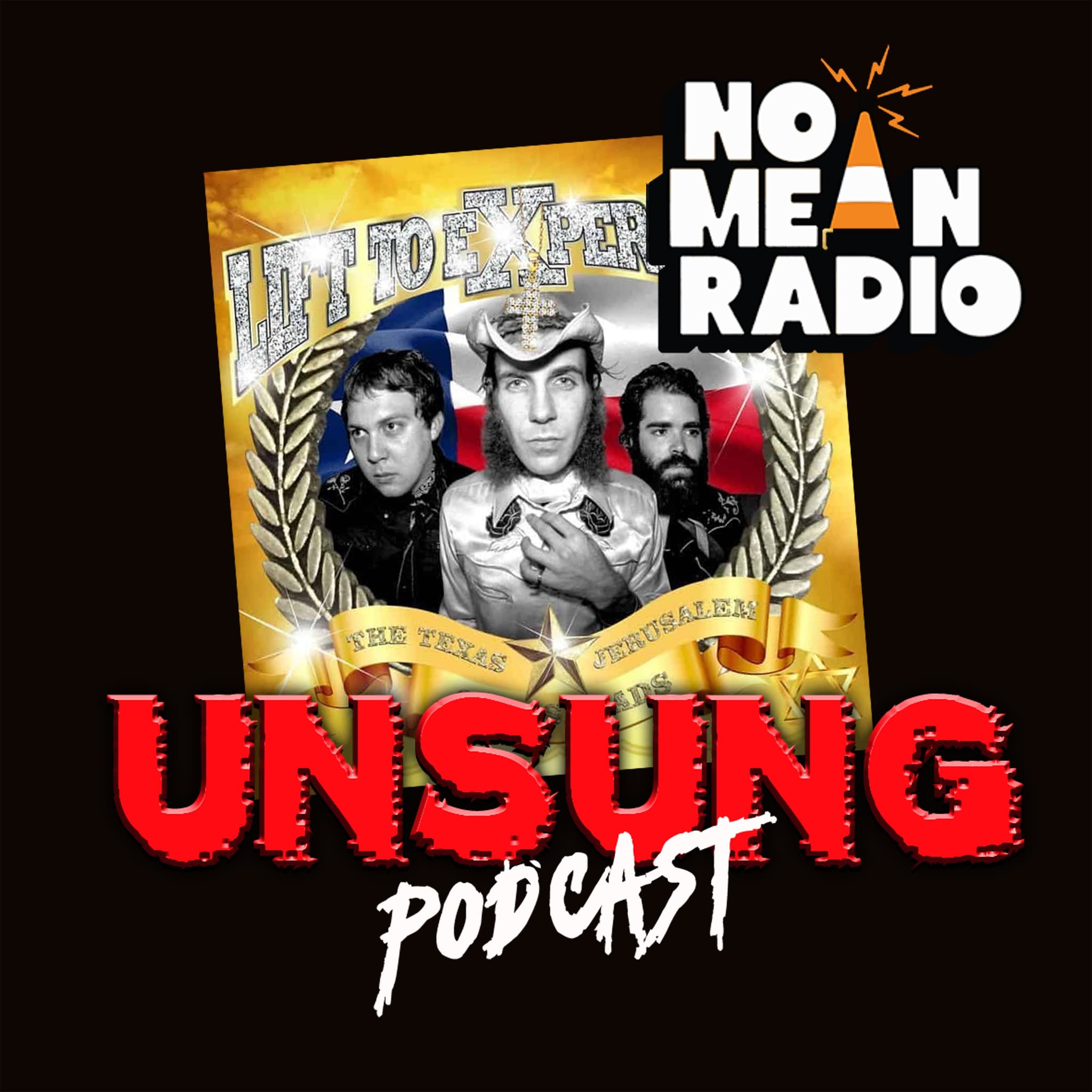
You may be shocked to hear that Lift to Experience made one album. One. A ninety-minute double CD concept record about the apocalypse, set entirely in Texas, written by three boys from Pentecostal and Baptist backgrounds who genuinely believed they had something to say to God. And then, more or less, they vanished. In this episode we cover the Texas Jerusalem Crossroads in full — the vision behind it, the religious fervour that powered it, and the question of whether you need to share any of that fervour to find the record genuinely moving. We'd argue you don't, and the band themselves seemed fairly relaxed about that. We also get into the wider story, which turns out to be just as compelling as the music. The album that couldn't be bought in its home country for years. The label that mixed it without the band present and broke their hearts. The tour that never happened. The beard competition. The sandwich grill. Along the way we ask a question that feels increasingly relevant right now — what does it actually mean when Americans start singing about Texas as the site of the final battle between good and evil? In 2001 it seemed like a grand artistic conceit. In 2025 it feels a little different. Is the Texas Jerusalem Crossroads the unsung post rock record with actual things to say? We think so. But it's a ninety-minute album, so you've got time to make up your own mind. Highlights: 00:00 Intro and Whether We’re Actually Living in the End Times 03:11 Album Introduction 04:46 Millennium Anxiety 09:17 Band Origins 11:19 Sound and Influences 12:22 Post Rock With Vocals?! 17:33 Name and Release 19:48 Religion and Meaning 25:46 Art Versus Belief 29:46 Lyrics and Apocalypse 32:00 Track Highlights 33:51 Shoegaze Favourite Track 34:50 Dynamics of Cloud Nine 36:27 Maximalist Texas Vibes 37:03 Album Art Joke Explained 38:56 Religion and Tech Rants 40:53 UK Success US Absence 44:22 Recording Struggles and SXSW Myth 49:19 Bad Mix and Band Fallout 53:17 Aftermath and Cult Legacy 56:02 Reunion and 2017 Reissue 59:41 Remix Reviews and Changes 01:02:42 Apocalypse Talk and Final Thoughts 01:07:45 Outro
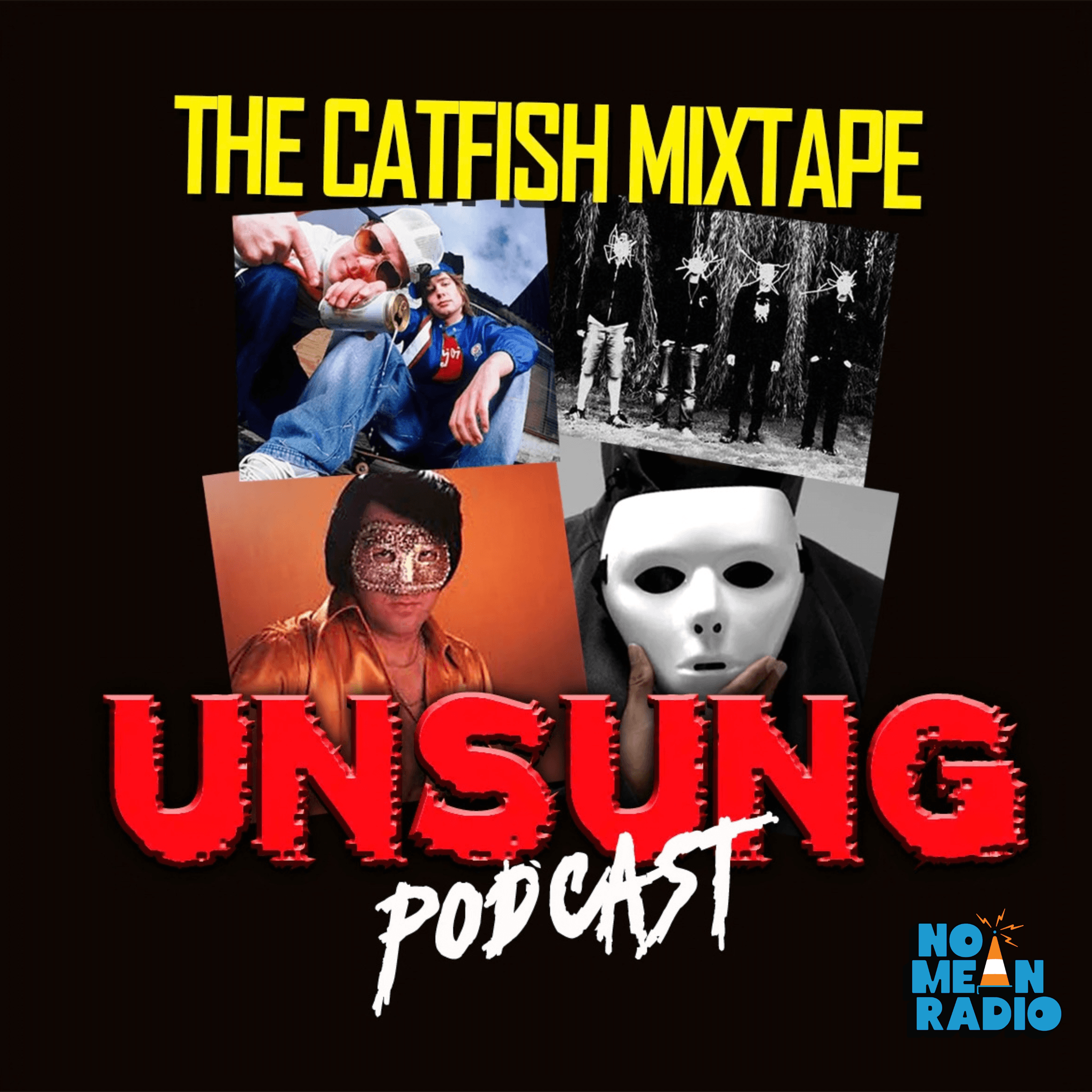
You may be shocked to hear that musicians sometimes lie about who they are. Some may say this is not shocking at all - it's almost a tradition. But there's a meaningful difference between Ziggy Stardust and a band from North Dakota claiming to be a Chinese black metal act to game the press. In this episode we try to map that difference. We spend a healthy portion of time on what we're not talking about - aliases, concept bands, anonymity for anonymity's sake - before getting into the genuinely murky territory of bands that have used fabricated identities for commercial advantage. We cover the fake Zombies that toured America simultaneously in 1969, The Masked Marauders and the elaborate Rolling Stone prank that accidentally became a real album, Silibil n Brains, Dundee rappers who got signed to Island Records on the strength of their American accents, before discussing Ghost Bath, the project that brought this whole phenomenon into focus for us. Along the way we also get into AI-generated music, Milli Vanilli (and why what they did is arguably less dishonest than what plenty of current pop stars do routinely, and a genuinely unresolved case involving a supposedly Iraqi black metal band that may or may not have put its members in real danger. The question running through all of it: does context change how we hear music? And if it does — what does that say about us? Highlights: 00:00 Introduction 01:24 Catfish and Hoax Bands Explained 02:11 Patreon 05:10 Famous Death Hoaxes 05:42 Mystique Versus Scams 09:02 Not Aliases or Roleplay 10:43 Anonymity and Masks 13:23 Fake Touring Lineups 19:03 Concept Bands and Bits 24:28 AI Bands and Deception 27:54 Outright Music Scams 30:13 Milli Vanilli Then and Now 30:53 Pop Star Fraud Culture 33:39 Mask Marauders Hoax 35:20 Orion Elvis Impostor 38:50 Platinum Weird Backstory 40:25 Syllable American Rap Ruse 43:38 Jana Mystery Metal Band 46:06 Velvet Cocoon Troll Scam 48:36 Ghost Bath Identity Debate 54:40 Context and Cultural Relativism 58:10 Ghost Bath Fallout and Ethics 01:02:53 Outro
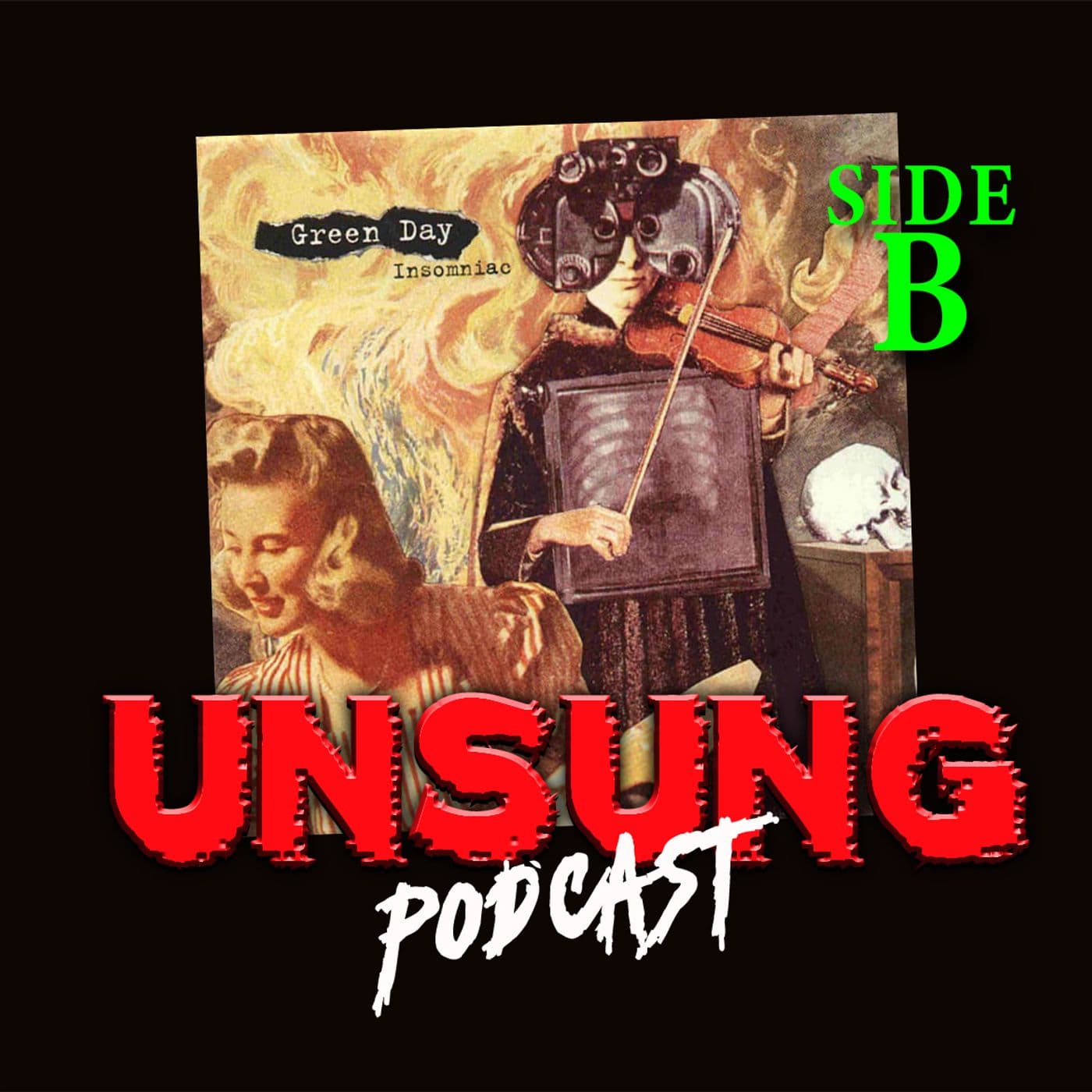
You may be shocked to hear that Green Day have a lot of songs. Some may say, in fact, that they have too MANY songs, because there does come a point where they all just blend into on another. In this episode we explore this phenomenon, and it is exclusively (in our view) an issue that plagues the latter half of their career. We cover everything from American Idiot to Saviors, and whilst not all of these albums are afflicted in such a way, it definitely seems to become more prevalent as we more closer to the present era. We also ask a crucial question - is Green Day punk? The answer is probably not quite what you expect, but we do debate the finer points. Suggesting that perhaps they could be Schrodinger's punx... All this leads us to trying to answer the real question - is Insomniac Green Day's unsung classic? Let's find out. Highlights: 00:00 Intro 01:53 Car Album Debate 05:07 Legacy Act Question 09:31 Setting Up American Idiot 10:24 American Idiot Phenomenon 14:22 Stadium Band Status 23:08 Broadway And 21st Century 31:15 Uno, Dos, Tre And Rehab 35:38 Revolution Radio To Father Of All 37:38 Father of All Reappraisal 39:03 Critics vs Short Runtime 39:49 Side Projects and Salty Pretzel 43:18 2020 Output and Pandemic Era 44:18 Saviors and Derivative Sounds 48:42 Compression and Phone Listening 52:49 Is Green Day Punk? 01:00:28 Defining Punk and Yardsticks 01:19:59 Insomniac Context and Backlash 01:21:21 Critics and Rawness 01:22:22 Sales and Fan Backlash 01:24:01 Honest Bridge Album 01:26:28 Opening Tracks and Tone 01:30:29 Singles and Track Picks 01:32:56 Production and Gear Talk 01:39:54 Songwriting and Label Control 01:53:48 Closing Tracks and Verdict 01:59:22 Wrap Up and Goodbyes
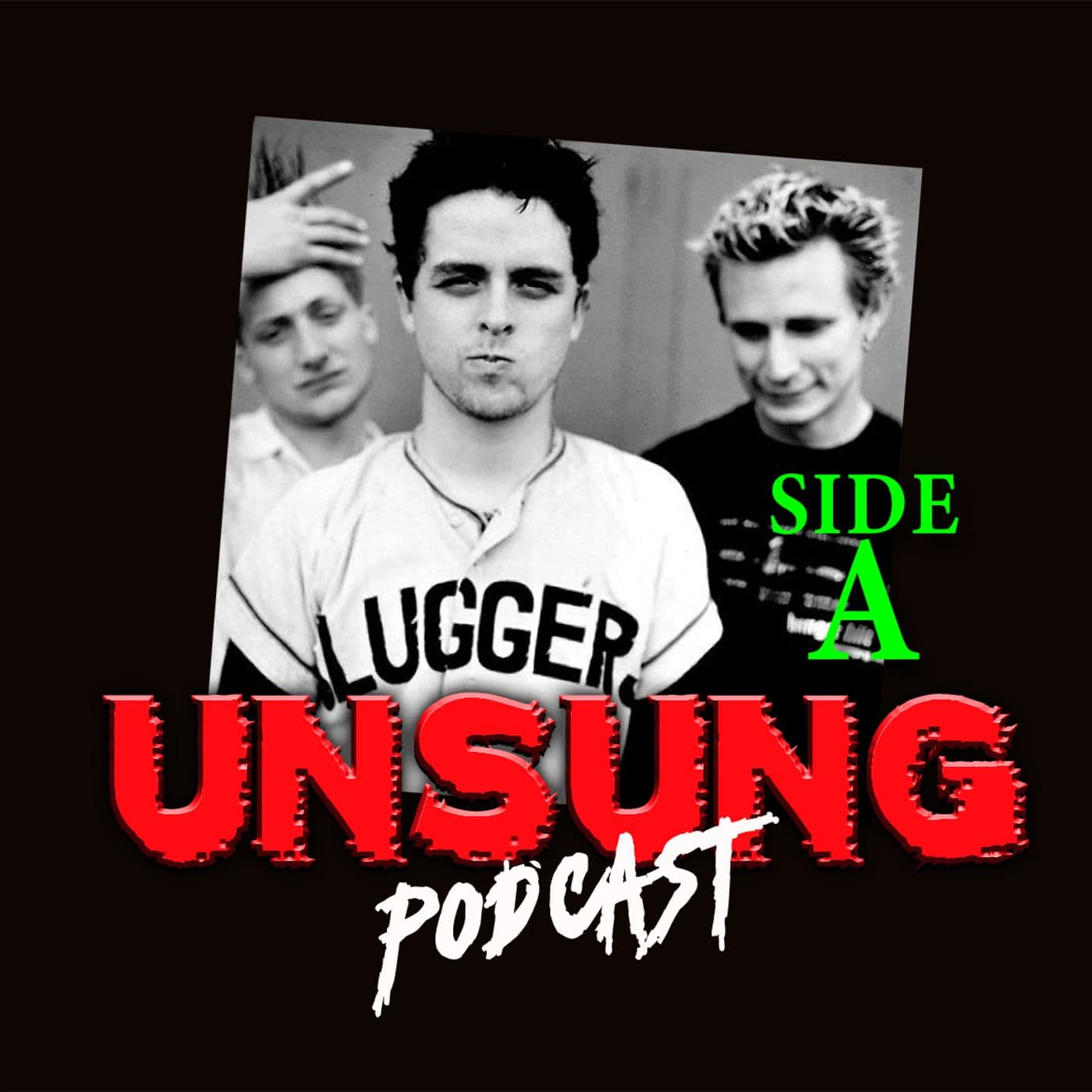
Could it be done? Is it possible to call anything Green Day have ever released both unsung AND (crucially, because there's a fair bit of 'meh' in their catalogue) good? Well folks, this week and next we're going to do our very best to find out. And we're joined by our good friend Rick Bruce from Coffin Mulch and Moonshine Docks. Our contention? That their fourth album, Insomniac, is an unsung classic. This is all relative of course--in the 90s and 00s they sold bucket loads of records. How many people had copies of their records knocking about in their car footwells before 2010? Probably millions. And it hasn't stopped. They're still pulling down millions of streams per month. Objectively, they are huge. And somewhat less objectively, they're probably the biggest punk band ever, and certainly one of the biggest bands on earth. I mean, Insomniac itself isn't even their lowest selling record. And in this episode, we don't even get to it! It's a two parter after all. No, in this episode we talk about everything from the 1000 Hours EP right up to, and including, Warning. With a brief detour into Pinhead Gunpowder too. We'll tackle Insomniac itself in our next episode--as is our way. Timestamps: 00:00 Introduction 02:08 Green Day at the Super Bowl 04:47 Is It Even Possible for Green Day to be Unsung?! 05:23 Support us on Patreon 06:53 Mark's Album-a-Day Project, Power Pop Rabbit Holes & Mic Banter 08:45 Green Day 101: Origins, Pop-Punk Blueprint & Gilman Street 10:51 Influences Deep Dive: Hüsker Dü, Replacements, Costello, Op Ivy & More 15:21 Which Album Is Unsung? Debating Kerplunk, Nimrod & Insomniac 20:27 Early Timeline: Sweet Children, 1,000 Hours EP & 39/Smooth Era 22:40 Scene Discipline vs Scottish Modesty: Getting Good on Purpose 33:03 Kerplunk Breakthrough, Major-Label Controversy & Setting Up Dookie 35:27 How I First Bought Dookie (and Why It Wasn't a 5/5 Yet) 37:03 1994: The Year Pop-Punk Exploded (Offspring, NOFX, Weezer & More) 38:04 Green Day's Mainstream Breakthrough: MTV, Grammys, and the Blink-182 Ripple Effect 43:56 Insomniac (1995): Darker, Faster, Burnout After Fame 46:55 Nimrod (1997): 'Good Riddance' and the Genre-Hopping Era 51:38 Seeing Green Day Live: Glasgow Shows, Merch Regrets, and Peak Memories 53:17 Do Novelty Songs Ruin Pop-Punk? The Big Debate (Descendents, The Offspring, Blink) 59:50 Warning (2000): Polished Pivot, Chasing Hits—or Underrated Growth? 01:09:12 From Warning to American Idiot: The Stolen 'Cigarettes & Valentines' Sessions 01:12:12 On the Cusp of American Idiot (Wrap-Up & Next Part Tease)
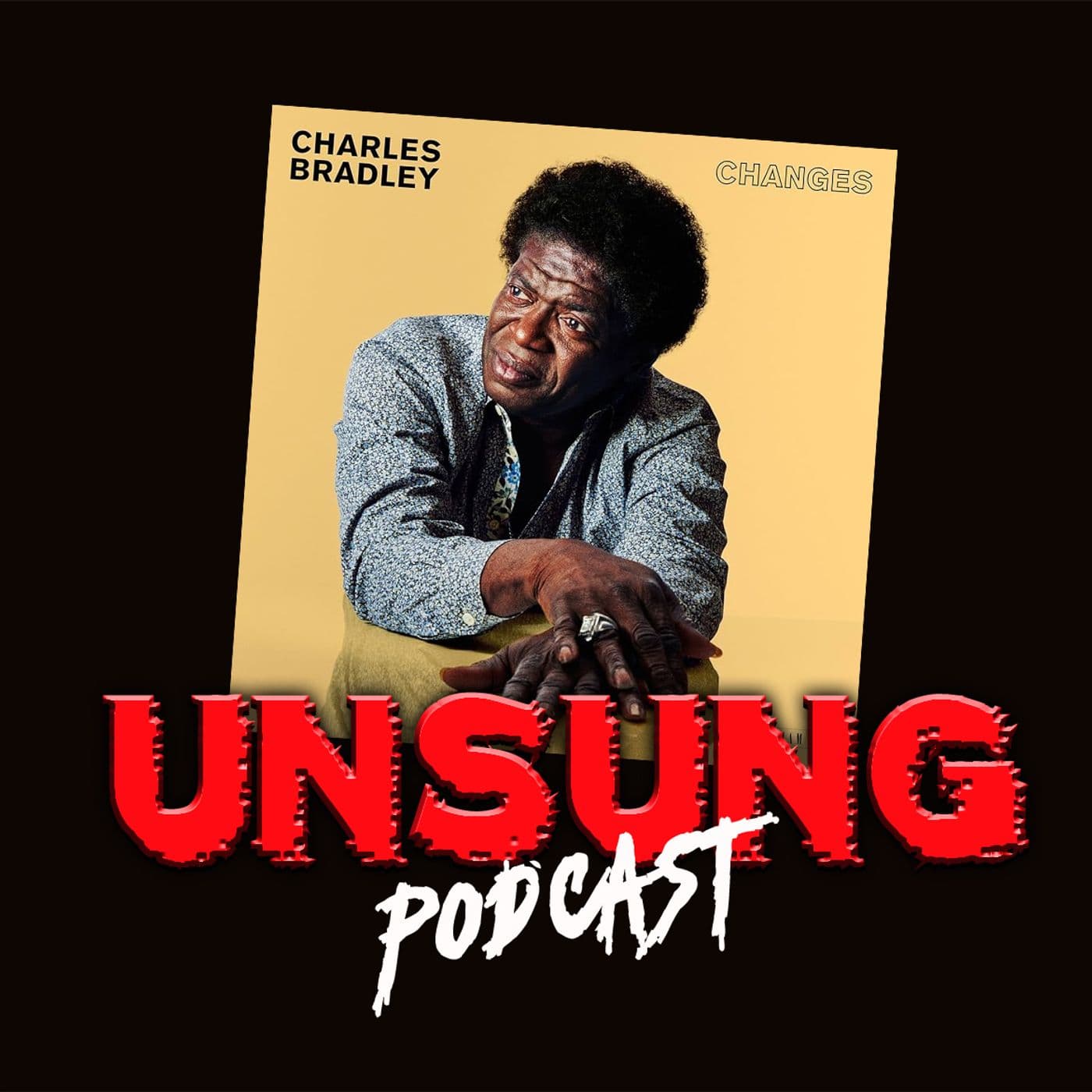
Charles Bradley’s cover of Black Sabbath’s Changes is one that both hosts of this podcast believe could well be the definitive version of the song. And we say that having done three episodes on Black Sabbath — an odyssey that gave us both a newfound appreciation for one of, if not the, most important metal bands to have ever existed. Changes itself is a great song, but this emotional reworking casts an entirely new light on its meaning and power. That, in turn, led us to dive into the work — and world — of Charles Bradley. Much was (rightly) made of Bradley when the then 62-year-old “Screaming Eagle of Soul” burst into public consciousness in 2011 with his debut album No Time for Dreaming. He was met with widespread critical acclaim, and the record proved a major success for his label, Daptone Records. From there, he went from strength to strength, releasing two more albums before his untimely death in 2016 from stomach cancer. A former James Brown impersonator, Bradley’s life was one of tremendous hardship, which ultimately saw him achieve his greatest dream. He burned brightly and briefly, and his final record, Changes — named after the excellent Sabbath cover nestled within — is a remarkable work to bow out with. In this episode, we talk all about his life, through the lens of the 2011 documentary Charles Bradley: Soul of America, before discussing some of our favourite soul covers of rock songs. If you enjoyed this episode, do take some time to check out our Patreon, where you can get early access to episode (with no ads), bonus content and much more.
Bowie fans have long found ways to make peace with some of the more unsavoury aspects of his character and behaviour during that decade. His Thin White Duke persona highlights what, by his own admission, were “the darkest days” of his life. And while he was quick to distance himself from that character as he grew older, its influence on certain members of the British far right certainly left a mark. Yet there is a much darker period of his life than this. It is now a matter of record that he was in sexual relationships with both Lori Maddox and Sable Starr — perhaps the two most infamous “baby groupies” of the early ’70s — when they were just 13 and 15 years old, respectively. Grim stuff all round. We’ll be exploring both of these aspects of his life in this week’s episode, as well as the wider “baby groupie” culture of the era. This episode raises questions about separating the art from the artist, the role of 1970s rock culture, and the personal responsibility of fans. Join us as we navigate the challenging waters of moral grandstanding and personal hypocrisy, questioning if, and how, we can reconcile admiration for Bowie’s art with the transgressions of the man himself. Highlights 00:00 Introduction 00:38 Unfinished Business with David Bowie 02:26 Trigger Warnings 04:05 David Bowie's Complex Legacy 13:57 Fascism and Controversial Statements 38:50 Sexual Misdeeds and Allegations 41:05 Introduction to Statutory Rape in Rock Culture 41:30 The Story of Dana Gillespie and David Bowie 42:34 Lori Maddox and the Baby Groupies 43:29 Sable Starr and the Rock Scene 45:05 The Culture of Underage Groupies 47:24 Laurie Maddox's Relationship with David Bowie 56:51 Jimmy Page and Laurie Maddox 01:00:06 The Wider Problem in Rock Culture 01:07:45 Modern Reflections on Past Actions 01:14:58 Conclusion and Final Thoughts
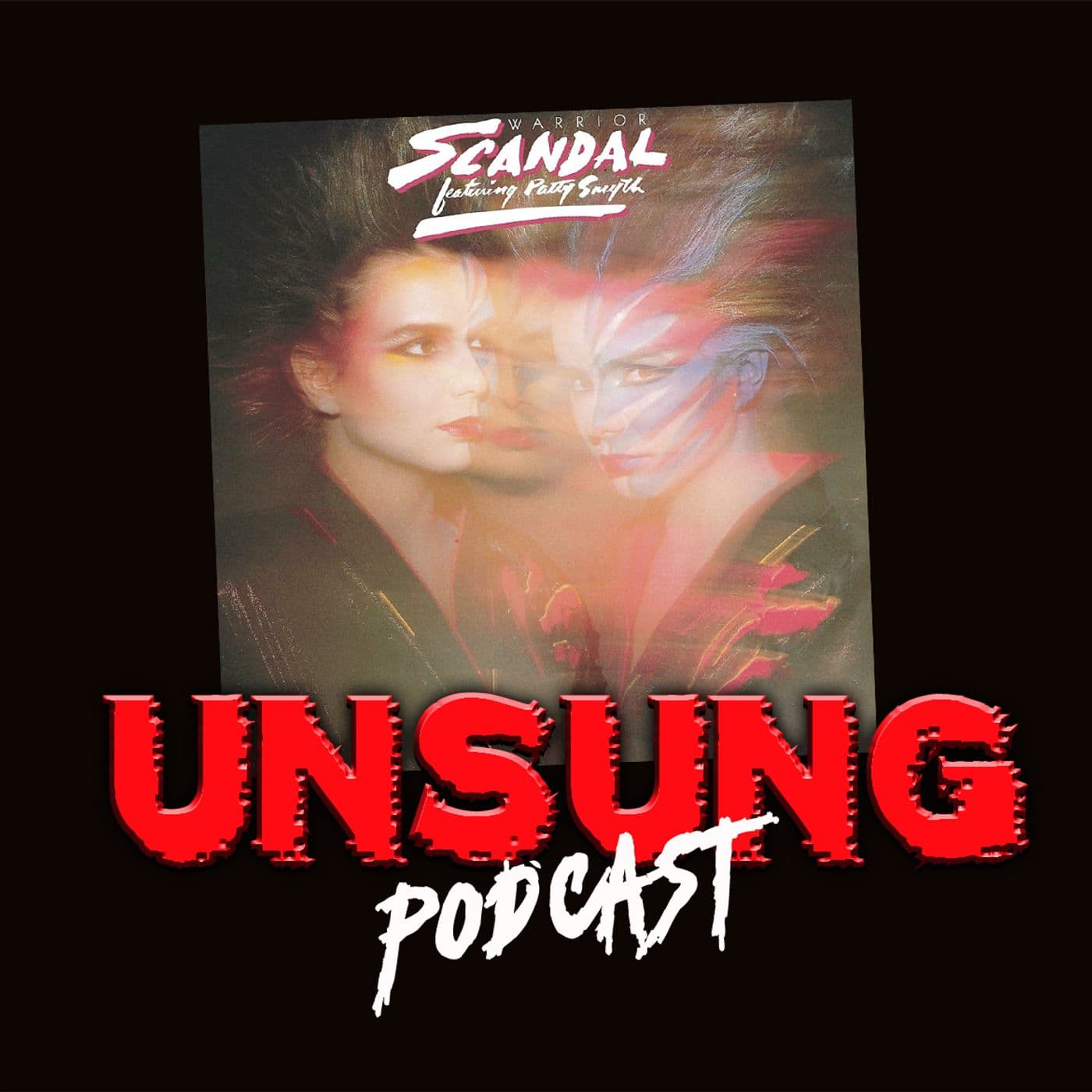
We're back after a fairly shambolic three weeks in our lives (redundancy sure does suck) with this slice of fried gold from the 1980s. You've almost certainly heard the lead single from this record. In fact, the question as to who the singer is of the song "The Warrior" has quite likely come up on a pub quiz at some point, and you've quite likely got the answer wrong. The answer is not, as you may think, Pat Benetar. It's Patty Smyth. The single this album is named after was an 80s hit, and penned by the legendary Holly Knight. We won't go into a huge amount of detail on her here, but suffice to say we think she's criminally underrated given some of the ginormous tunes she penned in the 80s. Indeed, we cover that in extensive detail in our episode on her short-lived band Device. Scandal imploded soon after this record was released, and members of the band, Patty included, went on to have varying degrees of success in the late 80s and early 90s. Patty Smyth's story itself is a fascinating one, so fascinating in fact that we actually forgot to talk all about her marriage to Television's Richard Hell. That one glaring omission aside, we do a pretty deep dive into Scandal and her career afterwards. HIGHLIGHTS: 00:00 Introduction and Pub Quiz Banter 00:35 Scandal and Patty Smyth: The Early Days 01:22 The Warrior and MTV Success 03:29 Classic Bands and Radio Challenges 05:03 Band Dynamics and Touring 07:24 Patty Smyth's Solo Career and Label Issues 18:31 Declining Van Halen and Family Priorities 21:19 Reunions and Later Years 27:12 Unreleased Tracks and MTV Hits 27:25 Goodbye to You and Other Hits 28:46 Fun Facts and Jimmy Fallon Appearance 29:39 Brian Adams Cover and Other Tracks 31:53 Christmas Album and Charity Work 33:22 The Warrior Album Review 34:44 Songwriting and Collaborations 38:40 The Warrior Music Video 43:12 Journey Song and Album Critique 45:10 Legacy and Final Thoughts
This week we're diving into why bands like Godspeed You! Black Emperor and King Gizzard are pulling their music from Spotify - and why it probably won't change anything. It's a trickier situation than it seems, but the whole mess starts with Napster in 1999. 80 million people sharing MP3s illegally crashed the music industry, dropping revenue 15% in four years and creating a chain reaction that led to piracy running rampant for much of the 00s. Enter Daniel Ek in 2006 with Spotify, which was built initially using pirated music from The Pirate Bay, telling you everything about how much they value artists. But it worked. By offering free access to entire music catalogues (with ads), Spotify created something no competitor can match without hemorrhaging money. Today, 412 million people use Spotify's free tier. That's the foundation of their dominance - not the 263 million paying subscribers. But this creates an impossible situation for artists. Big names with established fanbases can afford to leave, but new artists risk invisibility. Record labels and promoters judge bands by Spotify monthly listeners and post-gig discovery relies on easy music access, meaning that pulling your music from this platform could be potentially damaging for their careers. The "just use Bandcamp" argument misses the point - it's a different business model entirely. Bandcamp is buying a car; Spotify is hiring any car you want. And as it turns out, a LOT of people prefer hiring now. But the real problem isn't Spotify - it's "technofeudalism." Tech platforms operate like medieval fiefdoms where users become trapped serfs. Artists complain about Spotify royalties while creating free content for Instagram and TikTok, which monetise their labour through surveillance capitalism. The arms investment angle (Daniel Ek's €600m in AI weapons) sounds damning until you realise Google runs military AI projects for Israel, Meta builds battlefield AR for the US military, and all big tech props up the military-industrial complex. Their conclusion is bleak: there's no way out. The market expects free music and won't change. Mass boycotts might work but won't happen. The only real solution is direct artist support - gigs, merch, Bandcamp purchases, because it's almost impossible for anyone to truly extricate themselves from terrible machinery of the current internet era. Highlights: 00:00 Introduction: Bands Leaving Spotify 00:15 The Techsodus Idea and Streaming Services 02:23 History of Music Piracy: From Napster to Spotify 07:01 Spotify's Rise and Artist Payments 16:15 Technofeudalism and the Creator Economy 28:34 Spotify's Business Model and Market Dominance 34:58 The Spotify Dilemma: Free Access and Market Expectations 35:15 Apple's Potential and the iTunes Model Revival 35:53 Bandcamp: A Hopeful Alternative? 39:17 The Discoverability Advantage of Streaming Platforms 47:15 The Moral and Practical Dilemma for Artists 59:52 The Broader Issue: Platform Capitalism and Tech Giants 01:15:00 Supporting Artists Directly is The Only Real Solution
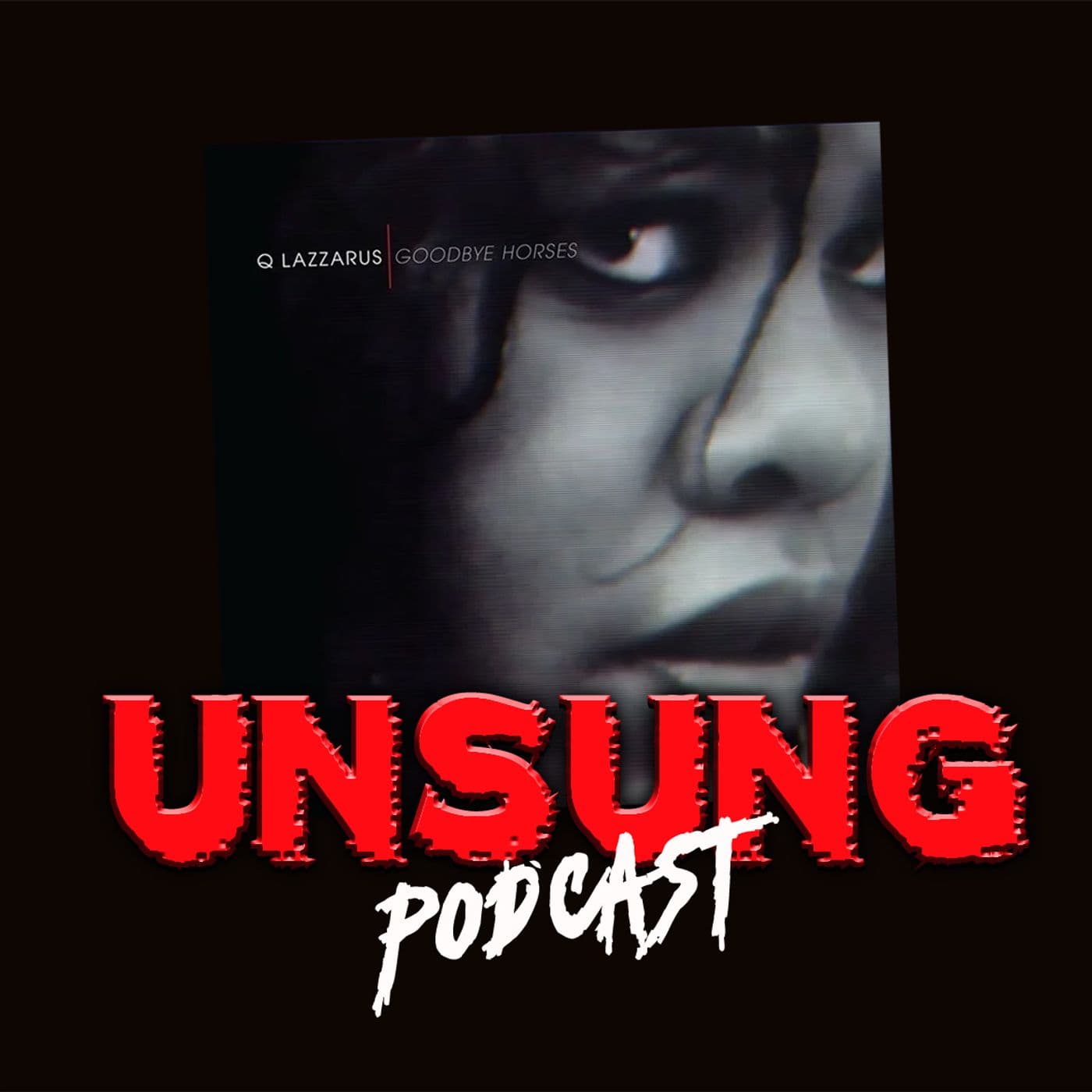
As stated at numerous points in this episode, a lot of the things discussed here can be found in the documentary Goodbye Horses: The Many Lives of Q Lazzarus. We urge you to go check out that film here: https://vimeo.com/ondemand/qlazzarus as it is a brilliant piece of work. It is, in fact, that only "official" release by Q Lazzarus. She would later go on to appear in Demme's next film, the wonderful Philadelphia, singing a cover of Roxy Music's classic tune "Heaven". After that, though, she would simply vanish from the industry entirely. So what happened? Why did this seemingly promising up and coming artist, who had two huge brushes with fame, suddenly disappear without trace? Well, it's a rather complicated, and compelling, story that touches on industry discrimination, artist exploitation, and the music business's treatment of unique talents. This week we dive into that story, with the help of a remarkable documentary film called Goodbye Horses: The Many Lives of Q Lazzarus - a film that came about through an almost impossibly serendipitous encounter between filmmaker Eva Aridjis Fuentes and her mysterious subject. The documentary is available on Vimeo and you should absolutely check it out for yourself, alongside the Sacred Bones compilation of her previously unreleased works. Please note that this story deals with some heavy themes and doesn't have the resolution we might hope for, but it's an important and deeply affecting tale that deserves to be told. Highlights: 00:32 Discussing Q Lazarus and 'Goodbye Horses' 02:30 The Mystery Behind Q Lazarus 03:19 Q Lazarus's Musical Journey 05:36 The Impact of 'Goodbye Horses' 07:19 The Search for Q Lazarus 12:01 Eva Aridjis Fuentes and the Documentary 17:58 Q Lazarus's Early Life and Career 30:37 The Duality of Q Lazarus and Diane Luckey 31:36 The Role of Luck in Diane's Life 32:52 Career Setbacks and Personal Struggles 34:00 Heartbreak and Disillusionment 34:57 Descent into Darkness 38:10 A Glimmer of Hope: Motherhood and Redemption 39:47 The Unreleased Works and Legacy 42:12 The Battle for Royalties 44:17 The Impact of Goodbye Horses 53:16 The Unfulfilled Potential and Legacy Tours 57:31 Final Thoughts and Reflections
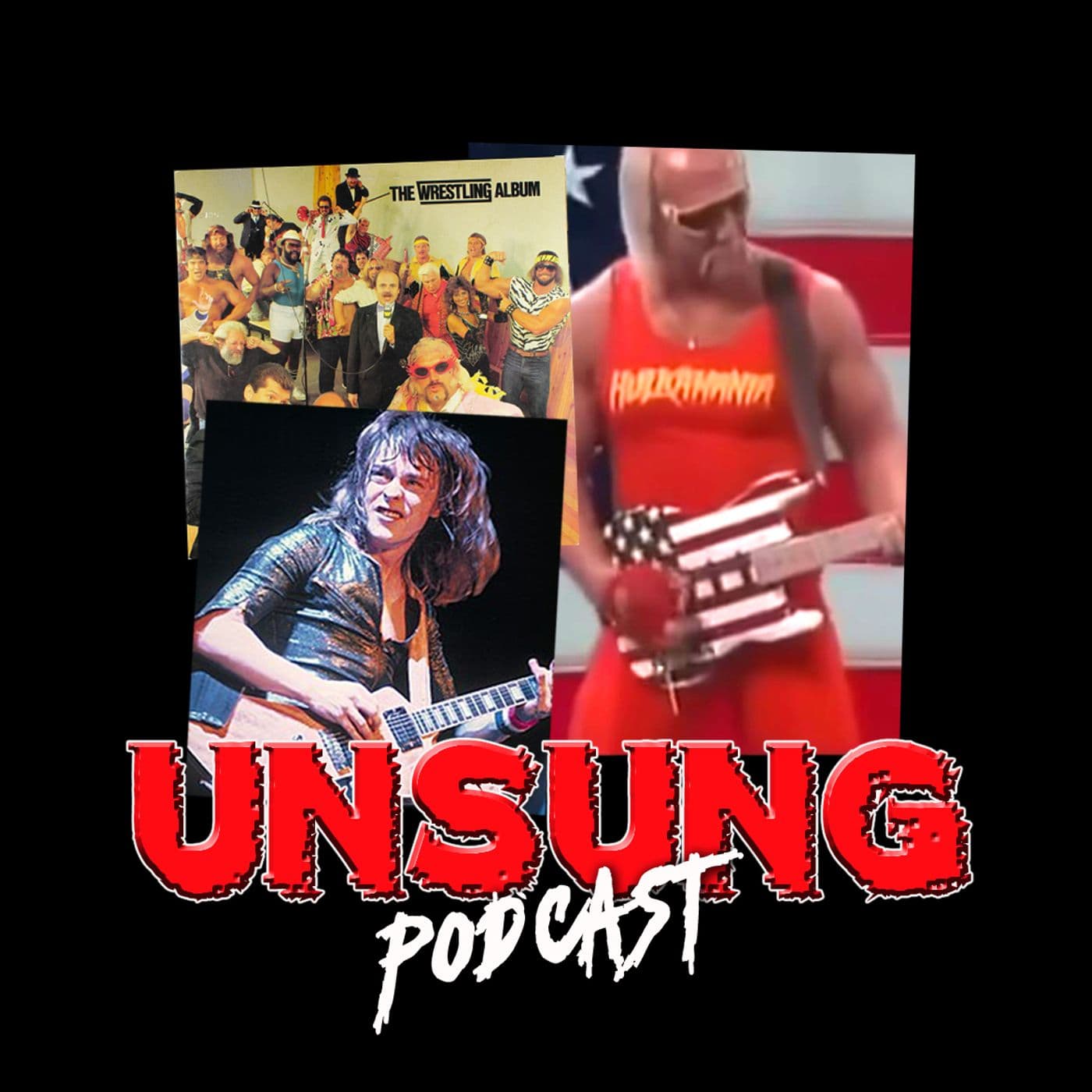
Everyone knows Hulk Hogan's entrance music, but how many know the fascinating story behind Rick Derringer's "Real American"? With the recent passing of Hulk Hogan, we thought we’d revisit a previous episode and update it with new information. Oh, and also to film the whole dang thing as we weren’t doing that back then. So, this week we’re exploring the unlikely journey of a song that became one of wrestling's most iconic themes, examining its cultural impact, political appropriation, and the complex legacy of both its creator and, in some ways, Hulk Hogan too. From Rick Derringer's impressive musical pedigree (The McCoys, collaborations with Steely Dan, producing Weird Al) to the song's evolution from US Express theme to Hogan's signature tune, we unpack how a piece of 1980s excess became a cultural touchstone - and political football. We also talk about Rick Derringer's extensive musical career and connections, the origins and evolution of "Real American"; WWE's "Rock and Wrestling Connection" era in the mid to late 80s; the song's political appropriation across decades; Hulk Hogan's controversial legacy and recent passing; the music video's gloriously over-the-top 80s aesthetic and more. Let’s fight for the right of every man. Or everyone, depending on the version you prefer. Episode Highlights 00:00 - Introduction and Hulk Hogan's recent cultural relevance 01:30 - Rick Derringer's impressive musical CV and career highlights 03:00 - The creation story: "The most patriotic song of all time" 05:30 - Wrestling music history and the Rock and Wrestling Connection 12:00 - How "Real American" became Hogan's theme (it wasn't originally!) 15:00 - Hulk Hogan's controversial legacy and recent scandals 18:00 - The Wrestling Album and WWE's musical ambitions 22:30 - The song's political life and cultural appropriation 28:00 - Iron Sheik's legendary Twitter feuds with Hogan 31:40 - Rick Derringer's own political evolution and re-recording 36:30 - The gloriously cheesy music video breakdown 41:00 - Why this song represents the 1980s perfectly 44:00 - Final thoughts on Hogan's impact and the song's enduring legacy
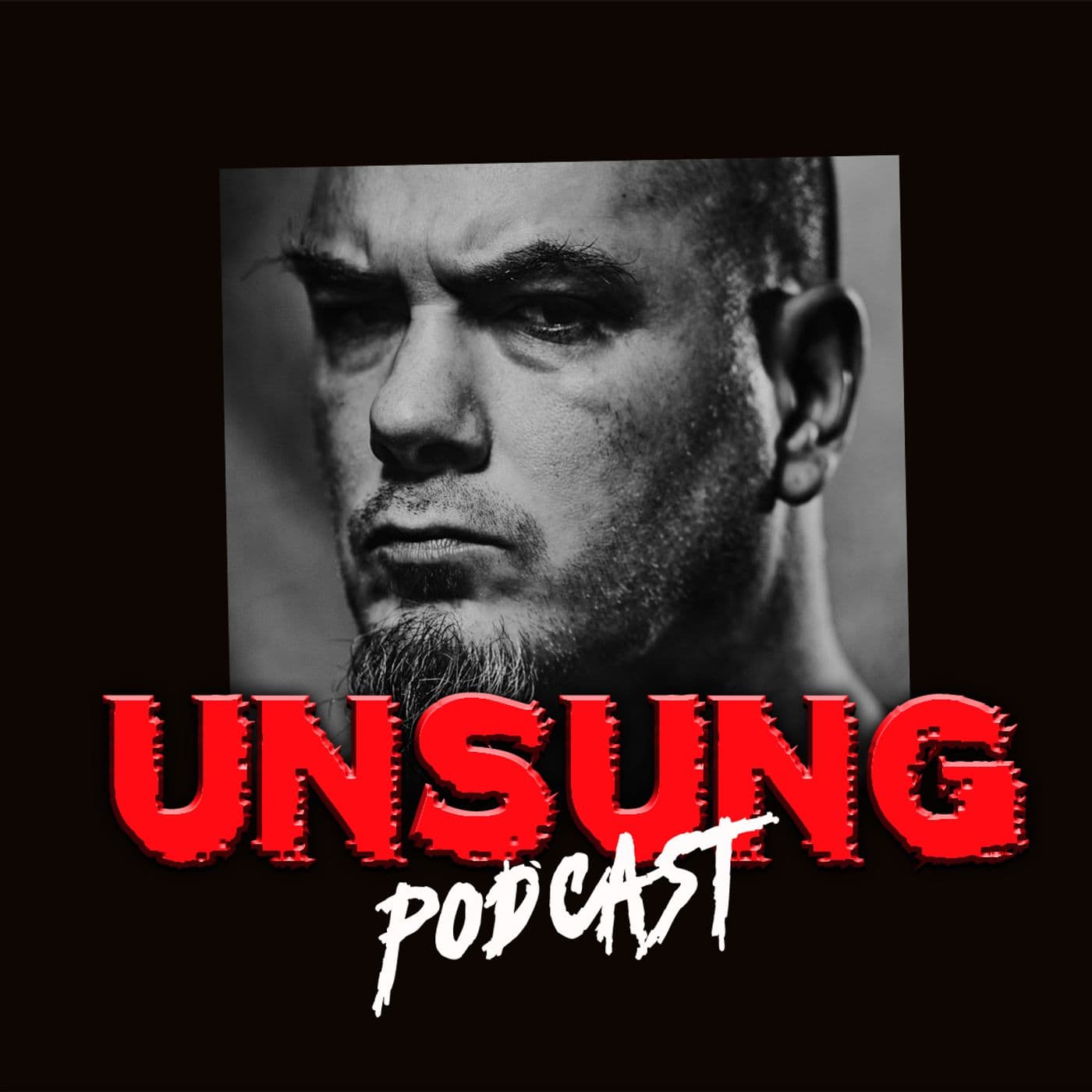
Like us, are you somewhat uncomfortable of about Pantera playing with Metallica? Why exactly might that be? We need to explore what it is about Phil Anselmo that gives people that icky feeling. This week we try to put some meat on the bones about the rumours that have dogged Anselmo for the last three decades of his career. White supremacist? Racist? Just a bit of a steamer? What is it about this guy that has gotten him this reputation? Is it merited? And if it is merited, do we have any sort of obligation to act on that? The Pattern of Behaviour It's an issue that's dogged Phil throughout his career, but came into sharp focus at the conclusion of the Dimebash concert in 2016. The thing is though, focusing too much on that fiasco is that it allows flimsy and bad faith justifications. Too much alcohol is one. "Oh, he was just trolling" is another. They've been fairly successfully passed off as excuses for not just his misdeeds that night, but his behaviour more generally. That smokescreen has enabled millions of paying Pantera fans to handwave away the evidence of their own eyes and ears. Denial is a powerful thing, especially when a band is so intrinsically tied up in the carefully guarded nostalgia of countless nineties teenhoods. Anselmo's history with white supremacist rhetoric and imagery goes back a long way. It's been scattered, downplayed, obfuscated to such an extent that it's easy to lose track. We gather all those details in one place so you can make better informed decisions about where you spend your money and what sort of behaviour we seek to excuse on literally the biggest of the world's stages. Episodes Referenced Our interview with former white supremacist turned anti-extremist advocate Arno Michaelis: https://bleav.com/shows/unsung-podcast/episodes/in-session-12-arno-michaelis-author-anti-extremism-activist-and-former-white-nationalist-side-a-360/ Slayer - South of Heaven: https://bleav.com/shows/unsung-podcast/episodes/episode-203-south-of-heaven-by-slayer/ Highlights 00:14 Why Pantera Supporting Metallica Feels Wrong 01:02 Your Money is Your Vote: Consumer Responsibility 01:54 The Pattern Begins: Early Controversial Incidents 03:42 The Dimebash Incident: Sieg Heil on Stage 06:07 A Decades-Long History of Problematic Behaviour 21:03 Confederate Flags: Heritage Not Hate? 25:27 Dog Whistles and Lyrical Controversies 30:32 The Night Everything Changed: Dimebash 2016 31:28 What Actually Happened at the Concert 31:50 Rob Flynn Breaks Ranks 32:55 The Silence Before the Storm 33:57 From 0% to 1000% Apologetic in Three Days 35:15 The Metal Press: Complicit in the Cover-Up? 36:58 Is Metal's "Radical Freedom" Part of the Problem? 38:12 Who Is Phil Anselmo Really? 53:31 Making Informed Choices as Music Consumers Support the Show You can support Unsung via Patreon at www.patreon.com/unsungpod. Join at the lower tier for bonus content, early access, and our closed members group where you can suggest episodes. Or join the record club where you get sent records by independent bands from independent labels.
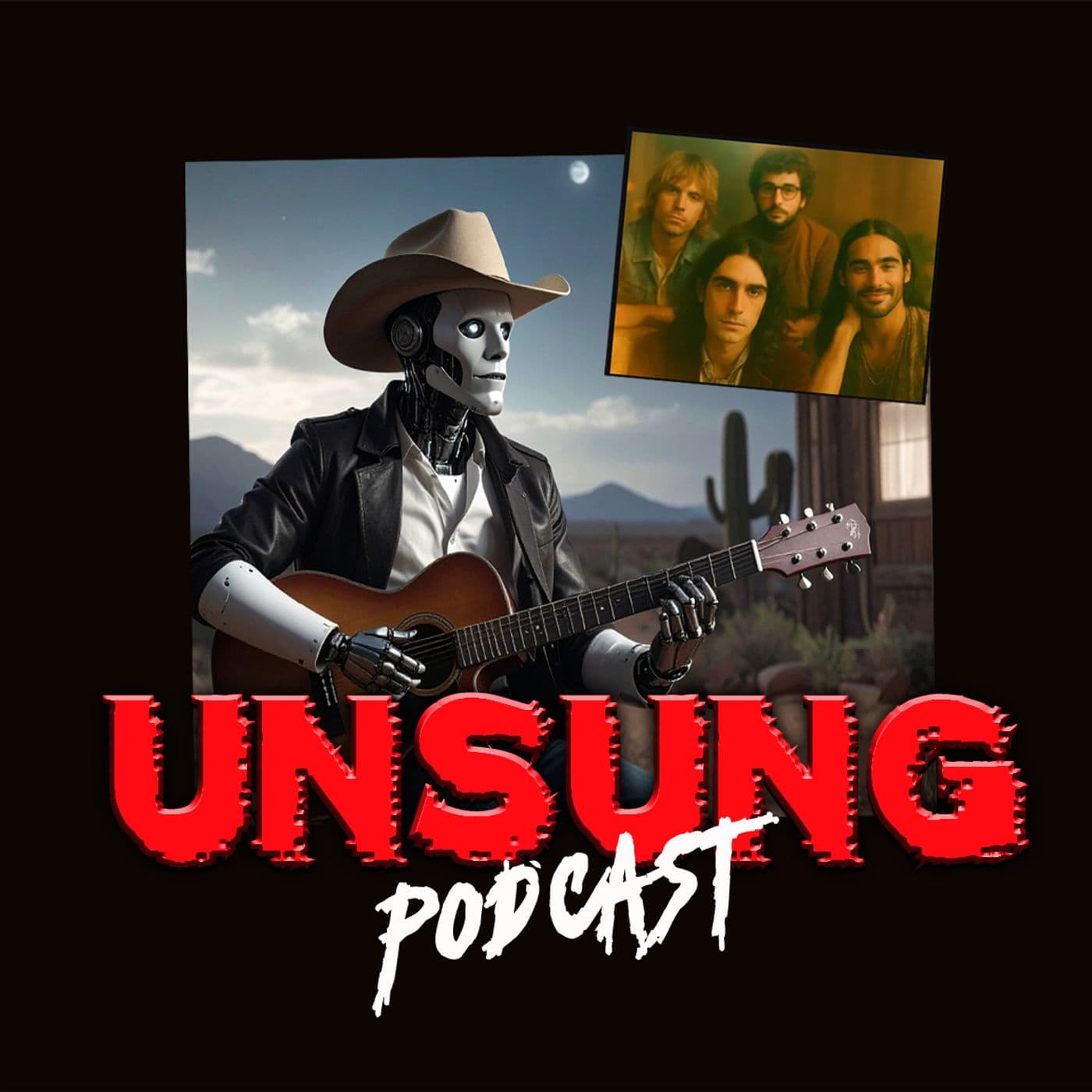
You may have seen the AI band The Velvet Sundown pop up in the news recently and thought "well, that's weird". Long-time fans of the pod probably also thought "when are they going to do an episode on that?" Well, here it is! If you've been following us for a while you'll know that every 18 months or so we seem to return to broader discussions about where music and technology intersect. It began with an episode on Threatin (if you remember who Threatin is, well done) and how one man's quest for fame led to him faking a massive fanbase. A quest that ended with him playing to empty rooms across the UK, and saw him trying to retcon it into some kind of art hoax. Later, we discussed what a possible future using AI music might look like in March 2019, looking at the early attempts to create artificial intelligence music and how the data given to streaming platforms could very well be used to create music. An episode that is now quite prescient in retrospect. Mark was actually quite optimistic that a Velvet Sundown-esque AI band scenario would not come to pass. How naïve... And then in October 2023 we took a two episode deep dive into Spotify playlist manipulation, and how it began way back in the early days of radio with payola. Spotify algorithm manipulation plays a huge role in how the person/entity behind The Velvet Sundown was able to gain so much traction so quickly - reaching 1.1 million plays and potentially earning £35,000+ annually. This week's episode continues this tradition. We cover some old ground in places (the history of AI music and playlist manipulation), but for the vast majority of the episode we break new ground. We look at the hard numbers around what this synthetic music "artist" stands to make, examine other AI-generated bands like Anna Indiana, The Devil Inside, and Aventhis, ponder both the inventive and interesting uses of artificial intelligence in music as well as the more troubling ones, and look at some possible futures in the wake of all this AI band controversy. You can also watch this episode on YouTube, if that's your thing. Link is here: https://youtu.be/04mYK3G4x5k If you've enjoyed this episode, do consider subscribing to our Patreon at www.patreon.com/unsungpod 00:00 Introduction to The Velvet Sundown 00:36 AI in Music: From Skynet to Rei Toei 01:35 The Rise of The Velvet Sundown 03:05 AI Bands and Their Impact 07:33 History of AI in Music 17:18 Modern AI Music Innovations 33:31 The Future of AI in Music 36:10 Financial Implications of AI Bands 42:05 The Impact of AI on Job Replacement 43:43 The Uncanny Valley in AI Music 45:07 Genres and AI's Ability to Mimic Them 49:57 AI's Influence on Modern Music Production 55:21 The Rise of AI in Country Music 59:24 The Future of AI in the Music Industry 01:07:19 Ethical and Regulatory Concerns 01:21:34 Concluding Thoughts on AI in Music
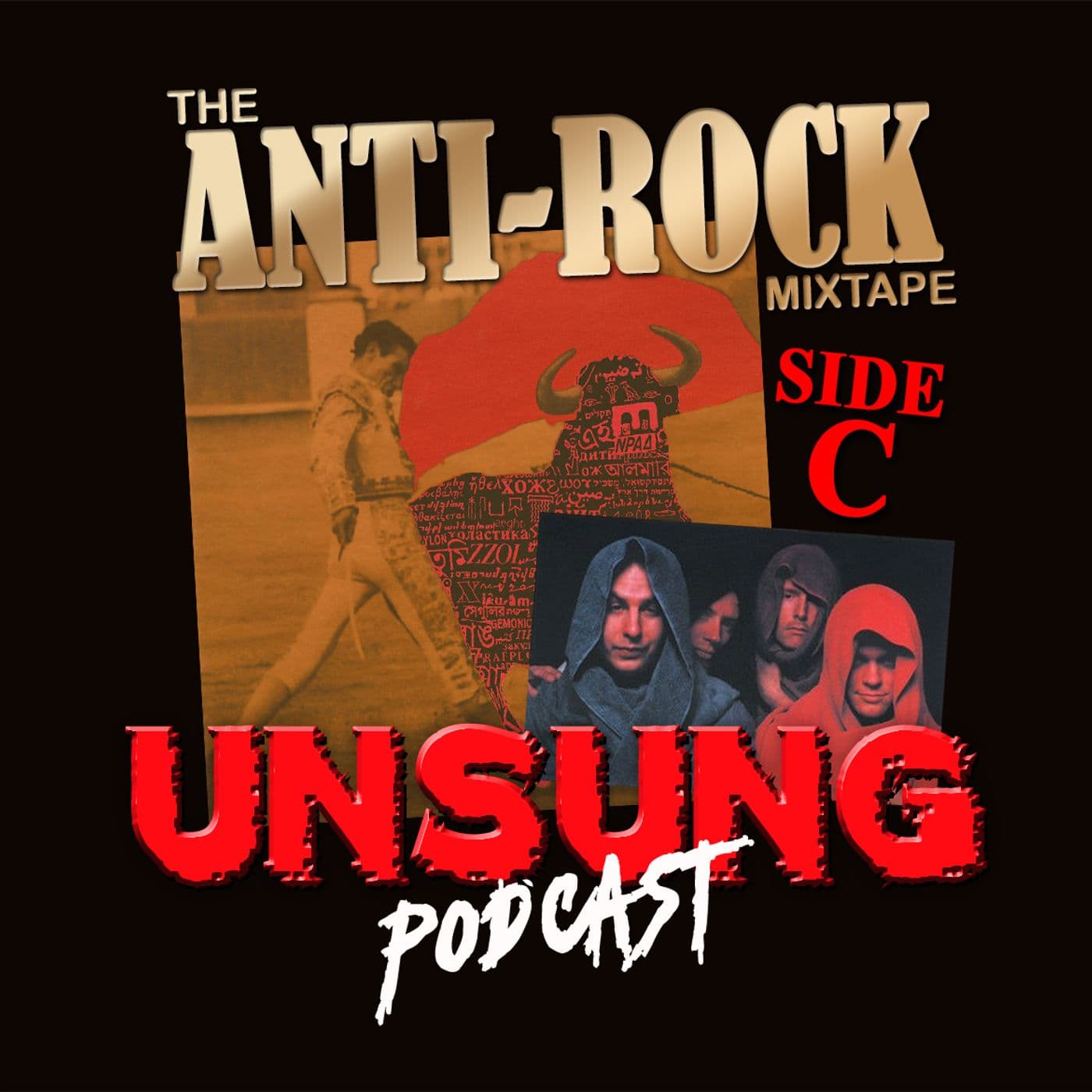
This week we're talking about US Maple. Which is a bit like saying we're talking about having your teeth drilled without anaesthetic. The Chicago quartet spent twelve years making music that deliberately disappointed every expectation you might have about rock music. They took guitars, drums, and vocals and somehow made them sound like they were arguing with each other in a language nobody understood. It was brilliant. It was infuriating. It was absolutely necessary. This is the final part of our Anti Rock trilogy, where we've been exploring bands that knew the rules of rock music inside out and chose to break every single one of them. US Maple didn't just break the rules though. They took the rulebook, fed it through a modified guitar with quarter tone frets, and sang over it like a demented lounge singer having a breakdown. We get into their impossible discography, their custom instruments that were designed to sound worse, their legendary tour with Pavement where they got pelted with rubbish nightly, and that infamous Oklahoma City incident involving Xanax and a cockroach. We also try to answer the eternal question: why would anyone voluntarily listen to this? Fair warning: this episode might make you feel slightly seasick. That's entirely by design. Featuring Ferruccio Quercetti from the brilliant Italian band Cut, who knows more about post punk and experimental music than literally anyone we know. Highlights: 00:00 Introduction and Welcome 00:58 Meet the Hosts and Anti-Rock Series Recap 05:25 Defining Anti-Rock vs. Post-Rock - The Core Question 18:51 Chicago's Noise Rock Scene and US Maple's Origins 20:32 The Band Formation and Todd Riman's Hybrid Guitar 24:00 "Snagglepuss on a Bender" - Early Recording Stories 31:47 The Commitment to Anti-Rock Philosophy 38:00 The Legendary Oklahoma City Incident 44:00 Shorty: The Band That Spawned US Maple 49:00 Album Deep Dive: Long Hair in Three Stages 59:08 Sang Fat Editor and Quarter-Tone Guitar Experiments 01:08:00 Talker and Working with Michael Gira 01:17:00 Purple on Time - The "Mainstream" Album 01:22:13 Al Johnson's Anti-Rock Manifesto 01:24:46 Why US Maple is "Weirdly Soothing" 01:29:00 Mark's Virgin Takeaway on the Band 01:33:54 Conclusion and Farewell
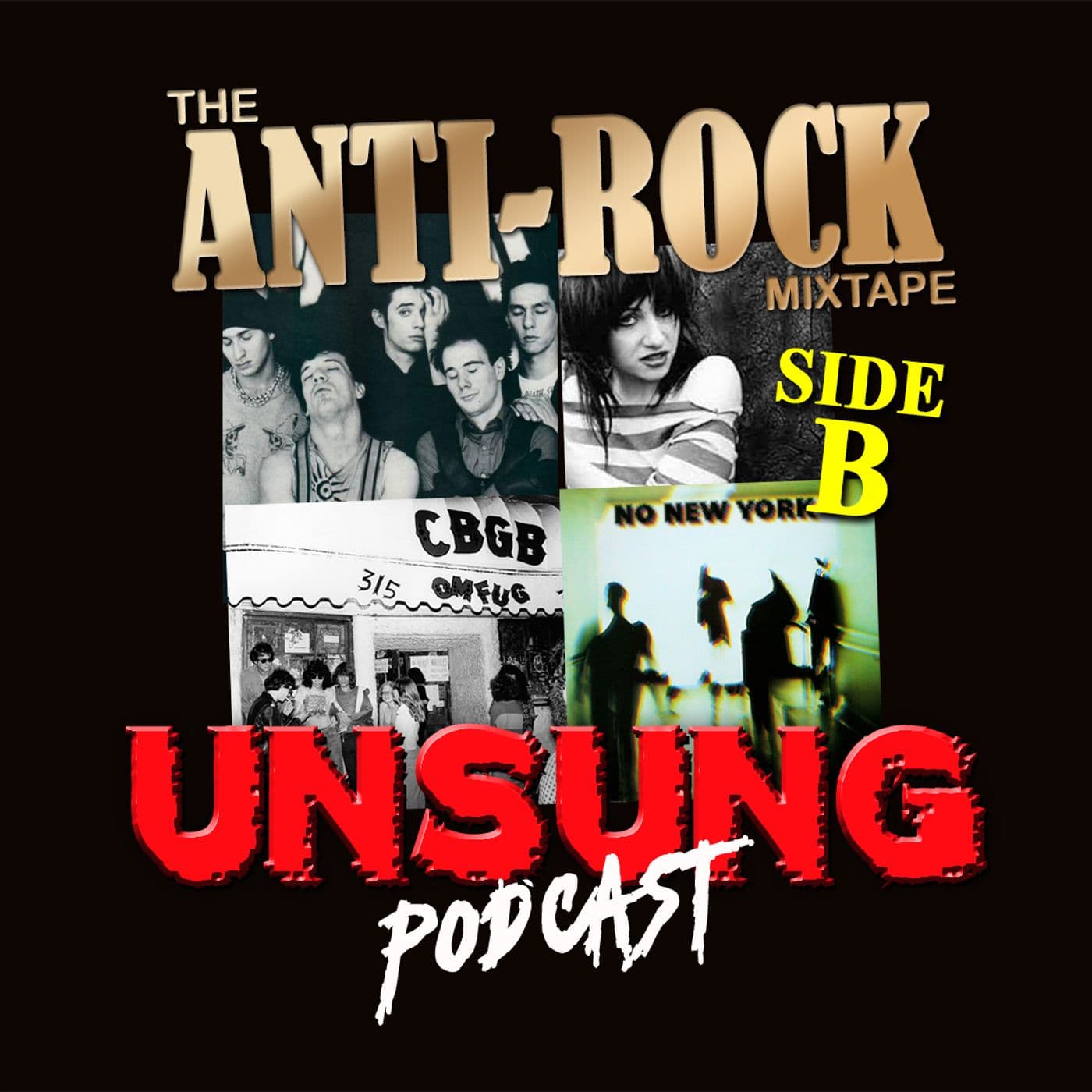
This week we're diving headfirst into the gloriously pretentious world of No Wave - the three-year New York art scene that somehow managed to influence everything that followed. Chris has somehow convinced Mark and our resident Italian punk professor Ferro to explore how a bunch of art school dropouts in a financially bankrupt New York accidentally created one of music's most important movements. We start with New York City in 1978: a proper shithole where you'd genuinely risk your life getting a taxi to Brooklyn, Times Square was basically a war zone, and the city had literally gone bankrupt. Perfect conditions, as it turns out, for a load of bohemian kids to move in, pay bugger all rent, and start making the most deliberately difficult music imaginable. Enter Brian Eno, who's meant to be in New York producing Talking Heads like a normal person, but instead wanders into some art space gig and discovers bands like Teenage Jesus and the Jerks, DNA, Mars, and The Contortions doing something completely mental. Being Brian Eno, he obviously decides to document the whole thing, creating the legendary "No New York" compilation that basically put the entire movement on the map. We get properly stuck into the key figures: Lydia Lunch being an absolute force of nature in Teenage Jesus and the Jerks, James Chance slapping music critics (literally - he assaulted Robert Christgau), and the various weirdos who decided that what punk really needed was to be even more antagonistic to its audience. Ferro brings his encyclopaedic knowledge of the European connections, particularly the parallels between New York's urban decay and Berlin's post-war experimental scene. We explore how Einstürzende Neubauten were literally destroying studio floors with sledgehammers whilst Throbbing Gristle were essentially inventing industrial music in their Yorkshire squat. The conversation sprawls magnificently through Swans' absolutely punishing early albums, the way Sonic Youth emerged from this scene, and how bands like Bush Tetras and Rat at Rat R kept the torch burning. We also dive into some proper tangents about Madonna apparently being in an art punk band with future Swans members (mental) and how this whole movement influenced everything from the Load Records noise rock scene to modern post-metal. This is part two of our anti-rock trilogy. Last week we tackled the prehistory from musique concrète to Captain Beefheart, and next week we'll finally get to US Maple and try to explain why anyone would voluntarily subject themselves to their particular brand of musical torture. 00:00 Introduction to No Wave and Brian Eno's Influence 00:33 Welcome to the Podcast 01:04 Recap of Previous Episode 02:14 The Rise of No Wave in Late 1970s New York 02:46 Sociological Context of 1970s New York 02:59 Key Figures and Bands in No Wave 03:43 The No New York Compilation Album 07:59 Brian Eno's Role and Impact 11:02 Musical Influence and Legacy of No Wave 20:04 James Chance and The Contortions 22:44 Sonic Youth and Swans: Post No Wave Evolution 25:51 The Influence of Swans on Post-Metal 27:25 Exploring Lesser-Known Bands: Rat at Rat R and Bush Tetras 28:48 The Impact of Foetus and Throbbing Gristle 35:13 Berlin's No Wave Movement and Einstürzende Neubauten 41:08 The Legacy of No Wave in Chicago and Beyond 45:03 Anti-Rock Bands and Their Influence 48:38 Concluding Thoughts and Teasers for Next Episode
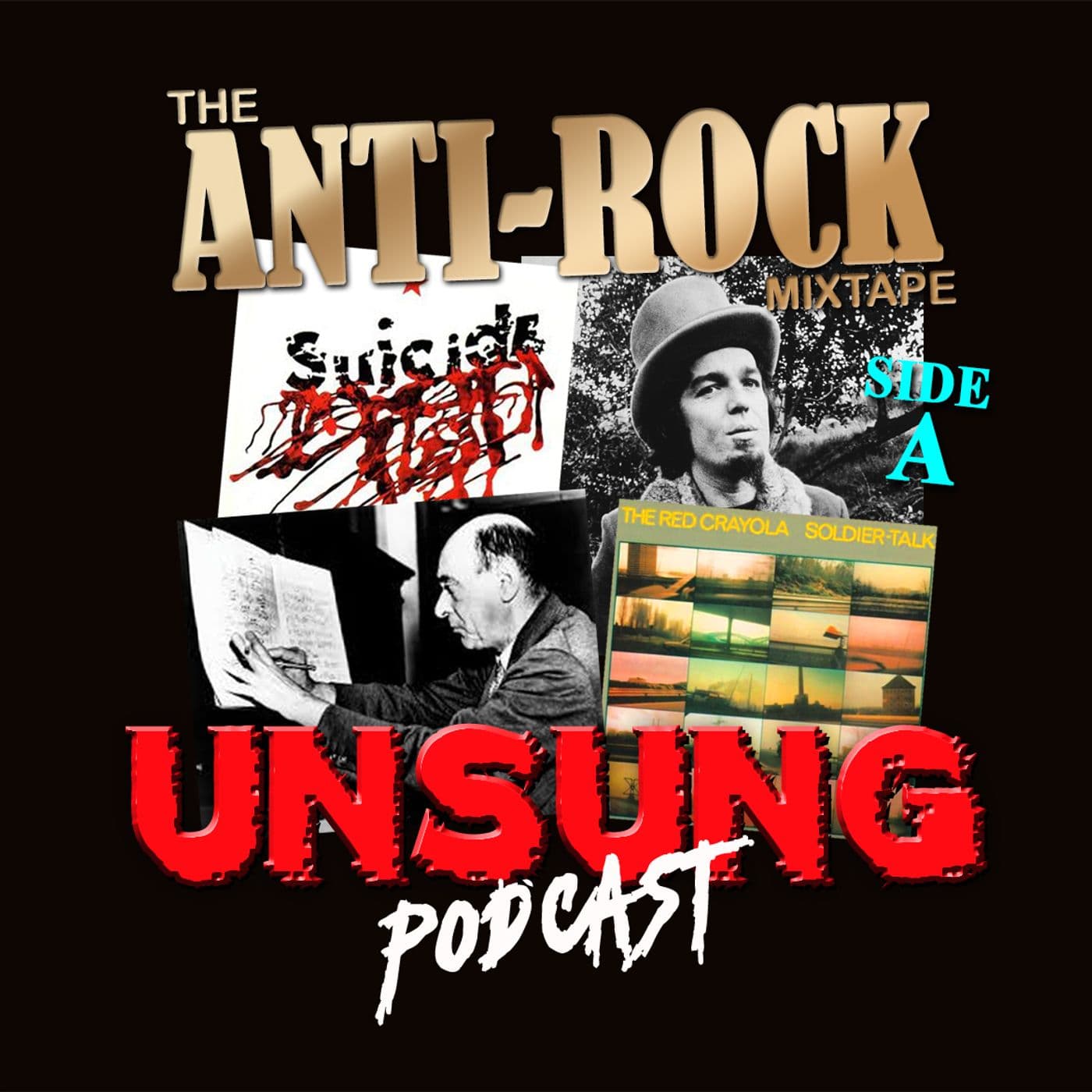
This week we're tackling the wonderfully niche concept of anti-rock. Or more specifically, we're trying to work out what the hell it actually is, why Google doesn't seem to know either, and how it connects to everything from Frank Zappa taking the piss out of The Beatles to bands who are so talented they deliberately make themselves sound rubbish. Chris has dragged poor Mark and our resident punk professor Ferro down a rabbit hole that starts with French composers banging bits of concrete in the 1940s and somehow ends up at US Maple, a band that sounds like they're actively trying to annoy you. Along the way we encounter Captain Beefheart's deliberately mental Trout Mask Replica, The Residents being mysterious weirdos in eyeball masks, and Suicide essentially inventing electronic music with what amounts to a homemade fuzz box. We get properly stuck into the prehistory of experimental music, from Pierre Schaeffer's musique concrète through to the New York art scene of the 1970s. Our main thesis is that anti-rock isn't just noise for the sake of it - it's what happens when genuinely skilled musicians decide to systematically tear apart rock conventions from the inside. Think of it as punk's more cerebral, art school cousin who's read too much Derrida. This is part one of three. Next week we'll tackle the No Wave explosion in late 70s New York, and part three will finally explain why US Maple exist and why anyone would voluntarily listen to them. We also touch on Glenn Branca's guitar symphonies, Pere Ubu's Cleveland weirdness, and try to work out why some of the most influential experimental music came from artists who could absolutely play it straight if they wanted to. Spoiler: they definitely didn't want to. Timestamps: Episode Highlights: 00:00 Introduction and Initial Banter 00:51 Meet the Guest: Ferro (Not Pharaoh) 01:47 Ferro's Musical Journey and PhD in Punk 04:16 What the Hell Is Anti-Rock? 09:37 French Blokes Banging Concrete: The Birth of Musique Concrète 22:01 When Classical Composers Lost Their Minds 27:48 Moondog: The Homeless Viking of Sixth Avenue 28:25 How American Music Got Properly Weird 29:15 Snake Time Rhythms and Native American Influences 30:04 From Experimental Composers to Rock Subversion 30:36 Captain Beefheart's Deliberately Mental Masterpiece 35:05 Red Crayola: Texan Psychedelic Deconstructionists 40:42 The Residents: Eyeball Masks and Musical Terrorism 47:09 Suicide: Two Blokes and a Homemade Fuzz Box 52:06 Pere Ubu: Cleveland's Contribution to Musical Chaos 55:38 Setting Up the No Wave Explosion
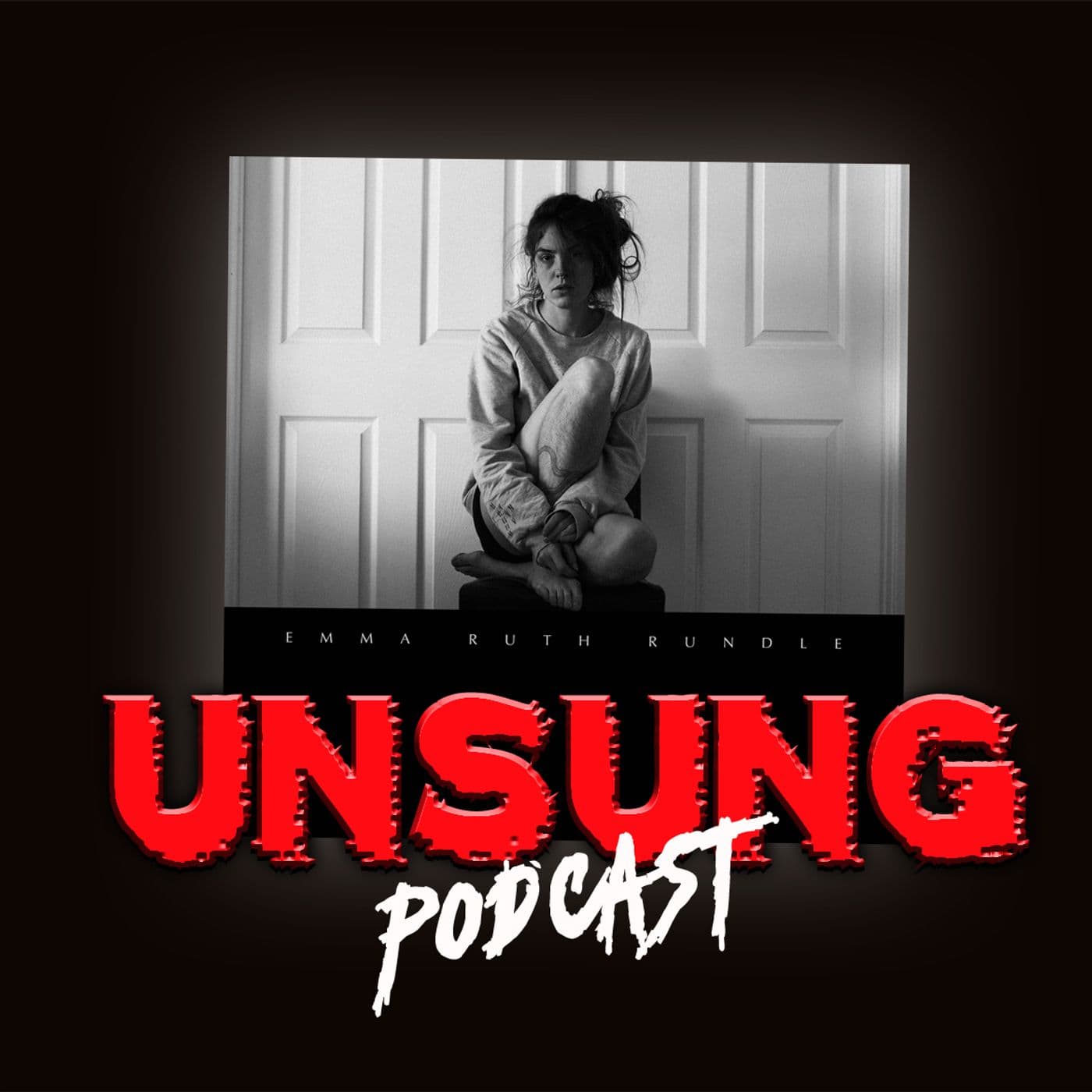
This week we're diving into the wonderfully gloomy world of Emma Ruth Rundle. Or more specifically, we're having a bit of a discussion whether she's actually goth or not, what goth even means, and how it may be broader than some think. Musically, Chris thinks most of her catalogue is a bit pants but she has artistic integreity. Mark reckons she's brilliant. Emma Ruth Rundle has spent her career shape-shifting between projects like some sort of musical chameleon with commitment issues. From her early folk-gaze days with The Nocturnes to her brief stint with post-rock titans Red Sparrows. From the overlooked Marriages project to her increasingly experimental solo work. She's never been one to stay in her lane. The question is: does all this reinvention actually work, or is it just restless artist syndrome? We get deep into the weeds of her entire discography. Our main focus is 2016's "Marked for Death", which Mark insists is her masterpiece and Chris... well, Chris has opinions. We also tackle the thorny question of what actually constitutes "goth" in 2025. Spoiler: it's probably not what you think. Plus we discuss her genuinely unnerving experimental albums. And try to work out why Sargent House thought it was a good idea to send a recovering alcoholic to record alone in the desert. With unlimited booze. Episode Highlights: 00:00 Introduction and Studio Setup at Variety Bar 05:21 The Great Goth Debate Begins 18:45 Emma Ruth Rundle's Project History 32:48 Electric Guitar One: Ambient Experiments 39:00 Some Heavy Ocean: The Proper Debut 44:14 On Dark Horses: Chris's Least Favourite 52:26 The Thou Collaboration: Overrated or Underrated? 59:48 Engine of Hell: Stripped Back and Boring? 1:04:06 Electric Guitar Two: Pure Horror Movie Soundtrack 1:13:28 Marked for Death: The Desert Sessions 1:26:00 Final Verdicts and Wrap-Up
This week we're talking about the Leeds band Vessels. Or more specifically we're talking about their quite abrupt change from identikit post rock band to something a lot more electronic and a lot more enticing. By their own admission, Vessels had something of a problem: the band had to evolve or die. They were trapped making the same post rock songs as everyone else, using the same delay pedals, creating the same "emotional" buildups that made grown men in plaid shirts cry. So they did something radical: they put down their guitars and picked up synthesisers. The result was Dilate, an album that lost them some fans but gained them something more valuable - an actual identity. In this episode, we not only get into the weeds of their discography (as we always do), but we also talk about post rock generally, as well as the band's history, their decision to turn to live electronic, how much of a nightmare that actually can be to pull off live, the influence that Berlin clubs had on their new direction, and so much more. Episode highlights: 00:00 Introduction and Podcast Setup
Joe from Shit You May Not Have Seen Podcast/the bands Go Down Fighting and Man Must Die, jois us this week. And his pick is somewhat controversial: Immortal Technique's second album second album Revolutionary Vol. 2. In true unsung style, it ends up leading to a massive debate about separating art and artist, all whilst looking closely at his politics and dissemination of conspiracy theories. Felipe Coronel fled Peru's civil war as a child, became a battle rap champion, and built a career on politically charged underground hip-hop - but how much of his "truth-telling" is actually that? We get into the weeds with that and much more. [00:02:00] - Fash comments on recent anti-fascist videos [00:04:00] - Joe's hip-hop origin story since 1992 [00:13:00] - Chris's deep-dive into Technique's Peru background [00:30:00] - InfoWars appearance discussion begins [00:33:00] - Sandy Hook moment that disgusts Chris [00:38:00] - COVID conspiracy theories breakdown [00:44:00] - Andrew Tate connection revealed [00:53:00] - Revolutionary Volume Two track-by-track [01:00:00] - Jean Gray vocabulary study tangent [01:18:00] - "Point of No Return" analysis [01:22:00] - "Dance With the Devil" storytelling masterclass [01:33:00] - "You Never Know" - the other narrative banger [01:40:00] - Mark's final verdict on the confrontational tone [01:47:00] - Bonus Peru World Cup conspiracy (Chris's Nexus moment) [01:51:00] - Next week: Casey Chaos compilation with Dave Weaver
On this episode we dive deep into the musical history of one of Italy's most fascinating and forward-thinking bands - Krisma (or Chrisma as they were originally known). This husband and wife duo from Milan created music that was light years ahead of its time, with their 1977 album "Chinese Restaurant" laying the groundwork for sounds that wouldn't become mainstream until decades later. We explore how this band went from Italian pop stardom to experimental post-punk pioneers, working with the likes of Hans Zimmer and Vangelis along the way. We chat about their various musical reinventions, that time Maurizio allegedly cut his finger off on stage (or did he?), and how their track "Miami" sounds remarkably like Radiohead's Kid A... except it was released 23 years earlier! From performing with The Beatles to mingling in Andy Warhol's circle, Krisma's story is as fascinating as their music is innovative. So grab a cuppa, settle in, and let us introduce you to your new favourite obscure band. If you enjoy this episode, please consider supporting us on Patreon: https://patreon.com/unsungpod 00:00 Introduction to the Unsung Podcast 00:37 Meet the Hosts and Album Introduction 04:55 Band Background: Chrisma's Origins 12:45 Album Analysis: Chinese Restaurant 13:02 Listener's Insight: Fario Tte's Perspective 15:18 Maurizio's Punk Rock Commitment 17:51 Album Analysis: Hibernation 23:02 Album Analysis: Cathode Mamma 29:20 Technological Innovations and Clandestine Anticipation 36:06 Discovering a Hidden Gem 37:44 The Band's Move to New York 38:26 Exploring the Back Catalog 45:44 The Controversial 2008 Tour 49:52 Why Chinese Restaurant is an Unsung Classic 01:01:02 Final Thoughts and Conclusion
In part two of our interview Arno Michaelis, we navigate the bizarre intersection of music, ideology, and redemption. If you've ever wondered how extremist movements actually work, this offers some great insight. Arno gives us the inside scoop on how a skinhead band like Centurion shifted 20,000 records whilst still getting royally ripped off by their label boss. We delve into the psychological mechanics too. Taking in everything from Norse fantasy to Tolkien, as well as the very large psychological leaps bands like Skrewdriver had to take to justify playing rock n roll music and Jewish cabaret tunes. Arno also talks about how the music of the Beastie Boys was something of a saving grace as he exited the movement, and he tells us about how a MySpace message in the early 00s regarding his former band, Centurion, led him to reckon with the legacy of poison he created. Whilst also giving him the impetus to try to be a force for good in the world. Grab a cuppa and dive in. Highlights: 00:00 Introduction and Conspiracy Culture 00:14 Steve's Transformation and Ideological Shift 00:53 The Neo-Nazi Rally Experience 02:58 Influence of the Church of the Creator 04:50 Disillusionment and Internal Conflicts 10:33 The Music Scene and White Power Bands 19:57 Tattoos and Symbolism in the Movement 26:47 Fantasy, Mythology, and White Nationalism 30:35 Symbolism and Corruption 30:50 The Mystique of Subcultures 31:46 Esoteric Symbols and Internet Mechanics 32:49 Trends in Holocaust Denial 34:12 Healthy Introspection vs. Obfuscation 35:53 Indicators of Radicalisation 41:35 The Role of Martial Arts in Youth Development 50:52 The Impact of Good Coaches and Mentors 53:00 Current Trends in Radicalisation 58:13 Arno's Musical Journey and Final Thoughts
This week and next we're joined by a very special guest - Arno Michaelis, author, anti-extremism activist, reformed white nationalist and former singer of the neo-Nazi metal band Centurion. You may have seen Arno recently on YouTube where he did a rather brilliant interview with Business Insider. As long time fans of the pod know, Chris' interest in the far-right is something we've touched upon a lot over the last 7 and a half years. So, when the opportunity presented itself to chat with Arno about not just his past, but how music is used a tool for radicalisation, we couldn't pass it up. In true Unsung fashion, our conversation is deep an extensive, taking not just Arno's past and neo-Nazi music, but a broader discussion about the far-right's position in modern mainstream discourse. In part one, we chat about Arno's early interest in punk rock and hip hop, through his transformation from street punk to neo-Nazi skinhead, where he provides a raw, unfiltered account of his journey. Learn about his transformation into an author and advocate for peace, his reflections on the influence of bands like Skrewdriver and Guns N' Roses, and the dangerous allure of conspiracy theories. Along the way, laugh, cringe, and maybe feel a bit enlightened about the intersections of music, hate, and redemption. 00:00 Introduction and Setting the Scene 00:27 Introducing the Special Guest: Arno Michaelis 01:41 Arno's Background and Books 02:35 Parents for Peace: Mission and Work 04:09 Arno's Neo-Nazi Past and Music Career 06:17 The Role of Music in Radicalization 09:37 Arno's Early Life and Punk Influence 15:12 Transition to White Power Skinhead Movement 19:37 Punk Scene Dynamics and Ideological Conflicts 38:07 The Influence of Skrewdriver and Radicalisation 39:56 The Influence of Skrewdriver 41:32 Musical Roots and Personal Reflections 42:46 The Impact of Skrewdriver's Music 43:37 Skrewdriver's Legacy and Controversies 47:16 Personal Connections and Reflections 52:49 The Role of Music in Radicalisation 01:01:46 Antisemitism and Conspiracy Theories 01:13:14 The Enduring Appeal of Conspiracy Theories
We've been a bit of a post-hardcore kick this year, so we thought we'd swing to the commercial end of the spectrum and talk about Alexisonfire. Specifically, Mark has chosen their 2022 comeback album 'Otherness' and we have a bit of a barney about it, as Chris and Mark's opinions on the band couldn't be more different. We spend time exploring how this Canadian quintet revolutionised post-hardcore with their three-vocalist approach, and track their evolution from their raw 2002 debut to their thirteen-year recording gap. Mark argues that their latest album is actually their best, while Chris starts off "begging to be hit by a bus" before gradually warming to their more mature sound. Poor old George Pettit (vocals) ranks the band's debut dead last himself, which Chris heartily agrees with. We chat about the Southern Ontario scene that birthed them, the pornstar who (unsuccessfully) tried to sue them over their name, and how their sound evolved over their career. This episode also features a fairly comprehensive look at the band members' various side projects, from Dallas Green's City and Colour (and his random collab with Pink) to Wade McNeil joining Gallows after Frank Carter's departure. Next week we're doing something a bit special - we'll be interviewing Arno Michaelis, former singer of neo-Nazi band Centurion, about music's role in radicalisation. We've been doing loads of prep for this one, and we'll hopefully bring you something thought-provoking. We're also moving to a new underground studio soon (literally underground), so stay tuned for that! Episode Highlights: [02:10] - Teaser for next week's interview with ex-neo-Nazi band Centurion's singer Arno Michaelis [10:00] - Chris confesses he thought Alexisonfire were Scandinavian in some bizarre Mandela effect [11:50] - The story of how Alexisonfire took their name from pornstar Alexis Fire, who then tried to sue them [14:50] - Mark explains how the geography of Southern Ontario created the perfect breeding ground for bands [29:10] - The three-vocalist dynamic that set Alexisonfire apart: Dallas's angelic voice, George's screams, and Wade's "gargling nails" vocals [36:00] - George Pettit ranks the band's self-titled debut dead last in their discography [41:00] - The pivotal role of their 2006 album "Crisis" going Platinum in Canada [50:27] - "I wanted to put the knife in Screamo" - George's controversial statement about moving their sound forward [1:09:00] - The shift to 70s rock influences and the addition of keyboards on "Otherness" [1:30:00] - Chris admits he "started off begging to be hit by a bus" before gradually warming to their later work [1:33:45] - The announcement of our upcoming move to a new underground studio
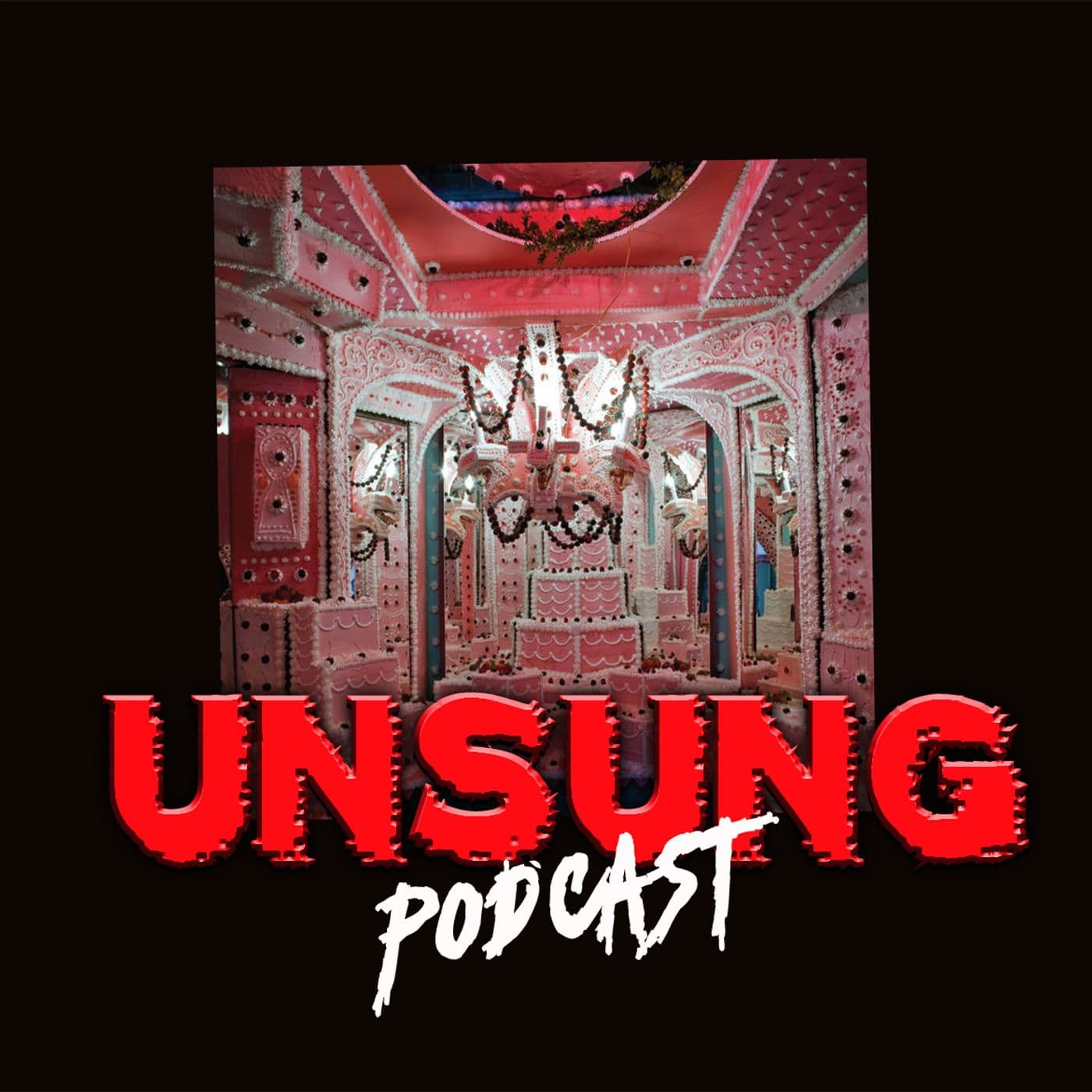
This week, we’re talking about Julie Christmas – a woman whose voice could peel paint off the walls one moment and tuck you into bed the next. Known for her work with Made Out of Babies, Battle of Mice, and her collaboration with Cult of Luna on Mariner, Julie’s debut solo album The Bad Wife is our focus here — an underrated little firebomb from 2010 that mixes noise, beauty, and some very sharp edges. We also trace her entire career: from the blood-curdling chaos of Made Out of Babies, to the theatrical collapse of Battle of Mice (complete with a 911 call and possibly a stair-related injury), and finally to Ridiculous and Full of Blood, her triumphant 2024 return. It’s one of those rare episodes where nobody dies, nobody gets sued, and there are no Nazis. Which, if you’re a long-time listener, you’ll know is fairly refreshing. Highlights 00:00 – Cold open and Toast of London chat 05:14 – Who is Julie Christmas? 10:25 – Vocal Style Breakdown: fragile-to-feral 14:45 – Women screaming in heavy bands 21:00 – Made Out of Babies discography walk-through 36:00 – Battle of Mice and a post-metal relationship collapse 41:56 – Mariner – the Cult of Luna collab that actually works 44:45 – Ridiculous and Full of Blood (2024) 51:30 – Spylcopa, Mouth of the Architect & other collaborations 54:55 – The Bad Wife (2010)
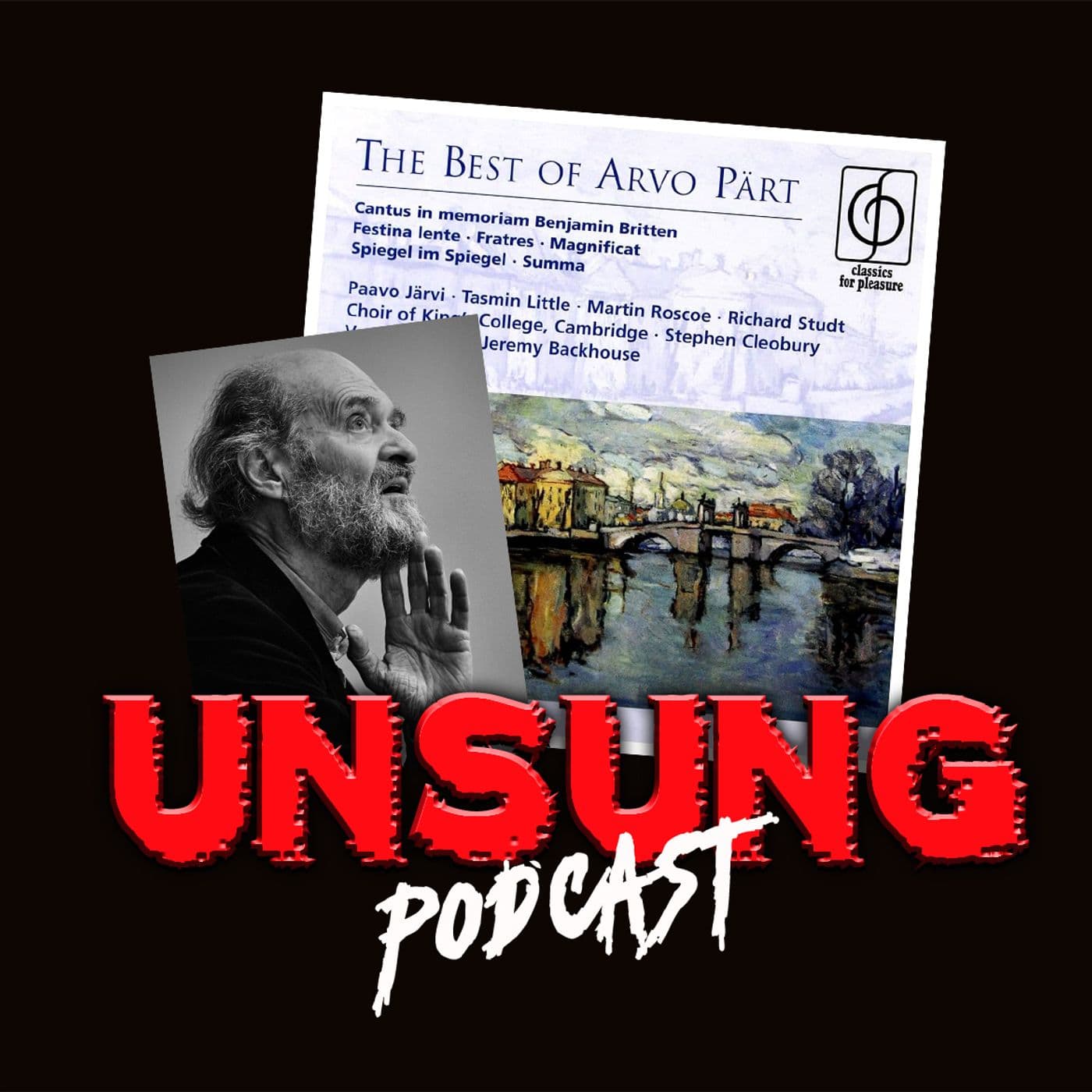
This week, we’re going in the exact opposite direction as last week talking about one of the most quietly revolutionary figures in modern music: Arvo Pärt. That's right, we're pivoting HARD from death metal to neoclassical music. Strap in! We go deep on his early works, his religious conversion, and his shift into the sparse, meditative style known as tintinnabuli. Along the way we discuss how his music achieves emotional intensity through restraint, why he basically disappeared for several years, and how his minimalist compositions have become unlikely mainstays in film and television. Expect talk about Soviet censorship, spiritual longing, and just how hard it is to make music that seems this simple. If you’ve ever cried to Spiegel im Spiegel, you’ll understand. Highlights: 00:00 Introduction and Greetings 01:13 Discussing Radio Show Introductions 02:39 Highbrow Conversations and Wine 03:19 Introducing Arvo Pärt 03:30 Arvo Pärt's Pronunciation and Popularity 05:44 Arvo Pärt's Musical Journey 15:02 Arvo Pärt's Life and Struggles 34:12 Arvo Pärt's Film Scoring and Return to Music 35:30 Tintinnabuli Technique and Influence 44:56 Exploring the Melancholy Beauty of Arvo Pärt's Music 46:04 The Story Behind 'Für Alina' 46:55 The Technique of Tintinnabuli 51:38 Arvo Pärt's Religious Influence 01:03:37 Pärt's Impact on Modern Cinema 01:24:48 Pärt's Music in Palliative Care 01:29:35 Conclusion and Final Thoughts
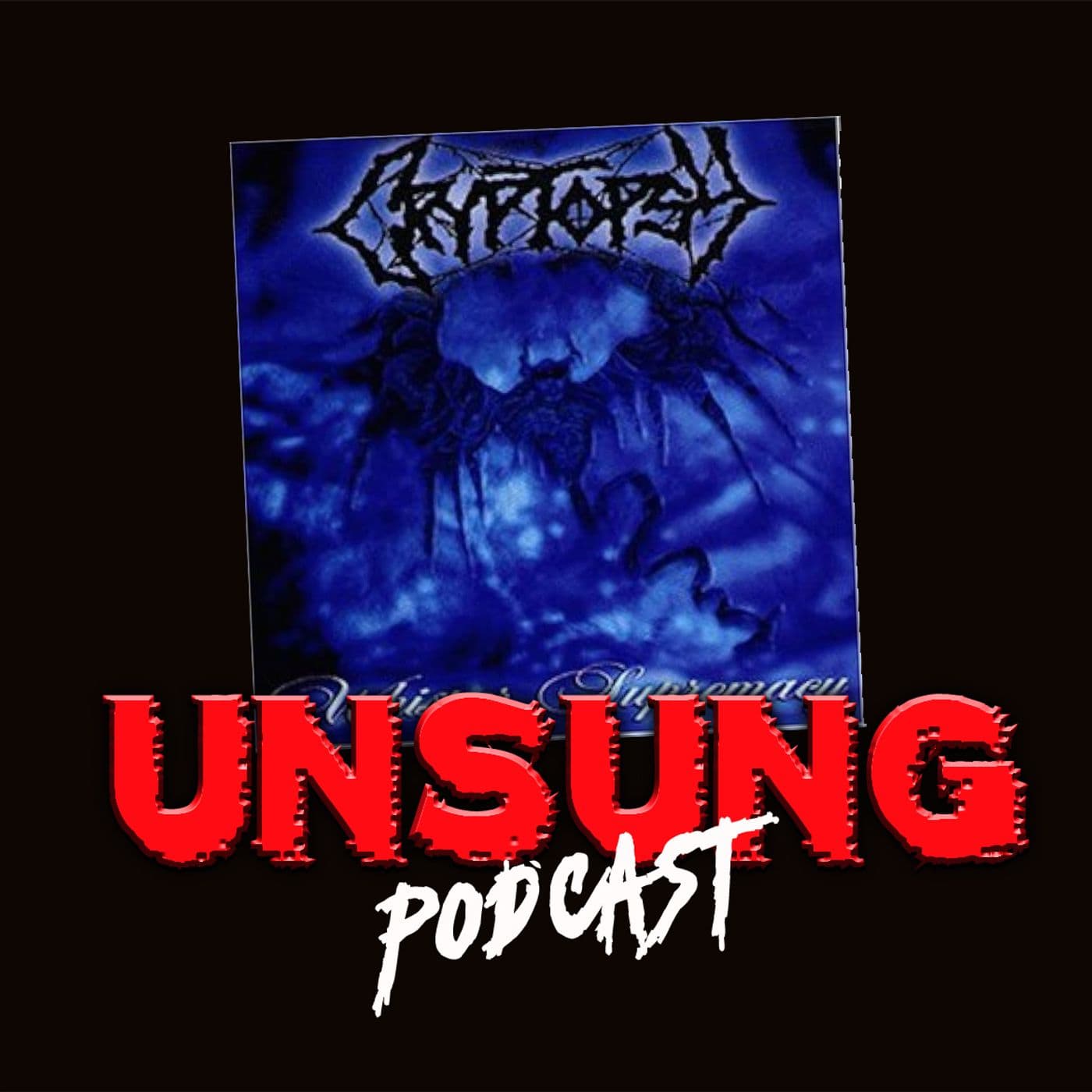
Once upon a time Man Must Die released two albums on Relapse Records and toured an absolute shit load. I actually remember when they toured with Machine Head, which is a fairly impressive thing for any metal band to achieve. Man Must Die were a death metal band, and in some quarters they were even called a technical death metal band. A term that vocalist, and our good pal, Joe disputes. And with good reason - technical death metal isn't really his bag. However, he does love Cryptopsy, and he has an extensive knowledge of death metal. And metal in general, really. So this week we thought it'd be a good idea to ask him to come along to talk about Cryptopsy, get his take on the various sub genres of death metal and to generally shoot the shit about a truly technical death metal band. Episode highlights: 00:00 Introduction and Greetings 00:11 The Joe Dilemma 01:05 Cultural Semantics and Humor 01:55 Podcast Dynamics and Editing 02:19 Introduction to Cryptopsy 04:14 Death Metal Deep Dive 11:09 Technical Death Metal Explained 29:07 Festival Chaos and Engineering Challenges 29:39 Dillinger Escape Plan Live Experiences 30:19 Technical Death Metal vs. Chaotic Metal 31:41 Progressive and Melodic Death Metal 34:07 Deathcore and Its Evolution 38:58 Cryptopsy's Journey and Lord Worm's Departure 49:39 Cryptopsy's Discography and Musical Style 01:01:06 The Science of Poetry 01:01:15 Depression and Lyrics 01:01:48 Cryptopsy's Musical Evolution 01:03:16 The Unspoken King Controversy 01:07:37 Return to Form: Self-Titled Album 01:13:42 Whisper Supremacy: A Detailed Analysis 01:22:34 Summarizing Cryptopsy's Impact 01:28:17 Upcoming Projects and Final Thoughts
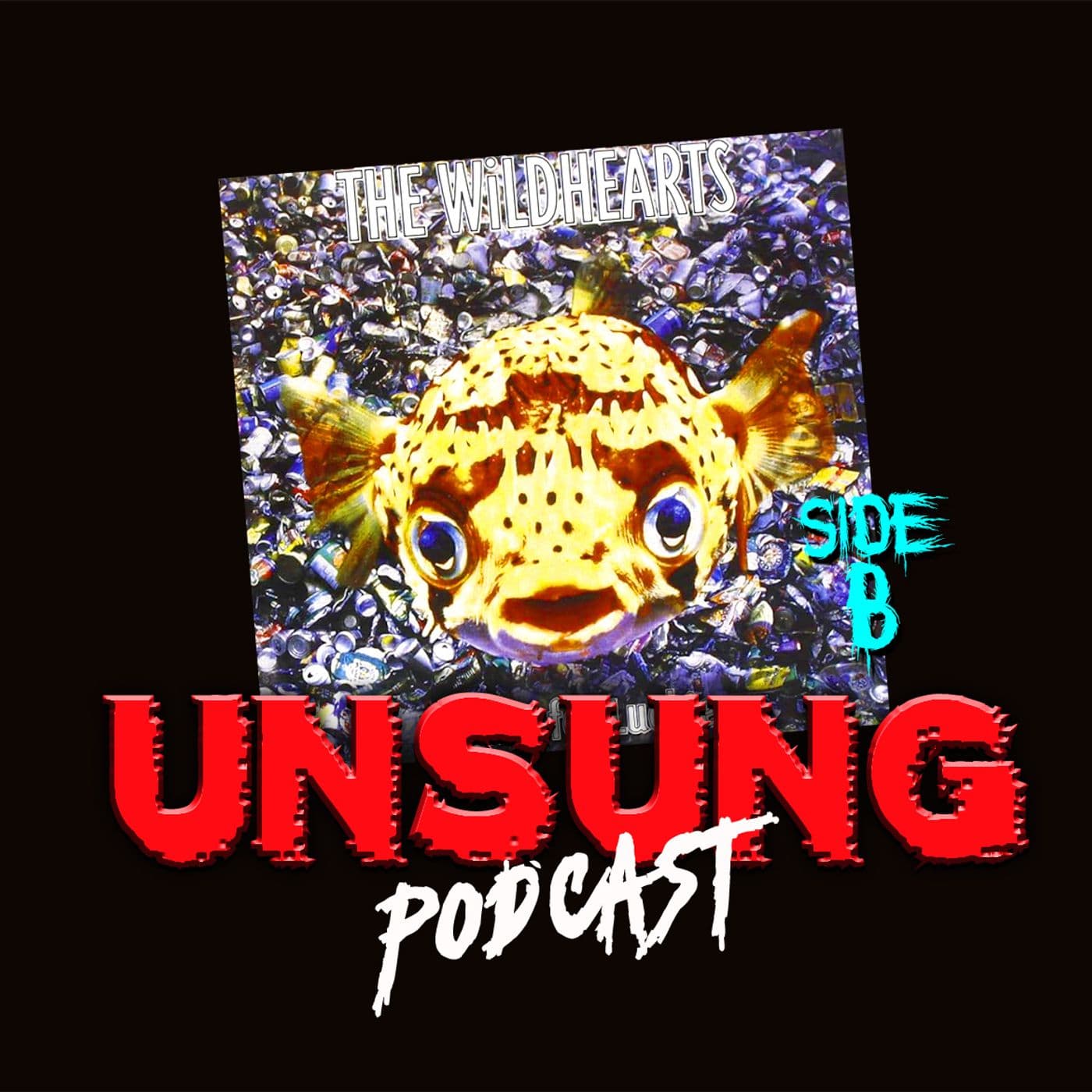
We’re back with the final part of our exploration of The Wildhearts, one of rock’s most truly unpredictable and chaotic bands. If you thought last week’s episode covered all their madness, think again cause we've a TON more stories in this one. Including a pretty grizzly tattoo story, so consider this a trigger warning for self-harm content. This time, we’re focusing on the mid-to-late years of their career, a period filled with controversial albums, internal meltdowns, and some truly bizarre stories. From an album that even the band hated to a festival riot they actively encouraged, The Wildhearts somehow never did things the easy way. We explore: The controversy around Fishing for Luckies and why it was re-released multiple times The implosion of the band in the late ‘90s and their never-ending lineup changes How Ginger Wildheart rebuilt the band from the ground up more than once The band's strangest stories, including hallucinated UFOs, body horror, and a food fight at Download Festival Why The Wildhearts never quite made it to the mainstream, despite being one of the most influential cult bands in rock We also attempt to answer some crucial questions: Did Endless Nameless ruin their mainstream chances, or was it just ahead of its time? Is Fishing for Luckies one of their best albums, or an overstuffed mess? Were The Wildhearts a punk band, a metal band, or something completely different? 00:00 – Intro & Banter: More Groundhog Day jokes than necessary. 01:07 – The Fishing for Luckies Controversy: A cash grab or a cult classic? 04:25 – Endless Nameless & Their Most Divisive Album: Was this a genius move or career sabotage? 09:10 – The Wildhearts’ Internal Chaos: Drugs, drama, and why they couldn’t hold a lineup together. 16:02 – Ginger’s Grossest Story Ever: The marshmallow arm incident (not for the squeamish). 19:24 – UFO Sightings & Conspiracy Theories: A night of hallucinations, tequila, and unexplained lights. 20:55 – The Download Festival Riot: Why The Wildhearts encouraged 80,000 people to throw things at them. 26:00 – Why Their Songs Are Too Long: Do they have too many ideas for their own good? 33:40 – Their Legacy & Influence: Why they never broke through but remain a beloved cult band. 49:00 – Final Thoughts & Outro: What we learned from this absolute rollercoaster of a band.
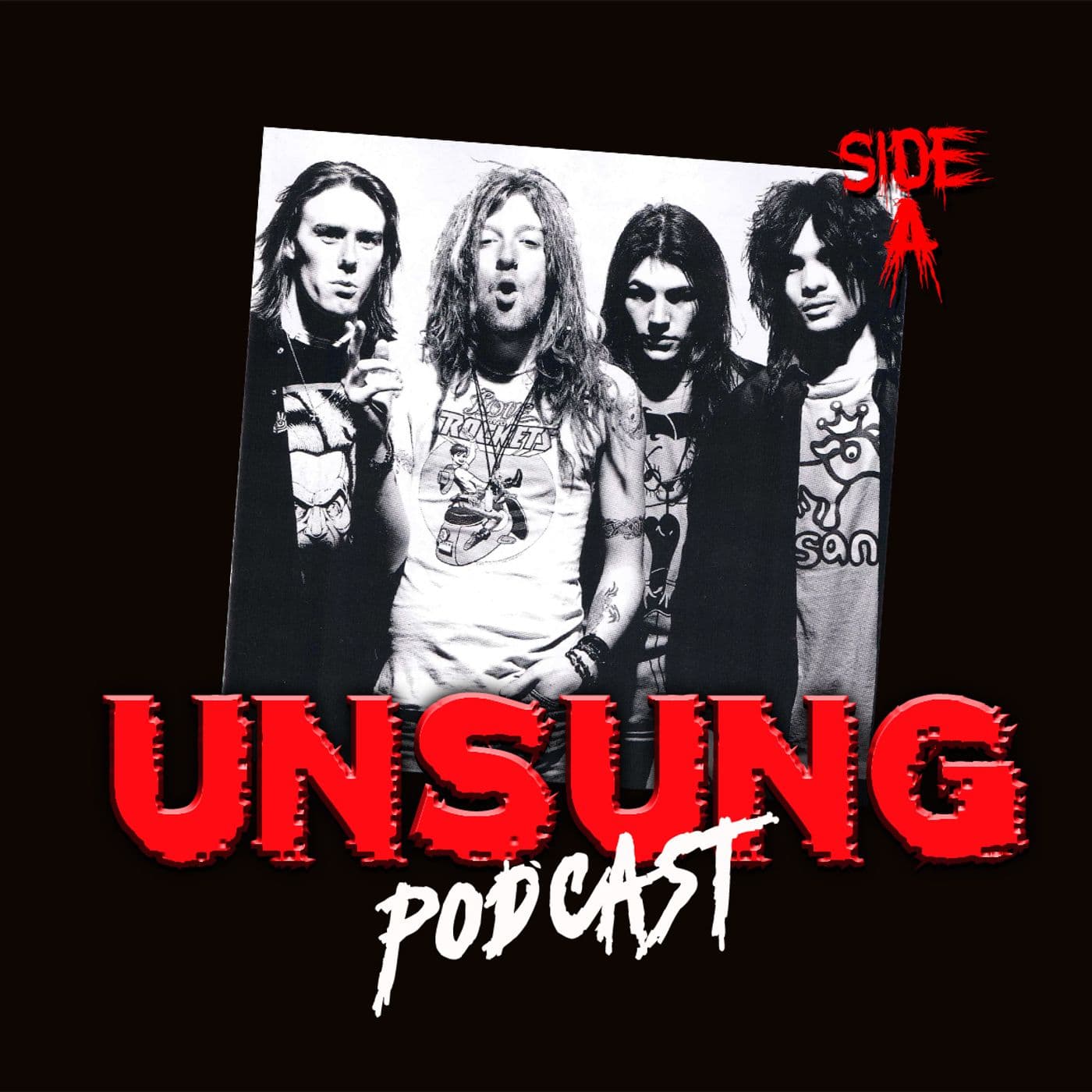
The Wildhearts could very well be one of the most chaotic, unpredictable, and underrated British rock bands ever. Ideal for unsung in a lot of ways, really. So this week and next, we'll we’re diving deep into their sound, history, and legacy. Claims that they sound like The Beatles merged with Metallica The endless lineup changes, hiatuses and threats of legal action How Ginger Wildheart outsmarted the music industry before crowdfunding was even a thing Why touring is harder than ever for bands like The Wildhearts How they built a cult following despite never truly “making it” 00:00 – Intro & Banter: Why we keep coming back to this band. 13:00 – The Wildhearts' Unique Sound: The Beatles meets Metallica (or something even weirder). 18:15 – Internal Chaos & Lineup Changes: A band that couldn’t stay together. 28:05 – How Ginger Wildheart Outsmarted the Music Industry: Crowdfunding and business moves. 39:50 – Why Touring Is Harder Than Ever: The death of mid-tier bands. 45:00 – The Wildhearts’ Cult Status & Legacy: Why they never “made it” but still matter. 51:00 – Final Thoughts & Outro: Would they even work in today’s industry?
We love it when we get a chance to talk about very influential bands who are extremely overlooked. It is, after all, the whole reason this podcast exists. And there are few as influential, and overlooked, as Ink & Dagger. Their albums aren't even on Bandcamp, let alone streaming sites. That probably tells you everything you need to know. Frankly, without Ink & Dagger, bands like Thursday, My Chemical Romance and a whole legion of post-hardcore/emo bands from the early 00s simply wouldn't exist. They gained a brief spike in popularity in the 2010s when they reformed with Geoff Rickly from Thursday on vocals, which ensured that their vital legacy got its day in the sun. Ink & Dagger were only active from 1995 to 2000, but were incredibly prolific in that short space of time, producing 4 EPs, 2 splits and 2 albums. Their sound evolved very quickly, and amongst all of that was relentless touring, a revolving door of band members (singer Sean McCabe and guitarist Don Devore remained the only consistent members) and at least a book or two's worth of insane on-the-road hijinks. The band agreed to disband in the year 2000 after their second album. But before they could even release that record, singer Sean McCabe passed away aged 27. A tragic exclamation point at the end of the band's short, crazy existence. If you like post-hardcore in any form but have never heard this band, well... prepare to be educated as, this week, we throw our focus on their debut album "The Fine Art of Original Sin".

Well, here we are again, back in the trenches of musical altruism, digging through the chaos and cocaine fumes of We Are the World. In our final part of this double header, we examine the actual recording process—a night filled with megastars, massive egos, and the creeping existential dread of Bob Dylan. We cover: Lionel Richie’s unexpected side hustle as a musical firefighter, putting out diva-induced blazes. Quincy Jones' increasing exasperation as some of the greatest voices in music fail to hit their notes. Michael Jackson going off the deep end with Sheyla-Sheyla (which is absolutely, 100% real). Stevie Wonder offering to guide Ray Charles to the loo, leading to perhaps the only acceptable "blind leading the blind" joke in history. Prince skipping the whole thing to eat Mexican food down the road. Cindy Lauper causing technical difficulties by jingling like a Christmas tree made entirely of cheap jewellery. Diana Ross possibly being the most accidentally terrifying sweetheart of all time. Also: did this song actually make a difference? Or was it just the moment that finally convinced Michael Jackson he was the second coming? We get into all of that, while trying to decide whether the song is a masterpiece or just a very elaborate Pepsi advert. 00:00 Podcast Introduction and Banter 01:12 Podcast Admin and Patreon Promotion 04:42 Recording 'We Are the World': Setting the Scene 04:47 Quincy Jones and the Ensemble Choruses 07:03 Challenges and Tensions in the Studio 13:49 Prince's Absence and Sheila E's Disappointment 17:23 Final Takes and Notable Moments 25:14 Reflections and Aftermath 30:27 Michael Jackson's Missionary Phase 31:37 The Concept of an Artist's Imperial Moment 32:45 The Role of MTV and Charity Singles 34:09 Critiques and Controversies of Charity Campaigns 35:20 Bandaid vs. USA for Africa: Distribution and Impact 37:56 Political Complexities of Ethiopian Famine 44:08 Mismanagement and Consequences of Aid 47:02 USA for Africa's Long-Term Development Approach 49:53 Cultural Impact and Legacy of Charity Singles 52:39 Conclusion: Achievements and Lessons Learned
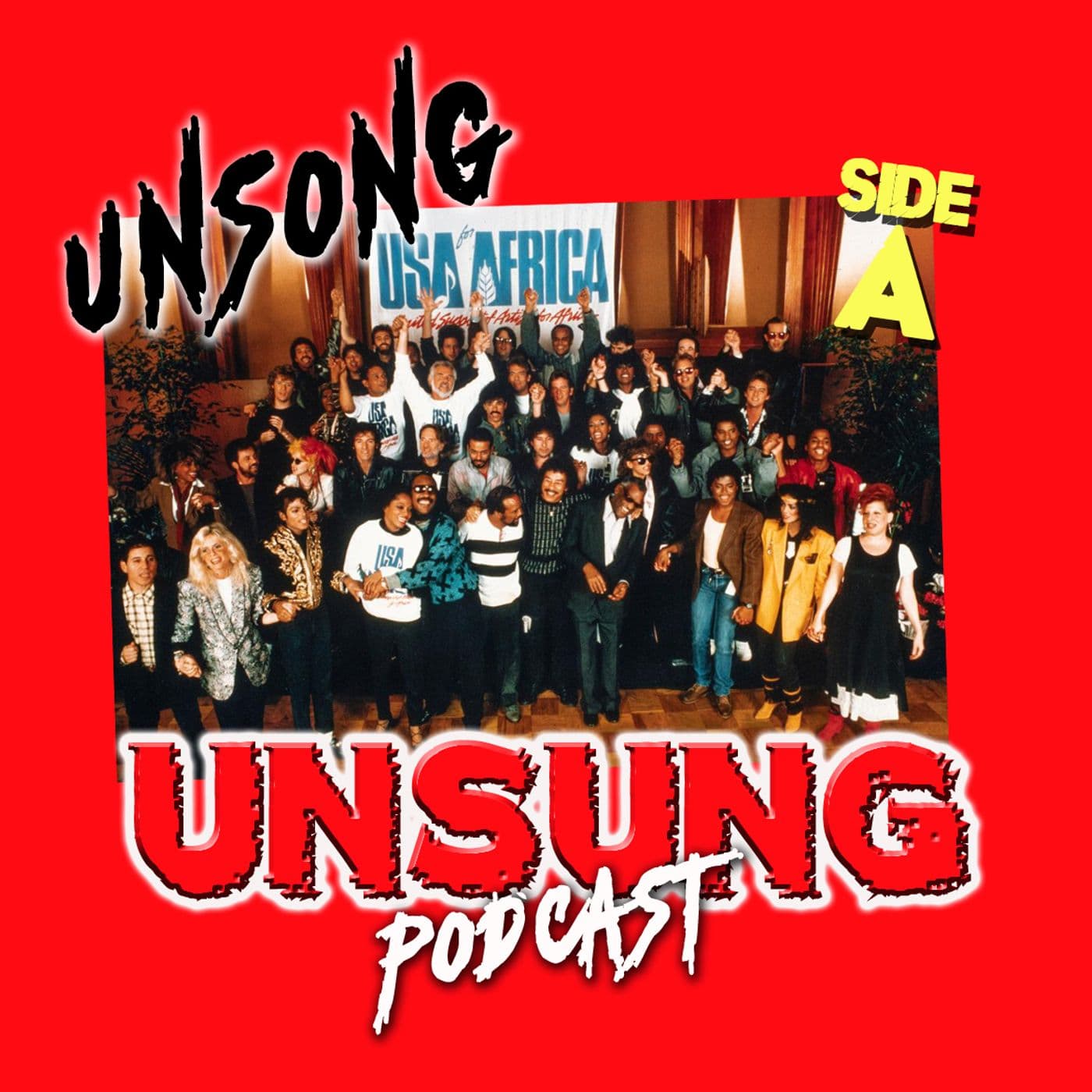
It’s 2025, and somehow, We Are The World is about to turn 40 years old. Time is a cruel joke. This week and next we'll be taking a deep dive into one of the biggest charity singles ever recorded. You know the one—Michael Jackson, Lionel Richie, Bruce Springsteen, Bob Dylan looking completely lost, and a very questionable Cyndi Lauper fashion choice. How this song was written in 10 days and recorded in one night (because the American Music Awards made it convenient). The absolute chaos of the recording session, including Lionel Richie trying to stay awake, Prince ghosting everyone, and Stevie Wonder insisting on singing in Swahili. Michael Jackson’s home studio, which included a chimpanzee, a Mynah bird that mimicked his voice, and a giant snake that terrified Lionel Richie. Why some artists hated the song, including Cyndi Lauper comparing it to a Pepsi commercial and Billy Joel thinking nobody actually liked it. What happened to the money, how We Are The World avoided Band Aid’s mistakes, and why Live Aid overshadowed it in the end. We also attempt to answer some crucial questions: Would a song like this even work today? Why does Quincy Jones always have the best stories? Has Bob Dylan ever looked more uncomfortable? Timestamps & Highlights 00:00 – Intro & Banter: Vikings, language learning, and Michael Christen (who?). 02:00 – Patreon Plug: Give us money, or at least send the pod to a mortal enemy. 06:47 – How "We Are The World" Came Together: The American Music Awards gave them a deadline, and chaos followed. 16:54 – Artists Who Hated It (or Rejected It): Prince, Madonna, and Billy Joel’s existential crisis. 27:20 – Michael Jackson’s Bizarre Recording Habits: A chimp, a bird, and a snake walk into a studio… 36:00 – The Chaotic Recording Session: Bob Dylan, Huey Lewis, and why Quincy Jones had to babysit 40 superstars. 47:00 – Stevie Wonder’s Swahili Suggestion: This actually happened. 54:00 – What Happened to the Money?: How We Are The World handled charity better than Band Aid. 1:06:30 – Live Aid & The Aftermath: How this song shaped charity singles forever. 1:18:00 – Final Thoughts & Outro: The legacy of We Are The World, and who we’d put on a modern version. Join the Conversation! Which solo line would you claim if you were forced to sing on We Are The World? Should Bob Dylan have just walked out? Would a charity single like this even work in 2024? Tell us what you think, share the episode, and tag us if you’re spreading the good word. Support the Show! Want bonus episodes, early access, and a hand in what we cover next? Patreon is your friend. 👉 www.patreon.com/unsungpod Follow & Subscribe Threads: www.threads.net/unsungpod Instagram: www.instagram.com/unsungpod TikTok: https://www.tiktok.com/@unsungpod
In this episode we are joined by special guest Grant Donaldson from Moni Jitchell and Civil Eleigies, as he dives into some of his early musical influences. From Meatloaf's 'Bat Out of Hell 2' to ACDC's 'Back in Black' and Refused's 'The Shape of Punk to Come,' he discusses the impact these albums had on his life and musical development. Along the way, anecdotes, gig memories, and the pitfalls of mixing punk ideology with mainstream success provide some entertaining listening. 00:00 Introduction and Guest Welcome 00:21 Grant's Musical Background 01:14 The Concept of Intros Episodes 04:20 Grant's Album Picks 04:43 Discussion on Meatloaf's Bat Out of Hell 2 24:26 Live Performances and Personal Anecdotes 39:02 Meatloaf's Chaotic Concert Incident 41:01 Uncredited Vocalist on 'I Would Do Anything for Love' 41:37 Grant's Chronological Music Journey 44:13 AC/DC's 'Back in Black' Album Deep Dive 58:57 Refused's 'The Shape of Punk to Come' 01:12:53 Refused's Legacy and Reunion 01:25:51 Conclusion and Farewell
Welcome to the third and final part of our Black Sabbath expedition with Rick Bruce from Moonshine Docks and formerly of Coffin Mulch! We dive deep into the tumultuous yet fascinating journey of Sabbath's later years and the cap it off by discussing the often-maligned 'Never Say Die' album. From Ozzy Osbourne's erratic behaviour and his temporary exit, to Sabbath's experimentation with new soundscapes and their revolving door of members throughout the 80s and 90, nothing is off limits. We've got a few hilarious and poignant anecdotes, tackle critical reviews, and even compare Sabbath's work to culinary experiences. Tune in for a spirited debate about one of rock's most controversial albums and find out if 'Never Say Die' deserves its spot in the rock pantheon or the bargain bin. 00:00 Introduction and Welcome 00:05 Black Sabbath Expedition Begins 01:08 Diverging Opinions on Black Sabbath's Evolution 01:41 Ozzy's Departure and Band Dynamics 03:03 Ronnie James Dio Era 10:21 Heaven and Hell Album Discussion 19:44 Mob Rules Album Insights 22:42 Born Again and Beyond 33:40 Headless Cross Era: A Stodgy Comeback 34:47 The Tony Martin Reappraisal 35:31 Tear and Headless Cross: A New Sound 38:57 Dehumanizer: The 80s Band Reunites 43:38 Cross Purposes and the Grunge Era 49:32 Forbidden: The Misstep 56:55 Never Say Die: The Final Ozzy Album 01:12:34 Nosey and the 70s Sound 01:12:50 Sabbath's Unique Riffs and Drumming 01:13:16 Influences and Inspirations 01:14:17 Critiques and Musical Textures 01:15:30 Hard Road and Vocal Performances 01:16:49 Medieval Covers and Side 2 01:19:23 Shockwave and Air Dance 01:24:08 Over to You and Breakout 01:27:04 Swingin' the Chain and Album Conclusion 01:35:14 Final Thoughts and Reflections
Well now. It turns out that 19 albums (technically 20 if you include Heaven & Hell's only album, The Devil You Know) is rather a lot. So our two parter has become a three parter. Whoops. But we tackle their discography with someone who knows the band inside out - Richard Bruce, from the band Moonshine Docks and formerly of Coffin Mulch. His encyclopedic knowledge of the band stands us in very good stead as we go about the business of talking about the band and their albums in detail. In this episode we chat about the band's history and then dive into all the Ozzy records, essentially covering all of the band's 1970s output. It's a pretty fascinating journey, and we really enjoyed getting to grips with the "classic" Sabbath material. Next week - Dio, Gillian, Hughes and Martin all come to the Sabbath party. Reaction to Aron interview = 13:05 Lyrical duties = 19:29 Ozzy solo charade and cutting folk out of credits = 20:09 the Beatles influence and pre mobile phone tours = 29:26 KIss is the American Slade = 34:27 West Midlands hard music and WC blokes plus G Harrison = 36:55 BUying the wrong Sabbath record = 40:46 Were Sabbath actually very satanic? Crowley, Witchfinder, Devil Rides out = 49:03 Naive lyrics and nursery rhymes = 57:04 Master of Reality defines stoner and doom = 58:16
It's 2025 and we're starting the year off with a bang. Regular fans will know that we always start the year off with a big artist, and there's very few metal bands bigger than Black Sabbath. This week and next we'll be chatting all about them. Episode one is an in-depth interview with Aron Ward, son of Black Sabbath's original drummer, Bill Ward. Aron discusses his eclectic musical journey, influenced heavily by his father but also carved by his own diverse tastes. He talks about his own projects, such as Olanza, Harpoon, and Repoman, and his approach to DIY music production. Aron provides personal anecdotes from his childhood, touring with Black Sabbath, and learning the harsh realities of the music industry. He also shares his thoughts on various Sabbath albums and his dad's impact on his music career. Tune in for a fascinating chat filled with music history, personal stories, and candid insights. NEXT WEEK we're bringing in ANOTHER guest to talk about the band, and focus on the record Never Say Die. 00:00 Welcome and Introduction 00:08 Meet Aron Ward 01:46 Aron's Musical Journey 03:22 Growing Up with Black Sabbath 04:35 Influence of Black Sabbath 16:13 DIY Ethos and Industry Insights 20:13 Memories and Reflections 23:56 Favorite Albums and Musical Preferences 26:33 Interviewing Ian McKay: A Shared Experience 26:54 Heaven and Hell: A New Kind of Metal 27:29 Living in Bel Air: Ozzy's Absence 29:50 The Dio Era: A Divisive Time 32:25 Technical Ecstasy: A Beatles Influence 33:56 Never Say Die: A Confusing Time 39:07 The Influence of Sabbath on Modern Bands 45:03 Final Thoughts and Personal Projects
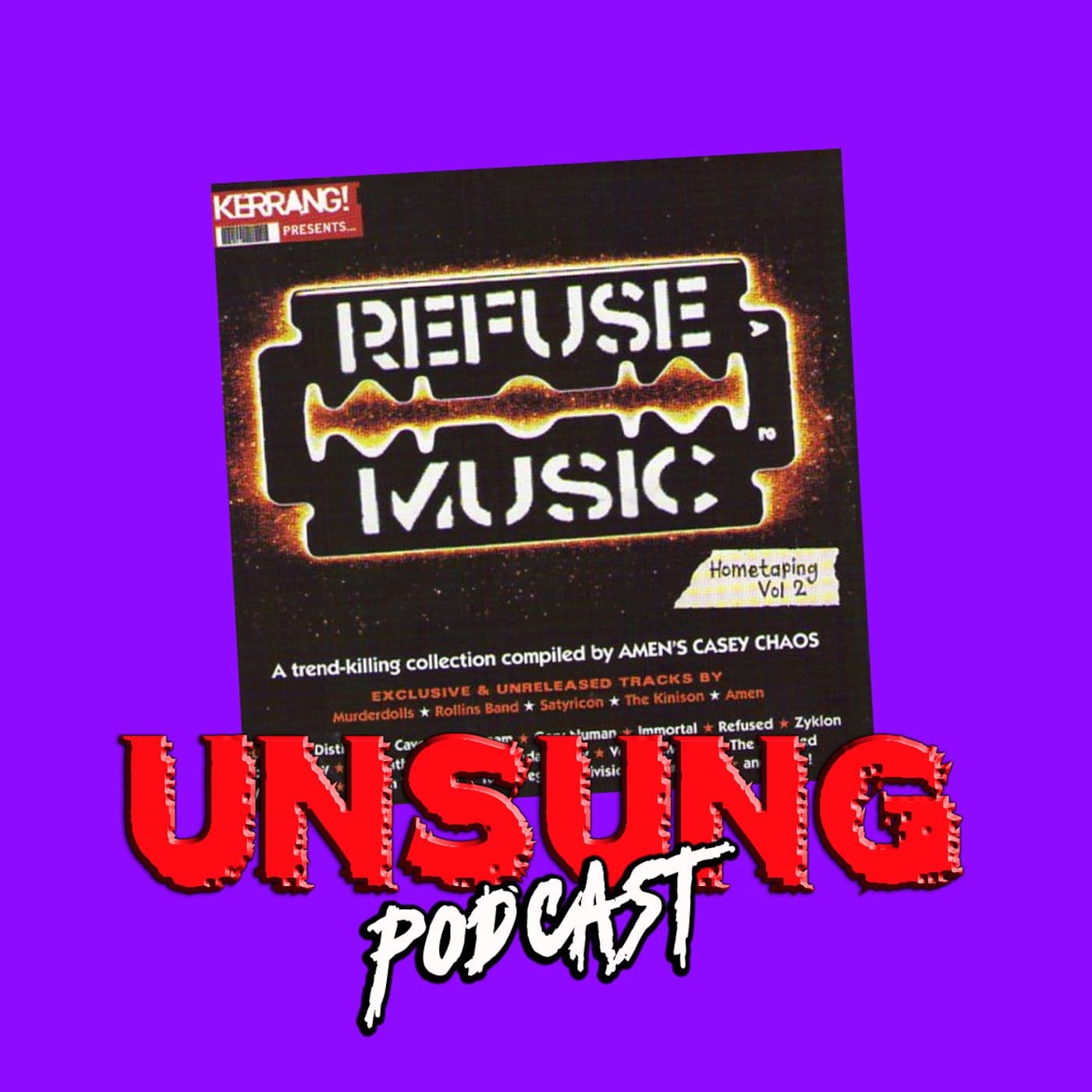
This week Dave returns as we dive into our bag of covermount CDs and unearth a real gem. Casey wasn't messing about. He whittled down his selection from 60 songs, phoned Henry Rollins and Satyr personally for unreleased tracks, and designed the cover himself. The result was 26 tracks of whiplash-inducing genius that introduced countless metal and punk fans to bands they'd never have discovered otherwise. From Refused's "New Noise" and Iron Monkey's feral sludge to birthday party's pre-Bad Seeds insanity and proper OG punk from Discharge and X-Ray Specs, this was cultural education disguised as a free CD. The fact we're still dissecting every track choice 20+ years later proves Casey achieved something genuinely special - a compilation that worked as both a history lesson and a challenge to dig deeper into the underground. Episode Highlights [00:00:00] Welcome to the cave: Easter resurrections and new studio vibes [00:05:39] Casey Chaos biography: From skateboard prodigy to punk legend [00:18:00] Rollins Band gets the pub rock treatment (Chris ducks for cover) [00:24:00] The Kinison: When Oblong, Illinois meets post-hardcore [00:29:00] Murderdolls: Budget Misfits for the nu-metal generation [00:32:00] Discharge delivers the D-beat masterclass [00:43:00] Iron Monkey: Nottingham sludge at its most feral [00:37:00] Refused drops "New Noise" and changes everything [00:42:00] Turbonegro: Norwegian glam-punk that divides the room [00:43:00] Void: The DC hardcore deep cut that finally clicks [00:46:00] Immortal: When black metal meets the Tony Hawk soundtrack [00:51:00] X-Ray Specs: Polystyrene schools the youngsters [00:56:00] Zyklon: Emperor side-project with uncomfortable baggage [01:02:00] Cave In: The wrong track for the right band [01:04:00] Birthday Party: Nick Cave's mental early years get the respect they deserve [01:06:00] Nasum: Swedish grindcore brings back the brutality [01:07:00] The Distillers: Brody Dalle's voice cuts through everything [01:13:00] Eyehategod vs Iron Monkey: The great sludge debate [01:14:00] Division of Laura Lee: Sweden's most forgettable export [01:15:00] The Haunted: At The Gates members go full throttle [01:17:00] Mortiis: Norwegian dungeon synth gets the goth treatment [01:20:00] Gary Numan: The robot pioneer closes out the education [01:22:00] Highlights, lowlights, and wild cards: The final verdict
After touching briefly on it in our Finland episode last week, this week we dive headlong into the discography of disorienting and electrifying world of the Finnish band, Oranssi Pazuzu. Known for their unique blend of black metal, psychedelia, krautrock, and electronica, Oranssi Pazuzu have pushed musical boundaries with their immersive and genre-defying style. We break down their discography, contemplate the terrifying beauty of their sound, and revel in the menacing brilliance of their 2020 album, 'Mestarin kynsi'. Expect insights into their influences, a bit of playful banter, and why their music is like a bad trip brilliantly gone wrong. Buckle up, it’s a wild ride! 07:58 Episode 1 recap 09:16 Oranssi Pazuzu intro 12:53 Influences & Comparisons 20:14 10 Influences As Chosen By The Band 29:27 Discography: Muukalainen Puhuu & Kosmonument 38:26 Discography: Valonielu & Värähtelijä 59:58 Discography: Muuntautuja 66:57 Mestarin Kynsi
This week we dive headfirst into the land of heavy metal, Finland. In what originally started off as an episode on the Oranssi Pazuzu album Mestearin Kynsi, we quickly realised that we had a two parter on our hands. So this week, we're using Oranssi Pazuzu as a lens through which to view the Finnish music scene. In the episode, we take a detour through the history and culture of Finland, exploring why this country has the highest ratio of metal bands per capita. We also touch on notable Finnish acts, quirky cultural elements, and the unique musical environment of Tampere. Expect insight, humour, and a bit of chaos as we unpack what's behind Finland's intense love affair with metal. 00:00 Welcome 01:10 Introducing the Topic: Finnish Metal 02:00 The Finnish Music Scene and Culture 05:43 Patreon and Community Announcements 08:49 Deep Dive into Oranssi Pazuzu 20:36 A Brief History of Finland 26:22 Finnish Traditions and Unique Sports 26:58 Famous Finnish Music and Artists 32:21 The Influence of Metal in Finnish Culture 35:03 Doom Metal and Its Finnish Roots 43:26 The Finnish Music Industry and Government Support 54:22 Tampere's Psychedelic Black Metal Scene 01:00:01 Conclusion and Final Thoughts
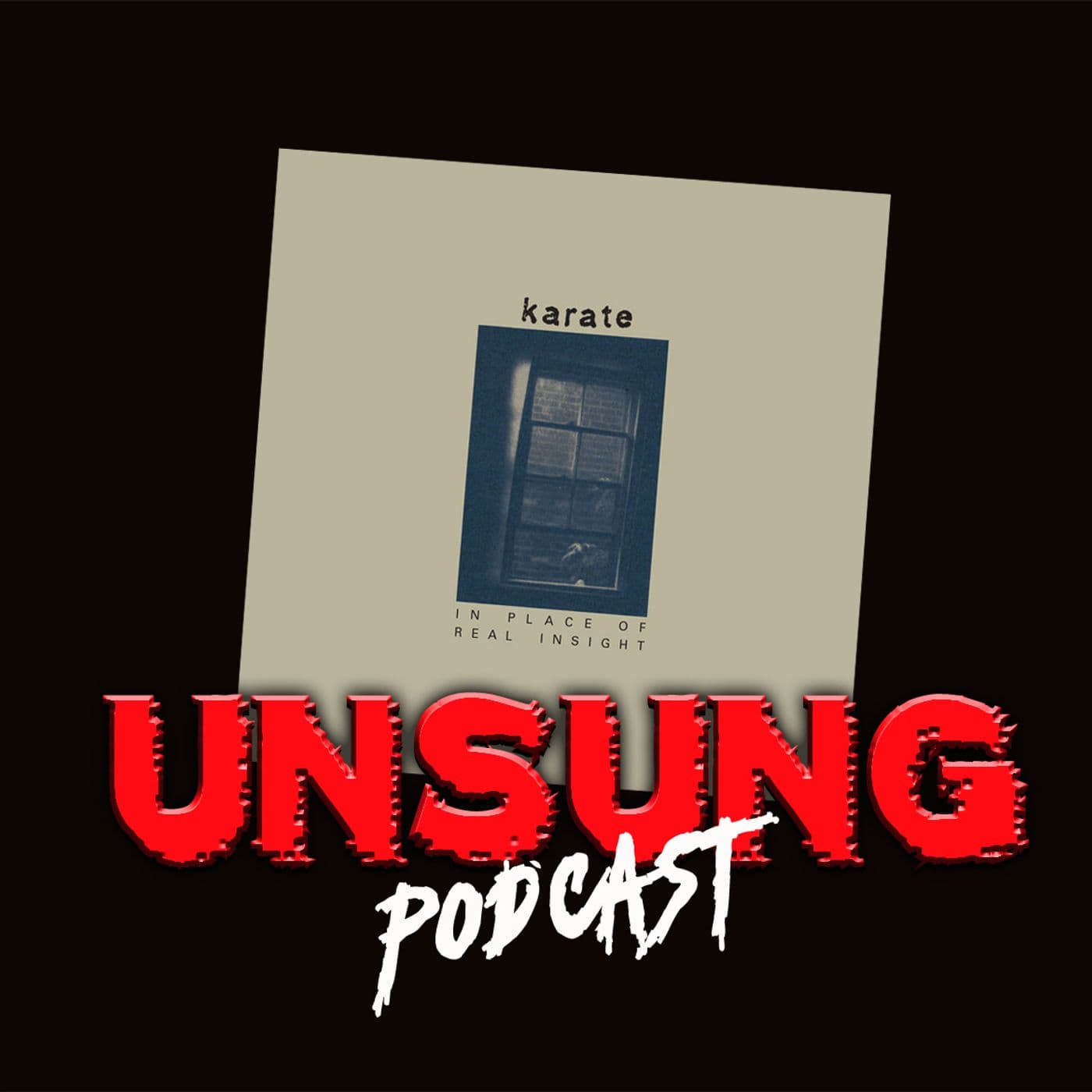
In this episode we explore the eclectic stylings of the band Karate. We break down their shift from post-hardcore roots to embracing jazz influences, focusing on the standout album 'In Place of Real Insight.' And we get there, in the usual fashion, by chatting extensively about their back catalogue. We also theorise that perhaps Karate fans may have split into two camps when they moved the focus almost exclusively to jazz. Our weekly Nexus challenge takes us from Karate to the late John Prescott through a convoluted but fascinating path involving jazz, punk rock, and the peace symbol. Expect deep musical analysis, unexpected links, and a few laughs. Karate background: 08:05 Chris' Theory on Karate fans: 15:13 Early discography and eponymous debut: 19:18 Bed is in the Ocean, Unsolved & the journey to jazzcore: 29:53 Some Boots & Pockets: 41:20 595 & Make It Fit: 48:20 In Place Of Real Insight: 53:28 Summing up the album: 75:51 The John Prescott Nexus: 80:36
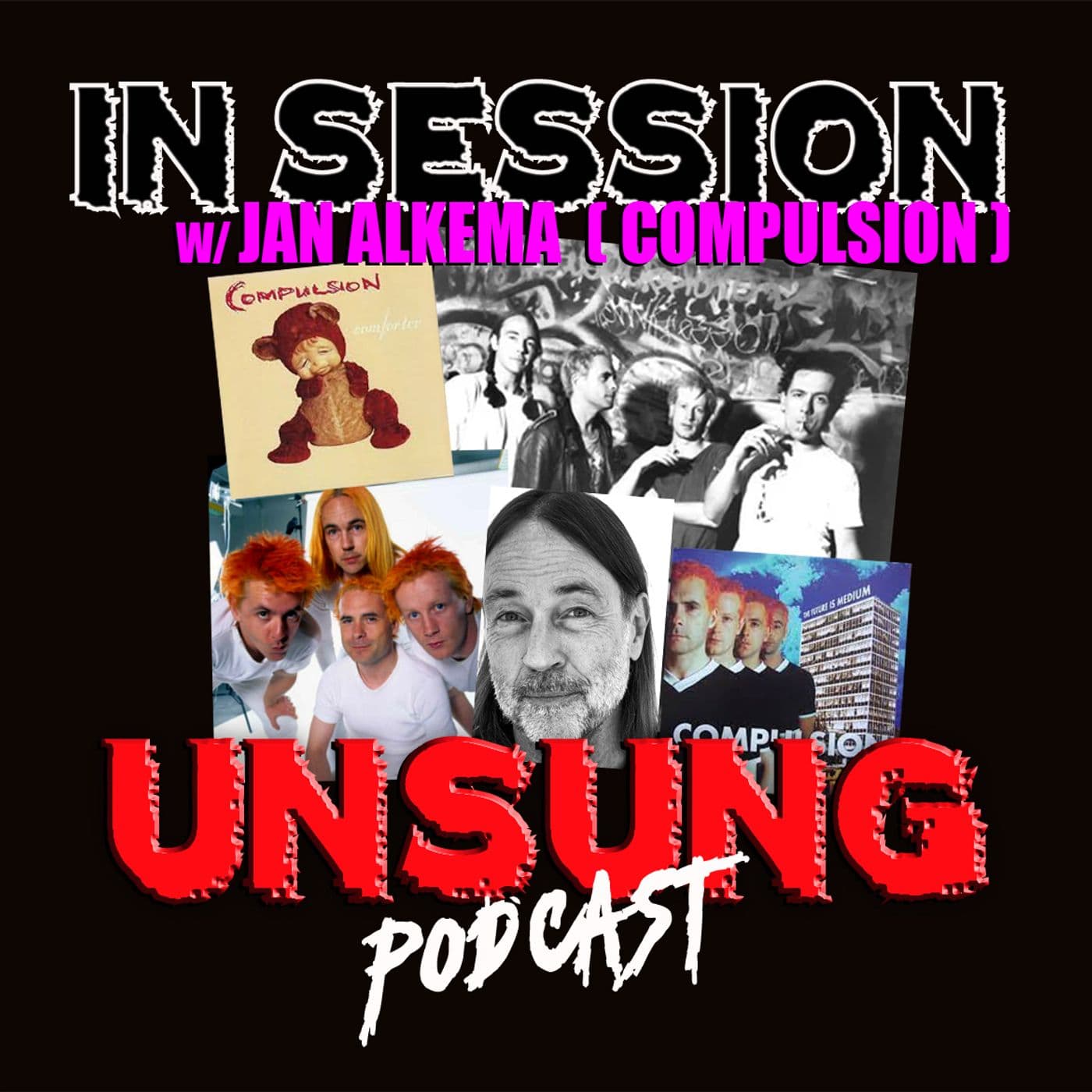
This week our pal Jan Alkema, drummer of the bands The Drum/China Drum and Compulsion returns. This time here's here to discuss the story of Compulsion. We cover the band's history, its ups and downs, and some behind-the-scenes stories. We hear about Jan's journey from joining The Amazing Colossal Men to Compulsion's battle with record labels, relentless touring, and eventual disbandment. Along the way, Jan drops some memorable anecdotes, including a run-in with Dave Grohl, a misadventure with Cradle of Filth, and plenty of backstage dramas. It's a helluva a ride, a candid real and entertaining look at a band that never quite got its due. 9:27 - Compulsion History and Formation 21:20 - The Amazing Colossal Men & in court with Virgin 29:24 - A fresh start and London 34:25 - The early EPs 39:49 - Touring, Elektra and Comforter 48:14 - Demostikon 50:34 - Timings, genres and peers 01:02:11 - The arrival of Britrock 01:06:21 - The Future is Medium 01:12:11 - The beginning of the end 01:17:08 - After the band 01:22:56 - Reissues 01:24:59 - Late trivia and gossip
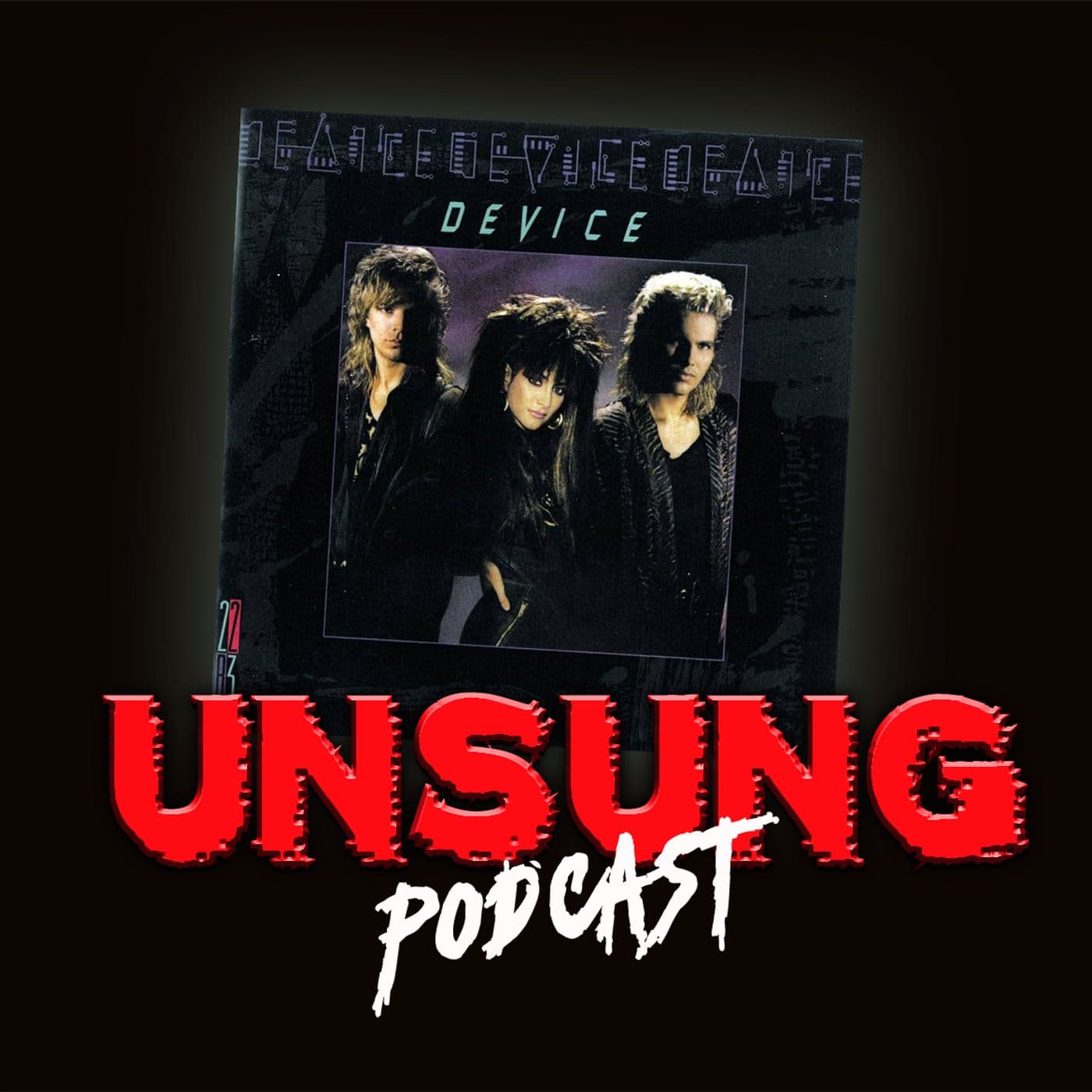
In this episode, we take a journey back to the 80s to explore Device's only album, '22B3', the choice of this week's guest co-host, our antipodean based pal, Crag! We delve into the album's rich synth-pop-rock sound and discuss why it remains an underrated gem. The key member of this act is the overlooked, yet all time great pop rock songwriter Holly Knight. She was the mastermind behind many iconic hits from the likes of Tina Turner, Bonnie Tyler, Heart and penned songs for Kiss, Bon Jovi, Cheap Trick, Meatloaf and so many more. On 22b3, she takes centre stage and we use this episode to investigate her influential yet often overlooked contributions. As we go through each track, we highlight the distinctive 80s production techniques, unique sounds, and memorable melodies. Crag shares insights into the equipment used and provides some industry context, which makes for a fascinating deep dive into 80s music culture. From discussing the album's standout tracks like 'Hanging on a Heart Attack' to exploring the various musical influences and collaborations, this episode is packed with intriguing details and anecdotes. We also connect the album to wider music histories and trends, giving listeners a thorough understanding of its place in music lore. As always, we wrap up with our Nexus, this time linking Device to Debbie McGee in a surprisingly twisted route through music and pop culture history. If you're a fan of 80s music, keen on unsung musical heroes, or simply love a good musical anecdote, this episode is a nostalgic treat you won't want to miss. 00:00 Introduction and Greetings 01:26 Listener Suggestions and Album Selection 02:56 Patreon and Membership Perks 05:25 Political Commentary and Americana 09:29 Album Discussion: Device - 22B3 16:49 Holly Knight's Career and Contributions 38:13 Paul Engeman and the Band's Background 47:37 Introduction to Marauder and George Tukto 47:52 Technical Credits and Chart Performance 48:33 Musical Equipment and 80s Sound 50:08 Diving into the Tracks 50:43 Track Analysis: Hanging on a Heart Attack 54:43 Track Analysis: Who Says 57:05 Track Analysis: Pieces on the Ground 58:50 Track Analysis: Tough and Tender 01:01:24 Track Analysis: When Love is Good 01:03:39 Track Analysis: Didn't I Read You Right 01:06:04 Track Analysis: Fall Apart, Golden Heart 01:09:10 Track Analysis: I've Got No Room for Your Love 01:11:42 Track Analysis: Who's on the Line 01:14:11 Track Analysis: Sandstone, Cobwebs and Dust 01:16:44 Conclusion and Final Thoughts 01:24:21 Nexus Segment: From Device to Debbie McGee 01:32:20 Closing Remarks and Upcoming Guests
In this episode we dive into a lesser-known compilation from Dundee, 1996, titled 'After the Storm', which was created to raise funds for 18U. We explore the tracks, uncovering a mix of genres from 80s power ballads to 90s dance and country influences. There's a lot of colourful and, shall we say, sometimes questionable, musical efforts showcased in this CD, and as ever we humorously navigate the ups and downs of their listening experience. Highlights include oddities like George McFarlane's rap experiment and a cheerful dance track by Bliss. They wrap up with an existential crisis triggered by Real Gone Kid by Deacon Blue. But it's all for your entertainment, so it's all good. Oh, and yeah cause this week is particularly heavy the first 18 minutes or so are about Trump winning the US election. So feel free to skip ahead if that doesn't tickle your fancy. 00:00 Introduction and Birthday Banter 00:57 Post-Birthday Blues and Football Highlights 02:20 Political Discussion: Election Results and Reactions 06:31 The Impact of Information Economy on Politics 09:32 Misogyny and Conservative Trends in Gen Z 11:40 The GOP's Transformation and Democratic Challenges 16:11 Crypto Bros and Political Discourse 17:19 Middle Eastern Vote and Political Puritanism 18:32 Music Podcast Transition and Upcoming Topics 44:41 Country Vibes and Musical Influences 45:47 Highland Cowpunk and Unique Instrumentation 48:08 Exploring George McFarlane's Musical Journey 51:40 Dundee's Musical Scene and Hidden Gems 57:07 Ian Cusick: A Deep Dive 01:01:24 90s Dance Nostalgia with Bliss and Lucy Jules 01:04:42 Gary Clark and King L 01:07:37 Michael Marra: Dundee's Bard 01:19:10 Final Thoughts and Reflections
In this episode of the Unsung Podcast, we delve into Vessel's 2014 album 'Punish Honey,' a unique blend of electronic music and modern electronica. We provide an overview of Vessel's career, touching on past albums and collaborative efforts. We discuss standout tracks like 'Red Sex' and 'Anima,' highlighting the album's haunting, ethereal qualities. We also reflect on Vessel's transition to scoring for films like 'The Northman' and talk about the importance of his innovative approach. We end the episode with a Nexus segment linking Vessel to cyclist Chris Hoy. 00:00 Introduction and Banter 02:09 Podcasting Challenges and Humour 03:12 Introducing the Topic: Vessel's Punish Honey 04:28 Patreon Shoutout and Admin 05:30 Concert Stories and Anecdotes 12:36 Social Media and Platform Changes 14:01 Deep Dive into Vessel's Career 21:00 History of Triangle Records 27:00 Early Releases and Order of Noise 34:00 Track Analysis: Order of Noise 45:50 Exploring the Synth Sound 46:52 Discussing the Northman Soundtrack 50:26 Diving into Punish Honey 52:37 Track-by-Track Analysis 01:03:02 Sidebar: Ozzy Osbourne and Rock Legends 01:17:17 Concluding Thoughts on the Album 01:21:17 The Nexus: Connecting the Dots 01:30:19 Call to Action and Future Plans
David Scott from Moni Jitchell joins us again this week as we round off our deep dive into the discography of Los Campesinos! We being picking up where we left off last week; in the midst of running through the band's discography. Mark then comes clean and says he actually took notes on the wrong album, before we all go down the rabbit hole of figuring out of Romance is Boring and/or Los Campesinos! are unsung. A small reminder that if you want to support the podcast you can do so via our Patreon. Not only will you get episodes early, you also get access to our Facebook group (aye we know it’s boomer shit, but we’ve yet to find a better way of mass communication) and you can have some influence on what we cover on the show. There’s also the option of our higher tier, the record club, where your money will go towards supporting independent artists that we think are truly unsung. If you want to learn more about Moni Jitchell, their most recent release is called Unreal, and you can get it here.
Guest time! In the first of two episodes we chat with David Scott from the band Moni Jitchell about Los Campesinos! and their third album Romance is Boring. In part one we go into a lengthy deep dive around twee pop, the band’s history and then begin to look closely at their discography, using the band’s own ranking of their first five albums as a means navigation. A small reminder that if you want to support the podcast you can do so via our Patreon. Not only will you get episodes early, you also get access to our Facebook group (aye we know it’s boomer shit, but we’ve yet to find a better way of mass communication) and you can have some influence on what we cover on the show. There’s also the option of our higher tier, the record club, where your money will go towards supporting independent artists that we think are truly unsung. If you want to learn more about Moni Jitchell, their most recent release is called Unreal, and you can get it here.
We've briefly touched on geek rock in the past - Weezer and Laeto spring to mind - but never in any detail. That all changes this week as we look at the genre through the lens of The Protomen. We also chat extensively about the band, their discography and their frankly brilliant homage to 80s rock.
Last week we spoke about the music of the sequels to The Crow (1994). We also spoke about the new crow film (The Crow (2024)), but we kind of cut it a little short because we didn't talk about the music of the new film. We do that this week before we dive headlong into the original soundtrack of the very first film in The Crow franchise. Not sure I can find a way to fit "The Crow" into this little blurb about our new episode on The Crow. So please enjoy this episode where we talk about the music from the 1994 film The Crow
A little update on what's in store for the future of this podcast.
Another episode where we're taking direct inspiration from something that we mentioned in an early show, we've decided to do two whole bloody episodes on the music of The Crow film franchise. In episode one we talk about the music from the very poor sequels to the original film: City of Angels and Salvation. Surprisingly, even though the movies themselves are fairly terrible, the soundtracks are actually really good! So we dedicate a bit of time to those two. We also talk about the place of The Crow in the wider pop cultural landscape, wondering whether it really was as popular as we seem to remember it was (subcultures are weird) before we talk about the brand new reboot The Crow. Which is... well, it's certainly not the worst of The Crow films, but that's not a high bar to clear... Fancy showing us some love? You can subscribe to the pod for as little as £4 per month on our Patreon: www.patreon.com/unsungpod
Usually, we like to space things out. You may have noticed that over the years, we'll do a metal album one week, then perhaps change it up with electro or something else. So, for us to do two post-hardcore/noise rock(ish) records so close together is a bit unheard of. But hey, what's the point of having a set of rules if you don't break them occasionally? We've been doing this show for a ridiculously long time. Too long, some might say. In those six and a half years (give or take a few months), we've managed to rack up a decent amount of subscribers. For some of our longest-standing subscribers, we give them the opportunity to pick a record for us to cover. This week, Todd Khul chose Face of Collapse by the Dazzling Killmen. We welcomed this choice, especially since it's a band Chris has also wanted to tackle for a while. So this week, we're diving deep into their short discography and offering some insights into their equally short career. Fancy showing us some love? You can subscribe to the pod for as little as £4 per month on our Patreon: www.patreon.com/unsungpod
Sound is a pound is always good fun. You'd be amazed what you can pick up for a quid in a charity shop. It's been about 18 months since our last one of these and frankly, we'd forgotten what albums we'd "gifted" each other at the end of the last episode. So Mark decided to pick two that he'd bought for Chris: Planet Claire by The B-52's (a strange compilation what was not released by the band's label, Warner Brothers) and Highly Evolved by The Vines. There's some surprises in this episode. There's also somethings that won't be surprising at all to long time fans. We'll leave you to figure out which is which...
John Congleton is a great producer, and as it turns out, also a great musician. The Paper Chase were, for many years, his only musical project and even as his star began to rise as a producer, he was still churning out unsettling, chromatic, occasionally catchy, often nasty music. Often described as a combination of avant-garde jazz, indie and punk, the band tick all of those boxes and much more. This week we're talking about their second album, Hide the Kitchen Knives which helpfully/frustratingly is only available on YouTube. An album so twisted that it actually gave Mark nightmares. We also talk about the band's discography at large and chat about why some albums never seem to make it to streaming platforms.
Long terms fans of the show will know that we've spent altogether far too much time talking about Britpop. And the bad news is that it looks like it's ABOUT BECOME ALL ANYONE TALKS ABOUT when Oasis announce their reunion. We recorded this episode before those rumours started to creep out. Funny how these things happen. Anyway, Mark fell into a Suede hole (sounds quite comfy, when you put it like that) after our episode on Baader Meinhof/Luke Haines and this lead to two realisations: 1) there's no way we could call Suede (or this song, really) unsung, and 2) we don't think they have an album solid enough to carry a full episode. This song though? It's a banger. Pure class. And we really wanted to talk about it. So we bent the rules a little.
A quick note of correct: we haven't done a Mojo covermount before. It was Uncut, but the audience for both magazines was/is broadly the same... Or so Mojo would have you believe. We'll be honest: the bag of covermounts is full of questionable CDs, so it was actually something of a surprise to land on something interesting. This Mojo covermount is, ostensibly, a history of electronic music. It goes all the way back to the 60s and includes in the mid 00s, when this CD was released. A strangely fascinating find, given that it was only released on the front of a magazine. From disco to house, ambient to jazz, this thing has a real selection of music that incorporates keyboards and synthesizers. It was fun to spend time with it, and we hope it brings something interesting into your life too.
Can you believe it was back in February 2020 when we did our Britpop mixtape? How wild is that? This week we're joined by Glaswegian musician Andy Isacsson, otherwise known as Luminous, who has picked this week’s record. We chat at length about his latest record, Precarious Karma, which took him about a decade to complete. We dive into the influences behind it, the reasons it took so long to finish, and much more. Then, we get into the business of talking about Baader Meinhof and Luke Haines. Unlike a lot of musicians, Andy opted not to release his music on Spotify. So you can check out his album here on Bandcamp. For Record Club subscribers, we’ve also added it to our catalogue. It’s pretty great, and we thoroughly recommend giving it a whirl. To wit. We always knew we’d come back to Britpop one day and we always suspected we’d do so via unorthodox means. Baader Meinhof by Baader Meinhof, Luke Haines’ sorta kinda first solo album, gave us a wee chance to do that. Not because it’s a Britpop record – it’s far from it – but Haines himself has proven to be quite a large figure in the history of that genre. He’s also got a massive discography. In this episode, we touch a little bit on The Auteurs, then very briefly look at Black Box Recorder and a minimal selection of his solo discography. Maybe next week we’ll escape from the 90s hole we seem to have found ourselves in, but I wouldn’t bet on it...
Is this a controversial choice? Quicksand's debut album Slip is widely regarded a classic, and in my quarters the band are seen as being hugely influential. So in many ways, picking their second album, Manic Compression, as an unsung classic seems like a no-brainer. On this episode, Chris talk about why this album is not just an unsung classic, but why it's also their best album. Healthy disagreements abound. What do you think is the better record, Slip or Manic Compression? If you're a spotify user, vote on our poll now!
Hailing from Ireland, Katie Kim is an artist who has demonstrated remarkable musical growth over the course of her career so far. Evolving from lo-fi folk to dark, experimental, haunting, almost ambient alternative rock. This week, we talk about her entire discography, before diving into her riveting fourth album, Hour of the Ox.
We have no new episode this week due to Chris' ransomware calamity. However, we do have something to share. A wee while ago Chris was on the excellent Sh*t You May Not Have Seen podcast talking all about the Bobcat Goldthwait film God Bless America. Enjoy! We'll be back in a few weeks.
One thing that we find particularly fun about this podcast (most of the time) is re-appraising records from our youth. Taking a closer, critical look at something you were once super familiar with is often eye opening. Particularly if it's a record you remember liking a lot at one time but have since stopped listening to. Most of the time, it's a fun experience. And this episode on Eight Arms to Hold You by Veruca Salt is one of those times! Mostly. Chris was not super into this band when he was younger, but he did like this album a lot. In this episode we talk all about the band's career, before ending on the album in question. Dig in!
Good news, folks! Chris has managed to recover the audio files needed to get our interview with Jan Alkema, drummer from The Drum, out the door! The quality might not be up to the usual standard, but we're so happy to share this with you. Just over a year ago, we did an episode on The Drum's only album/China Drum's third album, "Diskin." As a result, a few members of the band reached out to us on various platforms to talk about the episode. You may remember that we actually had a wee cameo from China Drum's singer/drummer Adam Lee on last year's Xmas episode. Jan also reached out to us and, after a brief back and forth, relayed his story of the creation of "Diskin." He also did a track-by-track rundown of the album, including all the details of the songs' recording process. So naturally, we just had to get him on the show to chat with us in person. After about a good 9 or 10 months of procrastination on our part, we finally sat down together on a Zoom call. Over the course of a couple of hours, we chatted about "Diskin," his experience with China Drum, when and why they changed their name to The Drum, the recording and release of the album, its subsequent tour, and the band's eventual dissolution. He also spoke a little about his own musical background too. In this episode, he talks about his experience as part of The Drum and the recording of "Diskin." The actual track-by-track rundown of the album by him will be released as a bonus episode to our subscribers on Patreon in November. If you want to hear it (and help Chris get a new laptop after last week's ransomware attack), sign up here. Big thanks to Jan for chatting with us. He's a genuinely lovely chap. We hope you enjoy this special interview! Now, due to the recent aforementioned loss of Chris' laptop, we're not sure if we'll have an episode for you next week, but stay tuned for info on when we'll be back in action!
X Japan have released a proper studio album since 1996. They did release a soundtrack in 2016, and released the occasional single too, but as for a longer release? Nada. Zilch. Of course, some of this is down to the fact they essentially broke up and only reunited in 2007. In this episode, we'll be talking about their 5 studio albums. Chris' album choice is actually their 1988 debut, Vanishing Vision. So as usual, we'll leave the chosen album to last. Before that, though, we go on a wild ride through their discography. From what is perhaps their best album Blue Blood, to their most recent output, which is 1996's Mania. Buckle up - we're going deep on this one!
Let's get down to brass tacks here, folks, there is no episode this week. Last week, Chris was subject to a randsomware attack which has unfortunately resulted in a complete loss of data from his laptop. In fact, it has rendered his entire laptop unusable. Not only that, but they gained access to all his accounts, and even our shared Dropbox folder, where the hackers also ruined all the files on it. Chris uses his laptop not just for this podcast, but also for music and, crucially, for work. We do have the files for what was supposed to be this week's episode backed up, but without a laptop and editing software, it's unclear when we'll be back up and running. We know times are tough right now, but if you've got a little cash and fancy putting your hand in your pocket to help donate towards a new laptop for Chris, hit up our PayPal donate page at www.unsungpod.net/donate. Hopefully be back next week, but if not, see you soon!
There's been a fair amount of ink spilled on X Japan over the years in certain media outlets. You can even find recent interviews with drummer/pianist/primary songwriter and Japanese megastar Yoshiki in prestigious publications like Time magazine. X Japan, however, remain something of an enigma on British shores. Sure, Yoshiki – a classically trained pianist with a background in drumming for the power metal band X Japan – can sell out the Royal Albert Hall solo, but X Japan themselves have never played a single show in the UK, despite being around for over 40 years. If you're a fan of power metal, speed metal, or Iron Maiden, there's a good chance you'll dig a lot of X Japan's music. But their relative obscurity here in the UK isn't the only reason we're dedicating two episodes to them. It's because the story of the band is absolutely wild, and in episode one, we'll delve into that story in detail. Next week, we'll take a deep dive into their discography. Grab a cuppa and let's dive in!
We knew this episode was gonna grow arms and legs when we realised that there are 27 Bond songs to talk about. So, now that we've dispensed with the history of Bond music, it's time to tackle every single one of these songs in chronological order. This doesn't include the original Bond theme from Dr. No (cause we discussed that at length in side A), but does include the two songs in On Her Majesty's Secret Service and the two non-Eon Bond films, Casino Royale (1967) and Never Say Never Again. It's a lot to cover. So we approached it a bit like our covermount episodes, only we decided to rank each song from 001 to 007 cause how could we really pass up that chance? We also give a little bit, the tiniest smidge, of detail about each film its place in the canon and the critical and audience receptions for each film. And song, where appropriate. Ready? Shake your Martinis and let's get stuck in.
What if we told you that the musical history of James Bond is actually so much more interesting than the history of the films? And that's not knocking the history of the films - they're plenty fascinating too. The music though? Super interesting. From the theory and the cultural cache of the Bond song, to the near misses and the rejected tracks, we cover a lot in Side A of our look at the music of James Bond.
This week’s episode is a very special interview with the legendary Eugene S. Robinson. Perhaps best known as the vocalist of the experimental rock band Oxbow, Eugene has not only played in various projects over the years, but has worn various different hats outside of music too. A renowned writer and journalist, he’s just about to release his memoir A Walk Across Dirty Water and Straight into Murderer’s Row on October 10th 2023. And when he’s not busy writing or performing, he’s also getting involved in MMA and bodybuilding. So we think it’s fair to say he’s a true polymath. In this extensive interview we talk a lot about his career, digging into just about every single musical project he’s been involved in. Along the way, he regaled us with stories about his life, his unique perspectives and philosophies about the world, and we also covered some real life body horror too. So, eh, if you’re squeamish, here’s your warning. We touch upon a few things from his upcoming memoir in this interview, and to be honest, it’s a great primer for that book. It was a true pleasure to chat with the man, and we really hope you enjoy listening to this episode as much as we did recording it.
If it feels like the length of our episode are getting longer on average then you’d be correct. This is likely because we have lost all pretence of restraint around how comprehensive we are. This week, we’re joined by Scott Walker for the Shit You May Not Have Seen Podcast to do a fairly definitive overview of the band Biohazard. A band who are also quite unrestrained... Many would believe that there’s not a whole lot to say about Biohazard because pretty much all of their albums plough the same furrow. Turns out, there actually is a lot to say. Over 2 hours worth of things to say. The band are actually somewhat interesting in how they tried to change their sound over the years. Attempts that were so unsuccessful that the albums aren’t actually available on streaming platforms. There’s good reason for that - it’s cause they’re nu metal albums. Anyway, on this episode we dive deep into their catalogue and also chat about the NYC hardcore scene they came up in, and touch a little on how it evolved over the years. Big thanks to Scott for joining us and picking this album. You can find his excellent podcast here.
Here it is. Another whopper of an episode. But this one has lots and LOTS of contributors. From one time and former hosts and a bunch of your suggestions too, we tried to be as comprehensive as possible within our little sphere of listeners. Thanks for your contributions to this episode. It really made it feel like a communal affair, and that's an awesome feeling.
Steve Albini's impact on alternative music is undeniable. From the sheer number of artists he collaborated with to his unwavering defense of fair treatment for musicians, his presence continues to be felt. His anti-capitalist views on the music industry may not have always aligned with everyone's, but his convictions were never in doubt. This influence extended to his unique approach to music. Whether working on his own projects or lending his talents to others, he imbued every recording with a distinct character. So recognizable and sought-after was his style that countless engineers and artists have attempted to emulate it, yet none have truly captured its essence. The deceptively simple brilliance behind his approach will be explored in more depth next week. This week's episode dives deep into Albini's life, career, ethics, musical philosophy, and of course, the controversies that continue to surround his legacy.
If you thought we'd prattled on about the history of Thursday a little too much in episode one well we've got some news for you - part two is a BEAST. It's 2 hours and 15 minutes long. Why? Because that's the unsung way. We give their discography a thorough analysis whilst continuing to chart the band's history. We also hear about how Geoff Rickly once slept on Sean's couch, and even take a wee detour in No Devotion, too. An episode for the true Thursday freaks, and also one which contains some Bischoff-esque Attitude error booking (iykyk - wait til the end).
As a die-hard Thursday fan, this week's guest comes right out the gates in explaining why Thursday he'll always love. And as it turns out, they're quite an easy band to love due to their ethics and overall affability as a band. Geoff Rickly himself often comes across earnestly and well in interviews, which is something Chris is keen to point out and dive into in the first part of this three parter. In Side A we chat about the band's history, their place in both the New Brunswick, New Jersey music scene, as well as their place in the early-00s emo scene as a whole. At the time, they were touted by some as being the next Nirvana but it was a label that never fit the band. We talk about all that, and their journey to becoming a major label act, in this episode.
At the mercy of poor train WiFi so keeping this brief. Still on holiday. Back this week, when normal service will be resumed. This is a Patreon bonus episode. To hear more like it join us at www.patreon.com/unsungpod
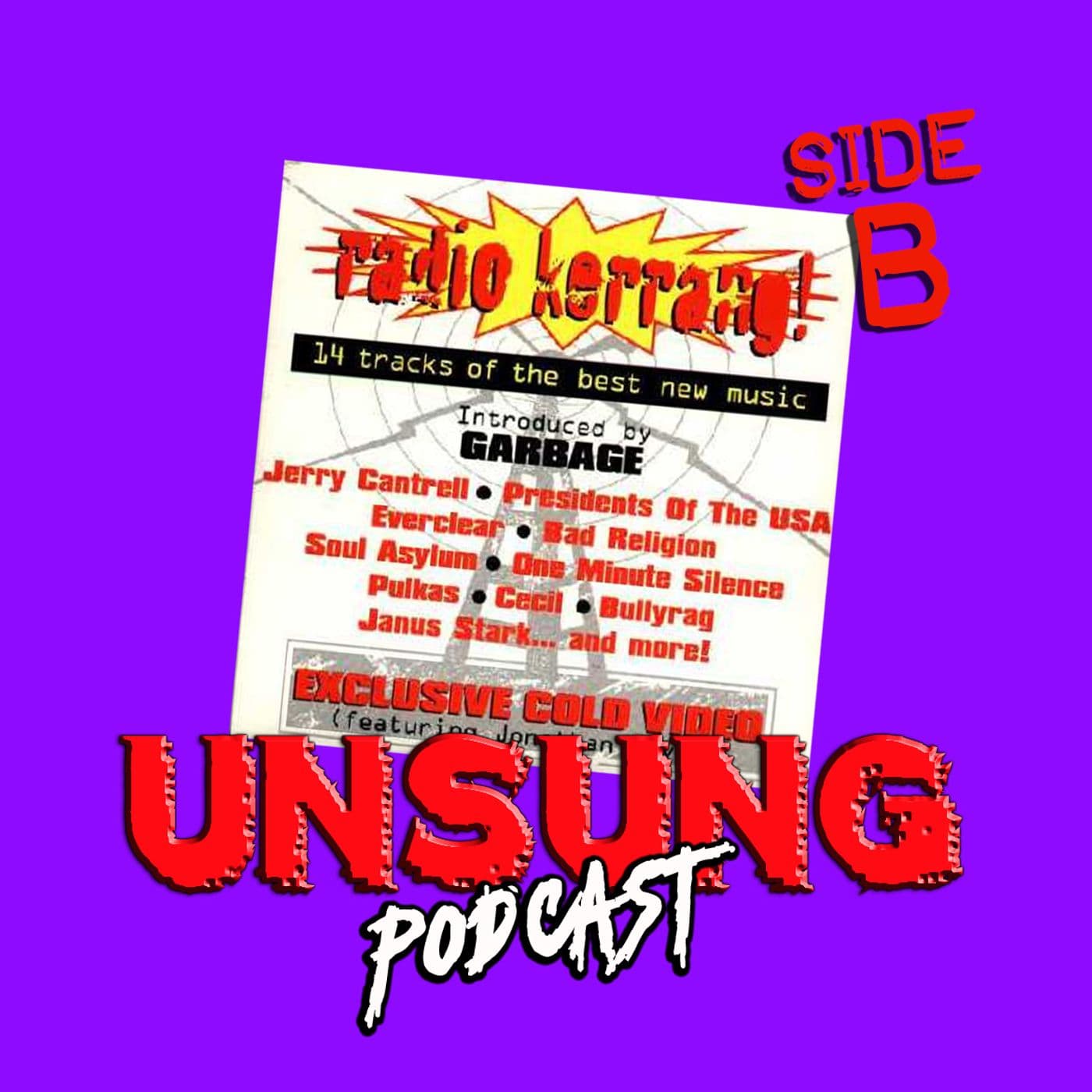
With the exception of Soul Asylum and the Presidents of the USA, unless you were seriously tuned into Kerrang! and/or alternative music in the 90s there are very few bands you'll remember, let alone recognise, in the back half of this CD. Bullyrag, Janus Stark, Pulkas, Cecil, Pissing Razors and Genitorturers have all vanished more or less into oblivion since the 90s. Genitorturers perhaps being a bit of an exception in that they're still going to this day. Grant, and the rest of the crew, are positively bewildered by the rest of this compilation. And very occasionally surprised.
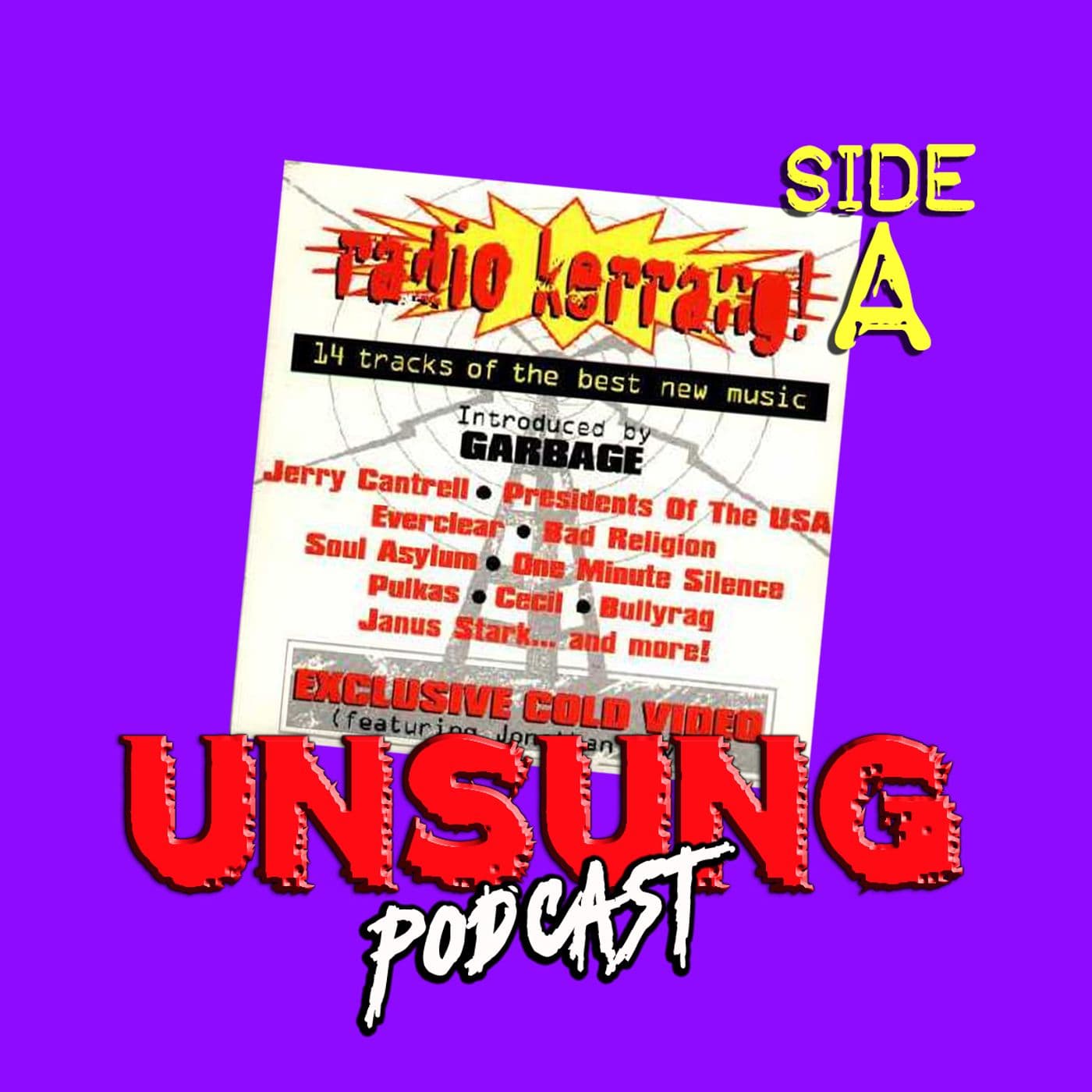
This week Grant Donaldson joins us to talk about this Kerrang! covermount CD that came out during the hey day of nu metal. Turns out Grant is quite unfamiliar with nu metal so this was a real fun episode. In side A we talk about the first half of this CD, which includes the talents of Jerry Cantrell, Everclear, Bad Religion, Psycore and One Minutes Silence. It's all downhill after that, which you'll hear in the next episode...
We break down the usage of music in ads into four categories: best original ad jingles and songs, songs made famous by adverts, famous songs best appropriated, songs ruined by ads. We also hear from our listeners on their favourite and least favourite tunes in adverts.
Given the sheer amount of work we've done lately on the pod, we thought we'd do something a little easy and do an episode on music in advertising. Except, it actually turned out to NOT be that easy because, well, this is a pretty fascinating topic. In part one we talk about the history of music in advertising and pick a couple of examples.
It's time to get really grindy and real with the band's more recent material, which is very fast, brutal and dark. It's a bracing but also fun. This band have a lot of songs but it's all quite short, so you can really batter through their discography in short order. Joe also gives us some of his thoughts on the band and then we get to the nexus.
There's a fair chance you haven't heard of Yacøpsæ before unless you're very much in tune with DIY grind/powerviolence. One of the things we started this podcast to do was to shine a light on great bands were think are truly unsung. This band are one such example of that. They're very underground, and are very, very, very brutal. In part one we talk about the squat scene, the definition of grindcore, how it differs from powerviolence and dive into their large, unwieldy catalogue. As this is a genre we're mostly unfamiliar with, we brought in the expertise of Joe McGlynn, who you may remember from our Carcass episodes. He was in a band called Man Must Die, now in a cool hardcore band called Go Down Fighting, and is a host of Shit You May Not Have Seen podcast. Things get very weegie here too, so be prepared for some incomprehensible Glaswegian accents.
And to wrap up our two episodes on Fever Ray we talk about Plunge before Chris goes deep on why their new album, Radical Romantics, is the best thing they've yet done.
When we suggested doing Fever Ray after our episode on The Knife's Shaking the Habitual back in Sept 2019, this album didn't even exist. Indeed, Radical Romantics now takes the title of the most recent album covered on Unsung. Back in 2019 Chris would have picked their debut album but as you can see, that's now longer the album he thinks is the best... But before we get to that, in Side A we talk about the history of Fever Ray, a little bit about Karin themselves, and their first album.
THE CONCLUSION. Kyle's still alive. Barely. In side C we get to the point of this whole sorry triumvirate of episodes: to discuss Digital Ash in a Digital Urn. And the nexus. Of course.
Kyle's still with us in this episode, but he's dreaming about taking a bath. Which we kept him from. Sorry. Sadly, there was work to do. And that work is to continue our chat about Bright Eyes' back catalogue, covering everything from Fevers and Mirrors to Down In the Weeds, Where the World One Was.
This week we're joined by Kyle Wood, who creates music under the name of Lovers Turn to Monsters. He has chosen Digital Ash in a Digital Urn by Bright Eyes, claiming rather boldly, that it's amongst the band's best work. Which many fans would no doubt disagree with. In side A we talk a wee bit about Conor Oberst, his history, the pre-Bright Eyes moments and the first two Bright Eyes albums.
On this episode we look at modern turbofolk. It's still hugely popular in some areas of the Balkans, in particular Croatia. So we dive into some recent examples from the genre and then take a wee peek into what the future of the genre might be.
We’ve been working on trying to pull together a very special episode which contains both an interview with a band, a special guest, and seeing us tackle a genre that we’ve yet to cover. We came so close to nailing one of these things but last week we were thwarted by illness. Which left us without an episode for this week. So we’re rolling out some bonus content for you and it’s episode FIVE of UNSONG where we talk about a single song that we think is an unsung classic. Chris has picked 80s pop banger Waiting for a Star to Fall by Boy Meets Girl. If you like this, you can find more by subscribing to the show on Patreon.
Last week was heavy. We ended on a pretty sour note. This week is slightly better if only because you get to hear some actual music and we talk a lot less about war criminals. Operative word here being less; we're talking about Ceca this week which means we must talk about Arkan. After that we then get start to look at some of the other popular turbofolk artists that emerged in the late 90s and 00s, then
WARNING: This episode contains some pretty hideous shit. We play samples and quote some truly despicable lyrics. Now that we've laid the foundations for what turbofolk is and the environment from which it came, we talk about some actual music in side B. We looked at Rate Your Music's list of the most critically acclaimed turbofolk albums and decided to do a brief rundown of their music and their message. There are some real, grade A bastards in this mix. Literally some of the worst people to have ever walked the earth writing about terrible things. We bring these songs to your attention for a multitude of reasons, the biggest of which is that many of these songs have MILLIONS of plays on Spotify and some of the artists in question were popular in the 90s. Some are still popular now, too. History, it seems, has not been as forgetful about some of these acts as it could be. Anyway, on this episode we continue our fascinating journey into turbofolk.
Turbofolk is basically Serbian, and sometimes occasionally Balkan, pop music. It's something of a thriving scene these days - think eurodance with traditional Balkan rhythms - but it's origins are very, very murky. It came to prominence in Serbia during the Yugoslav wars in the 90s, and was heavily exploited by Slobodan Milosevic government. In fact, it essentially became propaganda, pushing a nationalist, often ethno-fascist message. Focused on chauvinism, gangsters, guns, obscene wealth and often racism, it's a fascinating subject that soundtracked some of the darkest times, and acts, in human history. In Side A we talk about the Yugoslav Wars and touch, very briefly, on some of the artists.
Modern post-punk music (the post-punk revival revival?) has a fair few acts that all indulge in sprechgesang and sprechstimme vocals. From Dry Cleaning and Squid to Idles and Fontaines D.C., there's a whole lot of artists out there using the same vocal technique that Sue Tompkins deploys effectively on Any Other City. In part two we chat about modern examples of this sound, including a bunch of post-hardcore and punk bands that do it too. Then we dive headlong into Any Other City itself.
This week we are joined by special guest Shu Ying, an experimental/post-punk/electronic artist from China. In this episode we chat a little about her music and more broadly about the history of music in China and Hong Kong, the evolution of alternative music in the country, its unique sound, the differences to Western music and more. She also picked a few albums for us to get our teeth into by artists that are unsung in their influence on Chinese rock, punk and post-punk music. These include: Dou Wei - Black Dream Underbaby - Awakening Tat Ming Pair - Shi Tou Ji Anthony Wong Chau-Sang - Underdog Rock We strongly urge listening to these artists after this episode if you want to dive a little deeper into the specific traits and approach that these artists take, but as ever, there’s a whole bunch of samples and more besides in the episode. With her help, we also pulled together a Spotify playlist of some of the artists discussed. We were very keen to get an insight another insight into what music is like in non-Western countries, so we hope you enjoy coming on this ride with us. Check out Shu Ying’s music here, and find out Chinese and Hong Kong playlist below.
In part one we chat a little about Life Without Buildings and their origins. In doing so, we're forced to reckon with the particular vocal style of Sue Tompkins. In some quarters it's been quite divisive (there's a particularly bad NME interview that is a good example of this) but really her style is part of a much longer and larger legacy, one that is still very much alive and kicking to this day. Yes, we're talking about spoke-sung artists, or more specifically the vocal techniques of sprechgesang and sprechstimme. In the latter half of this episode we go on a little journey through history to really show how these vocal styles have been a part of popular music for a very long time.
We wrap up this week's dual episodes on The Haxan Cloak with Mark going deep into the Returnal soundtrack, doing a quick drive-by on the Beef soundtrack, touching on a couple of other movie scores, before taking Excavation on in its entirety. Due to the hype around Excavation when it came out, we go on quite the tangent about PR in music. We discuss how there seemed to be very little in the way of critical feedback on this album, and in doing so we explore whether or not this album actually has a narrative at all, or if the narrative simply exists because it was created by the press to give the media something to hang its hat on when talking about the album. We're not saying we start to question the meaning of music, but we do get damn close to it.
Diving deep into the discography of R.E.M. rapidly turned into a sorta of existential torture, particularly as we got towards the end of their career. So what did we decide to follow it up with? A journey into what existential despair may ACTUALLY sound like with The Haxan Cloak. Under the guise of The Haxah Cloak, Bobby Krilc has only released two albums, three EPs and, more recently, a single. In this episode we take a brief look at the first, self titled, Haxan Cloak record and those EPs, before turning our attention to Bobby's soundtrack work. A fair more eclectic and overall less abyssal oeuvre. In part one we cover a selection of his output up until the soundtrack of the (frankly stunning) game Returnal.
Well, we did it. We got to the end of R.E.M.'s discography and now we turn our attention to the album that started this journey in the first place - New Adventures in Hi-Fi-. Chris explains to us why he thinks it's unsung classic, and grapples with the possibility that his choice may not have been the right one. And as ever, we drop the nexus too. See ye next week!
It’s been QUITE the week here in Unsung towers, with holidays and various other things happening, we weren’t able to get a regular episode recorded. So we’re dropping this bonus content preview. Please enjoy, and if you like it, consider signing up to our Patreon.
R.E.M. never really chased superstardom, and yet they found themselves thrust into it in the mid-90s. Last week we ended by talking about Green and Out of Time. In part three we chat about Automatic for the People and Monster, before diving into the records they made after drummer and founding member Bill Berry left: Up, Reveal, Around the Sun, Accelerate and Collapse Into Now. This episode's the longest of all four parts precisely because we cover so much ground. We try to give each album a fair hearing before we circle back to Chris' choice of New Adventures in Hi-Fi in part four/Side D. There's a ton of samples of this, and it soon becomes clear that without Berry and dimming commercial appeal, that they were starting to become a little bit listless. Hope you enjoy getting stuck into it!
Welcome to part two of our R.E.M. series! Now that the context is out the way, we dive headlong into their discography. In Side B we talk about all the records the released on I.R.S., and also dispense some trivia about the band during the time on the label. We talk about Murmur, Reckoning, Fables of the Reconstruction, Lifes Rich Pageant and Document, discussing our highlights, lowlights, and our overall impressions of the band's early output.
Welcome to part one of our short series on R.E.M. So, as fans of the show know, the general thrust of Unsung is that each week we choose a record by a band. That record is either a classic by an unsung artist, or an unsung classic by a well known (and we take a fairly liberal view on what "well known" actually means) artist. The catalyst for this series is that Chris has chosen the album New Adventures in Hi-Fi by R.E.M. as an unsung classic. But before we even get to the album (coming next week in part four) we need to do our due diligence and take a quick glance over their entire discography. And folks, for R.E.M., it's a big ol discography. With fifteen albums, there's a lot to wade through, which is why this is a series in four parts, as opposed to one episode. But before we dive into the discography, we need to give context. So in episode one Chris talks about his affection for R.E.M., why he picked New Adventures in Hi-Fi, and we do a little bit of background on the band's pre-history. We also talk about our overall impressions of the band, what it was like to get to grips with the back catalogue. We also talk about Elizabeth Wurtzel's 1993 article "R.E.M. for The People", a key text for this series. In the next episode (dropping today RIGHT after this one) we dive into their discography. Stay tuned!
We're back! In new surroundings (digitally). To kick off our tenure in our new home of Bleav we thought we'd get out some Christmas leftovers and reheat them for you. Long time fans of the show will know that every Xmas we answer questions from our lovely listeners. Well, we had a couple we didn't answer from the 2023 Xmas specials and it just so happens that they pertain to the podcast itself and its future. So we talk a little about what drives us, why we're still doing it, what things might look like going forward and also chuck in some silly shit too. Can't be too serious all the time. Particularly when we talk about how fucked the music industry is. So sit back and relax with the first episode of the new era, and look forward to a bit more this week...
So here we are, the truly magnificent, slightly chaotic, overly long conclusion to our Xmas madness. It’s seen us well into January this year, which is maddening and funny. We had so many questions this year. A ridiculous amount, frankly. But we couldn’t let the die hards down, and that meant doing each and every single one. Somehow, despite divvying them up equally across the three episodes, the final part of this trilogy comes in a whopping 3 hour episode. Yes folks, bear witness to our first and hopefully last ever 3 hour episode. It was a chore, the edit was painful but it was also an immense amount of fun. This is probably actually our funniest episode ever. The hot takes are hotter than ever and the bantermobile has gone off the track and into some truly outlandish territory. After all this we’re taking next week off. Mostly because we actually have a lot to do and a lot of research on a band with a huge back catalogue. A band you perhaps never thought we’d cover (it’s not Prince). To keep you going we’ve created a playlist of our favorite albums of 2023. See ye in two weeks!
Christmas and New Year are very much in the rear view by this point, but due to our schedule having shifted due to ransomware attacks and COVID, we only managed to record parts two and three of our Xmas special last week. Usually part two is where we really get cooking. The booze is starting to kick in, the takes are at a reasonable level of spice, and we’re still largely coherent. That is, of course, not the case this year. We start part two sober, but it’s still as fun as it usually is. Because this is the part of the podcast schedule where we give back to you lot, we really take our time in answering your questions this year. That’s why this is a mega episode. It’s a lot of fun though. So grab something non-alcoholic (seriously, give your liver a break) and cosy up with this our new year’s treat. OH YEAH: we also made a playlist of all our favourite Scottish bands right now. It’s not just the ones we mentioned in the episode, there’s a whole bunch more besides. Listen here: https://open.spotify.com/playlist/4ZCFOr1YDagIqbsKpTB3lz?si=1b6f6edb4dcb4db9
HAPPY NEW YEAR! Due to COVID we recorded part one of our Xmas Xtravaganza remotely, so this is a relatively subdued affair both in terms of banter, hilarity and searing hot takes. But we do get through a fucking TON of your questions, and that’s awesome. Thanks to every single person who sent us some in December. We’ve got two more episodes to record, which we’ll be doing TOMORROW (Jan 2nd) in person with copious amounts of alcohol. Thanks for an excellent 2023. Let’s smash 2024 together, eh?
We’ve taken a small break this week to record bonus content, so we thought we’d drop some of our older bonus content as a way to tease you into subscribing. Unsong is basically THE UNSUNG SINGLES CLUB. In it, we breakdown a single song to talk about why it works so well. On this episode, Mark has chosen Separate Ways by your dad’s favourite 80s band, Journey. If you’d like to get more of this kind of content, consider subscribing to our Patreon. From just £4 you can be a member of the club, and if you really fancy a commitment you can donate a little more and subscribe to our RECORD CLUB. Each month we send out you a record from the host of your choice (or you can do a pot luck if you fancy), either digital or vinyl. It’s a fun wee thing, and we have some great records in it so do check it out! We also encourage subscribing and unsubscribing if you don’t want to carry it on month to month, or simply want to dip in and out as you see fit. Back next week with something a little bit different again.
IT’S CHRISTMAS! Is this our first ever Christmas day episode drop? Possibly. But don’t quote us on that. It’s been six years. So it’s likely we’ve done it before…anyway, this week is NOT part one (or two) of our Xmas Xtravaganza, but it’s part TWO of our karaoke mixtape! Last week we spoke all about the history of karaoke. This week we’re chatting about a couple things: are artists who tour using backing tracks essentially doing karaoke? And we also chat about our favourite karaoke tunes, our least favourite karaoke tunes, hear from some more friends of the pod and chat a whole other bunch of shite besides. HAVE A GOOD CHRISTMAS, FOLKS! See you in the NEW YEAR for the NEW YEAR’S TREAT!
Karaoke is a divisive artform. In fact, even calling an “artform” is divisive in itself. For most people it’s a fun thing to do with friends, and for that reason it is hugely popular around the world. Inspired by Chris’ recent birthday night out that ended in a karaoke booth, we thought we’d do something FUN and explore the history of karaoke. In part one we talk about how it began, its success and reveal the staggering scale of this multi-billion dollar a year industry. We also hear from a few of our regular contributors and past guests as they give us their opinions on karaoke and tell us what their go to songs are. We hope you enjoy this episode! TWO THING: One, the Xmas Vinyl Hamper has now been joined by a digital variant, which is great for people who live outside of the UK. Find out more over on our merch store. Also, we’ll chuck in a personalised message for you as well. Two, we are SIX YEARS OLD today. So please wish us happy birthday.
This week we have a guest! Grant Donaldson from Moni Jitchell (and many others) joins us to talk about the debut album by ‘68. Launching almost immediately after the abrupt end of the critically acclaimed Christian Metalcore The Chariot, ‘68 are a very different proposition indeed. At various points channelling equal parts southern blues, angular punk rock and noise rock, they couldn’t be further away from metalcore. Written in the studio and recorded in a very short space of time, In Humor and Sadness is both an extremely fun and seemingly spontaneous sounding record that also somehow comes across as well crafted. Truly a testament to the talent of Josh Scogin and drummer Michael McClellan, it’s an album full of ferocious energy, playing and charisma. In this episode we talk about the band’s history, including briefly touching on Norma Jean, The Chariot, Christian Metalcore and the band’s entire discography before giving the album itself a good once over. We hope you enjoy! VINYL FANS: Like the idea of the record club but don’t want the commitment? Well, this Christmas treat yourself or a loved one to our vinyl hamper, where will send you 3 albums from our extensive record club collection. Tell us which host you want to get albums from, and we’ll send them out for only £30 + postage. Check it out, now.
This week we talk about something positively wintery indeed, as we explore the foreboding sounds of Swedish sonic sorceress Anna von Hausswolff. Tracing influences from baroque pop storytellers like Tori Amos through to the cavernous industrial churn of Swans, we chart Anna's evolution across a series of bold studio works and her new live album. While early piano-led efforts drifted into listless bluesy indulgence at times, subsequent records built in scale and ambition, making powerful use of church pipe organs alongside doom-laden guitars. We make the case though that it is most recent album, a live collection titled Live at Montreux Jazz Festival, where von Hausswolff's songs are distilled to their dramatic, emotionally coruscating essentials. Spotlighting tracks from latest LP 'Dead Magic' alongside back catalogue standout 'The Miraculous', the performance captures a gifted ensemble locked into Anna's haunted creative vision. Sweeping highlights like 'The Mysterious Vanishing of Electra' and 'Ugly and Vengeful' twist and turn from Radiohead-esque ethereal fragility to Sunn O))) styled nightmarish peaks of noise, never losing their hypnotic grip. After a trademark meandering musical nexus takes us via Napoleon Bonaparte's living heirs to Kate Bush and Scott Walker, we also discuss the latest on our recent break and our upcoming Christmas episode plans. Which we’re taking questions for now, so if you want to contribute, send em over now!
We're back! After over a month away due to technical issues, the Unsung Podcast has returned with an explosive new episode on metalcore pioneers Poison the Well and their 2003 album 'You Come Before You.' Joining Chris and Mark for the first time in many months is Dave, who chose Poison the Well as his band for the episode. Hailing from Florida, Poison the Well helped define the metalcore genre in the early 2000s with their blend of hardcore punk and extreme metal. Albums like 1999's 'The Opposite of December' and 2002's 'Tear From the Red' built them a cult following. But it's their third album, 'You Come Before You,' that Dave considers their unsung classic. Recorded with producers who had previously worked with Refused, the album shows Poison the Well branching into more melodic territory even as the riffs become heavier. With nods to bands like Deftones and Cave In, it expanded the boundaries of what metalcore could be. The episode explores Poison the Well's entire career, analysing how they evolved from their raw early material into a more ambitious band on 'You Comes Before You' and subsequent releases. Though not all fans appreciated their change in direction, Dave makes the case for why their third album struck the perfect balance and deserves classic status. Tune in now to hear the full discussion and analysis of why Poison the Well's 'You Come Before You' is an unsung classic!
This week we get into the meat of Spotify streaming manipulation. We’ve already discussed the history, but how did Spotify become so influential? And why? The advent of music streaming opened new avenues for questionable promotion tactics to thrive. While piracy dealt a blow to record sales in the 1990s and 2000s, streaming's growth led to playlists becoming hugely influential. Getting on a top Spotify playlist can bring an artist millions of streams overnight. But with intense competition, some turn to shady methods for infiltration. Fake bot accounts, incentivised listens, and even playlists curators demanding payment to be on large playlists are used to artificially inflate plays. The goal is gaming Spotify's algorithms and human curators to appear more popular than the music merits. Companies openly sell packages guaranteeing huge stream counts through deception. But risks abound, from wasted money to torpedoed careers. Streams-for-hire erode consumer trust and unfairly disadvantage honest artists. The pattern echoes radio payola's heyday, which we discussed in part one last week. As technology progresses, some industry players still cut corners. While once payola was stamped out, streaming's unregulated landscape enabled its revival. Manipulation tricks the algorithm, but harms fair chance. If streaming aims for integrity, the platform, artists, and fans all must play a part. The path ahead remains murky, as new innovations open fresh exploitation possibilities. Yet hope persists that streaming may steer towards rewarding talent, not deception. By learning from history's mistakes, perhaps music promotion can shed its shadows. Or perhaps it’ll remain a wild west, with various figures and organisations vying for the attention, and money, of naive young artists.
We were hit with a bout of illness and frankly rubbish personal circumstances over the last couple of weeks, but we managed to get our shit together long enough to sit down with the wonderful, Sibohan Wilson. Siobhan Wilson is a musician from Elgin who has been making music for over a decade. She has released four albums and one EP, the most recent being “Survivre” in 2022. She released the album via her own label, Suffering Fools Records. On today's episode we discuss her career, discography, record label, Patreon, her love for Celtic Connections and experiences in the music industry. She spoke about the struggles of being an independent artist, her experiences with various record labels and what led her to forge her own destiny with her own record label. She also discussed the different methods she's using to reach her fans, including her Patreon and how it has allowed her to connect with her fans on a deeper level. It was a great chat and we're stoked we had her on the show. We hope you enjoy it. NEXT WEEK - Queens of the Stone Age...
Everybody wants to get famous. Or so they say. Fact is, for many emerging artists these days there’s a direct correlation between fame and the number of streams your tracks have on Spotify. As with anything online though, streaming figures can be manipulated. So over the next two weeks we’re going to tell you all about the phenomenon of playola, why it exists, how it works and the ways it has changed the music business. The story of playola goes back to the days of payola, whereby record labels and/or artists would pay DJs heaps of money to play their tracks on their radio shows. In this week’s episode, we delve into the history of payola for two reasons, really: It’s actually still a thing that happens, despite the fact that radio is more or less irrelevant for younger generations of people. Playola is an evolution of payola, using similar tactics to make artists seem popular, but via streams rather than radio. So this week, in part one, we’re giving you the context for a wider discussion on streaming manipulation by showing that it is payola by another name. We hope you enjoy this investigative podcast episode. We don’t often do journalism, but we sure do find it satisfying when we do.
It comes down to this, really - is Incesticide an unsung classic? We’ve added to the discourse around Nirvana’s back catalogue, with the exception of this album. Hopefully we’ve said something different, or offered a new, enlightening perspective. Or maybe we’re just talking unlimited rubbish. Either way, on the face of it it seems quite unthinkable to call anything by Nirvana unsung. It’s hard to wrap your head around that idea that maybe there’s some underappreciated gems somewhere that haven’t been rinsed to death by their legions of fans over the years. Our take? Yeah, there probably is some things you missed first time around, and a good selection of them are on this record. What do you think? Let us know on our socials! Find parts one and two here and here.
The sheer volume of ink spilled on Nirvana could reach the sun – that’s why a nuanced view is needed when re-examining their discography. So in part two of our Incesticide three parter, we’re going to do just that. If you missed it, part one can be found here. Rarely do appraisals both lionize a band yet conclude “I can’t listen anymore.” But Nirvana inspires this relationship. Their impact was supermassive, culture warping around them like a collapsing star. As teenagers, we binged their music until boredom bred apathy, echoed by Kurt snarling “Teenage angst has paid off well.” Time grants perspective. Their songcraft endures, but the addictive allure burned us out, like one night of overindulgence. Our teen obsessions were more than hype. Nirvana still slaps hard. Much of their music is timeless. So cue up the classics and deep cuts – their catalogue warrants renewed attention to hear what has or hasn't stood the testable of time. So join us this week as we take a trip into Nirvana’s studio albums. And the MTV Unplugged album. With lots of input from our rotating guest hosts, too!
Who would have thought that there would be a lot to say about one of the biggest bands in the history of music? This week, and for the following two weeks, we’ll be talking all about Nirvana. Our discussion has been brought on by Chris picking Incesticide by Nirvana. He thinks its an unsung classic, of course, but before we get into the band’s discography, there’s the small matter of their history… Alright, so we’ll be real with you here - this is an epic three parter. This episode will see us detail their history. We’ll talk about the odds and ends that bookended each album cycle, the live albums, the boxsets, as well as discuss the different band members, producers, recording circumstances and more. If you’re looking for the usual “unsung talks about the back catalogue before getting to the album proper” routine, well that’ll come in Side B, next week. It’s pretty wild to think we’re talking about about one of the most “sung” bands in the history of music on a podcast named unsung. But as you will see over the next three weeks, there’s a whole lot of unsung material, from bootlegs to outtakes and b-sides, that really do deserve more attention. We hope you enjoy.
We're back and we're talking about The Armed. But not just The Armed, we're also talking about anonymous bands/pseudo-anonymous bands, speculating about who has been in/played with/responsible for The Armed and, of course, the marketing campaigns that have accompanied all of their releases.
Chris and I are on holiday this week (and possibly next week too). We aimed to have something done this week and next week but we’ve actually been quite busy working on a couple of really interesting episodes. One’s an interview with a noise rock legend, and the other is a detailed journalistic episode about Spotify. So to make up the short fall, we’ve reached deep back into the catalogue of bonus episode and unearthed this gem. Recorded in 2020 after the first lockdown had been lifted in the UK, and back when Dave was still around, we sat down to talk about some shit albums with good tunes on them. Laughs aplenty on this episode. We hope you enjoy it! To get more content like this, and to learn about the Unsung Record Club, visit: www.patreon.com/unsungpod
After last week’s intro to Gene Clark, we continue the voyage into his career before circling back round to look at his wonderful 4th album No Other in its entirety. Whilst seen at the time by his record label, Asylum, as being a creative misfire, time has been incredibly kind to it. Maximalist (?) and refined, he was perhaps right in calling it his best work. Certainly, nothing he achieved before or since it ever came close to matching the overall quality of this album. Unique, daring and above all timeless, do you agree that it is an unsung classic?
Let’s take a trip back to 1994, when Chris was 13 (Mark was 7), and he was busy creating custom Headswim t-shirts around Stirling while discovering the brilliance of that band's debut album. The album in question was "Flood," and it left a profound impression on Chris. While we often discuss the albums that have influenced us, it's uncommon for us to bring one of these into the Unsung spotlight. So, let's dive right in: On this album, Headswim was a grunge band, with added psychedelic influences, haunting Faith No More-esque keyboard elements, and occasional Black Sabbath riffs. The record showcased a band brimming with genuine potential. In a music landscape saturated with grunge acts imitating Nirvana, Pearl Jam, Soundgarden, or Alice in Chains, Headswim offered a surprisingly refreshing alternative. However, their trajectory took a turn. Following the tragic loss of a band member's brother, they made a comeback in 1997 with their second album, "Despite Yourself." Although it received some comparisons to Radiohead at the time, the majority of the album epitomized the generic indie rock sound of the late '90s. And that was essentially the end of their journey. Apart from a single released in 2000 titled "Dusty Road," the band gradually faded into obscurity. That is, until the recent re-release of "Flood" in 2022. So, the question arises: Is this album a forgotten gem or merely another grunge record best left in the past? Tune in and discover the answer!
What’s this? A regular episode? LIKE THE OLD DAYS?! Yes folks, it’s been a little while since we did a regular, one album one band episode, and this week Chris has chosen the odd choice of Give You the Ghost by POLIÇA. Why odd? Well, it’s a bit of a spoiler I guess, but after this album the band’s star started to fade. Pretty rapidly. Even the reviews of every subsequent album after this agree. There’s also the fact that Chris is actually puzzled as to why he even chose this in the first place. Y’see, sometimes a funny thing happens when we chuck an album under the lens of this pod: our relationship to it changes once we analyse it closely. And this is partly why Chris was slightly puzzled by his own choice. That and the fact that it maybe hasn’t aged as well as it first seemed. Either way, we get to the bottom of a conundrum or two on this episode. Is Give You the Ghost an unsung classic? Let’s find out!
This week, we're fulfilling a promise we made when we started the Unsung Record Club - featuring episodes on the albums we've included in the club. We're excited to discuss four records available to record club members - two digital and two vinyl. From the digital selection, we have The Burnt Tapes' "Never Better" and Adam Stafford's "Imaginary Walls Collapse." These albums are a true delight, showcasing the talent of these lesser-known artists we genuinely admire. Moving on to the vinyl selection, we have Siobhan Wilson's "There Are No Saints" and Kaddish's "What World Was Still?" These records deliver a captivating experience that deserves recognition and appreciation. When we launched this podcast nearly 6 years ago (!), our goal was to spotlight lesser-known artists we admired. Though we've covered established artists to broaden our reach, the record club remains our means of supporting underrated acts directly, putting money into their pockets, and appreciating their art in a way streaming services can't match. By introducing these incredible artists to you, we hope you'll discover and enjoy their music too. It's our way of contributing to the music community and helping these talented musicians thrive. We genuinely love all four of these artists and their work, so even if you're not a record club member, we encourage you to seek them out, purchase their records or merchandise, and help sustain their creativity. Your support means the world to them. We hope you enjoy this episode, and thank you for supporting us in our mission to promote these exceptional talents. Together, we can make a difference in the lives of these unsung musicians and keep the spirit of their art alive.
This week we have our longest episode yet as we take a deep dive into the work of Rick Froberg, the singer of Hot Snakes, Drive Like Jehu and Obits who sadly passed away in June 2023. Enlisting the help of post-punk encyclopaedia, and literal Doctor in punk music, our friend Ferruccio Quercetti, we take a real good look at the work of Nick Froberg through the lens of Hot Snakes. With work on their fifth album said to be nearing completion at the time of his passing, this episode serves as a tribute to the man’s talent. Whilst we do mostly focus on Hot Snakes for most of this episode, we do touch on every project he, and John Reis, have been part of to some extent. We didn’t want to dwell on the other projects too long though, as there’s a really good chance we’ll come back and do episodes on Drive Like Jehu and Rocket from the Crypt at some point in the future. Both Chris and Ferro chose their favourite Hot Snakes albums for this episode. Sucide Invoice, the band’s second album, is Chris’ pick, whilst Ferro plumps for their third album, Audit in Progress. Now that isn’t to say that one is necessarily better than the other - truth be told, all four of their albums are really bloody good - but Chris and Ferro have their reasons for picking these two specifically, and we get into that in this episode. Along the way we also cite a ton of other bands that influenced Rick, as well as a whole bunch more bands that were influenced by him too. So please, grab yourself a beverage of any kind, raise it in a toast to Rick Froberg, and get stuck into this monster episode.
We conlcude our one album wonder mixtape by diving headlong into four of our own personal favourite one album wonders, and also by exploring two of the catagories we set out in the last episode. As a reminder, we're talking about bands that have had only had one album. We’re not talking about bands that are on their debut album, but acts that were one and done. The categories are: Bands that seemed to be fully-fledged projects but ended before they could realise their potential (which we covered last week) Spin-offs and side projects Acts that changed their name for one record So aye, we talk about spin-offs and side projects, and acts that changed their name for one record. We also talk about: Nailbomb by Nailbomb, Depatures by Midnight Masses, Hope by Non-Prophets and Handsome by Handsome. There's not quite as many samples in this episode as there was in the last one, but there's still bloody LOADS so fill your boots! We're going to try to put together a playlist but the edit was a nightmare on both of these so I wouldn't hold your breath too hard for it...
Now that we’ve set music festivals to rights (for this year) we thought we’d follow up on our White Town episode - a true one hit wonder - with a one album wonder mixtape. Which, as is our wont, turned into a two parter. So the remit is simple here - bands that have had only had one album. We’re not talking about bands that are on their debut album, but acts that were one and done. To bring some order to this, we’ve picked three albums each, and also come up with three buckets in which to place artists: Bands that seemed to be fully-fledged projects but ended before they could realise their potential Spin-offs and side projects Acts that changed their name for one record This week, we go through the first category, which is by far and away the biggest, and talk about two of our chosen albums - In a Million Pieces by The Draft and The Spoils by USSA. There’s more samples than you can shake a stick at in this episode, which makes it a real fun, and informative listen. Enjoy!
You may have noticed but England’s biggest festival, Glastonbury, took place recently. You know the score already - for a weekend a bunch of farmland in Somerset gets turned into a pseudo-city where people pay an crazy amount of money for a ticket to go and see some good, and some shit, bands. This year was the biggest (and probably most expensive) yet, with Guns n Roses, Elton John and Arctic Monkeys headlining. Naturally it sold out almost instantly when it went on sale last year. For the most part, the festival was a success. You can see that if you watch the hours and hours of footage that are available on the BBC iPlayer (fi you’re in the UK) and on YouTube. Chris watched a bunch of it and he has some opinions. Not just on Glasto, but on festivals more generally. Mark missed the entire thing cause he was in Krakow spoiling his liver on a stag doo. He was also able to conjure up some thought the the haze of a four day hangover though. All this activity led us to decide to do a very special festival focused town hall. We hope you dig.

This week we're doing another UNSONG because Chris has very much wanted to talk about this song for a while. You're no doubt familiar with it, but the story around it is fascinating. A one hit wonder for sure, White Town - the long running project of Jyoti Prakash Mishra - has reflected a lot on his brief stint on a major label, whilst also being thankful of the fact he had a one hit wonder. A truly compelling story, there's a lot to get into with this one so we ended up with an double length unsong-er. Hope you dig it as much as we did!
In part two of our Lankum special we dedicate some time to talking about the band’s entire back catalogue before getting torn into their 2019 album The Livelong Day. Up until this record, the band had only really toyed with taking their sound in a darker, more extreme direction. Of course, both of those adjectives are relative - Lankum are not Pig Destroyer - but in the context of traditional music, or folk music, the band make a devilish, challenging noise that is certainly indebted to noise and drone in less than subtle ways. The band have since gone on to create an even more challenging record in False Lankum, their latest album. It’s clear that they remain committed to treading their own path, and whilst we both admit to having not have had enough time to truly digest False Lankum, it’s heartening to know their vision remains uncompromised. But really it comes down to the age old question - is The Livelong Day an Unsung classic? Listen and find out, and chip in with your thoughts on our socials!
After the EPIC Nina Nastasia two parter we decided take a wee week off. So this week so we’ve gone deep into our catalogue of bonus content and unearthed the next episode in a series that we’re calling Unsong. If you like what you hear, consider subscribing AND joining our record club here. It’s basically THE UNSUNG SINGLES CLUB. In it, we breakdown a single song to talk about why it works so well. On this episode, Chris has chosen Come Undone by Duran Duran. Let us know what you think of this episode. We’re doing more of these in future and we enjoyed the hell out of this! We're welcome to lots of feedback on this. Wanna see more of it? Can we do it differently? What can we improve? Bring on your comments!
This week we've decided to tackle a genre we've yet to tackle - folk. Or traditional. Or traditional folk? Irish folk music? Irish folk drone? Who knows what to label it, really. All we know is that it's traditional music and it's folk music. Yes, we're talking about Lankum. We've been trying to get this episode in the bag for freaking ages but after interviewing the band, we struggled to land a guest to guide us through the world of folk music. So we decided just to plough on through anyway, so please forgive our ignorance around this genres, as we're not steeped in it like we are many other genres we cover. Ostentisbly this is a two parter about the album The Livelong Day by Lankum, however this week we actually have an interview with Lankum and with Scottish folk legend Simon Thoumire. In this episode we'll mainly be tackling trad music scene in Scotland, how it may seem inaccessible to some, the class divide, the instituations that train and develop trad musicians, and comparing that somewhat to the scene in Ireland. Hope you dig it!
We’re back with Joe McGlynn from Man Must Die (as well as In the Lap of the Pods Queen Podcast and Shit You May Not Have Seen Podcast) for part two of our two-parter on “Heartwork” by Carcass. As Carcass plough their way across the UK this week on what seems like a fairly extensive tour, we pick up where we left off last week as Joe opens by telling us his story about the band, before we dive headlong into their two latest releases. There was a lot of noise made around their return in 2007, but at the time the band said that no new music was on the horizon. It took them a good five years to backtrack on that decision though, and in 2013 they unleashed “Surgical Steel” on the world. It’s an album which very much sounds like the band that did the album “Heartwork”. Indeed, no sonic trace of “Swansong” could be found, which pleased a lot of fans, including our very own Joe here. A going concern once again, they’ve since fallen back into the cycle of performing and writing music. 2021’s “Torn Arteries” was met with reasonable acclaim in the press, landing on many end of year lists. Which brings us to the present day, and part two of today’s episode. It may seem odd to some for Joe to have picked why “Heartwork” is an unsung classic, but this week we dive into the album and give it a thorough going over before deciding if it does indeed deserve to be called “unsung”.
This week we’re revisiting a genre we haven’t covered in a while - melodic death metal. Ok, that’s kind of not true cause did Gojira not that long ago but they’re not THIS kind of death metal. Joe McGlynn from Man Must Die (as well as In the Lap of the Pods Queen Podcast and Shit You May Not Have Seen Podcast) nominates Heartwork, the fourth album by Carcass. Originally a “goregrind” band, whatever that means, the Liverpudlian trio (at the time) were often mentioned in the same breath as Napalm Death, but after releasing their first album Reek of Putrefaction they would soon begin to explore their death metal leanings further. Each subsequent album would double down on the metal whilst slowly bringing in more classic rock elements. This endeavour would culminate on their critically lauded album Heartwork, and would cement them as pioneers of melodic death metal, making them somewhat legendary in the process. On this episode we cover everything from their first album right up until their 17 year hiatus after the release of their fifth album, Swansong. So come on this journey with us, and let’s get nasty.
We all meet the reaper at some point in our lives. Most folks make it to a fair old age before they meet their end, but some, well, they depart the world a little too soon. This episode is dedicated to those that passed too early. We chat about some of our favourite artists, both obscure and well known, before we pay tribute to them by picking 7 songs each that we feel represent their lives and their work. Which means the trigger warning goes like this - we discuss not just death, but also suicide in this episode, and although we handle it fairly tactfully, you may want to skip this if you feel it’s not for you. We’ve pulled together a wee playlist with our choices in it too, so you can check this out below.
You may have realised by now that UNSONG is a feature that we usually reserve for our Patreon subscribers. Occasionally we’ll release an episode to general public to give y’all a flavour of what you’re missing over in the Unsung Record Club. Put simply Unsong is basically Unsung but with one song. This week we’re gonna chat about the song Real American by Rick Derringer, a tune best known for being Hul Hogan’s entrance music. “Why have you dropped this on us in lieu of a regular episode"?” we hear you ask. It’s quite simple, really: after we recorded this we felt it was just so much fun that we wanted the whole world to hear it at the same time. This song became well known because of Hulk Hogan, but the journey to how it even came into the purview of WWF, how it became Hulk Hogan’s theme song and why is actually really interesting. In fact, it even replaced a song that was written specifically for the Hulkster by Jim Steinman. Aye, that Jim Steinman. The one that wrote Bat Out of Hell. The 80s was a weird time. In the WWF, Vince McMahon wanted his wrestlers to be rock stars, which meant he pulled shit like having Cyndi Lauper on the first Wrestlemania, and create this whole MTV crossover style thing with the Rock and Wrestling connection. What should have been a 20 minute episode for us turned into a 40 minute banger so please, come with us into the world of 80s wrestling and Rick Derringer in this special episode of Unsong.
Things went pretty well last week as we delved into the formative years of Placebo. The era that many fans consider to be the band’s peak. This week we discuss everything post Meds and our views are…well, let’s just say they are decidedly less rosy. With 2009s Battle for the Sun Brian made a lot of noise in the press about how this was a band searching for, and finding, a new identity. That much is true as the band’s sound is a lot more open, optimistic and less melancholic. Perhaps getting sober played a big part in that? Either way, things sound less nihilistic. Which is somewhat divisive for us because we felt that perhaps they should have continued to plunder on what their signature sound. Or, perhaps, maybe taken other measures… We do end the episode on a thrilling high though as we discuss the band’s self titled debut album at length and folks, it might be 27 years but it still does the business.
After a quick break this week we’re back as Chris takes a journey into his youth and nominates Placebo’s self titled debut album. But before we get to that, we need to talk about the band’s history and their back catalogue. Coming onto the scene when Britpop was ascendant, Placebo were often lumped into with that lot even though they sound nothing like that. Taking cues from The Smiths, Sonic Youth, Depeche Mode and more, they were an alt rock band first and foremost. With breakout hit “Nancy Boy” charting highly in 1997 (almost a year after the self titled debut was released) they went to create quite the name for themselves not just in the UK, but across Europe and in the US too. Between 1996 and their fifth album, 2006’s Meds, the band kept getting bigger, garnering more acclaim and as a result becoming one the UK’s biggest rock acts. A legacy that still seems somewhat true today. In this episode we talk about the band’s pre-history and dive into everything from Without You I’m Nothing to Meds.
We’d been working hard over the last few weeks to try and secure our next interview and we’re pleased to deliver this wee gem with Chris Spencer from Unsane/Human Impact/Lamb Unlimited (and more). A lot of prep goes into interviews so that’s why don’t do them very often. Also, we get offers to interview people all the time but it’s rarely people who we think might fit the mold of this show. Unsane tick all the boxes as being an unsung band, really. It just so happens that this coincidenes with announcement of a remaster and re-release of their debut, self titled album (due late September).. Our Chris is a huge unsane fan, so to be able to interview this Chris was a real treat. Chris S was game to talk about what he felt are the highlights and lowlights of his band’s career, giving us a bunch of cool details and stories from pretty much all of their albums thus far. Later, he picked an album that he feels is unsung - the self titled debut album from Killing Joke. We had a really fun chat around that too. Catch them in tour in the UK this October, where they will exclusively be playing stuff from their early years. The remastered version of Unsane drops on September 23rd.
This week friend of the pod Benjamin Power, otherwise known as Blanck Mass, joins us to discuss a record he loves by a band he loves - Broken Ear Record by Black Dice. In this episode we get to grips with the difference between avant-garde and experimental music, ponder what music actually is, and do our best to understand the weird, puzzling world of Black Dice. Strap in. It’s gonna get mental.
Much like Lil Kim, we announced our intention to do an episode on The Gaslight Anthem some time ago. But alas, it did not transpire, and it festered for a wee bit, hung over us, filled us with dread. But we’ve now finally exorcised it from our system with the help of emo scholar Marisa Androvik. Despite coming from the very fertile New Jersey punk and emo scene in the late 00s, The Gaslight Anthem sound nothing like their peers. On the album we’re covering this week, you may very well get hints of Hot Water Music. Perhaps also Alkaline Trio. As far as contemporary points of reference go, that’s about as many as you’ll find. For musicians from New Jersey, Bruce Springsteen looms large. Usually, artists will faintly acknowledge it, merely nod to it. Never embrace it. Unlike those bands The Gaslight Anthem wear the influence of The Boss firmly on their sleeve. Indeed, it is one of the defining features of their sound. But it’s not as pronounced on their first album, 2007’s Sink or Swim. The influence of Bruce Springsteen can certainly be heard, but it’s not as apparent as it would later go on to become. Only a year after their debut album the band released their second record, The ‘59 Sound. Their sound had shifted, they leaned more into their heartland rock/Jersey Shore Sound influences. They became much more evident but not overdone (well, depending on who you ask of course), and their trajectory changed. Rapidly. Once The Boss himself had gotten wind of the band, their star began to ascend at speed. In the albums that would follow (with the exception of their fifth album, 2014’s Get Hurt) they began to incorporate more of Springsteen’s varied influences, not just writing the big obvious rock bangers that he did, but augmenting their sound with elements with the of soul, RnB which always peppered his music. They also added in Tom Petty, Bob Dylan and a sprinkling of Social Distortion to boot. As the acclaim, and the record sales, and the size of their tours, began to grow, eventually Mercury Records came calling and what followed were two big rock records. It was the latter of the two, the aforementioned confused and confusing Get Hurt, that led that band to announce a hiatus in 2015, shortly after its release. As of 2022 they’re now a “full time band” again. What does the future hold? Well, with a new album in their sights, perhaps they can improve on the misfire of their last record and craft something closer to the soaring radio rock of 2012’s Handwritten. Or maybe they’ll go all the way back to the source and become a punk band again like they were on their debut album, which is the subject of this very episode. Who's to say. In the end, only one question really matters - is Sink or Swim an unsung classic? You decide.
Been a wee while since we did a covermount CD so this week Crag joins us from 12 hours into the future to have a look at “Wake Up! (15-Track Guide To New North American Indie)” which comes from the March 2007 edition of Uncut. North American indie at this period contained a hell of a lot of flannel, as well as a shit ton of Americana influence. That kind of thing comes up a lot in this compilation. It’s also quite twee which is a vibe unto itself. It may not be for everyone, of course, but it certainly was for a lot of people back then. As is the case with most of the covermount CDs we have reviewed so far, there is an abundance of well known artists but a sheer lack of good songs by those artists. There are a couple exceptions to the rule on this CD (TV on the Radio’s “Wolf Like Me” is a straight banger and one of their very best songs period), but generally that rule holds well. Duff album cuts from the likes of Metric, Deerhoof, The Shins and Band of Horses can be found on this compilation. They’re slung alongside artists that…well, promptly vanished into obscurity when tastes moved on. Not the worst we’ve done so far, but certainly not the best either. Let us know what you think. Do you remember any of the bands from this era? Still a fan of them?
This week we’re joined by American artist and academic Rebecca Yurivna to talk about the Russian band Shortparis. Shortparis is a Russian experimental rock band hailing from the city of St. Petersburg. The band was formed in 2012 and musically, the band are quite difficult to catagorise. They take in elements of post-punk, electronic, and avant-garde music with traditional Russian folk melodies and lyrics. Their sound is quite unique, and is characterized by intense vocals, complex instrumentation, and a theatrical stage presence. More recent albums are almost exclusively sung in Russian, with the occasional lapse into English and French peppered throughout their career. Chris is fairly new to this band, as are Mark and Rebecca, so it was fun to get under their skin. We also chat about their political stance, which until the recent Russo-Ukrainian war, was somewhat ambiguous in their music. This often contrasts with their videos, which are more overt in their pro-LGBT+, almost anti-Russian stance. Indeed, they’ve become quite outspoken critics of Russia snice the war. In this episode we go through all of their records whilst also touching on the political situation in Russia today, and take a quick look at some other protest music that has cropped up in Russia since the war. Check out Rebecca’s music here, and give her a wee follow on Instagram here. It was great to have her on the show. Hopefully we can link up again soon! Let us know what you think of Shortparis on Facebook, Twitter or Instagram.
Dave is back this week and he brings some seriously heavy vibes from French metal titans Gojira. After seeing the band live recently, he remembers how great their third album, "From Mars to Sirius," is. Mark, who was also at the same show, was pleased to get acquainted with them. Chris had heard of the band but never really took the time to get to know them until now. It's surprising to think that a band like Gojira has become as successful as they are. Starting out as a technical death metal band, it wasn't until their third album that they began to push the limits of what they could achieve sonically. Although some of the core aspects of their sound are present in their first two albums, it was during album number three that they truly came into their own. Their success led them to sign with Roadrunner and tour heavily in America, eventually leading to Joe and Mario Duplantier moving there. On their sixth album, they took their sound in a more melodic direction with 2016's "Magma." However, their signature sound was born on "From Mars to Sirius," which combines the ruthless technical death metal of their first two albums with groove metal and melody to create a unique sound. While it may not be their biggest seller, "From Mars to Sirius" is their most critically acclaimed record and a true fan favourite. Some may still consider it an unsung classic. What do you think? Let us know.
Ok so the title is more or less a con - we’re not cancelled (we think?!) - but as an increasing number of artists we like/are aware of get cancelled (or in some cases - don’t even though they probably should) we always knew that one day we’d have to address cancel culture itself. But what does that actually mean? For some, it’s a blanket term that simply sees artists dismissed, leaving their credibility in tatters and making the very concept of things like “forgiveness” impossible. On the other hand, there are some artists with huge profiles with scores of allegations and convictions against them who everyone agrees should/are cancelled but whose listening figures on streaming platforms tell a very different story. Is a black and white thing? Is it even a thing? People all across the political spectrum are “cancelled” and “cancel” each other all the time. For those that are fervent supporters of the process there are others that decry it. So what does it mean? What does it entail? Is restorative justice possible? Are there people out there who should have been cancelled but are seemingly uncancellable? We do our best to reckon with all of that and then some in today’s episode as we take a deep dive into the cancel culture, its adherents, its victims, the motivations behind it and artists affected - and unaffected - by it. Strap in. You’ll disagree in places. We’re sure of it.
Everyone's got a collection of songs that they're really sick of hearing. Some are quite obvious - Wonderwall, we're looking at you - whereas others are perhaps not so obvious. And that's before we even get into the realms of talking about songs that were cannot abide for deeply personal reasons. What we're saying is that we all think a bunch of songs are overplayed. This week we dive into the world of overplayed songs. We go a little further than simply listing songs that are done to death, though. We go deep into the psychology behind why songs are overplayed, what it is about these songs that lead them to become overplayed, and try to come up with a few categories in which to put certain kinds of overplayed songs. We originally recorded this episode as a bonus episode for subs but it really took on a life of its own. Oh and our new co-co-host ChatGPT makes an appearance because why the fuck not use AI when everyone else is doing it? Any songs you think are particularly egregiously done to death? Let us know!
This week we get a little gloomier, sadder and generally more depressed than usual as we take a trip into the world of The Black Heart Procession. We delved into the band's unique take on indie rock(?), and try to get down to what makes this band work so well. As ever, we delve into the band’s entire back catalogue, and Vicki explains why she found herself torn between two of the band's third and fourth albums: "Three" and "Tropico Del Amore". Both albums showcase the band's ability to craft haunting and melancholic music, but in very different ways. "Three" is a dark and brooding album that is characterised by its atmospheric sound and Pall Jenkins’ haunting, yet beautiful lyrics. Their distinct use of traditional instruments and electronic elements creates a unique and otherworldly sound that is both beautiful and melancholic. On the other hand, "Tropico Del Amore" is a more upbeat (relatively speaking - they are not an upbeat band) album that sees the band pushing the boundaries of their sound by crafting a truly cinematic record - it even had a film accompanying it - and taking their music in new directions. We also discuss some of the band’s side projects before we eventually get to grips with “Three” itself. Don’t worry though, the nexus pops in at the end to bring the energy back up, as ever. What you reckon? An Unsung classic? Let us know!
Let's get properly nerdy. This week, we're talking about his third album Dangerous Days and in this bumper episode we don't only talk about his the dark, sugar rush of his music, but we also talk about the history of synthwave, his place in cybergoth and cyberpunk culture, video games and much more. For the uninitiated, Perturbator is an acclaimed French synthwave musician and producer whose works have been featured in video games and films. His whole catalogue of music is marked by dark and futuristic soundscapes, exploring topics such as cybernetics, robotics, and dystopian societies. Dangerous Days, released in 2014, is Perturbator's third full-length album, and it continues in the vein of his earlier works. The album is a journey into the darkest corners of cyberpunk, cybergoth and synthwave music. In what can only be described as a relentless barrage of power synths, augmented with the occasional vocal track, highlights include “Death Squad” and “Dangerous Days” feature huge, booming synths and relentless drums that evoke a sense of urgency and danger. Other tracks, such as “Future Club” and “Hard Wired”, are more mellow and atmospheric, creating moods that are perfect for a night of cyberpunk partying. Synthwave itself is something of a niche subculture, and Perturbator's fame is (by his own admission) built upon being included in various game soundtracks, most notably the Hotline Miami series. In this episode we chat about his influence, some of his contemporaries and of course, give his entire catalogue the once over. Come with us on a journey to explore the depths of cyberpunk and synthwave culture.
We’re really starting to think that a pound just isn’t very sound at all any more… This week we thought it’d be good to bring back your favourite Poundland £1 album review show. Except, Poundland doesn’t sell CDs anymore (probably a good thing), which means we had to start looking at other places to buy CDs for £1. Which meant going to charity shops and to be honest, that sits just fine with us. We roped Vicki into the latest edition, and instead of releasing it to our subs we thought we’d show people who aren’t subs just exactly what they’re missing by putting this episode on general release. So what do we have in our £1 album bucket this week? Well folks, it’s Deacon Blue, Ed Sheeran and Miss Dynamite. Not sure what else we can say. This went about as well as you’d expect - torturously so. Just…just go with it.
With the history of the band now firmly out of the way, we take this week to dive deep into the band’s entire back catalogue. With Chris and Vicki being avowed fans of the majority of the band’s work, we go on a windy, tangent filled journey through each of their albums, talking about the best tunes, the worst tunes and more. Then the main course: a thorough run down of the band’s fourth album, Lullabies to Paralyze. Coming After Songs for the Deaf, it was always going to be a tall order to follow that record. Not so much sonically - indeed, the band go in a whole new direction with this one - but in critical and commercial acclaim. There is no Dave Grohl. There is no Nick Oliveri. What there is, though, is a line up that would continue, albeit with augmentation, for the next few years and into Era Vulgaris. In fan and critics lists, this album often comes out right in the middle of their rankings. Chris thinks it’s about time you thought about it differently. Is it an unsung classic?
Wow, 250 episodes. That’s crazy. It’s definitely more than that, but as actual episodes go, it’s rather a lot. Especially when you realise that most podcast don’t even make it to 8 episodes… As is our new year tradition, after our regular Christmas shenanigans tanked our numbers (it’s by the fans for the fans, after all) we always come back BIG and this year we’re going to be discussing Queens of the Stone Age’s fourth album Lullabies to Paralyse. But before we get into that, and the band’s entire discography, it’s only fair that we give this band’s history a good once over. So on this week’s episode we talk about the band, its many members, Josh Homme himself, his biography, the controversies and just about everything in between as we attempt to give a good overview of the history of the Queens of the Stone Age.
HAPPY NEW YEAR FOLKS! For those of you not based here in lovely Scotland, aside from having the 1st of January as a holiday we also get the 2nd, so today is another holiday for us. Which is great if you happen to work for an employer that recognises it. We digress. The wheels start to come off in this episode in quite a fun way, which is why it’s MASSIVE. In this episode we discuss the awfulness of folk metal, Baywatch, Weaver's grammar, nasty Japanese porn comics, Transformers and of course Sir David Attenborough. We also talk about our favourite albums of 2022. Next week we have something quite special (hopefully!) stay tuned…
Merry Christmas folks! Or Merry Boxing Day, I guess. We hope all of you had a wonderful time no matter what you did or who you spent it with. Part two of our Xmas special is a remarkably civilised affair, which you may be shocked to hear, given how these things usually tend to go. Some spicy takes are of course had, and there is mercifully little chat about Jones and Kushner this week, but there are some very cool questions and some cool guest answers too. We’re away to tend to the Xmas leftovers and continue to drink our body weight in booze. Have a good week and enjoy the gootch end of the year. Or barse. Or whatever.
As regulars will know, our Xmas Xtravanganza is when all us have a few half lager shandies and answer questions that you have sent us. This year we had a whopping 35 to get thorough which meant things had to go in a much more orderly fashion than they usually would. Like last year, we’re joined by Weaver and Vicki and a number of VERY SPECIAL GUESTS answered some select questions too. Keep an ear out for them - some subs will be thrilled with who’s answered their questions. In part one we start to get warmed up, and there are a couple of SPICY hot takes right out of the gate. This is our last episode before Christmas so have a great one with your loved ones, folks. We’ll see you on Boxing Day for part two!
We did it, folks. We made it to 5 years. We are now, as of the publishing of this episode, 5. We’re just starting primary school. Our minds are open and receptive to new ideas, new experiences, new cultures… If only that were true. This week we conclude our Kiss vs Motley Crue two parter in banterful fashion, addressing topics like who’s the biggest arsehole in those two bands? What notorious (and notoriously awful) shit did they do? What is their legacy? And we do answer these questions. Mark also tells us which of the bands is “objectively” better by tallying up all the points scored and deducted in his frustratingly oblique point-scoring spreadsheet. Which, by the way, before you ask, you absolutely cannot see. Thanks. These episodes are perhaps some of the most fun we’ve had doing this show in a while (without booze) and y’know, we’re a bit sad it’s over. It felt like old times. Like when we were young and fit and in our prime. After we did these episodes we only kept discovering other mental shit about the bands. Like Eric Carr’s solo project featured Bruce Kulick on guitar and John fucking Corabi on vocals. Or that Eric Carr actually played in Lita Ford’s band, which is just another reason why these two bands are tied together. Who’s really the winner here though? Do you agree with our decision? What facts are you utterly aghast at the fact we missed? Because let us tell you, there’s a lot. A whole lot. Another two parter’s worth, we suspect. Perhaps we’ll revisit this for our tenth birthday…
Whilst our fifth birthday is the 15th of December this (absolutely ridiculous) birthday episode turned into a two parter so we’re dropping part one a week early. The topic for this episode is a call back to an old joke that Mark made way back in February 2018 when we interviewed the wonderful Jonah Matranga. In an attempt at “banter”, he said that Motley Crue were better than Kiss. The reality is of course that Mark has no strong feelings on this, but Chris had VERY strong feelings about it and has brought it up a whole bunch ever since. So in an effort to get to the bottom of this absurd question, we asked Dave to come back and defend Motley Crue whilst Chris defends Kiss. Mark has made a spreadsheet in order to try and make it somewhat objective. The result is, of course, hilarious. In part one we talk about their discography and legacy, amongst a bunch of other topics.
This week we decided it was time to dive into our bag of doom and do another covermount because we’ve somewhat indefinitely postponed our episode on The Gaslight Anthem. So, Crag joins us as we take a dive into this very hip (by 2007 standards) collection of indie, nu-rave and electronica from the 13th June 2007 edition of the NME. Apparently Muse curated this themselves, which is definitely up for debate because there are a fair few bands on this collection that were “cool” and all over the indie press in 2007. Nevertheless, there are a couple of totally bonkers inclusions (Lord Buckley? Lightning Bolt?!) and even an exclusive Muse song…that sounds like it was recorded in the back of a tour bus (cause it was). With this episode we’re now officially entering silly season. Over the course of the next month we’ll be celebrating our 5th birthday and doing the usual Xmas Specials. The birthday episode is a ton of fun, and sees the return of a very much in demand familiar face. Until then though, suffer with us through this Muse “curated” covermount CD.
This week we’re not doing The Gaslight Anthem due to some scheduling issues, so we’ve pivoted to Gene Clark (y’know, of The Byrd’s fame) and his fourth album No Other. When it was released this album was seen as a bit of a misfire for Gene. It didn’t land well critically, and given that it was turned in way over budget, it appeared that even the label, Asylum records, were keen to drop it in the dust bin of history. Indeed, they deleted the record from their catalogue less than two years after its release. Clark then played things for the rest of his solo career, diving right into Southern fried country rock for the majority of it. In the years afterwards, Clark lamented the lack of success and acclaim for the album and continued to state that it was his masterpiece. It wouldn’t see the light of day again until 1989, when a small German label reissued it around the time Clark’s solo career was on the wane. After his death (and perhaps because of it) interest in his work began to climb again through the 1990s. This led to two songs from No Other appearing on a compilation that was released soon after. Yet it wasn’t until the late 2010s when the album was finally released again, this time given the full 5.1 surround sounds, SACD/Blu ray treatment. This super deluxe treatment, remastered at Abbey Road and loaded with alternate studio version of the tracks, stands as true testament to his genius. He was indeed right all along – it is his best work. We go through his entire career in this episode, talking about the good and the bad. Join us next week as we dive into the album itself.
We really need to come up with a much better name for this weird phenomenon. This week’s episode is inspired by a little known Glasgow(ish) band called Julia Thirteen, an act that gained some prominence in the mid-00s, signed to a major label then vanished into obscurity, only for all of their members to turn up in a bunch of different acts. In some cases, these were acts which were significantly more successful. We get into all of that in this episode. We use this band to talk about other artists that have had the same fortune. Examples include Big In Japan, Green River and….well, so fucking many more to be honest. We dive into a whole bunch of those in this episode whilst also wondering just what the hell to call this thing. Any thoughts? Let us know!

Wasn’t the interview with Lou Barlow himself last week just lovely? If you missed it, you can check it out here. This week we’re going to unpack a lot of what he said in the interview, and give our own reactions to it. We recommend you checking that out before you start that episode. After that, we talk about Sebadoh’s extensive discography, from the lo-fi beginnings to this year’s Act Surprised. And then, of course, we get into Harmacy itself.
Very rarely do the stars align on this podcast. Indeed, given Mark’s absence this week due a scheduling conflict, it’s possible that you could call this another case of the stars failing to align. However, we’re here to disprove that notion entirely because it just so happens that they week we chose to do Sebadoh, Lou Barlow himself just happened to be in town. Which means that our episode on the band’s sixth album. Harmacy, has now become a two parter where in part one, Chris chats to Lou Barlow about the band’s legacy. He reflects on his favourite Sebadoh records, regales us with a couple of stories about the band from over the years, and then goes fairly deep into the whole Harmacy (and to a latter extent, Bakesale) era. A thoroughly amiable chap all around, we’re grateful to Lou for taking some time out of his schedule (he had not long arrived in Glasgow and was due to play with Dinosaur Jr that very evening) and for giving us his true opinion on the album. He answered a few questions we had about the album, yet left us with a bunch more, which we’ll dive into in part two. Next week we’ll chat more fully about the band’s career and of course Harmacy itself.
We loved the last Sound is a Pound so much that we thought we’d go away and record another. You know the drill - each of us goes into a Poundland and buys two albums for £1 then “gifts” them to the other two hosts. You’d be surprised at some of the gems you can find in a Poundland store, actually… But we opted not to buy any of those classics. Instead, we opted for something a little more…bland. Mark got A Place in the Sun by Lit, Chris got Gran Turismo by The Cardigans and Dave got Deserter’s Songs by Mercury Rev. In a sea of beige, these were the best we could come up with. The results are not quite what you expect though. Well, not in every case. Lit is sheer garbage, but Chris and Dave managed to find unexpected things in their albums. Things that they, well, liked is a strong word, but certainly appreciated in some way. We hope you enjoyed this excursion into Poundland albums. We’ll have another for you soon. Next week? Manic Pop Thrill by That Petrol Emotion and the return of our favourite Italian, Ferro. Our new record club starts shipping this week! You still have time to sign up where you can not only support our podcast, get access to bonus content and episodes a few days early, but also get a new hand picked album from a host of your choice every single month. Available in digital and vinyl variants. Sign up here: http://www.patreon.com/unsungpod
As fascinating as Lil Kim’s career is, what is also fascinating is the way her music helped to bring female sexuality “into the mainstream”. In part two of our deep dive into her career, we look a little deeper at this aspect of her music, as well as the legacy this particular approach has left. Often touted as a feminist, Lil Kim recently said that feminism has always been something of a grey area for her because first and foremost, for her, it’s all about supporting women. It’s clear that her debut album was ground-breaking in how it brought female sexuality to the forefront of popular music in a way which was equally as lewd as what many male rappers were doing at the time. Is her music empowering? Or does she, by trying to outdo male rappers, become another one of the “boys”, by projecting an image of what men expect a woman to be? And what of her legacy? Many female rappers cite her as an influence, but are Nicki Minaj, Cardi B and Megan Thee Stallion actually talking the talk (by creating music that is thematically similar to hers) but failing to walk the walk (by making comments in interviews that demonstrate conservative views that are at odds with the message in their music)? We grapple with this and bring in some academic sources both from third parties and our own in house academic Marisa Androvik. We then talk about Hard Core as an album, Chris uncovers his dislike for any kind of humour in music, and we have some properly great nexuses too.
We were supposed to do this episode months ago but we just couldn’t get someone with more than on X chromosone in the room. Once we asked our latest guest host Marisa if she fancied joining us though…well, it was GAME ON. So here we are. Doing an episode on the “controversial” Lil Kim. A protege of Biggie Smalls, she shocked the world with her debut album Hard Core then went onto craft quite the legacy for herself, challenging the norm in the male dominated hip-hop scene and, as some might argue, paving the way for women in rap to be sexual, and not be afraid to talk all sex. We didn’t plan for this to two into a two parter but there’s just so much to talk about when it comes to Kim. From the albums to the beefs, to the feminism and feminist critique of her work, it became clear that we’d need to dedicate some serious time to unpacking all of it. On this episode we chat mostly about her back catalogue and her life outside of the music. There’s plenty of banter and music clips too. We hope you enjoy!
History is littered with bands that went “experimental” for one album and then broke up after said album. A lot of the time, fans and press assume that the reasons for that are simply because they couldn’t stand the rejection from their fans. That’s not always the case. Formed in 1989, The Drum also go by the name China Drum. If you were around in the 90s and read musi mags or followed the Britrock scene at the time, the name China Drum is probably familiar to you. At the end of the 90s, they decided to embrace new technology and new songwriting techniques (spurred by the addition of a fourth member). The result was a radically different sound, which led them to change their name to The Drum and release their third/debut album Diskin. It’s a very different prospect in comparison to the pop punk tinged alt-rock of their previous two albums - Goosefair and Self Made Maniac - but the result is, we feel, thrilling. On this episode we dive inside the band’s career and this album, complete with some first hand testimony from singer Adam Lee himself.
If you were wondering why we had a small break last week and teased you with some of the sweet bonus content our subs get (which you can get access to by signing up at www.patreon.com/unsungpod - starting at £4 a month!) it’s because we needed a little time to get our research hats on. This week we’re bringing you another monster episode and the topic is Donny Hathaway. Donny Hathaway was a remarkable musician. That’s not in dispute. A prodigious talent from a very young age, he transitioned from gospel choir singer to a house songwriter for Curtis Mayfield’s Curtom Records, whilst also working with a number of seminal soul and RnB artists in the late 60s. As the 70s rolled in, he started to explore a solo career and the rest is, as they say, history. From 1970 to 197 he delivered a lot of output in a very short space of time, before mental health issues began to take their toll, sending him off into creative silence for the remainder of the 1970s. As far as soul and RnB singers go, Donny is one of the most influential you’ve probably never heard of. A real musician’s musician, so to speak, he garnered a lengthy list of admirers in his lifetime, and an even greater list since his tragic passing in 1979. On this week’s episode Crag takes on a deep dive into all of his albums before we discuss his posthumous live collection Songs for You, Live! And get to the bottom of whether or not his truly unsung.
It got pretty heavy last week, and whilst we’re not apologising for covering such weighty topics, we do understand that some levity is required. In the form of a mighty two hour opus about Nina Nastasia’s discography. Yes, you read that right - this episode is two hours long. It is perhaps our longest single episode to date. Even though Nastasia has a smaller discography than many of the artists we’ve covered in the past, both Chris and Vicki had a lot to say about her work, so we just let the conversation flow. We cover her entire career here, before doing deep dives on The Blackened Air and You Follow Me. There’s also a fair amount of hilarity too, which we absolutely won’t spoil for you, but suffice to say it really does address the balance after the sombre mood of last week’s episode. What do you folks think? Is The Blackened Air her best record? Or is it You Follow Me? Or is it ANOTHER OPTION? Let us know!
This week we have the first of two episodes on Nina Nastasia, as we go deep into her career, decision to vanish from the public eye, recent events and much, much more. It’s been a wee while since we did a head-to-head episode, but Chris and Vicki couldn’t agree which of her albums was the best, so here we are. Vicki has chosen her second album, The Blackened Air, whilst Chris has gone for her 2007 collaboration with The Dirty Three’s Jim White, You Follow Me. But there’s a bit of an elephant in the room here that we felt we had to address. As of writing (September 2022), Nina is in the midst of wrapping up press for her most recent album, Riderless Horse. It’s a landmark album for her in two ways: One: it is her first album in over a decade. In the time between this album and 2010’s Outlaster, she essentially vanished from the public eye, except for one single that she released in 2018 called Handmade Card. Two: it is the first release since the suicide of her partner Kennan Gudjonsson. She has openly stated in interviews recently that Kennan had a lot of input into almost all aspects of her career, so this album, in her view, is also her first ever “solo” album as it is the first time she’s ever made music without her former lover. In the press surrounding Riderless Horse Nina has gone into a lot of detail around the nature of her relationship with Gudjonsson, particularly with regards to his controlling, manipulative behaviour and how long it really took her to see it. Needless to say, there was no way we couldn’t bring this up in any conversation about Nina Nastasia’s music given how integral Gujonsson was, by her own admission, to her music. On this week’s episode we chat about some more biographical elements of her life, focusing on her relationship with Gudjonsson, how it effected the music, her personally and the overall trajectory of her career. There is discussion of abuse in this episode, so please bear that in mind before listening. Next week: we talk exclusively about her music, so tune in!
We’ve asked our friend of the pod Babs from the Over/underrated music podcast back to talk about one of her favourite bands - Belgium’s weird alt-rock quartet called Millionaire. This all came about because when we last had her on for our episode on Origin of Symmetry by Muse, it turned out that she and Chris shared common ground in the form of this band. It just made sense that an episode would follow. Millionaire are one of many projects by the Belgian artist Tim Vanhamel. Tim keeps some interesting company, having previously played with Eagles of Death Metal and working with Josh Homme. He’s also closely linked to another weird Belgian group (that you’ve probably heard of) called dEUS. Outside of their home country, not many people seem to be aware of Millionaire. They’ve released four albums, the most recent being APPLZ ≠ APPLZ in 2020. There was a lot to cover in this episode besides their four albums though. We go deep into the Belgian rock music scene, as Babs talks about the different sounds that come from different parts of the country, as well as some of the acts that are huge over there but seem more or less unknown in other parts of the world. So, aside from a deep dive into Millionaire, you can also consider this your deep dive into the Belgian rock music scene. Outside the Simian Flock is Millionaire’s debut album and it’s equal parts alt-rock, indie and funk. Sound weird to you? Well, it basically is. Is it an unsung classic though? You decide.
Once, a little while ago, Chris, Dave and Mark decided to review their first ever demos. Soon after we asked people to send this their first demos so that we could have a wee listen and (probably) a wee laugh at what other people got up to in their first bands. Well, we’re happy to say that we revisit this concept this week with some listener submissions! We have demos from long time fans Greg Love and Thomas smart, as well as a demo from our very own co-host Crag Carrick. Glassjaw, Thrice, Funeral for a Friend and Alexisonfire are real touch points in all three demos, so that absolutely should clue you into the era that all of these were recorded and released. Despite our overall slagging of the demos, they’re actually way better than we thought. Even better than some of the stuff we did ourselves way back when, which is humbling. And probably why Chris went so hard on a few of the songs… But we digress. We’d love to do this again! So if you’re interested in sending us your first demo then do drop us an email at unsungpod (at) gmail (dot) com! Next week we chat about Nina Nastasia with Vick. Get ready to get sad.
With Chris off on tour and Mark having just returned from holidays, we needed to do something fast that didn’t require a lot of research. Mark also had to find a host because, for the first time ever, Chris was not available to do a show. In stepped Crag, and with it the idea of doing another covermount CD. You may remember that, at the end of the last one we did back in April (also with Crag) Chris plunged his hand into the great big covermount bag of doom and extracted Brutal Bunch volume 2. Well, if you do remember that – good work. If you don’t, well, you’re about to get real familiar with it real quickly. From what we could gather in our research, Metal Hammer only issued 4 Brutal Bunch covermount CDs, doing so over 1995 and 1996. Much like the last covermount we did, the MO is very different from what Kerrang! Would do with their CDs: Brutal Bunch featured established (to a greater or lesser degree) bands, the majority of which appeared to be on major labels, big indies or offshoots thereof. Volume 2 featured the likes of Korn, Helloween, Prong, Cradle of Filth among others, whereas the other 3 volumes impressively featured the likes of Alice in Chains, Skunk Anansie, Fear Factory, Silverchair and many more. Unlike the Uncut covermounts though, all of the music on these CDs was current, coming from the bands’ recent releases. Is it “brutal” though? Well, no, not especially. There’s some metal of course – it can be a Metal Hammer CD without some of that – but there’s also far too much MOR and post-grunge too. So grab a drink, sit back and relax as Mark and Crag take you on a journey through this aural hellscape of a covermount CD.
With Chris now off on tour with his rather excellent band, Outblinker, we decided to split our Diamanda Galas episode into two as both of the bois were passing each other like ships in the night this last fortnight. So this week Chris and Vicki dive deep into The Singer by Diamanda Galás and a whole lot more…
With Mark currently whirling his way around Europe, this week's (and next week's) episode fell to Chris and Vicki. The choice is somewhat...strange, and in this episode they take a look into the wild career of Diamanda Galás and all that weird noise she makes.
Taking a canter through the career of a band is often one of the best and most enlightening things about doing this podcast, and we hope it’s something you appreciate too. In fact, we know it is, cause that’s why most of you tune in. But when it comes to going through the back catalogue of Brand New, well it can start to feel a little icky. Once again, emo scholar and new friend of the pod Marisa Androvik joins us to dissect the band and in particular their acclaimed third album. We touched on the ickiness of some of the band’s lyrics during last week’s episode, of course, particularly on the first two Brand New albums. Things do get a little better towards the end of their career, but much to no one’s surprise there’s also a lot of questionable lyrics on The Devil and God Are Raging Inside Me. Or, we say questionable - there’s perhaps a knowingness in them, the admission that clearly Jesse knew there were skeletons that might come roaring out of the closet one day. Indeed, even the title of the album itself hints at a darkness within, and a darkness which surely did lead to his downfall back in 2017. Can we really say this album is an unsung classic though? Well, that’s truly the bone of contention here - yes, it may be their most celebrated album, but now that they’re cancelled can they ever be taken as a noted influence by bands ever again? Should we even be platforming them by discussing them in this way? Some of these questions are addressed in this episode. Some aren’t. You’ll need to listen to find out which.
A couple of weeks ago we joked that we had been cancelled. We haven’t (to our knowledge), but it did lead us to ponder - can we talk about a cancelled band? How would people react to that? And which band should we talk about? The answer wasn’t immediately clear to us at the time - there were a few options of course - but it became clearer when we spoke to someone we’ve wanted to have on the show for a while… So we enlisted the help of emo scholar and all round wonderful person Marisa Androvik. Having completed her masters thesis on this very album, and being a die hard fan of the band much like Mark was before the whole cancellation thing, it felt that Brand New would be our first shot at talking about a band “no one” listens to any more. As it turns out, we had way more to talk about than just the band’s albums and the misdeeds of Jesse Lacey. So we hope you’ll tune into part one of our Brand New retrospective.
It’s crazy to think that this music went unheard for so long, and only properly came to the public’s attention in the late 00s. One listen to Death tells you that they had all the ideas that punk bands are STILL using way back in 1974. Before punk was even a thing. Indeed, a large part of this episode is dedicated to punk before punk was punk. Or rather, to proto-punk. Dr. of punk rock Ferro joins us this week and we go deep into the world of proto-punk, whilst also talking about the staggering legacy Death narrowly missed out on having due to their name, and just how great this album is. It still sounds vital even today. They are indeed truly unsung.
We’re back in superground territory (?) this week as Mark brings the debut album by mysterious, psuedo-anonymous screamo band United Nations. Fronted (at least, on most of the songs, albums and live shows) and partially conceived by post-hardcore legend and Thursday frontman Geoff Rickly, in the early 00s, for a long time he was the only “official” member of the band. When they were sued by the actual United Nations in 2010 around 30 people were listed as being involved with the band, but for the most part Rickly has been the one to do interviews. With a couple of exceptions in more recent years. Because in more recent years, with the release of their second album The Next Four Years in 2014, it was later confirmed that Jonah Bayer and Lukas Previn were also members of the band. That remains the case, with various members of other bands playing live shows with them. In 2017 they released a single called Stairway to Mar-a-lago which features an entirely different vocalist. Meaning the mysterious nature of the band remains somewhat intact. Conceived as a throw back to the chaotic 90s screamo of Orchid, Rites of Spring etc, the band weld together various styles of extreme music to some impressive results. But are they unsung? That’s what we try to figure out. Come along on the journey with us.
Your favourite dynamic duo return for the second week in a row as we chat about the soundtrack for Kevin Smith’s debut film, Clerks. This idea came to Chris at about a day’s notice, but it did give us at least enough time to think of a through line for this episode: the Clerks soundtrack is something of an anomaly. Whilst the film itself cost just over $27k to make, the licencing for the soundtrack actually cost more, coming in at $28k. Some of the music on this is used in the movie - Alice in Chains, The Jesus Lizard - and some was even commissioned for the film. For Gen Xers, this soundtrack is about authentic as it gets. Others tried and failed to capture some of the same energy that this one did (Empire Records springs to mind), and one could probably argue that the fact a Gen Xer has brought this Gen X soundtrack to the table, chatting about how it’s very authentically Gen X and “legit” is perhaps the most Gen X thing in the world. Or you could just argue that there’s actually something to be said for how this film, and indeed soundtrack, managed to capture a moment in the way that underground bands sometimes are able to capture the zeitgeist. Or in fact create their own movement out of nothing. What do you think? Defining moment in indie film soundtrack history?
From the mind of one auteur to another - this week things get a little darker and introspective as we discuss It’s a Wonderful Life, the third album by Sparklehorse. The career trajectory of Sparklehorse is an interesting, if ultimately tragic one. Moving from lo-fi, one man band recordings to working with multiple indie music legends, as slowly as Mark Linkous’ career evolved, it did seem as though he was an artist that was genuinely passionate about seeing how many different ways he could make music. Towards the end of his career, he also seemed very interested in making music with more people. Indeed, the last album by Sparklehorse, The Dark Night of the Soul, is not only a collaboration with Danger Mouse but every single song is a collaboration with different singer. It is about as far removed as you can get from the early days of playing every instrument on every song. Chris had a real hard time picking a Sparklehorse album because he felt that there’s not much between the first three albums. Nevertheless, he landed on this and we use this episode as a vessel to explore not just the band’s entire catalogue, but to talk about Mark Linkous’ life and death. So, for those unaware of Sparkhorse, here’s your trigger warning: we discuss suicide in this episode. Is this an unsung classic? Is this even their best album? Have a listen and find out…
This week we are delighted to welcome back our good pal Kapil Seshasayee as he talks about his upcoming album, his latest single and how this particular album by Lithuanian-American musician Vyto B was a huge influence on his early work. Tricentennial 2076 is a contender for being the most obscure thing we’ve yet covered on this podcast. Borning in obscurity in 1976, its existence and the mystery of its creator seemed to grow in the decades since its inception. Due to a couple of exceptional pieces by The Chicago Reader in 2019, much of the mystery of who Vyto B is was made clear to the general public. Which is particularly great for a podcast like ours, and someone as elusive as Vyto B is just catnip for us. He claimed to have written hundreds of songs over the course of his career but most of it remains inaccessible. The music of his that is known though is fascinating. This album is a mixture between 70s acoustic folk and mental free-jazz piano pieces, all wrapped in a barely comprehensible sci-fi story set in post-apocalyptic America. Future records are all over the shop, and nothing at all like this. This week we dive into the man, the myth and the pseudo-legend, and also chat to Kapil about his latest single, which you can listen to here: https://youtu.be/hZqF9DFkW_A Next week - something very different from this indeed.
There’s probably not many podcast out there that would happily slam Meat Loaf, Oasis, Madonna and Cyndi Lauper together over the course of an episode, but that’s just what we do here at Unsung. And this week, things are going to get even weirder as we start to talk about some more of the first records that influenced us. No matter what you think of the albums on the last episode or this episode, the fact is that we are only here because we found them. Without those records, this podcast wouldn’t exist… In part two of our first “Intros” episode we talk about The Offspring, Nirvana, the OST from the film My Girl, Pulp and Sepultura. Let it be known, folks – the whiplash was real for this one. There’s really no fun way to transition from the 70s Motown/soul classics of the My Girl soundtrack into the ferocious groove metal of Sepultura. Neck injuries aside, doing this was a total blast and we can’t wait to revisit this concept with our other hosts, some guests and perhaps YOU GUYS. That’s right, stay tuned cause we’re going to find a way that we can get you to add your voice to our show from the comfort of your phone that is a little more internationally friendly than you simply leaving us a voicemail. Next week we’re either doing weird lo-fo singer songwriter or loud, 90s college rock.
Last week we said we were going to to Lil Kim but we’ve been unable to wrangle together the people needed to tackle it, so we’ve decided to launch a brand new feature instead called Intros. The idea is simple: we talk about the first albums we ever heard. We’ve split this down into three categories: The first one you remember playing a big role in your life courtesy of your parents or a family member; the first one you ever bought; and one that also hold special significance for you and is taken from that same formative period. Vicki joins us this week and in part one we tackle the first albums that made an impression on us that our parents own, before looking a little bit at some of the first albums we bought. We won’t reveal what they are here though: you’ll have to listen to find out! We plan to return to this concept regularly, and we’ll also be hoping for YOU to get involved. Stay tuned for more info on that. We’ll also be looking to get our other guests and some artists involved too, so let us know if you like this episode.
Much like last week, a warning before we begin: this episode contains the discussion of some fairly charged and unpleasant topics, including some deplorable ideas and music. Please be aware in advance that this show features some isolated samples and we’ve added them into this episode because we’re discussing a difficult topic and we trust our audience to exercise their own discretion. Hopefully you find this to be an informative and a cautionary journey. Enjoy! Last week we put Ace of Base in the context of the wider Swedish pop music movement, and how on the face of it, there’s really not that much about them that could lead for people to believe that they are some kind of secret Aryan pop project. This week we place the Nazi politics that Ufe courted in his teens into the wider context of Swedish politics itself. One of the members of that band he was in, Commit Suiside, went on to be the leader of Sweden’s far-right Sweden Democrats party. We interrogate that idea of them being some Nazi pop group and dive into the album The Sign, look at some of the ideas conveyed in the lyrics and also take some very strange articles about this band to task for a multitude of different reasons. And then, we reach our conclusions - are this band Nazis or not? A fun episode, if a little dark. Hopefully you stuck with us. Next week, we’re going in a vastly different direction… REMINDER: It’s record club shipping time and we’re sending some cracking albums to our subscribers. Want free albums every month? Find out more below!
Before we begin, this episode contains the discussion of some fairly charged and unpleasant topics, including some deplorable ideas and music. Please be aware in advance that this show features some isolated samples and we’ve added them into this episode because we’re discussing a difficult topic and we trust our audience to exercise their own discretion. Hopefully you find this to be an informative and a cautionary journey. Enjoy! Depending on how online you were in the early 2010s, you may have come across the odd story here or there about how Ulf Ekberg, keyboardist of Ace of Base, was part of a Nazi punk band called Commit Suiside in the early 80s. This, by his own admission, was indeed true. He has since signified his regret for this dark period and, we’re sure, hoped that would be the end of it. Only it wasn’t. Rumours of whether or not Ace of Base had actually secretly started out as some kind Aryan pop project have quietly bubbled away across the internet since then. There’s been numerous articles on it, some defending the idea and some rubbishing it, but no real definitive conclusion has been reached. Before we undertook this episode we reached out to the band for their comment, mostly because we wanted to give them the right to a fair response before we took a deep dive into this topic. Sadly, we heard nothing back, but we’ve done our best to keep things as fair as we could in this and next week’s episode. In part one we’ll go over the basics of the Nazi controversy surrounding Ace of Base, Ulf’s response to it, and the overall history of the band themselves. We also talk about Swedish pop, the country itself, Nazi punk and the darkness of that entire scene. We hope you enjoy this episode. We had fun doing it, even if going down the rabbit hole itself was a bit grim.
Your favourite Poundland album review show is BACK and we have quite the selection for you on this episode. The lads have gifted each other with the following three albums: Mark has Alisha Rules the World by Alisha’s Attic. Chris has Odelay by Beck. Dave has A Weekend in the City by Bloc Party. It’s an interesting and fun selection, with some highlights and a lot of lowlights. Does anyone actually remember Alisha’s Attic? Are Bloc Party one of the most boring “popular” bands in recent memory? Is Beck actually good? All this and more and is answered this week. It’s a riotous time. Enjoy! REMINDER: It’s record club shipping time and we’re sending some cracking albums to our subscribers. Want free albums every month? Find out more below!
We promised to make our covermount episodes a recurring feature and we are here to make good on that promise. This week Crag joins us again and we’re talking about a “collection” that was included with the June 2006 issue of Uncut Magazine imitatively called “The Playlist”. If you were to think of words that end in “able” the first one that springs to mind with this covermount is “forgettable”. Sandwiched in between (admittedly brilliant) tracks from the likes of Siouxise and the Banshees and Al Green is some truly beige music. There are other stand outs of course, but the whole thing is downright bizarre. In our last covermount episode we hypothesised on what the real purpose was for covermount CDs for magazines such as Kerrang! And Metal Hammer; was it to promote new bands by using established acts to get people’s attention? Was it simply a good way to make money from smaller labels/bands/management companies by promising them an audience that was sure to be rapt with attention when they found out someone such as, say, the Deftones, would be contributing a track? We’re not entirely sure, but the feeling was certainly that at least they were trying to promote new music. Uncut’s motivations are just as opaque and baffling only in a completely different way. Shoved in between tracks from the The Small Faces, The Waterboys and the aforementioned Al Green and Siouxie and the Banshees is a grab bag of indie, electro and country garbage laid out across 16 tracks. Whatever the purpose of this covermount was, it certainly was not to promote new music, or even, it seems, particularly good music. The title “The Playlist” is probably the giveaway here – their ethos seems to be akin to what we all do with Spotify playlists now. That is, they wanted to chuck together some songs they thought were cool and then offer for free to their readers. A noble intention perhaps, but we can’t help but think many of their readers were familiar with some of these bands already. Did you enjoy it? Let us know in the comments below. REMINDER: Our Patreon is now a RECORD CLUB where we will send you a digital and/or vinyl record from the host of your choice every month. We’ll be shipping May’s lot very soon but since this is an ongoing thing, there’s still plenty of time to get involved. Learn more www.patreon.com/unsungpod
We’re men of our word. As we look to clear all of our outstanding commitments from our old Patreon model (info on the new one - the Unsung Record Club - can be found here), there was one album we were asked to do that we’d been putting off for a while - New History Warfare Vol. 2: Judges by Colin Stetson. Our top subscriber Cory Robinson asked us to do this a while back, but it took us ages to get around to it. Why? Well, we actually tried to do it earlier on in the year. We listened to the record and thought that it would make a very interesting episode, but none of us could quite connect with it. A few episodes passed and we realised that we had to stop putting this one off and just go for it. For a podcast that primarily deals in rock music, and the various subgenres of, we do our best to expand our palette where possible. We’ve covered jazz briefly in the past of course, but nothing quite as avant-garde as this. This album, and indeed most of Colin’s work, requires the listener to be in a certain mood. It’s a mood that doesn’t come easily when you’re unfamiliar with the genre, and it’s also something you can only really tackle if you’re feeling up to the task because this is complex, challenging stuff. It’s also musically and technically impressive. Oh, and physically impressive too - the things this guy can do on his own with just a saxophone and a bunch of mics in one room are truly stunning. So as you can imagine, it took us while to get into the mindset to tackle this album. On this episode, alongside chatting about Colin Stetson’s extensive discography - soundtrack work included - we talk about mood albums as a whole, and discuss why it can sometimes be difficult to get into a song/band/album if you’re just not in the mood for it. We also discuss how this affects the creation of this podcast as a whole. Yeah, that’s right, we get fucking introspective this week folks. Is this an unsung classic? We certainly feel it is…
Dads of the world, UNITE! How do you follow the Beach Boys? Well, apparently it’s by covering Electric Light Orchestra. Going from one grandad band to one dad band seems to make a crude kind of sense, even if immersing oneself in the music of ELO is…difficult. Not because they’re terrible. No no no. They are by no means a terrible band. Some of their music has aged well whereas some of it certainly has not (we’re looking at you Discovery). One example of the former is their ridiculous foray into synth-pop with their ninth album, Time. Chosen by guest Alexander Volz from the wonderful podcast Every Album Ever (which you should absolutely check out if you’re a fan of ours - they’ve covered a bunch of stuff we’ve covered, as well as some we want to cover in future), his rationale was pretty straight forward - it’s a very polarising album and it should fit in well with our MO. And he’s right. Despite still selling millions of copies, the claim that Time is an unsung album is a very fair one. The mid 70s were the band’s creative and commercial high points - A New World Record (1976) and Out of the Blue (1977) were runaway successes for the band. After incorporating disco elements in 1979’s Discovery, and tackling their first film soundtrack with Xanadu in 1980, Jeff Lynne was trying to find ways to keep the band sounding relevant and with Time, he largely succeeded. A concept album about a man being transported from 1981 to 2095, the album sees Lynne and co ditch the string quartet they had used for the last decade and replace it almost entirely with synthesisers. The result is much like The Visitors by ABBA, a record that is very ahead of its time and sees the band use new technology to evolve their sound. Sadly, the album seemed to mark the beginning of the end for ELO - after a poorly attended tour the band all but ceased playing live, and the follow up, 1983’s Secret Messages, essentially killed the band entirely. 1986’s Balance of Power was created and released as a way to fulfil contractual obligations and ELO simply vanished into the shadows. Aside from a brief re-emergence in 2001 to release the poorly received Zoom, Jeff Lynne kept ELO dormant until 2015. In the period between Time and the present day the band never revisited this synth heavy sound. Which is a shame because you can hear lots of different genres of electronic music emerging from this one record. It’d have been cool to see what another album of this would have been like. Is this an unsung classic? We certainly think so. What say you? REMINDER: It’s Record Club shipping time! We’ll be posting out vinyl and emailing digital download codes to all of our subscribers next week so there’s still time to get involved before the end of March! You can also drop in and out if an ongoing subscription is too much for you. Find out more below.
Whether pretending to be surfers and getting slapped with fines from the manager for swearing or cavorting with transcendental meditation and falling out with one another, The Beach Boys were never quite what people thought they were. They were often at each other’s throats, relationships were fraught a lot of the time, members of the band seemed to withdraw from the group and return whenever the mood suited them and that’s before we even mention Brian Wilson’s sometimes extreme battle with mental health. The story of the Beach Boys is weirder, sadder and madder than you could have ever imagined. We spent a lot of last week talking about that aspect of their career. The lore is so thick, in fact, that we had to stop only half way through their career because these guys have said and done a lot in the last 61 years. So this week, we pick up where we left off – the late 80s, when the began to slow down significantly when it came to their musical output, but refused to vanish entirely, becoming a legacy touring act with a rotating line up of ex-members and studio musicians alike, all revolving around Mike Love and Bruce Johnston. Given the legacy of this band, we decided to offer up our own subjective interpretation of that legacy. Were The Beach Boys really at their best with Brian Wilson? Is Mike Love a bit of a dick? What about the extensive contributions of Carl and Denis Wilson, as well as Al Jardine and Bruce Johnston? Do the band deserve to be heralded as one of the greats? Can they even be Unsung? We answer all of these questions. Then we dive into the three albums that Vicki struggled to choose from - Wild Honey, Sunflower and Surf’s Up. We do a bit of a dive into Wild Honey and Surf’s Up before giving Sunflower the full Unsung treatment. What do you folk think? Is Sunflower the most underrated and underappreciated Beach Boys record? Let us know what you think! REMINDER: It’s Record Club shipping time! We’ll be posting out vinyl and emailing digital download codes to all of our subscribers next week so there’s still time to get involved before the end of March! You can also drop in and out if an ongoing subscription is too much for you. Find out more here: www.patreon.com/unsungpod
Did you know that The Beach Boys have 29 studio albums, 11 live albums and a staggering 61 compilation records? Before we agreed to do their 16th(!!!) album Sunflower at Vicki’s behest, we knew it was going to be a huge undertaking but good lord, it was bigger than we could have ever imagined. And that’s to say nothing of the tumultuous interpersonal relationships between the band members. On one hand, it makes sense that there would be some drama – they came up in the 60s and churned out records at a faster rate than The Beatles throughout that entire period. They were also teenagers when they began, so some discord was bound to arise as they grew up and started to change as people. Furthermore, they’ve been a band (yes, they’re still going) for over 60 bloody years at this point. Falling out once or twice was sure to happen. And yet… It’s hard to understand why these guys keep at it. For decades, literal decades, of their career, it seems like some members didn’t even like each other all that much. The answer is (other than money, of course) the music. There is a lot of it, sure, but there’s some truly great stuff throughout their career. Ok, not their whole career: there’s a lot of great stuff up until the late 70s. After that it’s some serious Big Grandad Energy. As of writing, the band is 61 years old. There’s a very good chance that they’re the world’s longest running band. The Rolling Stones started in 1962 – a year later than The Beach Boys – so as you can imagine, there’s a whole lot to cover here. Which is why it’s an epic two parter. In part one, Vicki takes us through their history right up until the 1980s. We talk about the music, the members, their relationships, the drink, the drugs, the mental health problems, the politics and of course the deaths. Next week – the 80s, 90s, 00s and 10s (because aye, when this episode ends there’s still just over 30 fucking years of general stuff to discuss) and Vicki tells why she had trouble deciding between Sunflower, Surf’s Up and Wild Honey. REMINDER: It’s Record Club shipping time! We’ll be posting out vinyl and emailing digital download codes to all of our subscribers next week so there’s still time to get involved before the end of March! You can also drop in and out if an ongoing subscription is too much for you. Find out more here: www.patreon.com/unsungpod
We’ve called this episode “The Covermount Mixtape” for now, but it hasn’t escaped us that a covermount essentially IS a mixtape, only one that was put together by magazines (with what is probably a fair amount of label/PR interference, but we digress…). So until we come up with a better name for this new series, we’re stuck with this for the time being. In any event, this is the first in what will no doubt be quite a long series where we discuss and dissect a covermount CD. For this one, we’ve picked Radio Kerrang! Vol.5 and friends, it’s weird. Alongside the usual nu-metal fare that was floating around in 1998, there’s also a few other interesting choices, such as Backyard Babies and a few bands that no doubt no longer exist, like Freekspert. There’s a surprising amount of Swedish artists on this CD too, much to our bemusement. It’s not all just banter about the music on the CD though, we also ponder what the conditions were to get on these CDs for smaller bands, and contemplate just how much sway the labels or PR companies of the bigger bands had over the selection. In doing the research for this new feature we found that it is very, very easy to get your hands on these CDs. People sell them by the box load on eBay. Probably because they’re all worthless and no one in their right mind wants to own them. So strap the fuck in folks, we’re plumbing the very, very depths of late 90s rock and metal with this one. If there are any covermount CDs that were instrumental to your musical development then let us know what they are. Or better yet, if for some reason you still own one of these CDs, we’d love to hear from you. Next week we’re back to the regular format. Vicki returns to chat about The Beach Boys. It’s going to be an epic.
Some time ago we threatened to do an episode on covermount CDs. For Chris, Dave and many, many other teenagers, the covermount CDs found bundled with copies of Kerrang!, Metal Hammer, NME and numerous other magazines were an indispensable way of finding new music. At a time when these music magazines were still in high circulation, the covermount CD (or cassette, or vinyl) was also a great way for relatively unknown acts to find a new audience by being included on a CD with some of the biggest acts in the world. But how did it all begin? What was the origin of these covermount CDs, cassettes, vinyl and floppy disks? How did it benefit bands, the magazines and the labels? Did it even have a positive effect on the smaller bands that found themselves on these release? And how exactly did unsigned bands manage to land a spot on one of these compilation albums? In this episode we endeavour to answer all of these questions and attempt to figure out just how this process worked for musicians, managers, labels and magazines alike. We also talk about the ways in which these types of CDs - mostly from the late 90s and early 00s - had a huge effect on our music tastes as we grew up. Next week we’ll be diving into the first in a brand new series where we review a covermount CD and let us tell you, there’s some true crackers to be discussed. REMINDER: We’ve begun shipping vinyl for our new record club and there’s still plenty of time to get involved. Want to know how to get free records every month? Check out our patreon! http://www.patreon.com/unsungpod
All genres are littered with bands that somebody somewhere thinks are unsung. Some are unsung because they influenced other, more successful acts, whereas there are artists that are unsung because they just didn’t land quite the right way at the right time. That Petrol Emotion are, arguably, the latter. Formed by the brothers O’Neill from the ashes of legendary pop punk band The Undertones, That Petrol Emotion immediately come across as a whole different proposition on their 1986 debut album Manic Pop Thrill. Sure, primary songwriter (on this and subsequent album Babble) John O’Neill had already proven he knew his way around a tune in his old band, but this new outfit were something else entirely. Daring, politically charged post-punk all but blows away the cheerier, more saccharine vibes of The Undertones, and the result is truly great. Our guest host this week, Ferruccio, is a huge post-punk nerd (as you all know by now) and he was torn between this album and follow up Babble. It’s a close call indeed - Babble is darker but also with a couple singles in tow - but on balance, we feel he’s made the right call here. After Babble things start to go a bit weird for the band. John O’Neill left and the direction of the band changed from album to album, and by the time they called it quits in 1994 they were edging towards are more American radio rock, REM influenced vibe. A far cry from this album. Is it an unsung classic? As ever, the choice is yours. Vote below. We’ve also begun shipping records for the record club! Head on over to our Patreon below to find out how you can sign up and see what all the fuss is about.
Are InMe an unsung band? Is Overgrown Eden a forgotten classic? Well…you can make up your own mind on that. Us? We’ve certainly made up our mind. In fact, we’re not even going to bother playing coy with you here - we only did this episode because we were asked to do it for “the patter” by friend of the pod Craig B. He also paid us a handsome sum of money for the “privilege” and we really wish he hadn’t. We also decided it was time to do this because we’re “clearing the decks”, so to speak, of our old Patreon tiers before we move to the new Unsung Record Club. Check out how cool this is - we’ll be shipping records soon! Anyway, if you’re a fan of the band InMe, you might want to skip this episode. Have the fans left yet? Good. First thing’s first - we’ve heard that they’re all nice guys. In fact we’ve heard that lead singer/only remaining original member Dave McPherson is a very nice guy. That’s awesome. You love to see it. But we’re sorry Dave…we just didn’t like any of your music. On this episode we canter through all 7 of their albums before returning to Overgrown Eden and giving it a good once over. We also talk about nostalgia festivals and bands that probably should have stopped years ago but are somehow still going. Alongside this, we discuss the finer points of why bands suddenly seem to disappear after being on the cusp of fame, and dive into how the now defunct PledgeMusic (and other crowdfunding platforms) were something of a panacea for bands with small but fervent fan bases. There’s no vote this week. We’ve taken the power away from you on this one. We don’t want this in our discography. Next week - a surprise! You can still sign up to our new Patreon Record Club! Find out more about it below!
Ah, electronica, how we have missed thee. This week we’re talking about the debut Factory Floor album and Chris gets to wondering why he like this album in the first place. Are they a minimal wave band? Post industrial? Tech house? All of these categories seem to fit in their own way, and we talk a little about all three of these, what they are and why they might be relevant to this band. Many styles of electronic music are repetitive. Indeed, any music that humans want to dance to is repeitive in nature. However, Chris contends that this is a releatively recent phenomnon, and that certainly in the case of Factory Floor, it’s something they rely on heavily. Indeed, songs are so long that the repetitive beats and melodies become weirdly hypnotic. In this episode we chat about all this and more. Including a little detour into the nature of live electronica and the sort stuff that may seem like an artist is making sounds at a gig, but when in reality they’re probably not… Is Factory Floor’s debut album an unsung classic? As ever, you decide. Vote below.
In the legendarium of hardcore and post-hardcore, there are a whole slew of bands that are arguably unsung. The big hitters are pretty obvious, right? Your Black Flags, Bad Brains, Husker Dus, Fugazis etc have lots of column inches devoted to their huge influence. This week we’ll argue that Jawbox’s third album, For Your Own Special Sweetheart, is just as, if not more influential, than some of those artists. Vicki joins us this week as we chat not only about the band’s small back catalogue, but also about the major the label feeding frenzy that led to this weird indie band from Washington, with deep ties to the legendary DC hardcore scene, getting signed to Atlantic Records. In the dying days of grunge, when everyone was scrambling to find the next Nirvana, some exec at Atlantic thought that Jawbox were one of those bands. Unlike many other acts though, Jawbox made modest demands of the label before signing, allowing them to go away to record the album they wanted in the way they wanted to do it without getting into huge amounts of debt with the record label. The result is an album that saw the band literally re-learning how to play together and which helped them to solidify their status as one of the best post-hardcore bands around. We also talk about the legacy of the band and their lead singer J. Robbins, who would go on to be a significant producer in his own right.. Is this an unsung classic? You decide.
We always coming out swinging with something BIG after Xmas and this year is no exception as we talk about South of Heaven by Slayer. What is there to say about Slayer that hasn’t already been said? Formed in 1981, it goes without saying that they’re one of the most important metal bands of all time. The “Big 4” of thrash were called that for a reason, and it’s about more than just their rise to fame. Their influence is legion but Slayer’s sound had a massive influence on extreme metal. It arguably began with them, after all. A band for almost 40 years, they released 12 albums all without every really altering their sound in any huge way. This album though, the middle one of three records that would later be classed as their “peak”, was perhaps the most “experimental” of any of their work. After the unholy fury and speed of Reign in Blood the band made the decision to slow things right down on South of Heaven and saw them take their songwriting in a whole different direction. After this record, they’d go on to record Seasons in the Abyss which would combine the approach of Reign in Blood and South of Heaven. The result being three albums that simply defined their legacy. In this episode we chat about the band’s entire legacy including the lyrics, the controversy, the death, the drink and the huge influence they had on metal. Oh, and this episode is almost 2 hours long. So grab a six pack of beer and tune in. Is this their unsung classic? You decide.
The New Year is now well underway but we’re not quite ready to let the Christmas cheer disappear just yet. To that end, we now share the conclusion of our XMAS XTRAVAGANZA. Vicki and Chris are pished, we talk about our favourite albums of 2021, artists who should have joined the 27 club, our favourite discoveries of the year that we made via the pod and a whole lot more. Now seems like a good time to thank everyone for their continued support over the last four years. Next week, we will be doing an artist that many might argue are not unsung at all. We will also be announcing our new Patreon subscription model and we’re really bloody excited to tell you what it is. Let’s make 2022 a cracker, eh?
Happy new year to all you fine folks. I hope you’ve shaken off the hangover and are ready to re-immerse yourself in real life. Part two of our CHRISTMAS XTRAVAGANZA is upon us and we’re having a grand old time. The port is flowing, the opinions are getting gradually more ramble-y and everyone is in an altered state of consciousness. Our questions this week include: what artists are shit but have one, or a few, great songs? If you had to watch one artists every night for the rest of your life, who would it be? And what music hot takes are you sick of? Amongst other nonsense. Ferro also drops by to talk about his favourite album of 2021. Next week - the XMAS FINALE (two weeks after Xmas).
Merry Christmas one and all! There will be no coal in your stocking this year, oh no. This year you get a big fat Xmas three parter with both David and Vicki joining Mark and Chris. Aren’t you lucky?! As is now tradition, we have canvased our loyal fanbase for fun questions and set about answering them over the course of three episodes that start fairly acceptable and descend into drunken madness. This year’s Xmas special is a little different though because it begins with episode number 200! That’s right folks, we did it. We got to episode 200. It marks our four year anniversary (sorta) and we have everyone who listens to this podcast to thank for it. So whether you’re a new listeners (and this is probably a terrible time to begin listening to our show, tbf), an older timer, or something in between, thank you. Enjoy!
Pitchfork do get it wrong from time to time. That is why we’ve just dedicated two full episodes to how often they, and music journalists as a whole, get it wrong. This week we’re discussion three albums that we think they it got it the most wrong with: Futures by Jimmy Eat World Lateralus by Tool Wishville by The Catherine Wheel With the exception of The Catherine Wheel, who broke up shortly after Wishville came out, and whose break up had nothing to do with how they were received in the press, both Tool’ and Jimmy Eat World’s careers were unfazed by their poor Pitchfork reviews. Indeed, Pitchfork were very much the outlier when it came to these albums, both receiving much acclaim in pretty much every other big music publication. The point of this deep dive into Pitchfork and music journalism in general is not to definitively say if Pitchfork is bad (although a good case could probably be made, and has been made, for that) but to say that they did (maybe still do?) wield incredible power. Bad reviews don’t seem to be particularly common on big sites these days - but between the early 00s and mid 10s, they sure did help make and break so many bands. The question is, then, which of these three albums did they get it most wrong with in their review? Vote below.
Over the last few episodes we’ve discussed how the music press can make or break a band’s career, and even have a lasting effect on band members psyches’ long after they receive critical acclaim/indifference. My Vitriol and The Sound provide two fascinating case studies in that regard: The former were a band who gained massive buzz in the dying moments of the physical format era. The turn of the 21st century saw a frankly obscene amount of cash, coverage and opportunity being flung at bands. Now of course, we’re not naive enough to think that this happens in a vacuum - having well connected friends and family can and does play a part in that sometimes. Indeed, My Vitriol went at it so hard, so early in their careers that it by all accounts led to burn out. On the other hand, The Sound were contemporaries of bands that had acclaim heaped upon them, yet seemed to miss out on it themselves. Various members of the band would speak about this at different points over the years, discussing how seeing their peers get critical and commercial success but never tasting it themselves led to a significant amount of distress. We’re probably past the age where the “Pitchfork Effect” is relevant, but from the early 00s to the mid 10s, the influence of Pitchfork’s opinions was huge. They were tastemakers. Kingmakers, even. The gatekeeper of coolness. Their opinion could, and did, definitely influence the trajectory of many now beloved bands. In part one of this special, we talk about music journalism as a whole and our experiences with it, both as part of the machine and as artists at the mercy of it. Next week we’re going to pick an album each that we think Pitchfork reviewed wrongly, and make our case for it being included in our discography. FUN.
Interview time part 2! In case you missed it, here is part one, where we discuss Andy’s career in mclusky and Future of the Left. In this episode we asked Andy to pick three albums he thinks are unsung classics: Jarcrew - Breakdance Euphoria Kids (which you will find version of on Spotify simply titled Jarcrew) The God Machine - Scenes from the Second Storey New Kingdom - Paradise Don’t Come Cheap Three very different albums that Andy picked for different reasons, as we go into at length on the episode. From friends and future band mates, to tortured alt-metal and all the way through to psychedelic hip hop, there’s not a huge amount that really link these albums at first blush, but that’s part of the intrigue! All in, we spent about 3 and a half hours recording with Andy for these two episodes. It was a long but lovely evening, and we’re very appreciative of him and his time. Normality returns next week as we invite friend of the pod Ferruccio Quercetti on to talk about Hissing Prigs in Static Couture by Brainiac.
Our favourite Italian post punk encyclopaedia Ferruccio Quercetti joins us this week. He’s nominated the hugely influential, yet strangely underappreciated album Jeopardy by The Sound. Being contemporaries with bands like Wire, Echo and the Bunnymen and Joy Division (to name a few - Ferro gives even more detail in the episode), it’s something of a mystery as to whey The Sound never quite reached the heights that those bands did. Indeed, if any band could be seen as one that could take the post punk mantle into new territory, The Sound would surely be the first name on some people’s lips… And yet, it never quite panned out that way. That’s not to say they were unsuccessful - quite far from it, actually - but their lack of acclaim is something that irked the band. In particular, it was a source of discontent that would haunt the band’s late lead singer and primary songwriter Adrian Borland for most of his days. On this episode we cover the band’s discography and also get into the weeds around how the press at the time didn’t really seem to enamoured with them, and the impact that had on the group personally and musically. Is Jeopardy an unsung classic? You decide. Vote below.
Interview time! It’s been a wee while since we did one of those so we got one of our favourite musicians, and general lovely bloke, Andy Falkous from mclusky, Future of the Left and Christian Fitness on to have a good ol’ yammer. In part one we chat about IKEA furniture, tiny cans of Diet Coke, why you shouldn’t put beer in the fridge and many other things. Including his musical career thus far. Which we talk about at length and it’s bloody lovely. We touch on just about every part of his career here. We go in depth about mclusky and what it was like. Then we touch on FOTL and some of the tunes that he feels have gone under appreciated in his canon of cracking tunes. All told, Andy is great banter and we cover way, way more than what I’ve just written here. If you’re a fan of any of his music, this is essential listening. If you’re a general Unsung fan, you’ll also love this. Go forth, listeners, and have a bloody good time.
We’re back in action! This week our friend Neil from The Accordion podcast joins us to talk about the mythical My Vitriol, and their highly praised debut (and so far only) album Finelines. First off, a little on Neil himself. He hosts a podcast called The Accordion which, if you like ours, we’re absolutely sure you will love. He has interesting conversations about his favourite albums with an array of guests and it’s just as deep as ours, so if you like analysis and good chat, you’ll love his show. My Vitriol were a huge buzz band in the early 2000s. Their debut album saw them gain acclaim and a ton of great touring opportunities from pretty much the get go. Whilst longer term success seemed assured, they then went a bit quiet before going on hiatus completely. They’ve since re-emerged in fits and starts ever since, even manging to release a sort of second album called The Secret Sessions in 2016. In many ways, My Vitriol’s success is something that could only have happened during the major label feeding frenzy of the early 00s. On this episode, we talk about the band’s history, the fickle nature of music journalism and how it can make or break bands, whether they warranted the buzz they had and much more. Is Finelines and unsung classic? You decide. Vote below.
What you hear in this second episode is the sounds of three people getting gradually drunker whilst a Scottish ex-pat in Australia looks on aghast. Yes, whilst, much like last week we were all jazzed to talk about Caught Up by Millie Jackson, and her career, the night was getting long and it’s well past 1am local time as we record this one. If you thought the first part sound merry then hoo boy, do you have a treat in store for this episode. It’s also pretty fucking hilarious too. One of our very first subscribers, and the man with a whole tier named after him on our Patreon, Crag Carrack joins again us this week. He’s currently doing a radio show over in Australia and Chris has featured on it a couple of times. Be sure to check it out if you like good banter and tunes. This week we talk about Millie’s career in some depth. When we say “some” we do mean some - she’s released a lot of albums, which mean there’s a lot of stuff to cover. So this week, we pick some highlights from her storied, weird and wild career before diving right into Caught Up itself. A wonderful example of mid 70s soul and RnB. She is, in our opinion, an unsung artist. Does this album deserve a place in our discography of unsung classics? You decide. Vote below.
What you hear in this first episode is the sounds of four people on the second attempt at recording. Yes, whilst we were all jazzed to talk about Caught Up by Millie Jackson, and her career, a catastrophic technical issue turned this two parter into a mammoth 5 hour recording session. So when you hear how this rapidly begins to sound like a Christmas special, you know why. The booze was flowing as the Scottish contingent did their best to keep the banter flowing until 3am. One of our very first subscribers, and the man with a whole tier named after him on our Patreon, Crag Carrack joins us this week. He’s currently doing a radio show over in Australia and Chris has featured on it a couple of times. Be sure to check it out if you like good banter and tunes. Vicki also joins us, and together we get down to the business of talking Millie Jackson. In this episode we talk about some of her career, some of her career choices, why she’s perhaps not as famous as she could have been and a whole bunch more stuff besides. An astonishing artist, and if you aren’t already familiar you should rectify it that right after you listen to this episode.
Still with us? Good. In part two of our Muse exploration, our guests Fran and Babs from the excellent Over/underrated music podcast make a case for why Origin of Symmetry is an Unsung classic. We ponder what a “birth squeeze” is and what a llama’s toenail looks like…. We also talk about the band’s entire discography and friends, let me tell you, it was a journey. There are definitely highs - some ridiculously overblown highs at that - but there are also some crushing lows. Matt Bellamy once stated that Muse fans were 5 years behind them musically. A truly baffling statement when you think about how their latest album is essentially their take on an 80s new wave record. Actually come to think of it, this is also the guy whose lyrics are so close to some of the things Alex Jones says to real live human people on InfoWars so really, nothing is surprising about this band any more. All this is to say that yes, we tackle all 8 of their albums. Giving every single one a good once over before diving headlong into Origin of Symmetry (and the remaster!) itself. Think it’s unsung? Vote below. Don’t forget to check out Fran and Babs’ podcast too. We’ll have them back on in the future, so get acquainted!
EVEN MORE GUESTS?! WHY! Well, because it’s fun and across these next two episodes you’ll really begin to see why because our guests Fran and Babs from the excellent Over/underrated music podcast have chosen Origin of Symmetry by Muse. This turned into the most EPIC of two parters, so you better strap the fuck in for this one because we had so much to talk about that we didn’t even get to the band’s discography in part one. That’s right, there was just so goddamn much to talk about with Muse that we spent an entire episode talking about the band’s history and, more specifically, the history of Matt Bellamy’s weird conspiracy theory fixation, and how that seems to inadvertently align with a lot of the bullshit spouted by people who like Q-anon and InfoWars… But we digress. This episode is really quite entertaining and we end with a game of “Who said it: Matt Bellamy or Alex Jones” and the results are….frightening. Next week we’ll talk about the band’s discography and Origin of Symmetry itself, but for now, buckle up and enjoy the ride. Don’t forget to check out Fran and Babs’ podcast too. We’ll have them back on in the future, so get acquainted!
Our good pal Anna Goldthorp joins us this week and takes us into a genre of music we have not yet covered with Shannon and the Clams’ third album, Dreams in the Rat House. Hailing from Oakland, Shannon and the Clams are part of a rather deep, and popular, retro garage rock revival scene. They’ve been going since 2009 and have six albums in that time to critical acclaim. The band themselves are very well respected in this scene, and the boys had really great fun immersing themselves in an entire genre of music they’d never really explored before. A genre which is somewhere between 60s do-wop, RnB, garage rock, psychedelia and rockabilly. There’s a lot to be said about this genre - and believe us, we do say a lot about it - but what’s pretty clear is that when it comes to recreating that 1960s feel, Shannon and the Clams stand head and shoulders above their peers. The resulting conversation covers a lot of ground, which is why this episode is a bit of a bumper edition because when Anna is about, we can’t help but have a good old chinwag. In this episode we talk about the death of the American dream, Elvis Presley, the allegations around Burger Records, beauty standards in music, David Lynch, punk rock melancholia and way more besides. So do come with us on the journey, and at the end voice your opinion as to whether you think Dreams in the Rat House is an unsung classic by voting in our poll below. Next week - MORE GUESTS!
This week we’re joined by the multi-talented troubadour, promoter and friend, Kapil Seshasayee as he picks the debut album by little known Scottish post rockers Long Fin Killie. Post rock is perhaps only one way of defining this band., but it’s probably the most accurate label to affix to them when it comes to Houdini. Incorporating a myriad of American post rock influences that were floating around this tiny scene at the time, the band, fronted by writer Luke Sutherland, made extensive use their impressive multi-instrumental talents to weave violin, bouzouki, mandolin, hammer dulcimer, saxophone, trumpets, keyboards and so much more alongside the standard two guitars, drums, bass and vocal setup. The band did achieve a reasonable amount in their short lifetime though, and released another two albums after this, inching away from post rock to something a little more post-hardcore and straight forward. Luke Sutherland would later go on to play with Mogwai for years as a touring member and occasional contributor, so whilst they may not be hugely well known, they certainly had an influence on the nascent British post rock scene at the time. So, I think it’s fair to say that this band, and this album, firmly tick all the boxes of being “unsung” indeed. It is up to you to decide if Houdini is worthy of inclusion in our discography. But before you do that, do take a second to check out Kapil’s work too! He’s an artist whose profile has consistently risen over the last few years on the back of his debut album A Sacred Bore. It’s a journey which has seen him appear on festivals and tours on both sides of the Atlantic, and saw him gain press in The Guardian, VICE, BBC radio, Rolling Stone, and much more. Check out his website for more info on his music and the message behind his truly unique, captivating music.
IT’S A PODCAST CROSSOVER, BABY! This week we’ve asked Ryan Schaff from The Broken Record Player Podcast to come chat to us about an album he thinks is an unsung classic. His choice? Tinderbox by Siouxsie and the Banshees. We always knew that we’d need to address these guys at some point, so it was great to have a fan come on and do the job with us. Ryan’s a super lovely dude and Siouxsie and the Banshees are a super interesting band so we couldn’t be happier to have him on hand to lend his expertise. We go pretty deep on the band’s discography and Ryan let’s us know abou his favourite songs and his opinion on all the band’s catalogue, whilst Mark and Chris come along for the ride. He also attempts the nexus which, to be honest, went very well indeed. Is Tinderbox and unsung classic? As ever, you decide by voting below. Don’t forget to check out his podcast too - it’s pretty great! He’s also thrown together a playlist of his favourite songs, so check that out below too.
Dave is MIA this week so we’ve drafted in our pal Vicki and asked her to pick an album. Her choices is Stubborn Persistent Illusions by Canadian post-rock troupe Do Make Say Think. Hailing from Toronto and part of Constellation Records, it would be fair to consider Do Make Say Think’s jazzy, dual drummer, almost joyful approach to post-rock the yin to Godspeed You! Black Emperor’s doomy, melancholic yang. That’s not to say there aren’t moments of darkness in Do Make Say Think’s music, just that their overall vibe is quite different to that of their labelmates. Members of the band have played in/contributed to/been part of Broken Social Scene over the years, so they come from reputable stock too. Over the course of their 25 year career they’ve grown to comprise of 11 members, including various woodwind and brass instruments. At their core though, sits Ohed Benchetrit, David Mitchell, James Payment, Justin Small and Charles Spearin, all of whom have appeared on most of their seven albums. This week’s choice is the latest of their seven albums, and arrived in 2017 after an 8 year gap - the longest in their history. So Vicki and Chris take us through a tour of their back catalogue before asking the age old question - should this go in our discography of unsung classics?
It’s incredibly difficult to categorise Arthur Russell. His music ranged from the purely experimental, to disco, warped 80s synth pop and so much more. It’s the latter that makes Calling out of Context, the first posthumous complication released by his estate such an intriguing listen. Arthur rose to prominence as the musical director of Manhattan’s avant-garde musical playground The Kitchen. He rubbed shoulders with people from all walks of life - from Allen Ginsburg to the Talking Heads and many more besides - before discovering disco music. From there, he produced a number of underground disco classics under various names (most notably Dinosaur L). All the while, he recorded tons of music on his own, most of which remains unreleased to this day. His life story is wonderfully told in the film Wild Combination, and if you’re a fan of this episode, we urge you to seek it out. It chronicles his career as he left small town Iowa until his untimely death from AIDS related illness in 1992. In his lifetime, Arthur Russell only released two albums. Both were very different. His first, Tower of Meaning, was completely instrumental and was almost orchestral in nature. Sparse percussion and cello led, there’s something very aching about it. Particularly in comparison to his second album, World of Echo, which sees the cello very much front and centre, slammed through effect pedals, alongside his almost fragile vocal. Calling Out of Context is, as already stated, the first posthumous release by his estate. More followed, but this is, we feel, the perfect introduction into the strange world of Arthur Russell. He’s an unsung artist for sure who has influenced many people. Is this album an unsung classic though? You decide.
Alright, so in the grand scheme of things, Humbug by the Arctic Monkeys isn’t exactly bereft of plays on the ol’ streaming platforms. Hell, it still sold a lot of physical copies too. However, in comparison to the rest of their discography? It’s certainly one of the albums that has shown the least love. It did have some big-ish singles of course, but nothing on the scale of some of the others. The closest to Humbug is their 2018 album (and latest release at time of recording) Tranquillity Base Hotel & Casino. Which, yeah, probably asks more of their fans than any previous release. Why do we bring this up? Well, cause we talk about that album as well as Humbug on this episode. Foreshadowing n that, eh? Anyway, we go deep on Humbug this week, and also have some very nice, very fun nexus (nexi? nexae?) for y’all this week before Dave decides that he will be taking us in a very different direction next week. You’ll need to tune in to find out what that direction is though… Is Humbug an unsung classic? Make your voice heard by voting on our twitter poll below.
The cat is truly among the pigeons this week, as Chris puts the Arctic Monkeys’ third album Humbug forth for our consideration. Is this the biggest band we’ve ever covered?! Probably not, no - we did cover Metallica after all - but they are the first band we’ve ever covered with a song on Spotify that is has over 1 billion plays (It’s Do I Wanna Know? incidentally) so I suppose you could argue that they are the biggest band we’ve yet covered. On this episode we talk about the band’s history, as well as how they came about in this weird post-Napster pre-Facebook era, coming completely out of nowhere at a time when MySpace was the places where all the kids hung out online. The band have made a number of interesting stylistic choices over the years, which is impressive for a band with their profile. What’s more impressive though is how their fans seem to come on the journey with them, which is rare for just about any band, let alone a huge act like these guys. Next week we’ll talk about Humbug itself and of course the Josh Homme factor.
Screamo is still a dirty word to those of a certain generation. It conjures up images of The Used and Hawthorne Heights and Silverstein. Well we’re here to tell you that before those bands became a thing, screamo was something entirely different. The best example of this is, of course, As the Roots Undo by Circle Takes the Square. Won’t harp on about screamo too long in this post (you’ll need to listen to get the full rundown) but the OG version of it (or “skramz” as it is often called, partly as a way to differentiate it from the aforementioned early 00s, mainstream bothering second wave of it) has more in common with grindcore and post-hardcore, than it does metalcore and pop punk. CTTS released this album in the midst of the mainstream screamo boom, but like their peers in Orchid and pg.99 (to name a few), couldn’t have been further from the mainstream. On this episode we’ll cover the history of the genre - from its beginnings in the early 90s to it’s mid to late 10s post-hardcore tinged renaissance. We’ll also give you some history on the band too. Before asking the key question - is this unsung? Vote below.
And so we’re back to talk some more about Skunk Anansie and this time, THIS TIME, to actually chat about the album we said we would talk about, Paranoid and Sunburnt. But before we get there of course, we also chat about Skin because her influence and mere presence in the music both back in the 90s and now, are huge. She’s a very interesting character in her own right, so it would be remiss of us not to talk about her. After that, we then dig into the album proper. This weird hard rock/funk rock hybrid which sounds more American than British, and produced the huge (yet strangely not their most popular on streaming services) single Weak. Is it an album which has stood the test of time? Are the band unsung and underappreciated? As ever, you decide. Vote below.
Skunk Anansie have sold millions of albums. Paranoid and Sunburnt, their debut, was released to wide acclaim and arrived in the post-grunge period where the UK was in the thrall of Britpop, but what is the band’s legacy? Many of the bands that came out around about this time that didn’t fall into the Britpop category were loosely termed Britrock, and Skunk Anansie were one of the biggest, and most interesting of the lot. Sonically, they had more in common with bands like RATM and Faith No More than anything this side of the Atlantic, but they were a breath of fresh air when they arrived, bringing the politics of race, class and sexuality to the forefront of their music and their message. They released 3 albums in the 90s before vanishing, resurfacing in the late 00s. Their output since then hasn’t quite reached the heights of this interesting (if now dated) debut, but there’s still a few songs to love throughout their more recent 3 albums. On this episode we talk about the band’s history and what they mean in the wider lexicon of British rock music. We also talk a little about how, despite being huge at the time, they seem to be a little “forgotten” by many people. As ever, we talk about the band’s back a catalogue too. Next week, we’ll talk more about Skin and the album itself.
Whilst any meaningful distinction between what is “high” and what is “low” are is surely a conversation born out of complete nonsense (who gets to decide this things? Why do such individuals fall into these categories? etc), what we can say is that we are very much out of our wheelhouse on this episode. That’s right. We’re going classical. We’re going Erik Satie. Look, classical musical analysis is really not our forte but we give it a damn good go on this episode (with proper credit applied where necessary). As some of Christopher’s favourite pieces of music Gnossienne is something he’d been itching to do for a wee while. There’s a good chance you’ve heard at least some of numbers 1 to 3 in a film at some point over the years. Indeed, just like at Satie’s IMDb entry to see how many films his music has appeared in. It’s a lot. Anyway, Erik Satie was a bit mad. We won’t spoil it for you by talking about it here - really, you need to listen to get the full measure of his strangeness - but what is often agreed upon is that he’s the father of ambient music. We talk about that, and so much more, in this week’s show. Is he unsung though? You decide.
In case you missed it, last week we discussed the history of the double album. We spoke about how the double album was born, how it paved the way for more conceptual records, some of the big hitters, some of the worst ones, triple albums, quadruple albums…just any and all things related to the very concept of the double album. We also created three loose categories that we think all double albums fall into. If you missed it, you can find the episode here. This week, we’ve each picked what we think are excellent examples of the double album and decided to chat about why they’re not just great records, but whey they’re great double albums. As is usual for the format of our mixtape episodes, we’ve relaxed the rules a little on what constitutes as “unsung”. Chris went for perhaps one of the most well known, and well loved, double albums ever, in the form of The Smashing Pumpkins Mellon Collie and the Infinite Sadness. Weaver plumped for Don Juan’s Reckless Daughter by Joni Mitchell, because we don’t really think there’s a way we can do Joni Mitchell on a regular show given how massive she is. And Mark went for the influential alt rock/emo classic Zen Arcade by Husker Du. Both three very different examples of the double album, we think. Some are conceptual. Some are just long ass albums. Whatever the case, we stand by our choices. But which do you think should be the first ever double album to go into our discography? Use the Twitter poll below to decide.
The dreaded double album. In the eyes of some, it’s an aberration. A sure sign of a band with too much ego/money/time and not enough tunes to make it really work. Well, join us this week as we talk all things double album. The double album dates back to the last 50s, with Ella Fitzgerald first releasing a double LP set with her 1956 album Ella Fitzgerald Sings the Cole Porter Songbook. Yet many will claim that Blonde on Blonde by Bob Dylan is the first true example of a double album in popular culture because it was the first double LP set that contained original songs. Whatever the case, the double album truly began to blossom into the 70s, when many bands started to take advantage of the double LP format to create sprawling works that no single LP could contain. Different variations on the format followed - the triple album, the Sesquialbum, the quadruple album, the box set to name them - but as time went by, and the physical format gave way to streaming, it seems that double albums are no longer the statement they once were. On this episode we’ll cover the history of the double album, talk about some highlights, discuss some of our favourites as well as some good (and bad) examples of the genre. Next week, we talk about the three albums we’ve picked as the best examples of the format.
Before we dive into Demanufacture properly, this week we take some time talking about Fear Factor’s albums from Archetype until this year’s Aggression Continuum up and friends, to say it’s a mixed bag would be an understatement. If you missed last week’s episode, listen here. Largely this is down to interpersonal issues between the band, with Digimortal being the last time the “classic” lineup of Fear Factory would ever spend time in the studio together. There’s some good stuff lying around these later day albums, and we do call out some of the interesting tracks, but your mileage may indeed vary with some of this. Then to wrap things up, we talk about Demanufacture itself. It’s an interesting chat, and it goes in a couple of surprising directions too, as we discuss the larger concept at play on the record, Dave explains why he has so much love for the album and all three of the lads give us their final thoughts on the album and the band. Also, the nexus is a doozy as we have to link Baby Hitler to the band. Which is a lot easier than you might imagine (but not because the band are racist or anything). Is Demanufacture an unsung classic? Is it more influential than Obsolete? Is it the band’s finest moment? You decide. Vote now.
A mainstay of 90s and early 00s metal, Fear Factory are a band whose influence has been felt keenly on both nu metal and industrial metal alike. Their second album, Demanufacture is, Weaver argues, a hugely important record on metal music in general, so this week we take a tour of the band’s history and more. Despite having been a band for over 30 years at this point, Fear Factory have only released ten albums. In fact, their latest one came out only a week ago (at the time of writing). We didn’t plan that - truthfully, Dave was completely unaware that they had a new record coming until he decided we were doing this album - but it’s turned out quite well for us. 30 odd years is a long time for a band to exist, which is probably why they’ve long portions of that time either not being Fear Factory, or being at each other’s throats. Indeed, whilst the latest release features co-founder Burton C. Bell, he’s no longer actually in the band. It might feel like a strange thing to mention, but the interpersonal relationships between band members but it’s actually one of the defining features of this band. It’s something we talk about at length in this episode. We also discuss cyber metal, industrial metal and Mark also gives his thoughts on why he more closely associates the band with groove metal, despite (and including) the industrial elements. We also talk about their first four albums, and indeed mention the thematic trilogy that links Demanufacture, Obsolote and Digimortal. All in all, it’s a jam packed episode. We hope you enjoy. Vote next week!
If you’ve any interest in underground hip hop then this album is probably familiar to you. Widely hailed as one of the most important hip hop albums of all time, The Cold Vein by Cannibal Ox a real lightening in a bottle moment for Vast Aire and Vordul Mega. And now, having just celebrated its 20th anniversary, it seems a good a time as any to explore why. Having formed simply by dint of knowing each other through the New York battle rap scene and hanging out at El-P’s flat/studio, Cannibal Ox came together somewhat at the behest of El-P. What transpired was two years of hard graft on their first (of only two) album together, created as they sat around thinking about rhymes and creating music with producer El-P. The skills of Vast and Vordul really shouldn’t be underestimated. Having clearly honed their craft through years of spitting rhymes in ciphers on the streets, their lyrical dexterity and outrageous vocal partnership is clearly a highlight of this album. That’s alongside El-P’s production. This was the first thing he’d ever worked on outside of the work he’d done with his old group Company Flow, and it’s a tour de force. Together with Can Ox, they paint a paranoid, dystopian, Philip K Dick inspired vision of Harlem, Brooklyn and New York City as a whole. Despite being hailed a classic, to date it has only sold just over 100,000 copies. Which is clearly fucking insane. That alone means it fulfils our criteria as an unsung classic, but like so many other artists we’ve covered on this podcast, Can Ox are real artist’s artists. So we ask you, is it worth of a place in our discography? You decide, as ever.
One of the ultimate aims of this podcast is to introduce lesser known bands to a new audience, which is why we’re all pretty chuffed to be doing This is the Third Album of a Band Called Adebisi Shank by Adebisi Shank. Hailing from Wexford in Ireland, Adebisi Shank were a band for about 8 years, and in that time released three albums and one EP. Throughout their life, they were able to release music on some cool labels (Big Scary Monsters, Richter Collective, Sargent House) and tour a whole bunch with great bands. Their music is often classed as “math rock” and whilst they occasionally took issue with that, it’s probably the closest genre to place these guys in. For a three piece, they made a tremendous racket, and made, we think, some of the craziest, catchiest pseudo-instrumental math rock that you can possibly imagine. Indeed, this, their final album, is their true zenith. It combines all the math rock time signature instrumental madness with a real sense of joyful abandon, coupled with ridiculous guitar and bass tones, awesome drum sounds and some appropriate robotic vocals. Most of all though, this album is just pure fun. Like, really really fun. It’s quite over the top in places but it all works. It’s carefree. Exuberant, even. In this episode we talk about that at length. We also talk about the rest of the band’s catalogue and why they never once fall into the self serious overplayed nonsense that a lot of math rock falls into. More folk need to listen to this band and we think it absolutely is an unsung classic. Agree? Disagree? Vote below.
Our good friend Ferruccio Quercetti returns this week, nominating Brainiac’s third and final album, Hissing Prigs in Static Couture. Over the course of their five year career, Brainiac recorded three albums and two EPs as well as a bunch of singles. They’re widely recognised as being one of the most influential post punk/noise rock/experimental rock bands of all time. So much so in fact that a documentary about them was released in 2019. Titled Transmissions After Zero it’s a pretty candid look at the life of the band, from their beginnings until their eventual disbandment after the death of front man Tim Taylor in 1997. Loads of folk in that documentary talk about how influential this band were, and if you google their name you’ll find many more besides. On this episode, we talk about all of their albums, the influence of the band and of course, Ferro puts forward his case as to why Hissing Prigs deserves a place in our discography. Vote below.
In case you missed it, we discussed The Walker Brothers’ career, and some of Scott Walker’s, in part one, which you can listen to here. This week we dive into the period where Scott gets weird. From 1984’s Climate of Hunter onwards, Scott begins his transformation from 60s pop poster boy to avant-garde legends. He only followed Nite Flights with another 4 albums, but the impact of his work from this period until the end of his life is absolutely massive. We go into this in quite a lot of detail, spending a fair amount of time talking about The Drift and Bish Bosch before we circle right back around to the reason we’re gathered here: Nite Flights. Scott Walker’s four songs on this album are hailed as groundbreaking, and their influence is, well, we said it before, huge. In many ways though, Scott Walker is unsung. He may be influential but he’s always been an outsider. Many of the acts that love his music have gone on to be truly huge. Is Nite Flights the best representation of this underappreciated artist? Or should we come back and discuss one of his later albums? You decide.
You know how it goes by now folks: artists with big catalogues get two parters, and Scott Walker is no exception here. Weaver has chosen Nite Flights by The Walker Brothers this week, but with a particular focus on the Scott Walker songs on the album, which necessities a deep dive into his catalogue. And what a catalogue it is. It’s so large in fact, that we only get as far as the 1980s. Indeed, this week sees us mostly talk about The Walker Brothers themselves and some of Scott’s early solo stuff. Of course, like his “brothers”, his solo career begins, musically, not too far away from The Walker Brothers’ sound, but with the influence of Jacques Brel very apparent in his lyrics early on, each subsequent album from Scott to Scott 4 peels back the curtain a little as he lets the darkness encroach on his sound more and more. It’s important context because this period in his career would end with Nite Flights, and whilst we will be discussing that album next week, it also sets the stage for his music to get even stranger from the 80s onwards. A fascinating artist, really. He began as a crooner and 60s pop singer, music swathed in strings and Wall of Sound production. But it ended…well if you know, you know. And if you don’t, you’ll find out next week.
Well, this is annoying. We find ourselves without an episode this week due a hideous technical issues which saw an entire two hours of content on Heaven or Las Vegas by the Cocteau Twins sent completely down the drain. To so it was a bummer is a total understatement. Two weeks of episodes, three weeks of research, all lost forever. We will re-do the episode at some point though, so do keep an eye out for it! In the meantime, we’ve decided to do our first ever REWIND. Basically, we’re re-broadcasting an old episode. This week we’re going all the way back to the halcyon days of October 2019, where the world wasn’t as awful as it is right now. Original content follows below. We return next week with St. Anger by Metallica. ENJOY! Hoo boy. This week’s episode is tasty. Some more savvy internet users may vaguely recognise the song ‘Plastic Love’ by Mariya Takeuchi. It’s a song that literally millions of people have heard due to the vast amount of memes that popped up in 2017 after a YouTube user used the the song in one of their videos. Apparently though, that’s not what led Weaver into the arms of the strange 80s J-Pop genre of City Pop. To say that anyone here actually thinks this album is good would be an outright lie, but Weaver brings this to the table to talk about this weird genre, and its even more baffling resurgence. We’re always keen to expand the number of genres we cover on this show, but does that mean this record will get a place in our discography as a result of this?
Last week we chatted about a bunch of different supergroups and devised 5 categories that we felt all neatly fell into. If you missed it, catch up by listening here. It occurred to us soon after recording this episode (well, it occurred to Chris, really) that perhaps there should be a 6th category for supergroups that are side projects. Ones that are not ongoing, regular projects for their members. All three of the album’s we’ve chosen could probably fall into this category too. We’ll leave that discussion for another time as we feel that perhaps side projects, and the very concept of them, deserve an episode in their own right. Anyway, this week we talk about the three albums we’ve chosen. Are these our favourite albums by supergroups? Not completely, but they are albums we enjoy. Chris picked The Director’s Cut by Tomahawk, whilst Mark picked Take a Break by Me FIrst and the Gimme Gimmes, and Dave picked NOLA by Down. We can’t help but play to type, it seems. We got through each band’s discography a little on this episode too, although we don’t dive too deep on them. Our albums do of course fall into more than one of the categories outlined in the previous episode but that’s ok! We also have regular guest Vicki Henry making a brief appearance to chat about Queens of the Stone Age too! Next week, Scott Walker and The Walker Brothers…
170 goddamn episodes. Jeez. Y’know, we’ve actually had a chat about supergroups on this podcast before. Twice, in fact. But we’ve had to cut it out of the episode because the discussion just went on for far too long. Which surely meant that we’d need to do an episode on supergroups just to do the topic justice. Or two episodes, as it happens. In part one Chris lays out his five supergroup categories, and we place some of our favourite supergroups in those buckets. It ranges from “Just a band” to “unicorns” and everything in between, including hangovers and desperation. It’s a very handy list, and many bands crossover into more than one category. Including some of our own picks (which we’ll get to next week). We also talk about some good supergroups, some not so good supergroups, in what is essentially just a massive list of bands we like. We also missed a TON, so please don’t take this list as exhaustive and we’re sorry if we missed your favourite ones out. Next week, we talk about the three albums we’ve chosen. You’ll need to listen to the episode to find out what they are though. Not going to give it away that easily. Also shout out to friend of the pod Ferrucio for giving us his brief take on supergroups. He will return. Soon…
Friend of the pod and very nice chap Benjamin John Power used to make music as part of a duo under the name of Fuck Buttons. However, since 2010 he’s been banging out some solo stuff under the moniker Blanck Mass and boy howdy is it some goooooood shit. In order to dismiss accusations of nepotism, and with Dave away moving house this week, we asked our other good friend of the pod Vicki to pick an album. This was her choice. Naturally we could not decline. Our second ever interview was with Ben, and you can find all three parts of that chat here, here and here. As a result we don’t talk much about influences and such like as he more than covers that in his interview. In this episode we talk about Ben’s career as Blanck Mass, chat a little about his past in Fuck Buttons and then go through each of his albums to decide if his second album Dumb Flesh is indeed the most unsung. What transpires as a delightful conversation about the unsettling, often strange atmosphere in his music, and we also highlight the superb attention to detail in both the production and songwriting across his entire catalogue. Granted, after All Pigs Must Die, this marks two weeks on the bounce where we’ve did intense, malevolent music but hey, it’s our party and we’ll make everyone feel regularly ill at ease if we want to. Is Dumb Flesh worthy of a place in our discography? You decide.
Slightly, eh, dodgy name aside, there are few bands as relentlessly heavy as All Pigs Must Die. Their second album Nothing Violates This Nature really encapsulates all of the things this band do best - combining every single kind of metal subgenre you can image with layers of d-beats and hardcore breakdowns in one massive, intense, screamy cocktail. If you’re unfamiliar with the band, they’re basically a supergroup made up of members from various well known Boston/Massachusetts bands. Chief among them is drummer Ben Koller, well known not only for being the dynamo behind Coverge’s feral, emotive sonic assault, but also man of many bands himself, drumming for Mutoid Man, Killer Be Killed and many other projects. The band are rounded out by Kevin Baker, the vocalist for influential 00s hardcore act The Hope Conspiracy, and Matt Woods and Adam Wentworth from the doom band Bloodhorse. More recently they’ve been joined by Brian Izzi on guitar too, from the death and roll/crust punk band Trap Them. The ethos behind this band is fairly straight forward - do it fast, do it heavy, do it intensely. They’re very much a “mood” band in that regard, namely that you’re unlikely to want to sit through an entire album if you’re feeling chipper, but if you’re having a rotten day then this guys might just be your jam. Also suitable for perhaps if you want to bench press 1 million pounds or run to the other side of the country. Suffice to say, they’re full on. They come from great stock, and they write almost all of their music remotely, which probably accounts for the formula. Anyway, they’ve only released three albums and this, Mark contests, is the best example of what they do best - grind all day. Is it worth of a place in our discography though? That’s up to you.
Now it’s time to get down to the meaty business of talking about Big Country’s debut album The Crossing. As well as the rest of their back catalogue. We go into a lot of detail on their 80s and some of their 90s stuff too, and it’s interesting to see how this band, and Adamson as a writer, evolved over this period. There’s also a lot of discussion on just what makes this band’s first three albums so good. Each of these first three albums show a distinctly different side of the band, from the post-punk riot of The Crossing to the darker, more emotive Steeltown and then the more upbeat and big guitar rock of The Seer. This period in the band’s history is truly their defining moment, and despite everything that’s been said about them, they were hugely popular for a good reason - they were fantastic players and songwriters. As per, there’s a little more Scottish history in here too, because that’s a big part of the band and, apparently, a bit part of the three of us too, which is weird and only something we realised as we were recording this. The late 80s and beyond a true mixed bag as things go, but in our minds there’s no denying how vital this band were in their heyday and now. The real question is, despite having sold lots of copies and making the band real popular, can we class The Crossing as an unsung classic? As ever, it’s your call. Vote below.
When was the last time we did a Scottish band on this show? Too bloody long, if you ask us! This week Chris redresses the balance by humbly submitting The Crossing, the debut album by the Kingdom of Fife’s very own Big Country. This turned into a very nice two parter, so instead of getting one MAHOOSIVE deluge of Big Country, we thought it best to split the difference. This week we talk about the history of the band, Stuart Adamson himself, the band’s origins, their BDE (that’s Big Dad Energy, you filthy minded so and so) and, eh, a fair amount of Scottish fucking history too as both Mark and Chris (mostly Mark) toss out some facts and theories. And in case you want to look it up, it’s spelled Caledonian Antisyzygy. Yes, it is a real thing. Look it up. You won’t be surprised. We don’t really cover the band’s music a whole lot in this episode. Rather, we thought it important to give you, dear listener, some context about the band, where they came from, what they sang about and actually just how big a deal they were in the 80s. Their hey day is long gone, and yes, they are still a band, but these guys were proper rockstars back in the day. Next week we’ll go through the band’s discography and cover all the bases. Including the BDE they have, and talk about some incredible, and some not so incredible, tunes. Enjoy!
ESG are without a doubt one of the most unsung bands we’ve covered on this podcast. You may never have heard of them, but you have definitely heard them. Particularly if you like hip hop, dance or house music. There’s an absolute ton of literature devoted to sampling in music, including the ethics of it and the affect it has had on many artists. We won’t go into that here, but suffice to say some of the most well known beats in hip hop coming from this band’s first EP and their first album Come Away with ESG. Dave brings this to the table with the full weight of that in mind, leaving both Chris and Mark shocked at the sheer influence this album has had on people even though the band are little known. Not only did they have a massive impact on sample culture, but their sound inspired any number of post-punk and indie bands, including everything from Gang of Four to LCD Soundsystem and beyond. This band of four black women from the South Bronx originally began as a group that simply wanted to turn the vibe you get from a James Brown bass and drum breakdown into full songs. They largely achieve this, weaving spares funk in alongside snippets of Motown and of course post punk. On this episode we go deep on the band’s back catalogue and discuss the importance of this album, their career afterwards and exactly where they’re at today. You decide: Come Away with ESG by ESG – is this truly unsung?
There’s a bunch of bands from the late 90s punk and emo scene that are hugely influential. Of them though, one could argue that Lifetime are the least well known. Which is odd given that many huge bands are on record as stating that they were directly influenced by this album in particular. Everyone from Saves the Day to Fall Out Boy, Thursday and Taking Back Sunday have all voiced their appreciation for this album over the years. Which until we did this episode, was news to Mark as he had always thought of them as more of a melodic hardcore band. This week we dive into the band’s rather short back catalogue. We talk about their beginnings, their break up, their reunion ten years later and their subsequent silence after releasing a “comeback” album in 2007. Resident punker Anna Goldthorp joins us this week to give her take on this album too, so we get a variety of opinions on here also. Jersey’s Best Dancers came out in 1997, which was an important year for emo as a whole, so we take some time to dig into this and talk about the other bands that were floating around the emo scene at the same time. Mark also gives us a potted history of Lifetime guitars Dan Yemin, his influence, the bands he formed after Lifetime and the way he helped shape an entirely new genre of hardcore on the back of Lifetime, Kid Dynamite and Paint in Black. But as ever folks, you have to decide the key thing here: is this an unsung classic? You decide. Vote below.
The ABBA-geddon comes to an end this week in part two of our ABBA mixtape. If you missed part one, listen here. We listened to everything ABBA ever wrote in order to devise a comprehensive list of the best, most unsung ABBA songs and yes, it was a complete joy, before you ask. Over the course of 8 albums, ABBA explored pretty much every facet of 70s pop music. They swung from stomping glam rock to disco floor fillers, and from mad prog rock excursions into weird baroque pop. They even experimented by pan pipes and shit. In the 80s the began to incorporate synth pop into their sound, and their final album (to date?) The Visitors is truly ahead of its time. It seemed to predict the sound of pop music in the 80s before the decade had truly begun and had we known just how great of an album it was before we did this mixtape, we might very well have did an episode on itself it is truly an unsung classic. Absolutely worth spending time with, in our view. Listening to their discography is pretty fascinating. Many people don’t think ABBA are terribly eclectic, but they are, and we’ve tried to demonstrate a fair amount of that with our selections. We also asked a few regular contributors for their choices, so we hope you enjoy hearing Ferrucio Quarcetti, Crag Carrick and Hazel Burgess giving us the lowdown on their favourite ABBA songs and why they chose them. Also, after doing the AXIS OF ABBA last week, we thought we’d include our version of it below. We hope you managed to get close to it!
Oh lord it’s another two parter. However, you should rejoice as it is our long promised ABBA mixtape and boy is it a TRIP. First of all, thanks to Tommy Smith for first suggesting that we should do an ABBA episode. Initially we scoffed at the idea - ABBA? They’re not unsung! - but Chris suggested they could be ripe for a mixtape. Eventually, we said we would do it but only if we got ten new subs. Well folks, we got them in the end and here we are. Once we’d dived deep into ABBA’s catalogue - which is, by the weird, a truly strange collection of music in places - we realised that their final album, The Visitors, could actually have qualified for this show as it is brilliant and very unsung. Alas, we’d already committed and thus agreed that each of us would pick three tunes each for a playlist. We then added in some friends in the form of Ferrucio Quarcetti, Crag Carrick and Hazel Burgess. Which is a little bit of a spoiler for what will come next week. This week, we have a game. Observe the graphic below: This is the AXIS OF ABBA. We each took turns at placing one of the 18 songs at either side of the screen somewhere on this axis. It generated some good banter and some nice thoughtful discussion too. Particularly about the pan pipes and shit. Yes, that was a thing. Sometimes it’s great, other times it’s a big WTF but that, as you will come to learn (if you weren’t already aware of course) is ABBA. Next week - our picks, some words from friends and more.
Last week was part one of our Faith No More two parter and it is, as it turns out, quite easy to dedicate the best part of three hours to Faith No More and their music. We did try to keep it brief but how many times have we said that and failed miserably (AHEM XMAS SPECIAL AHEM)? To wit, this week we’re covering the band’s output from 1995 to this very day. As is our wont, we dive into Album of the Year and Sol Invictus before swinging back around to King for a Day, giving that album the usual unsung once over. You may have heard, in this and the last episode, that we have resurrected our tip jar! If you’re not a fan of longer term subscription (and we don’t blame you!) then you can now make a one off donation to us. Go to www.unsungpod.net/donate to chuck us so some cash. Or if you are a fan of commitment, you can also find our Patreon there too! Anyway, back to the point - is King for a Day…Fool for a Lifetime Faith No More’s unsung classic? Vote below. Next week - ABBA MIXTAPE.
Mike Patton is now officially the first ever artist to have been nominated twice for this podcast. His previous inclusion was in the guise of Tomahawk, and their second album Mit Gas. The public rightfully decided that this was worthy of inclusion in our discography. Now it's time to see if Faith No More's fifth album, King for a Day… Fool for a Lifetime, will join it. Chris has been talking about doing this album for bloody ages. Him and Mark are huge FNM fans and Chris has a very compelling case as to why this album is their unsung classic. Similarly, Dave has dabbled with the band in his past - enjoying The Real Thing and Angel Dust in particular - so for him it was something of a trip down memory lane. We talk very extensively about this band, as you'd expect. Which means we're gracing you with another two parter. That's right, we're over a month and a half into 2021 and we've yet to do a single album in one episode. Whoops. We talk about the band's history and give their albums a good going over here. As usual it is replete with interesting facts, questionable patter and snippets of banging tunes. Enjoy!
All good things must come to an end. This week we finish our round up of DOOM’s career and cover the wonderful, influential and (so far) only Madvillain album, Madvillainy. If you’re familiar with DOOM you’ll no doubt have seen scores of articles about his influence and legacy, about how he remains a rapper’s rapper. There is, of course, not much more we can add to that but my god to we try. So tune in for Mark and Weaver getting geeky over the album, Chris being somewhat of a bystander and some enlightened discussion on the many face of Daniel Dumile. Is Madvillainy worth of a place in our discography? Vote below.
Surprise! Here’s another interview for ya’ll. We’re delighted to bring you this interview with the wonderful KateJane Garside. Well known for her staggering voice and stunning stage presence, KatieJane has been involved in a number of musical projects since the late 80s, most notably the garage punk outfit Daisy Chainsaw in the early 90s and ferocious noise rockers Queenadreena from 99 to 2010. She subsequently went on to form Ruby Throat with her life partner Chris Whittingham, a much more subtle neofolk affair, before marrying the noise and the folk together with their latest album under the name Liar, Flower, called Geiger Counter. We were lucky enough to catch KatieJane as she was on dry land, and she was kind enough to lend us a generous amount of her time so we could talk about her life and career. We cover everything from Daisy Chainsaw to the present day, digging into her life story, some of the things that make her tick as a musician and getting some pretty great tales in the process. This is one for the books so we hope you folk enjoy listening to it as much as we enjoyed recording it. We’re back next week with Mark’s choice of The Ugly Organ by Cursive.
We’d always planned to do a hip hop episode after the Cocteau Twins, but after the sad passing of MF DOOM was announced on December 31st 2020, we decided to switch focus from The Cold Vein by Cannibal Ox to one of DOOM’s finest hours - Madvillainy by Madvillain. Madvillain is one of many collaborative projects that MF DOOM embarked upon throughout his career, with this particular one being his first collaboration with legendary undergroun hip hop producer/DJ/MC Madlib. One of Daniel Dumile’s many personas, DOOM was born out of frustration with the music industry, ad Dumile sought to “destroy that which had created him” following the death of his brother and the unceremonial dismissal of his first project, KMD by then label Elektra records. Until Madvillainy, we had only properly been seen on the first MF DOOM album Operation: Doomsday in 1999. After creating albums under the names King Geedorah and Viktor Vaughn in the period leading up to this record, Madvillain saw DOOM bring his “main” persona back into the spotlight, and there it remained until his untimely death last year. In this episode we cover DOOM’s career right up until 2004, whilst also waxing lyrical on the tendency of some journalists to project their own ideas onto art in order to cack-handedly “legitimatize” something that is already very legit. Part two is next week, and we’ll cover his career from DANGERDOOM onwards, and then get torn into Madvillainy.
We feel that, by this point, you’re aware of everyone’s positions on this band so far, but there’s still a little twist at the end that you’ll want to stay tuned for as we take some (a lot of) time to chat about the legendary Heaven or Las Vegas by Cocteau Twins. A lot has been said about this album of the years. It’s highly lauded by just about anyone that has an affection for shoegaze, dreampop, 80s goth and even goth-grandad himself Robert Smith. Their influence is huge at this point, even if upon reflection they had a rather cantankerous relationship with the media and their fans. But the fact remains, is any artist beyond reproach? We look at it from all angles - someone who loves it, someone who hates it and someone who’s indifferent. The truth for some may be in the middle. Or maybe at least one of us is talking absolute tosh. Either way, it’s an entertaining listening so join us as we say hello, and goodbye, to Heaven or Las Vegas.
IT LIVES! Sorta. After all the silly bastard nonsense of the Xmas Xtravaganza, we decided to re-record the episode we lost on our 3rd birthday. Welcome to our Cocteau Twins analysis, as we talk about their career and the album Heaven or Las Vegas. As fans will recall, our first attempt at this episode was scuppered by some tech issues, and we were unable to recover it. In some ways, it’s kind of a shame because there was a great dynamic on the episode as Chris and Mark played their cards close to their chest before letting rip at the end. Sadly, that tension is gone cause we already know each other’s positions, but it’s still a really good analysis of the band’s music, career and then of course, following next week, Heaven or Las Vegas. Please enjoy our return to normality!
It’s time to bring this whole sorry four parter to an end. Christmas is now well in the rearview and to be honest folks, after the chaos this descended into, we’d really like to put this behind us too. We talk a whole lot of pish here, including Chris talking about some of 2020’s most highly rated albums that he thinks are not that good. We also, finally, after three years, get a complete history of Weaver’s high school band INCLUDING some actual goddamn music. Which is a truly stunning turn of events, I’m sure you’ll agree. Ben also tells us what Kayne album is best, and we talk about some local bands that we think should have made it. Things are capped off by Anna telling us why Chris is so angry all the time, and then it just…doesn’t end. There is no ending. Something happened. The ending failed to record, and Dave’s backup was lost due to a hard drive error so we finish with Chris and Mark burbling completely nonsense. We’re sorry folks. So very sorry. Hopefully you can forgive us for this mess, and join us next week as we take a second run at Heaven or Las Vegas by Cocteau Twins.
Happy new year folks! Hopefully the Brexit chat last week didn’t make you feel depressed. I mean, it probably did but hey, everything’s fucked anyway right? This week we go down the Taylor Swift rabbit hole when we ask Jonah Matranga what’s better - Evermore or Folklore? We then get into a very drunken heated debate about just how much agency Taylor Swift has in the corporate process of her image and songwriting, then we talk about some of our favourite albums of the year. We’re also incredibly drunk, which is kinda fun for you lot but was hellish for us to listen back to. Things go off the rails quite spectacularly towards the end, so you’re gonna wanna stick around for that. Part four of this entire shambles will be with you on Thursday. Then we can call get back to our lives.
Before we got in the room to record this whole debacle, we planned out the questions to that they would cover two parts. In the end, we recorded for 5 hours or so, and that two parter became a three parter in the room, and is now a four parter after the edit. Merry Christmas?! Anyway, we go in hard on Brexit right at the top of this episode. No stone left unturned, as they say. We drop some realness on how it will affect bands and music both in the UK and the EU. It’s not a pretty picture. Vicki and Ben also join us to answer a couple of the questions you folks submitted, and we also got introspective about what music makes us feel old. This episode is the “goldilocks zone”. We’re not quite smashed, but we’re still drunk and coherent. It's honestly a really fun time, and things go spectacularly off the rails in the next two episodes, so you still have that to look forward to. Have a great New Year (to those who listening on day of release) and we’ll see you in 2021 with two episodes in week one.
Christmas is a time for cheer, and a time to eat, drink and be merry with family. For a lot of folk, some of these things may not be possible this year, which is why we felt even more duty bound to continue our very own festive tradition of getting really bloody silly at the end of the year. For the first since March, we decided to get in a room together and stare in lovingly into each other’s eyes to record this mega three parter. In the weeks leading up to this, we asked people to submit questions, ridiculous or otherwise, to us so we could turn this self serving nonsense into something for you lot. The results were…really messy. We also asked some of our previous guests to contribute too, so you’ll get to hear from co-hosts Anna Goldthorp and Vicki Henry, as well as from Ben Power of Blanck Mass, Jonah Matranga and of course, the most knowledgeable musical mind we know, Ferrucio Quercetti. In part one we answer a handful of these questions and have some of these co-hosts chip in. We start to get drunk and honestly, it’s a real fun time. Part two will drop next week where, as luck would have it, we address a bunch of questions about what Brexit will hold for touring bands going forward. Prescient stuff.
You can hear part one here. Alright, this is where shit gets real. Like really real. This is when our guest and the concept of our podcast collide to create a thing of singular beauty. There is a meeting of minds. There are moments where agreement is reached, and unsung music appreciated. On part 2 of our interview with Steve Von Till, he goes into detail about Neurosis, Neurot Recordings, some of the records he really digs and, as true to the ethos of the show, picks an album he thinks is unsung. That album is Life of Crime by Laughing Hyenas, and we get into the weeds about the bands, the sound, the scene around them and why they’re truly unsung. Which then puts us in the position that we always put ourselves in. The position in which we ask you, the listener, to vote on whether you think this album unsung. When you listen, you’ll know what we think. But the power in your hands. So use it wisely.
It seems our argument that Metallica are the “acceptable” version of thrash has gained a little agreement on all of the internets on which we are present, which is nice. Of course, after the abomination (?) of St. Anger, Metallica returned to their “roots” with Death Magnetic and Hardwired… to Self Destruct. Which as Dave points out on this episode, is now a bunch of (mostly) old dudes trying to be young again. As if they ever really grew up anyway… To wit, this is part two of our Metallica exodus, wherein we talk about the band’s career from Damage. Inc up until the present, including a very brief sojourn into the weirdness of Lulu, which is an album that does not get better with age, despite Lars confidently proclaiming that it would. Man, that was a long sentence… Nevertheless, we do give St. Anger a chance, and Dave does genuinely like this album, faults and all. In the end though, it all comes down to what you think. It’s worth saying at this point that we will never ever revisit this band ever again. So, if you do think Metallica deserve a place in our discography this is the only chance you’ll get to vote them in. Have your say on Twitter. DON’T FORGET - You can subscribe for $2 a month to access to our episodes a few days earlier, as well as regular bonus content and access to our AAA backstage Facebook group. Head on over to our Patreon to learn more: www.patreon.com/unsungpod
We’re three bloody years old today. THREE. Can you believe it?! As is tradition, we do something a bit silly around our birthday. In year one, Chris decided to take things very seriously do the album Meantime by Helmet, because the name of this podcast comes from one of the songs on that record. In year two Mark subjected the world, and a room full of actual live human beings, to the ridiculous pop punk mixtape. Soon after, covid-19 was discovered. A coincidence? We think not. The world hasn’t been the same since. This year it’s David’s turn, and he saw it was time to force St. Anger upon us, much like Metallica did when they released this album on the unsuspecting human populace. Much like the impact of covid-19, the world has never been the same since, and nor have Metallica themselves. Look folks, it’s silly season. We’ve actually touched upon this band before in our ill-fated foray into the world of radio, so to say some of us were primed for this is an understatement. What you get across these two episodes are three men who hate Metallica talking about Metallica. Except Dave actually, genuinely likes this album. May god have mercy on us all. DON’T FORGET - You can subscribe for $2 a month to access to our episodes a few days earlier, as well as regular bonus content and access to our AAA backstage Facebook group. Head on over to our Patreon to learn more: www.patreon.com/unsungpod
This week we take a critical look at the discography of LA noise/electronic/pop/metal/dance/whatever band Health from good ol’ Los Angeles. Perhaps best known to some as noise rock band, their sound has changed a fair bit over the years. After releasing two acclaimed DIY noise type records they went away and did the soundtrack to Max Payne 3. When they returned years later they had fully embraced the electronics that they had begun to incorporate in their second album “Get Color” and fully enhanced their presence within their music. Of course, that’s only part of the story. They’re a band who had always had a penchant for a remix or two - indeed every album of theirs has had an accompanying remix record called DISCO - so to say their movement into the realms of industrial and electronica was a surprise would of course be an understatement. On this episode we chat about their third album Death Magic. Things get a bit heated this week as - shocker - we don’t agree on this album at all. But hey, that’s the kinda content you’re here for right? Does Death Magic deserve a place in our discography? You decide. Vote below. DON’T FORGET - You can subscribe for $2 a month to access to our episodes a few days earlier, as well as regular bonus content and access to our AAA backstage Facebook group. Head on over to our Patreon to learn more: www.patreon.com/unsungpod
One of the things that we find quite gratifying about these double episodes is the amount of time we can spend talking about a storied band’s large back catalogue. Of course, in many ways that’s the entire raison d'etre of this whole damn enterprise, but it feels particularly good when you’ve spent a bunch of time learning about an artist and can just splurge all this knowledge out in a way that (we hope) is enlightening and educational. Our new pod friend Ferruccio is back this week and we finally dive into Pink Flag in itself. Many argue, many punk and hardcore luminaries no less, that it is the most important punk album of all time. Indeed, in many ways one could argue it’s the only proper punk album Wire have ever made (relative to the scene at the time). Either way, there is no denying how influential this album has been, but we suggest here that this album, and my extension Wire as a band, are more of a band’s band. As ever, we give the record a good once over and Ferruccio brings in some top tier post-punk knowledge to lend us an air of credibility. Of course, the real question here is: does Pink Flag deserve a place in our discography? Vote below! DON’T FORGET - You can subscribe for $2 a month to access to our episodes a few days earlier, as well as regular bonus content and access to our AAA backstage Facebook group. Head on over to our Patreon to learn more: www.patreon.com/unsungpod
We hope you like Wire. Or, at the very least we hope you’re interested to hear about Wire because we have a lot to get through with this. David couldn’t join us this week, but we were able to get a post-punk expert to join us for this mammoth two parter, so say hello to Ferruccio Quercetti of the Italian punk band Cut. He is a true font of knowledge and he provides a ton of context here, which frankly is worth the price of admission alone. Anyway, Chris has been talking about nominating Pink Flag for years. Literally years. He made it known that he was thinking of pulling the trigger on this a few weeks back, which is just as well as this band have a lot of albums. That’s why this ends up as a two parter. We cover about half of their career in this episode. The crux of Chris’s argument here is that Pink Flag is one of the most important and under recognised punk albums ever written. Coming out at the height of punk in 1977, it’s clear from the outset that their approach was different from many of their contemporaries, looking to psychedelia and America instead of what was going on over on these fair shores at the time. On this episode we talk about their history, chat about the Ramones influence (and more), and cover about half of their discography. It’s a great episode, and the second part is also a doozy so come back for part two next week! DON’T FORGET - You can subscribe for $2 a month to access to our episodes a few days earlier, as well as regular bonus content and access to our AAA backstage Facebook group. Head on over to our Patreon to learn more: www.patreon.com/unsungpod
This week we welcome back our good friend Vicki as we finally get with the programme and talk about the impact covid-19 and the ongoing global pandemic are having on music and the arts right now. It is Unsung vs the Coronavirus and by god are we coming out swinging. A word of warning though, there are some slight audio issues. Still working out some of the kinks that are inevitable parts of our guest’s setups. Looking forward to being able to get back in a room together so that the only issues we need to worry about are when someone farts. Anyway, to wit - this week we’re chatting about how arts funding and the careers of many artists are in jeopardy given the current state of that world. It’s something that not only opens us up to the possibility of many venues closing, labels going bus and bands ceasing to exist, but it also calls into question the very nature of arts funding (as well as who gets and why), as well as the general sustainability of being an “artist”, whatever that means. It’s clear that there are certain kinds of artists out there whose livelihoods are at risk in the midst of the ongoing global bastard. We go deep into who the affected are, why they are affected, and ponder more generally on the notion of art as a commodity. We go deep in this one folks. Things get philosophical. And ranty. But it’s fun! We’re hoping to do some more of this kind of content in future (not about covid but more probing content in general) so do let us know what you think! DON’T FORGET - You can subscribe for $2 a month to access to our episodes a few days earlier, as well as regular bonus content and access to our AAA backstage Facebook group. Head on over to our Patreon to learn more: www.patreon.com/unsungpod
Welcome back friends to our first ever podcast crossover as we welcome back Mitch Bain from the excellent Strong Language & Violent Scenes podcast. If you missed it, part one is here. Just a wee reminder to everyone, Strong Language & Violent Scenes is is about giving genre films a second chance which, as they put it, may or may not deserve it. They’ve produced well over 200 episodes on this point, and have managed to build a lovely community by regularly bringing guests on to talk about films and by doing live shows at Frightfest. Since we do music and they do films, we felt an acceptable crossover was to combine do the mixtape format with a movie bent, and as such we asked Mitch to pick 8 of his favourite movie needle drops, as well as two songs he thinks would make perfect needle drops but haven’t (to our knowledge) yet been used in film. We then picked 3 songs of our own, as well as a wild card. In part two we continue to go through each other’s lists, and cover some real good films (and film theory) as a results. Some cracking songs in here, ranging from films such as sweet indie drama It’s Kind of a Funny Story, to the brutal You’re Next, and even down to bloody Bill & Ted’s Bogus Adventure. We cover a wide range of genres on this ep and it’s a right good laugh into the bargain. As is customary, we also do the nexus whereby we need to link David St. Hubbins from Spinal Tap with one of our wildcard artists. A fun, fun time indee. So please, enjoy part two of Mitch’s Movie Mixtape, and then go check out his podcast too! DON’T FORGET - You can subscribe for $2 a month to access to our episodes a few days earlier, as well as regular bonus content and access to our AAA backstage Facebook group. Head on over to our Patreon to learn more: www.patreon.com/unsungpod
Welcome friends, one and all, to our first every podcast crossover as we welcome Mitch Bain from the excellent Strong Language & Violent Scenes podcast. Put simply, his show is about giving genre films a second chance which, as they put it, may or may not deserve it. They’ve produced well over 200 episodes on this point, and have managed to build a lovely community by regularly bringing guests on to talk about films and by doing live shows at Frightfest. In recent times Mitch has also scored a couple of feature films too, which mean that it absolutely made sense to have him come on and talk about some of his favourite needle drops. Therein, dear friends, lies the crossover – we’re talking about music from films. As if that somehow wasn’t obvious by this point. We asked Mitch to put together a list of his 8 favourite musical moments from films, then asked him to also pick a couple “wildcard” songs that had not yet been featured in a film but would make for excellent needle drops. The also picked three of their favourite songs and one wildcard each. With so many tunes chosen between us (and many more aside) we felt it was only right to make this a two parter. So please, enjoy part one of Mitch’s Movie Mixtape, and then go check out his podcast too! DON’T FORGET - You can subscribe for $2 a month to access to our episodes a few days earlier, as well as regular bonus content and access to our AAA backstage Facebook group. Head on over to our Patreon to learn more: www.patreon.com/unsungpod
Released to critical acclaim, Marissa Nadler’s third album, Songs III: Bird on the Water, is a record which sees the her begin to expand her sonic palette. Joined by folk-cum-psychedelic rock outfit Espers on a few of the tracks (the album was produced by founding member Greg Weeks), her sound is augmented with hints of synth, electric guitar, cello, percussion and harp. For the first time she really begins to truly channel the American gothic vibes that she’d be tagged with for years, and the results are pretty interesting. As it turns out, her back catalogue was much bigger than Mark initially realised, so with that in mind we give as much of discography a going over as we can, bar the odd bandcamp only release. The results are mixed, with split opinion amongst the troops about Nadler’s oeuvre. So what do you think? Is this an unsung classic or is it just a wee bit meh? Vote on Twitter below. DON’T FORGET - You can subscribe for $2 a month to access to our episodes a few days earlier, as well as regular bonus content and access to our AAA backstage Facebook group. Head on over to our Patreon to learn more: www.patreon.com/unsungpod
Deep Politics is Grails’ 8th album, and is it turns out it’s one that proves to be particularly divisive on this episode! Chris and David both found this band at different points, with Chris being a fan from the early days and David joining a bit later. What results is a pretty cool discussion around this band’s discography, the highlights and lowlights, as well as providing insight into how people’s views of bands changes over the course of their lives. Grails do a pretty good job of splicing arcane psychedelia and krautrock with large swathes of Constellation style/Spiderland-era Slint post rock. Something they do to (mostly) good effect. Depending on who you ask, of course… This album - actually scratch that - this band has received their fair share of critical acclaim over the years. Despite the fact all three of us don’t quite agree with the critics, some illuminating conversation does follow! So what do you think? Vote on Twitter below. DON’T FORGET - You can subscribe for $2 a month to access to our episodes a few days earlier, as well as regular bonus content and access to our AAA backstage Facebook group. Head on over to our Patreon to learn more: www.patreon.com/unsungpod
Rumour has it that Thom Yorke plays in another band called Radiohead, but we found it increasingly difficult to find out about this band. Has anyone ever heard their music? Apparently they’ve released a few records. Yes, this is probably stretching the concept of this very show to breaking point, but the argument here is that this is perhaps the least well known thing that Thom Yorke has done. It also wasn’t met with the same kind of critical praise that greets most Radiohead albums, or indeed the two (three) albums that followed this. So we’re gonna talk about it, alright? The Eraser is probably the most “human” sounding solo album by Thom Yorke. A nice marriage of electronica and (subtle) art rock weirdness, it feels a lot more organic and played than the albums he’s released since. The result is something just as paranoid as you would expect from a man whose music often reeks of it, and that’s a very good thing indeed. Is it unsung? Should it be added to the discography of classics? That’s up to you. NOTE: FACEBOOK have removed their polling feature. It’s gone. Kaput. Erased. So please vote below. Or on Twitter.
It’s kinda crazy to think it’s taken us this long to touch a Saddle Creek band, but we got there in the end. This week Mark has picked Cursive’s seminal fourth album The Ugly Organ for inclusion in our discography. A weird mashup of emo, alt-rock, cabaret and more, it’s an album that the band themselves thought might be a bit too weird for a label that had spent many years releasing classic emo records from the likes of Bright Eyes et al. But no. It went on to sell 170,000 copies and it received serious critical acclaim. Yet, despite this, Cursive remain a band’s band. One that never went on to reach the heights of some of their contemporaries and in the end, they seem quite alright with that fact. To those in the know, this might not seem like an unsung classic but if you’re the kind of person that likes emo, or the kinda of indie emo stuff that the American midwest seems to churn out by the dozen, it’s probably somewhat baffling that this band aren’t huge. Or not, as some will argue. Not a contentious episode by any means, this one, but good chat nonetheless. What say, dear listeners: unsung or not?
Part one can be found here. Whatcha gonna do when Double Glazing run wild on you? Polish up those pythons and take your vitamins pod fans, cause we’re dropping part 2 in the same week as part 1 because we’re just that goddamn crazy. On this ep we talk a little more about wrestling entrance music, WWE Studios, WWE music in general and more. We also pick our top five favourite entrance songs and also pick three songs each that we think would make excellent ring music. We also do our own create a wrestler type thing for those songs and the results are…wild. Also, this week’s nexus is a monster so do stick around for that. DON’T FORGET - You can subscribe for $2 a month to access to our episodes a few days earlier, as well as regular bonus content and access to our AAA backstage Facebook group. Head on over to our Patreon to learn more: www.patreon.com/unsungpod
David ended up in jail last week, so Mark and Chris had to concoct an entirely different episode at short notice. The result? An episode on wrestling entrance themes. Long time fans of the show have probably heard Mark and Chris talk about wrestling from time to time on the show. Turns out that they’re actually pretty big fans of Vince McMahon’s house of big sweaty men and women. However, instead of just chatting about the world of wrestling for ages, because there’s already plenty of great podcasts that do this, they did what they do best and focused on the music. What transpired was two episodes about the history of music in wrestling that segue very nicely into them talking about the purpose of music in wrestling, and chatting about some of the more notable theme tunes. Which is to say that even you’re not a wrestling fan you should definitely stick with this one because it’s really entertaining and will be time well spent. Part two will follow later this week (we’re not gonna spread this one over two weeks like we normally do with our two parters). ENJOY. DON’T FORGET - You can subscribe for $2 a month to access to our episodes a few days earlier, as well as regular bonus content and access to our AAA backstage Facebook group. Head on over to our Patreon to learn more: www.patreon.com/unsungpod
We seem to say this every time we do an electronic record, but…it’s been a while since we did an electronic record! Lord of Dance (not of the dance, although having seen him cut shapes, we can attest that this may also be somewhat accurate) David Weaver has chosen this seminal dubstep album from the influential UK garage and dubstep artist Burial. If you hear the words “dubstep” and think Skrillex, or hear UK garage and think Craig David then we got news for you folks - this ain’t like any of that. On his debut album, Burial crafts intricate, dystopian soundscapes that paint brief and claustrophobic picture of South London. It’s truly nothing like Skrillex, but that’s what makes it so interesting. Does his debut album warrant a place our discography? Vote below.
Chris was ill this week so we decided that we would release of the bonus episodes we recorded for subscribers back at the end of last year. This one was a lot of fun. We talk about some of our favourite guilty pleasures. We hope you enjoy - some truly brilliant and also hideous stuff in here. Next week we return with Burial’s self titled album!1
Why donate to our Patreon? Well, if you’re made enough to donate a Crag ($50) then we’ll make an episode on an album of your choosing. Then we’ll let folk hear it. That’s exactly what happened here. Well, kind of. Our aim with this episode was to release this to subscribers only but it turned out so damn well that we asked my Rayce Bannon, the man that asked us to talk about this album, if we could release it to the general public but to be honest, we’d already decided we were going to do it anyway. It’s that good. For the first time you will get to hear Chris’ complete noise rock nerdiness on display. It’s…it’s quite something. We also talk about the band, obviously, and more. The nexus in this episode contains a reference to Erin Brockovich, which to those who listened last week, will know that Dave also made the same bloody reference. That’s why were confused and thought we’d done Anneka Rice before. We hadn’t, we’re just idiots. We hope you enjoy this episode. Are we right or wrong here though, does Pissed Jeans’ 4th album deserve to be entered into our discography?
Chris picked a hip hop album. Chris. Chris Cusack. The whitest man in Scotland. He did a good job too. This is Saul Williams’ second album, but it’s the first one where he true voice begins to emerge. It’s a huge clash of styles too, equal parts punk rock, noise, industrial, spoken word and hip hop. His true eclectic style is born on this album, and what a ride it is. Saul would later go on to work with a bunch of acclaimed artists from across a variety of genres, but this album really helped push him into more alt-rock circles, and it’s easy to see why too with Zack De la Rocha, Serj Tankian and Isiah “Ikey” Owens all contributing to this album. The case could easily be made that Saul Williams is himself unsung, so what we want to know is if you think this album is worthy of inclusion in our discography. Vote below.
We really did go down the rabbit hole last week, eh? Well, grab your cave diving gear cause we’re going deep on The Gray Race and The Process of Belief. Much to the complete indifference of Anna and Weaver. Anna in particular is on top form here, which results in perhaps the funniest goddamn episode we’ve ever produced. Chris and Mark go head to head on their choice of unsung BR album, and they each make an impassioned case not just for their album, but also as to why this band are important. Again, much to the indifference of Anna and Weaver. C’est la vie. Wank jokes and monkey’s aside, you fine folks need to decide which album is better: The Gray Race or The Process of Belief. So go do it. Do check out Anna’s radio show on Radiocore too, where on the last Friday of every month her and a pal talk about their experiences DJing and spin some cracking rhythm and blues bangers.
Chris and Mark have threatened Dave with a Bad Religion episode for years, so we felt it was time to put him out his misery. We decided on a head to head, as the band have so many albums that it’s quite difficult to pick just one unsung record (we fully admit that they have a few sung albums). Dave’s indifference to the band and, well, to a lot of punk music, meant that we had to get a punk in to level the playing field. Enter our good pal and frequent guest Anna Goldthorp. A true punk, but also absolutely not a Bad Religion fan. Thus began our epic quest to cleave through Bad Religion’s back catalogue. Epic is indeed the word cause this fucker ended up taking almost 3 and a half goddamn hours to record. Both parts one and two are pretty heavy on the Bad Religion chat (obv) and trivia (double obv) so unless you’re a fan of the band, this episode may very well be a test of our listerns’ mettle. In part one we talk about all of the band’s albums and toss around facts like they’re going out of style. Note: this episode and next week’s are two of the funniest episodes we’ve ever made, so hopefully you’ll stick around for the whole ride even if you’re not a fan.
Hey folks. We’ve been away preparing for a series of really cool episodes we’ve got coming, and we thought we’d take a small break from our regular recording schedule to do some research. But fear not - we’ve decided we’d drop one of our exclusive subscriber bonus episodes for all you non-subscribers. Our Split 7” series is when we take a listener suggested topic and wax lyrical on it. We recorded this back in September last year, and is a great example of the kinda of freewheeling shit we throw together with a near infinite amount of love for our fans. If you like this, we have a bunch more hiding behind out patreon page, which you can access for as little as $2 a month. We regularly ask our patrons for ideas for this content, and you can contribute to this too! On this episode, friend of the pod (and Mark’s flatmate) Craig Brown suggested we talk about our favourite closing tracks. It provided some…interesting discussion, to say the least. Hopefully you fine folk dig it! We return with something a bit special, and a bit different, next week.
Many say that alongside Meshuggah, SikTH are one of the forebearers of djent music. A brief listen to this album will suggest that this may be somewhat true, but the influence is probably more apparent on their second album Death of a Dead Day, than this, their debut. The Trees Are Dead & Dried Out, Wait for Something Wilde by SikTH is not a djent album. The elements of the sound are there for sure, but this record incorporates a lot of nu-metal, emo, math and prog. Amongst a lot of other weirdness. It’s a strange record. These guys were clearly thinking outside of the box though. There’s a level of playing here that far surpasses many of the things their contemporaries were doing at the time. Has it aged well? We couldn’t decide, but you have the power to decide if this makes it into our discography. Fans of djent will no doubt be completely aware of this band’s importance. Those less familiar though? It’ll be interesting to see how y’all react.
What do Pearl Jam, Marilyn Manson and Miles Davis have in common? Absolutely nothing at all, except that they’re nominated together for our first live album mixtape. Our three live albums actually showcase some of the different kinds of live record we spoke about on the last episode: Neil Young’s ‘Mirrorball’ is not a concert album, but was recorded entirely live, and you can hear that in the recording as you will often hear them talking before and after takes. Marilyn Manson’s ‘The Last Tour on Earth’ is a live album that essentially serves as a tour retrospective because each song is taken from a different show on a two year long tour (or series of tours). Miles Davis’ ‘Agharta’ is a snapshot of one night, and if legend is to be believed, the best performance of a multi-night stint in Osaka, Japan. So, completely by accident, we all picked wildly different artists and completely different interpretations of what a live album is. As ever, you get to decide which one makes it into our discography. Seems unlikely we’ll return to these artists in future but time will tell.
Ah, the fabled live album. It takes guts to do one, and it takes true talent to choose a single gig as opposed to throwing together a compilation of tracks recorded over the course of a tour. On this episode we put the live album into some distinct categories, and from there each of us talk about some of our favourites. We discuss the history of the live album, what it means, why there are so few and a bunch more stuff. What’s some of your favourite live albums? We reckon we’ll probably cover more of these in future episodes - there’s a lot of great bands with a lot of great live albums - so hit us with your best suggestions!
Our voyage into continuous music comes to a close as we dig into Lubomyr Melnyk’s eighteenth (!) album Corollaries. For the unfamiliar, Melnyk categorises his style as being something almost beyond classical music, yet this release sees him team up with neoclassical composers Nils Frahm and Peter Broderick. This album seemed to give Melnyk a new lease of life; upon getting together with Frahm and Broderick he stated “Where were you in my thirties?”, a statement that stands in stark contrast to his general aversion to playing with other musicians in the years before. There’s a lot to be said about Melnyk’s playing, and I think we cover most of that in the episode. Once again, potato quality audio from Mark but hey, it isn’t terrible. There’s no doubt in our mind that Melnyk is unsung. The question is, do you agree? Vote below.
OH GOOD LORD IT’S ANOTHER TWO PARTER. Maybe we should get better at planning these things… Anyway. Chris has been chomping at the bit to do this Lubomyr Melnyk album for a while. In fact, some may even remember that he brought it up during our Pandemic Mixtape. Well, the time has come to finally tackle this post-classical/minimalist work and in doing so we absolutely had to cover his…interesting thoughts on musical philosophy. Which cascades into his questionable thoughts on the actual science of how sound works. Which takes us down a big old rabbit hole, as I’m sure you can imagine. All of this to say that it takes us a while to get to the album as a result. Also, the dude’s done like 20+ albums (although we don’t cover all of them) so that’s another whole thing we had to deal with. We also talk about continuous music (the genre he reckons he’s in…of which he is the only practitioner), his incredible piano playing speed and a bunch more things. We’ll chat about Corollaries next week. Also, apologies for the bad sound on Mark’s part this week.. Technical error as resulted in proper potato quality sound.
Finally, after the extensive preamble, we’re now down to talking about J Dilla’s third album Donuts. Because of the nature of this record, we didn’t break it down track by track as the whole thing flows as a kind of suite, so we do a little bit of track analysis and talk more extensively about the composition of the album, the techniques and technology used to create it, the samples used, the message of the record and a whole lot more. Is this an unsung classic? Vote on our facebook page. Black lives matter. J Dilla may not have been obviously political in his music very often, but he certainly had things to say about the black experience in America when he was on the mic. Indeed, his song “Fuck the Police” explicitly deals with his own negative experiences with the police, something Ma Dukes would later say often came down to the fact he was a “clean young man” that wasn’t selling drugs and the Detroit PD just couldn’t believe it. J Dilla’s story is, as we are all well aware, not an outlier. It’s time for this to stop. We all have a part to play, and a good place to start is to amplify black voices. So go do it.
Rarely do we go into an episode thinking it’ll be a two parter. It certainly wasn’t the intention with this one. Yet it turns out there’s rather a lot to say about J Dilla. He was a truly gifted producer and musician, who created an incredible amount of music in his short term here on Earth. Donuts was his second (or third) full length album, and was released a mere 3 days before his untimely death at 32 years old from a heart attack. But as a producer and beatmaker, he’d created and contributed to way more than three album’s worth of songs and, as has been demonstrated since his death, composed a lot more tunes alongside. On this episode we really dig deep into his story, talk about some of the career highlights, cover off a bunch of the things he worked on (not all because frankly, there’s a lot) and give you as much of the story of his life as we can. People who know a lot about hip hop may be wondering how this man could possibly be unsung, but the fact remains that his influence is still being felt to this day and not a lot people know about this album and his life. Vote next week!
It’s time for another emergency mixtape, folks! Due to unforeseen circumstances Weaver wasn’t available this week, so as something of a response to what seems like a deluge of people live streaming acoustic gigs from their bedrooms, Mark and Chris decided to rustle up this little number about singer-songwriters. It goes without saying that we’re mostly focusing on solo artists in this episode, and it’s by no means an exhaustive list of the ones we think are good. In fact, we’ll probably revisit this topic a little further down the line, and no doubt some of the artists mentioned will get their own episodes too. So grab a beverage and relax as we talk about some of our favourite singer-songwriters. Next week we’re going to cover Donuts by J Dilla. Promise.
Doing these two Dillinger Escape Plan episodes was a blast. You can hear part one here, where we spoke about the band’s history, live shows, touring and all of the other albums we’re not covering on this episode. It’s a good deep dive into one of metal and hardcore’s most influential acts. On part two we each make that case as to why the DEP album of our choice is the correct one. Chris has backed Calculating Infinity, Weaver’s fighting in the corner of Miss Machine and Mark thinks One of Us is the Killer is the best. Which is it? Well, we couldn’t decide because we obviously all disagreed on which is their best album, but you can help us with that by voting below. Next week we’re going hip hop and instrumental as we cover Donuts by J Dilla.
Aye so at the start of the year we thought we were absolutely capable of make our episodes a bit more concise. We were wrong. Sorta. One of the few good things to come out of lockdown is that we can spend more time researching and then talking about artists. PJ Harvey is a good example of that, and we expand upon that idea with our Dillinger Escape Plan threesome. The idea was to pit three DEP albums against one another, with Christ vouching for Calculating Infinity, Weaver backing Miss Machine and Mark bigging up One of Us is the Killer. With each of us covering a separate era of the band we soon found that we were all rather comfortable chatting about what this band means, what they stood for, and every single aspect of their sound. We figured this out as we were recording (although you’d never be able to tell) and decided to split this episode in half cleanly, so in this part we talk about the band’s history and the albums we didn’t choose. Vote comes next week.
It’s part two of our PJ Harvey episode, and this week we talk about her fourth album Is This Desire? in full. We get into the flow of the album, how it differs from her other work, and do our usual track by track breakdown. Weaver also drops in via voice mail to give us his thoughts. Plus we have the usual nexus shenanigans too as we look to try and connect PJ Harvey with the bloody Peperami mascot, The Animal. So, the question we pose to you is this: Do you think Is This Desire? is the definitive unsung PJ Harvey album? Over the past two episodes we’ve discussed whether or not it’s her best, and if it’s the most well known album (it’s not). You can probably guess which way we float on this, but it’s your call so vote below. Next week: The Dillinger Escape Plan Triple Threat.
Chris has been deliberating on which PJ Harvey to pick since before this whole podcast even started. It was a choice so difficult, that he’s had to call in back up in friend of the pod, and resident PJ Harvey expert, Vicki. Weaver couldn’t join us in full this week due to a myriad of technical issues (seriously, we tried for like half an hour to find a work around), which further proves we’ve yet to come up with a foolproof remote recording method that takes into account women who make tarot cards, phones without headphone jacks, and decent quality mics. We are, however, closer than ever to creating the perfect remote episode. Promise. This week, Vicki picks PJ Harvey’s fourth album Is This Desire? for your consideration. This episode turned into an absolute whopper, so we’ve broken it down into two delightfully bitesized(ish) chunks. We cover the history of PJ Harvey and a bunch of her albums to boot. Voting comes next week. Hopefully you’ll think we’ve made a good case. We’ve also compiled a wee PJ Harvey playlist, which is pretty great if you’re unfamiliar with her work. You can find it over at www.unsungpod.net
Weaver’s taking us back to France this week, as he gives us the lowdown on 90s house music and we give Daft Punk a good analysis. It’s difficult to imagine a time when Daft Punk were not one of the biggest electronic artists in the world. Everyone’s heard them. In fact, there’s a pretty high chance that you’ve heard “Around the World”, which was taken from this very album! The story goes that Daft Punk only wanted to put out singles, but after writing a lot they decided they had enough tunes for a full length, and some 4 years after they arrived in the French house music scene, they released Homework. All of the singles they’d released up to this point are included, and the rest is history. We go on a journey of their discography and Dave tells us about house music too. A good listen, if we do say so ourselves. Is Homework Daft Punk’s unsung classic? You decide.
After last week’s vote ended in 100% of people agreeing that Mule Variations should go into the discography, we thought we’d return to punk and cover Sing Sing Death House by The Distillers. We also welcome back Anna Goldthorp! The Distillers only released 3 albums in their career, and people generally tend to look more favourably on their 3rd (and to date, final) album Coral Fang. But this week Anna and Mark are here to argue Sing Sing Death House is not only unsung but also the band’s best record. On this episode, aside from going into the band’s limited back catalogue, we spend a good chunk of time talking about how influential Brody Dalle is, why The Distillers were an important band in the early 00s, and her legacy. As we’re now recording remotely, we’re still sorting out a few things on the audio side, so this episode may sound a little strange in places. Sing Sing Death House - unsung classic? You decide.
It’s difficult to imagine a world without Tom Waits. You may not be a fan, or even at all familiar with his music, but he’s been such a well known cult musical figure for so long that he’s taken on an almost mythical air. And mystical. And mythological. Basically, anything that starts with m and ends in al. That’s largely because he remains something of an enigma. An intensely private person, fans only really know him through his music, and his music is weird. This week Chris brings his 12th studio album Mule Variations to the table, obstinately proclaiming that it is an unsung classic. We try to give his entire 16 album catalogue a once over and manage to drag this our discussion to a conclusion in just over an hour and half. If you’re not a fan of Waits, it’s unlikely this episode will do much to change your opinion, but hey, you might just learn something in the process. Is Mule Variations an unsung classic? Only you can decide.
We may very well be doubling down on the post-apocalyptic vibes this week, but it’s apt. So sue us. This week, we get back on track with Ausserwelt by French post-metal sextet, Year of No Light. Weaver’s back in the game, although as we’re now in lockdown, we recorded this one remotely. Which seems like it’ll be the story for the foreseeable future. We do a bit of a deep dive on Year of No Light, and touch upon some of the other projects their members have been involved in. An unsung band for sure, are Year of No Light worth of a spot in our discography? You know exactly what to do, folks!
Well, it happened. We knew the day would come. We knew there would inevitably be a point where we wouldn’t be able to get into the same room together and it’s taken a goddamn pandemic to make that happen. So here we are. Our first ever remote episode. And almost certainly not our last. As fans will know, we were originally scheduled to do Ausserwelt by Year of No Light this week. However, Dave was feeling a little poorly so we decided to do something else. Chris and Mark sat down to have a wee chat about their post-apocalyptic anthems. It’s been a rough few weeks for pretty much all of humanity, but we decided we wanted to solider on because hey, it’s not like we’re doing much else at this point in time. To wit; we picked a few songs each, dispensed some thoughts on coronavirus and basically tried to make these bleak times seem a little less bleak. By talking about bleak music. Go figure. We don’t know what the future holds for us in terms of getting together to do this podcast, but we’re committed to keeping this whole sorry affair going remotely for the time being. We’d love it if you chatted to us too, so hit us up on socials or fire us an email. We hope to return to our regularly scheduled programming next week. Funky sound in tow. In the meantime, stay safe, stay at home and wash your hands.
Almost lost to the sands of time (well, in an official sense), Static Age was the first album the Misfits ever recorded, before being ditched save for a few singles and the occasional re-recording of some songs by primary (at the time) songwriter Glenn Danzig. The album lived on though in what seemed like an endless tape copy circle amongst fans. They would later go onto double down on the horror gimmick to record and release a “proper” debut album in 1982 called Walk Among Us, and for years fans clamoured to hear what they recorded all the way back in 1978. Their dreams came true in 1996 when it was released as part of a new boxset, and it seemed to live up to the hype. Indeed, some even say that if this was released as intended it may very well be remembered as one of the most important punk albums ever written, and a highlight from the punk’s first wave. Misifts are almost certainly not an unsung band - their logo and the famous “crimson ghost” image is iconic. But is Static Age unsung? You decide.
The perfect antidote to SHOUTY ANGRY MUSIC is to do something a little more…melodic. And iconic. Which is why we’re doing Pod, the debut album by The Breeders. Something of a supergroup, The Breeders were formed when Kim Deal, feeling unfulfilled by her role in The Pixies, decided to put a band together to showcase the material she’d written. After sending a demo tape to 4AD, the rest is history. Recorded by Steve Albini at Palladium Studios in Edinburgh, it’s a stunningly consisted, and assured, debut. Even Steve thinks this is one of his best records! It is an album that is, by all accounts, pretty bloody good. But is it their unsung classic? You decide.
How do you get as far away from dance music as possible? You choose a powerviolence album. And guess what? Weaver fucking loves Nails and Orbital. The many truly has the widest music taste in all the land. Yes, this week Mark pulls the trigger on powerviolence/crust/grindcore stallions Nails. As far as bands of this ilk go, they are somewhat of an anomaly. After gaining the attention of the mainstream music press shortly before the release of their third album ‘You’ll Never Be One Of Us’, Nails have gone on to create a buzz for themselves. Sometimes for the right reasons, and sometimes for the wrong reasons. We go into both during this episode. Somehow we end up talking about the band for over an hour. Which is actually longer than their entire discography. Go figure. ‘Unsilent Death’ is their first album. It’s quite an angry affair, truth be told. But don’t hold that against it. They’re a band with one emotion and two(ish) speeds. You’ll either love it or hate it. Is this album their unsung classic? Is it even an album? As ever, you decide.
Dance pioneers Orbital are perhaps more influential than you might think. Yes, they’ve headlined Glasto, and yes they’re practically household names to anyone who enjoyed getting a bit squiffy in a warehouse in the 90s, but they never really reached the same popularity as many of their peers. And it appears they liked it that way. Which is fine! This week Weaver brings their fifth album The Middle of Nowhere in for a good going over. Which is exactly what we do. We touch upon the 90s dance scene they came from, their legacy, their peers and more. Is this album unsung? You decide.
The time has come to talk about three albums that we think are good Britpop albums. If you could even call some of them Britpop albums… Chris chose ‘I Should Coco’ by Supergrass, which is definitely a Britpop album. Mark chose ‘Everything Must Go’ by Manic Street Preachers, which is not a Britpop album, but is often considered one, and is even categorised as one in wikipedia. Weaver chose ‘Blur’ by Blur, which is not a Britpop album, but is an album by a leading Britpop act. It’s really where the band shed its skin and went into more lo-fi, indie rock territory. All of these choices prompt some healthy discussion, which we won’t spoil for you hear. Needless to say though, it’s actually quite good natured all round! Which is the best, most Unsung Britpop album? Only you can tell us.
So, Britpop eh? To say that each of us approached this mixtape with trepidation would be an understatement equal in size to how badly the British government fucked up Brexit. That is to say, the fear was big, ugly and all too real. Which is mostly understandable on Chris’ part as he experienced it first hand. Mark and Weaver were still aged in the single digits when the whole sorry mess began. Yet it still somehow permeates their memories like a splinter you just can’t quite get a hold of with a pair of tweezers. Tortured similes aside though, there’s something to be said about researching something you feel indifference to - you have substantially more objectivity. Indeed, just as history is mere narrative arranged by people that swallow facts for a living, we gave this topic a mighty good once over. The result? It could very well be one of our best episodes yet. No bullshit. In fact, we had to split this bugger in two, so exhaustive was our appraisal of this pseudo-nationalist “genre”. On this episode we talk about the history of the genre; how it started, why it started, the marketing, the social context, the impact it had etc. Then we talk about some of the bands and some of the tunes. Look, if you like our schtick you’re gonna love this schtick. And we’re really not that harsh on the “genre” either!
The Melvins have a ton of back catagloue, and in our effort to reduce episode run times this year, we’ve tackled it with an unusual amount of brevity. In places. Not every place. But some places. But that’s easy because some people, including our resident fan of the band Chris, think that they’re a band that has struggled to stay consistent for entire albums. Which, when you realise they’ve released 23 albums (and a bunch of other collaborative stuff) is somewhat understandable. Yet there are occasions when they’ve managed to get their shit together for long enough to focus on an entire album. This is one of those albums. Widely seen as the forefathers of both grunge and sludge (but don’t say the latter to their face), there’s an embarrassment of riches to be found throughout their entire oeuvre. The special moments occasionally last entire albums though, and this one is a prime example. It comes fairly late on in their career - it was released in 2006 - and is their 15th goddamn record. After the departure of bassist Kevin Rutmanis, Buzz and Dale decided that, instead of just borrowing the bassist from Big Business for a bit, that they would just incorporate the entire band into their own. What follows is a quadruple vocal, double drummer affair with a bass tone that matches Buzz’s ferocious guitar tone lick for lick. So this late career hurrah is, we feel, a little overlooked compared to some of their other records. But is it their unsung classic? You know what to do.
Oh lawd, we ain’t messing around this year. Without Flying Lotus, the much vaunted Brainfeeder jazz/hip hop/electronica scene that gave rise to Kendrick Lamar, Thundercat, Kamasi Washington and Anderson .Paak, wouldn’t exist. Although those guys had all been in each other’s orbits for a while, it took FlyLo’s record label to really bring attention to all of the good shit that was coming out of LA in the late 00s and early 10s. He’s worked with all of those artists, and yet he’s remained obstinately, steadfastly different. Beginning his career doing instrumental hip-hop a la DJ Shadow, he’s crossed multiple genres on his way to substantial underground success. Bringing his rich heritage of jazz to an entirely new audience by splicing it with IDM, Drum n Bass, hip hop, psychedelia and electronica to absolutely stunning effect. Comsogramma is his third album, and as we will go on to argue, marks the moment when his musical vision grew more cinematic and ambitious. He pours everything he has into this cosmic whirlwind of an album. Every version of FlyLo is heard on this record - from jazz fusion freak outs to lush string laden experimental hip hop and everything in between - has been expanded on ever since. But this, this is where the artist is truly born. Is it his best work? Does it deserve a place in our discography? You decide.
Even though we said last week that our resolution was to keep our episodes to around an hour, it turns out we’re big fat liars. We’ve busted that promise. We didn’t even last one episode. However, this week we’re talking about Kate Bush frankly, we just don’t think it’s possible to do her oeuvre justice in less than an hour. So there. After the roaring success of our Deftones episode (seriously - it was perhaps one of our most popular ever), Weaver is hoping to go two for two this week, as we give him another crack at choosing an album. He chose Aerial, Kate Bush’s eighth album. Released in 2005, it was her first release in 12 years. It was also a double album which (we may be wrong here) make it our first double album that’s been under consideration for our discography. A highly anticipated return for this much loved, somewhat mysterious artist, it comes complete with the usual Kate Bush quirkiness, albeit dialled down significantly. Mostly, it comes across as an artist who has settled into a comfortable middle age. Risk are taken, although they’re perhaps smaller than what they were some 20 years before. She’s released a lot of important, iconic, highly praised work, meaning that Aerial is a prime candidate for our discography. Does it deserve a place in it? You know what to do.
We deliberately didn’t tell you what we were doing next so that you would be somewhat surprised. This week, we’re rolling out one of our big guns. A critically acclaimed, influential, multi-million record selling big band of big dudes. It’s the Deftones’ fourth album, and it’s self titled. This episode is probably the biggest single episode we’ve yet done, but it works. We do an entire career retrospective of the band’s back catalogue. We give each of their albums a once over. Weaver gives his (much anticipated) opinion on why he thinks the band changed and when. We go deep, folks. We think we may have, perhaps, gone a little too deep. To wit; this is a comprehensive run down of Sacramento’s finest sons. Our resolution this year is to never have a single episode go this long again. Will it stick? Who knows. You know the drill: is this the Deftones’ most unsung album? Do the vote thang below.
It’s 2020. And the world has not yet ended. It’s something of a miracle. What is not a miracle, and is frankly a bit tedious if you’ve been somewhat alienated by our previous two episodes, is that our Xmas special is STILL not over. Well, after today it’s over, but it’s annoying that we’re dropping part three damn near two weeks after Christmas. It wasn’t supposed to be this way. This whole sorry thing should have been a two parter. We ran longer than planned though, so here we are, finishing off the Xmas Xtravagansa 2019 trilogy on January 6th. On this episode the beer and the mulled wine really starts to kick in, but we make up for it by doing a quick list of our favourite one hit wonders and cover versions. It’s a good laugh, actually. You can find the playlist of cover versions at the bottom of this post. Thanks for suffering through 2019 with us. It was a pretty big year for our show, and we only have plans to grow even further in 2020. Hopefully you’ll come along with us. We return to our regular programming next week, and boy do we have a doozy for you…
Look, Christmas is a time for giving. And also for drinking. And also also for airing semi-coherent nonsensical opinions. On this episode we some how many to cover all three. No more phone calls from Mark’s dad though. So that’s a thing. We take some more questions, go on some tangents, and then we resurrect Sound as a Pound (we will make this a regular mini-episode at some point in 2020, promise) as we each give the gift of a £1 to album to one another. The results are…well, the range from good to absolute Toploader level trash. Side note: we rambled so much nonsense when recording this that it is now morphed into a 3 parter. Xmas, it seems, really will last until January 6th. In case you missed it, find Part One here: https://www.unsungpod.net/episodes/episode-101-the-2019-xmas-xtravaganza-side-a
It’s the most wonderful time of the year, apparently. As is now tradition we get a drunk, mouthy and a bit fighty. 2019 has been quite the year, so like last year we go through our usual list of questions. Some that we’ve dreamed up, and some that our fans have sent our way. As every year, this is split into two episodes. One drunker than the last. This year’s honour for the drunkest goes ti Mark, incidentally. Spoiler alert. Enjoy your Christmas folks. We’ll see ye in a week!
So folks, it all comes down to this. We’ve discussed the ins and outs of the genre. Given you the history from its pre-punk roots all the way right up to the present day. With all that history, all those artists, all those albums, we try to boil it down to the three best examples of the genre in our eyes. Chris picks Ixnay on the Hombre by The Offspring. Weaver picks Pump up the Valuum by NOFX. Mark picks New Found Glory by New Found Glory. Three examples of the genre that are completely distinct from one another. We also do our nexus (where we link each of our albums to Murder, She Wrote actress Angela Lansbury) and we take some questions from the audience too. Will it all end in tears? Vote below and let us know what you think is best.
Oh dip, it’s part two of our three part Pop Punk mixtape extravaganza. On this episode we move from the late 90s to the present day and wonder if people actually like pop punk after the mid 00s. The answer to that depends on how much you like fringes, whether or not you’re English, and if your favourite band is Blink 182, New Found Glory or All Time bloody Low. Weaver takes us from 98 to mid 00s, covering the “golden age” of pop punk. And Mark brings us bang up to date with a smattering of good, bad and “meh” songs by bands that we’re all too old to really get. Turns out time is indeed a flat circle, friends, and like zombie Jesus himself, pop punk never dies.
All three of us has done a fair amount of reliving our youth on this podcast, and after Chris had his Grunge mixtape and Weaver had his Nu Metal mixtape, it’s Mark’s turn to do the Pop Punk mixtape. So on November 24th a bunch of folks joined us in Glasgow’s The Flying Duck as we celebrated our 100th goddamn episode with this pop punk nonsense. It turns out this is a three parter, so in the first episode we cover the history of (pop) punk from the 70s until 1998, taking in some of the highlights and dropping some knowledge on the genesis of the genre. I mean, can you still believe pop punk is a thing after all the highs and lows?
You 90s kids probably heard Cable in a Sprite advert. They weren’t particularly fond of their decision to make this move, in retrospect. Which kinda sums up a lot of this band’s story; screwed over by the mechanations of an industry that they thought would help them achieve at least some semblance of success. But when you think about it, given how obtuse a lot of this band’s music is, the fact they even made it as far as getting a song synced to an advert in the first place is no small miracle. Even though they were really only a properly active, touring unit for about four years, their influence on dozens of British post-hardcore bands in the early and mid 00s is legion. When Animals Attack is often seen as the band’s finest hour. Their sound is a confident, often playful mixture of late 80s/early 90s Dischord post-hardcore, with a dollop of grunge for good measure. If you’re unacquainted with this truly unsung band, we suggest you remedy that immediately. Are they good enough to enter our discography though? You decide. Vote below.
It’s hard to see a picture of billy woods’ face. At least, it’s hard to see an “official” one as it’s often censored. It might seem like an odd thing to start with, but we bring it up because his music is so identifiable, so recognisable that it really doesn’t matter if you know what the guy looks like or not; the art speaks for itself. Yes, that is Robert Mugabe on the cover. And the text is stark. The whole aesthetic of this record is confrontational. It’s ironic. It’s a bit dingy. It’s dark. It’s also staggering that billy woods is not more well known because he’s just as vital as many popular hip hop artists today. History Will Absolve Me is woods’ second (possibly third) album, and it came at a time when he was questioning whether a music career was really for him. In this episode we talk about not just his discography, but the man himself. Over the years he’s taken part in many projects, but we focus almost entirely on his solo output. An unusual move for us, but the album is so deep that we thought we’d spend a little more time talking about the content and themes within. For Weaver, it’s a close race between this album and his fourth album Today, I Wrote Nothing. This record is the one that he freely admits helped put him and his record label, Backwoodz Studioz, on the map. Is this his definitive statement? You know what to do.
If you’re not too young, and it’s not too painful, cast your mind back to 2003. The studded belts. The big fringes. The eyeliner. The teen angst. The legions of identikit metalcore bands. It was a different time. It can also be viewed as a most regrettable time. For fashion. For music. For everything, really. The Bled were a little known band from this period who seemed to unleash this album onto this world with no really thought as to what would happen next. Are they a true anomaly of this period? Probably not. Mark and Weaver listened to a bunch of shit like in their youth. Both moved on, but Mark felt it was time to address this period in music history and thus chose The Bled. We go over their career, the weird emo/metalcore scene they were born from, and everything in between. We have no real desire to come back to this genre, or period, of music. But it was important, and this is our stab at an unsung classic from that era. Should it go into our discography? There’s a plot twist at the end of this episode, incidentally…
True to type we return to moody, melancholic indie this week. Only this time it’s a little more diverse, as Sharon Van Etten’s fifth album ‘Remind Me Tomorrow’ augment her usual folk-ish indie rock sound with everything from trip-hop to 80s synth pop. This album was released in 2019, which makes it the newest record to be nominated for our discography. Whilst it is a pretty good record, some of our attention turns towards wondering if we can call an album unsung when it is an artist’s latest release. Particularly when that release has been the recipient of its fair share of critical acclaim. Elsewhere, we due the usual due diligence on her back catalogue, and also discuss some of the female artists that sprung up around the same time as Sharon Van Etten. Is ‘Remind Me Tomorrow’ worthy of a place in our discography? Vote below, and if you’re unfamiliar with her work Chris has chucked together a few choice cuts from her back catalogue alongside a raft of influences and influencees.
Hoo boy. This week’s episode is tasty. Some more savvy internet users may vaguely recognise the song ‘Plastic Love’ by Mariya Takeuchi. It’s a song that literally millions of people have heard due to the vast amount of memes that popped up in 2017 after a YouTube user used the the song in one of their videos. Apparently though, that’s not what led Weaver into the arms of the strange 80s J-Pop genre of City Pop. To say that anyone here actually thinks this album is good would be an outright lie, but Weaver brings this to the table to talk about this weird genre, and its even more baffling resurgence. We’re always keen to expand the number of genres we cover on this show, but does that mean this record will get a place in our discography as a result of this?
What’s not to love about three white men prattling on about sad indie music? Wait, didn’t we just do that? Well, we’re at it again. Sorta. Elliott Smith is more singer songwriter/college rock/alt rock but he’s by far and away sadder than Interpol. Which seems to be our MO for the past month. Look, we’re not necessarily saying that Figure 8 is his best album (but it might be), but we’re definitely arguing that it’s his most unsung album. Yes we know, it’s on a major label. He was not as obscure as he was when Either/Or came out, but we reckon that particular record is widely regarded as his best by fans. Mark brings this sad boi music to the table this week. Which, we’re sure you’ll agree, is not entirely unsurprising given some of his past choices. We talk about Elliott’s career, tragic life and as ever, dive into his discography to see what’s what. Some people still consider this man underrated, y’know. But even if he’s not, is this his unsung classic? Vote below.
If there’s one thing you can rely on when it comes to alternative music podcasts is that at some point they will inevitably cover Interpol. There will be some (usually straight, white) men in a room somewhere, huddled round their microphones, discussing the clever intricacies of their music, waxing lyrical about their coolness, and producing a well rounded chat on their influential status. We do some of that here too. Chris believes that this is not only their best work, but that it is one of the most important indie rock albums of the century. The aloofness, the distant nature of the band, their calculated, oddly catchy, interesting, dynamic music is something that he, and their legions of fans, utterly adore. It’s an argument well made about a band who were almost unquestionably one of the most interesting acts to come out of that early 00s NYC, Joy Division/New Order inspired indie scene that spawned, and still spawns, a myriad of imitators. One thing we learned from this episode is that fans of Interpol tend to agree with the idea that they are an important band. But as we also learned, your mileage will inevitably vary given how much you enjoy indie generally. The band left a dent, that much cannot be denied. They exploded into alternative music consciousness with this record, and their profile has only increased in the time since. They are by no means an Unsung band, but this record may very well be their music Unsung collection. Is it worth of a place in our discography? That is, as ever, for you to decide.
You can find part one here: https://www.unsungpod.net/episodes/episode-92-somewhere-along-the-highway-by-cult-of-luna-part-1 Now it’s time for part two. After some lively discussion about their discography we pick things up as Chris talks about how fans generally rank their records, which then moves on to talk about the band’s status within metal music today. Weaver also talks about why he loves this record so much and we give the whole thing a good once over to boot. For many it’s a toss up between Salvation and Somewhere Along the Highway as to which is Cult of Luna’s best work. Do you think this record is the one for our discography? Vote below!" As our first proper foray into post-metal, we’d love to know what other albums of this kind you’d love for us to cover. So do let us know!
Hey, look guys, sometimes we can be relevant to current musical trends! If those trends are simply the result of us covering bands who have just released new albums… This week we cover one of Dave’s all time top 3 favourite bands, a band he reckons haven’t produced a bad record. A band called Cult of Luna. Amongst the die hards, the title of best Cult of Luna album swithers between this and Salvation, the album directly before this one. Salvation marked the band entering new territory, incorporating more dynamics, augmenting their post-metal vibes with elements from post and prog rock. Somewhere Along the Highway those is where they really took it up a gear. In part one, we talk about the band’s history, laying the groundwork for why we think this is the best album from an unsung band. Part two can be found here: https://www.unsungpod.net/episodes/episode-92-part-2-somewhere-along-the-highway-by-cult-of-luna
Earnest, occasionally angry music by straight white men? Sounds like a punk band Mark likes. And so it is, as this week we talk about the gruffest men on earth, Hot Water Music. Ostensible a punk band, their throaty yelling and cathartic choruses have had a huge influence on so many punk bands over the course of the past 15 years. Alternately called things like gruff punk, or beard core, or even gravel core, all of these ridiculous pseudo-genres bring to mind men with beards and plaid shirts. Which is entirely accurate, really. Formed in 1993, they’re celebrating their 25th anniversary this year and have been a hugely inspiration band for punks all around the world. This week Mark picks their fifth album ‘Caution’. Not a fan favourite, and definitely their “most well known” release, it’s their second release for Epitaph, and marks perhaps their most popular period. They landed great tours, the band were on a hot streak and it looked like things might actually be happening for them. From a musical standpoint, fans may well disagree that this album is the correct choice for inclusion in our discography. Do you agree, or is this the right one? Vote below. ANNOUNCEMENT We have launched a Patreon! You can donate here: www.patreon.com/unsungpod This is also the last podcast we will release on a Friday - starting Monday 7th of October we will be moving to a Monday release. Still want to get em on a Friday? Subscribe on Patreon for early access, bonus episodes and much, much more!
The Knife are perhaps one of the most political bands we’ve yet covered on this show. Fiercely independent into the bargain, they’re probably one of the most punk bands we’ve had on this show too. Except they’re not a punk band. They’re anything but. As an electro-pop band, their early stuff was a cool juxtaposition between breezy dancable pop tunes and a strange, subtle darkness. Sometimes both could be felt in the same song, but mostly their albums swung between both. It was only on Shaking the Habitual, their final, and longest album, that things finally came together. Their sound truly evolved, taking in techno, EDM, industrial, drone and noise, all of which culminated in this epic double album. In Chris’ view, it’s as grand an artistic statement as any band have made. It’s challenging, dense, political, beautiful, brutal and absolutely uncompromising. It takes a little effort to get into, but we feel it’s an ultimately rewarding listen. Is this their magnum opus as well as their Unsung classic? You know what to do.
This is it. Time to talk about what records we actually picked and why we picked them. Chris decides to tackle his youthful enjoyment of far left cliches by choosing a record he adores, by a band whose politics he has grown to have serious questions about, in The (International) Noise Conspiracy’s second album ‘A New Morning, Changing Weather’. Whilst Weaver goes for Rage Against the Machines final album ‘Renegades’, because what’s better than a left wing band who paints in broad-strokes to really set the teenage sociopolitical heart ablaze? Mark opts for ‘Pick a Bigger Weapon’ by The Coup, whose sole remaining original member is well known for his activism, outspoken socialism, incisive wit and general love for all things funky. Which is the best? You decide.
Despite our Liberal leanings, we are not a communist podcast. But we do hold some of the same fundamental views on society, politics and people. Which means, surprisingly, that we rarely disagree on politics. So why a Red Meance podcast? Well, due to our leftness, we thought it'd be fun to explore some of the artists who espouse or influence our views. Thus, a mixtape was born. This, and next, week, we are discussing bands that are very left wing. The kind of communist and socialist bands many of us love, as it happens. But also bands we may have grown to find a little problematic. On this episode we talk about some the bands and genres we think fall into this category. As well as those that don't. It's a fun ride. Promise. So enjoy, if you will, a very brief primer on left wing bands.
One listen to Hood’s intriguing fifth album ‘Cold House’ would have you think that they were just another bunch of perennially morose Northern Englishmen. Not so. This week Weaver aims to tell you otherwise. Despite critical acclaim, some tasty tours and lovely festival slots, Hood never did seem to catch the right wave. By the time record came around, they’d been ploughing their trade for ten years, and had recorded and released a ton of songs, exploring many different musical avenues. With this record though, it seems to come together. The second release on Domino, and the backing some indie press, was enough to see them continue for another few years. Then the promptly vanished altogether. One of the brothers who made up the core unit of the band, Richard Adams, moved onto The Declining Winter, whilst Chris now creates music under the name A Remote Viewer, Bracken and runs a label called Home Assembly. Nevertheless, Weaver argues that this is a true unsung classic, and the band’s melancholic magnum opus. A strange mixture of electronica, post-rock, indie and trip hop is what you can expect to find on this album. The trip hop elements bolstered with guest spots by Anticon co-founders Why? and Doseone. In this episode we chat about the album, try to define what it is about some English bands that just screams “dull” and a whole bunch more. Is Cold House worthy of inclusion in our discography? You know what to do.
Before we delve into the funk let’s start by saying that we’re a little out of our depth here because funk, and specifically P-funk, is a mad, mad sci-fi psychedelic world of slap bass, 70s keyboard freak outs, horny horns, gospel-esque backing vocals, R&B melodies, the occasional Hendrix-style guitar freak out and more funk than James Brown could shake a stick at. The mythology behind Parliament’s 10 (!) concept albums is deep, freaky, hilarious and acts as a critique on 70s Black America. It’s also neigh on impenetrable, yet remains a cornerstone of Afrofutrism. It is, in many ways, absolutely fascinating. Your mileage may very. Chris finds funk hard to connect with, whilst Mark and Dave are keen to extol the influence and legacy of Parliament-Funkadelic’s mental freaky funk outs. Along the way we run down Parliament’s discography, talk about the enduring legacy of George Clinton, Bootsy Collins and Bernie Worrell’s contribution to popular music. We’re more than aware that Mothership Connection is Parliament’s biggest, most well known album. One could make the argument that is anything but unsung. Yet in a discography that is overwhelmingly white, we think it’s time we let our audience know about something a bit different. Should we add it to our discography? As ever, you decide.
Surprise! Part two of our Biffy episode is available a few days early, as we look to go ahead with ‘Mothership Connection’ by Parliament this Friday. The gloves are off in this episode as Chris finally gets to the root of his deep seated disdain for the band, we talk about this album, where it sits in the context of their discography, and the weirdness of their fame. We also get a bit philosophical as we ponder how they could have been a big important rock band but instead have become the British version of the Foo Fighters. It’s up to you to decided whether or not that’s a good thing. Most importantly though, it’s time for you guys to finally do the thing you do so well: vote on whether or this album should be included in our discography. Have we managed to make the case for this being or not being added to it? As ever, you decide.
Alongside Fritz, Crag is one of the podcast’s biggest donors. We planned to have him on the show sooner but it proved somewhat difficult to organise on account of him living on the other side of the world. But a recent trip home meant we were able to tie him to a chair for a couple of hourswhile Chris gave it both barrels on Biffy. Sadly, due to a bereavement Weaver wasn’t able to join us, but Crag was in fine fettle and what followed was a two part exploration on the band, their back catalogue, their raise to fame and everything in between. In part one Crag tells us why he chose this record, we run down the band’s history and their discography and wonder how a band as weird as this managed to get as big as they are. Part two on Tuesday!
In many ways, Pitchshifter are an anomaly. Initially staggering onto the scene in a maelstrom of pseudo-Minestry inspired industry metal, although somehow heavier, they were every bit the equal of their early 90 metal peers in terms of sheer ferocity and ambition. But as they progressed, changing vocalist and embracing a multitude of influences from drum and bass, dance music and more, they begun to shed their one-dimensional skin in favour of something more dynamic, interesting and, perhaps above all, much, much more innovative. Which brings us to www.pitchshifter.com. Their fourth album, the title seems somewhat quaint in the modern era, but in a way, it underlines just how forward thinking they were. With addition of Jim Davies, the erstwhile guitarist for The Prodigy, and a major label deal in the offing, they went full on industrial rock. They combined a bunch of disparate influences from across rock, metal and dance to create a record which has ideas that are still, even now 20 years later, ahead of their time. Chris has been a fan since the 90s, whilst Mark and Weaver had never really spent time with the band until this record was thrust upon them. What transpired was, we think, an interesting dissection of a band who may very well have peaked with this album, reaching that critical point where their ambition met the tunefulness that would carry them, at least somewhat, into the mainstream. On the back of this record they became critical darlings in the music press, both for their recorded output and their live shows. At this point, it seems that perhaps their legacy is not as regarded as it should be, and Chris makes the case as to why this album is a proper Unsung Classic. Agree? Disagree? You know what to do.
“Flash in the pan” style genres are a distinctly modern creation. Once born from message boards and chatrooms, they’re chucked into existence on social media and furiously lapped up by the music press. Every magazine, website, blog, podcast and channel is keen to shape the tastes of thousands, and embracing such fanciful “microgenres” can reap immense short term benefits for any outlet that appears to be on the zeitgeist. And sometimes, just occasionally, these things crossover into the mainstream. That was the case with Salem, a “witch house” band from Chicago and Traverse City. Despite having existed before the short lived, two year mini-boom that was witch house, they ended up being at the forefront of it. After this album was released the promptly vanished, and have yet to do a single thing since their final 2011 EP I Am Still the Night. After our discussion of “cool” in the Sonic Youth episode, Weaver was keen to see if albums which come from "cool” genres stand the test of time, and as a result he ended up chosing King Night, the debut album from Salem. A mixture of southern hip hop, sparse electronica and drum and bass, the band were lumped in with a bunch of other improbably named acts all of whom were beholden to a occutly, 80s horror film, gothic aesthetic. Chris was surprised by this album, as was Weaver. Micro genres very much capture a place and time, but does this place and time deserve a place in our discography? Vote below.
Like every genre, hardcore has evolved over the years. From its snotty beginnings in the 80s to the present day, it’s been welded to just about every genre and subgenre of punk rock you can imagine. In this episode, we dedicate a little bit of time to talking about melodic hardcore, the bastard offshoot of hardcore, punk and emo. Oh and we talk about Witness by Modern Life is War. A “foundational text”, as Mark puts it, for this kind of music. It’s an album which has influenced a crazy number of artists. What’s more, it comes out of a tiny town in rural Iowa, a town that lead singer Jeremy Eaton has described as a place completely devoid of art of any kind. A marked change from their debut, My Love, My Way, it seen the band fuse Bane-esque hardcore with 90s emo to create the kind of melancholic, sincere, heart on sleeve style of music which straddles many genres. Critically lauded at the time, if you’ve been within feet of a hardcore show at any point in the last decade you’ll have heard a band attempting to imitate this kind of music. So much so in fact that if you’re unfamiliar with the genre, you might even find this a bit generic. But make no mistake about it, these guys were the progenitors. Along with the likes of Have Heart, Verse and Sinking Ships, Modern Life is War were band who were ahead of their time. Mark brings this to the table on the basis that they’re an unsung band. They ceased being a full time band almost a decade ago, a result of endless touring that seemed to be bearing little fruit, but their legacy echoes through the ages. Is it worthy of a place in our discography though? Well, that’s up to you to decide.
And now, for avid fans, we present part 3 of our interview with Benjamin Power/Blanck Mass. After two weeks of talking about Blanck Mass and Ben’s career, it’s now time to talk about music that Ben thinks is underrated. There’s some great, obscure, interesting choices and discussion in this episode around the album’s he’s picked, why he’s picked them and what he loves about them. We also recommend checking out episodes 1 and 2 on the links below. Part 1: https://www.unsungpod.net/episodes/in-session-2-ben-power-of-blanck-mass-part-1 Part 2: https://www.unsungpod.net/episodes/in-session-2-ben-power-of-blanck-mass-part-2
And now we get to the heart of the matter. The very meat of the discussion, if you will. Sonic Youth have a huge discography that, like nearly artists with catalogues of such size, varies wildly in quality. Yet someone, even towards the tail end of the career, they will still able to produce an album as cohesive and consistent as Rather Ripped. After some more discussion around what “cool” is, and how Sonic Youth are still considered as such despite their increasing commercialism, Chris gives us a highlight reel of their career before we discuss Rather Ripped as a whole. We’re not saying Rather Ripped is their best album, but does it classify as Unsung? Does it deserve to be in our discography? Vote below.
As is tradition for our interviews, we’ve broken it into three parts and this is no exception. On part two Ben talks about the genesis of Blanck Mass, the method behind some of the music and the boys go on a deep dive of the Blanck Mass back catalogue, taking in as much ground as they can. Ben talks about some of the stuff he says is his favourite and things that encapsulate what Blanck Mass really is. They also touch on some of the collaborations Ben’s been a part of and so much more. Mark is again sadly absent from this episode as he’s was ill. But you’ll never even notice. Part one can be found here: https://www.unsungpod.net/episodes/in-session-2-ben-power-of-blanck-mass-part-1
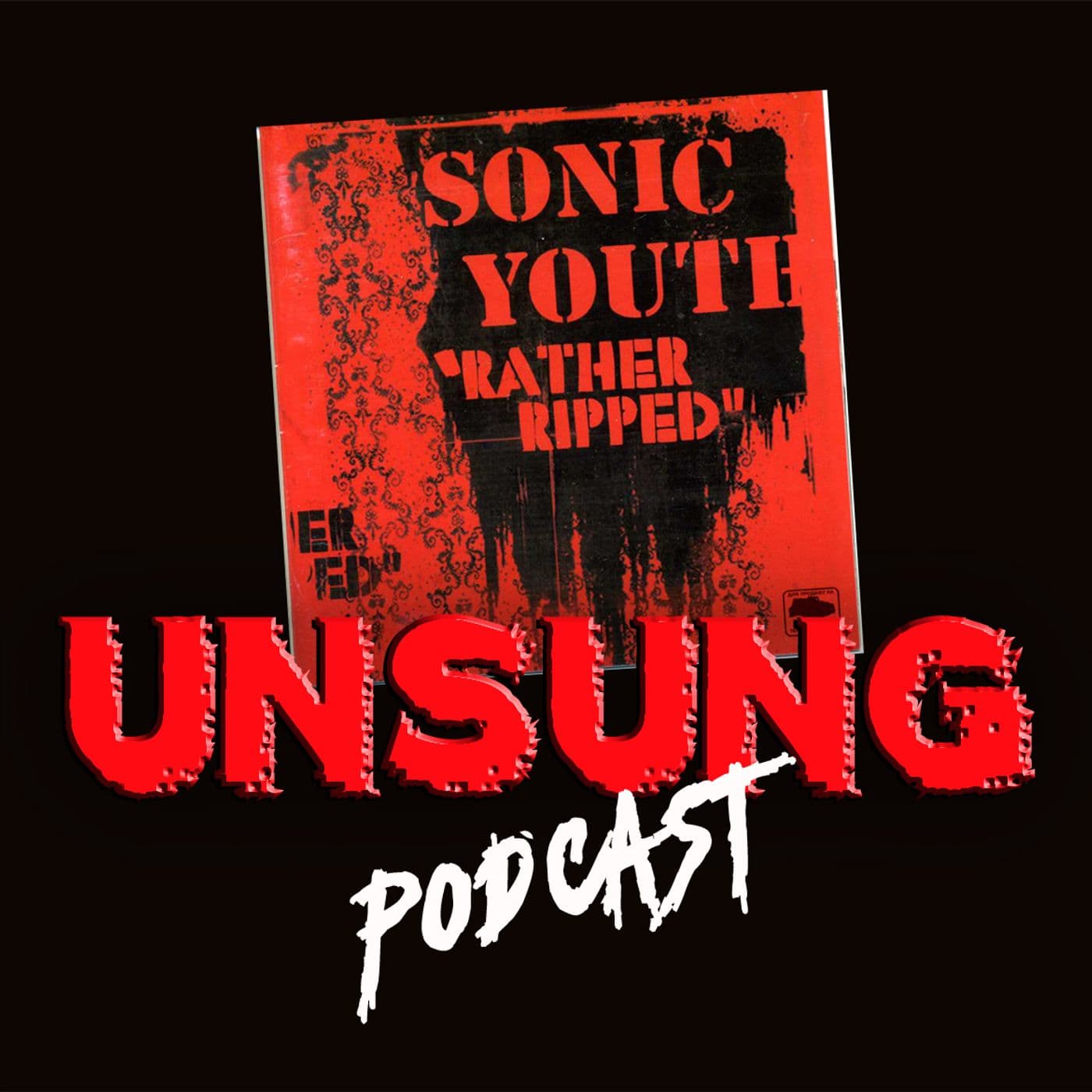
We’re back in action this week as Chris finally pulls the trigger on Sonic Youth. Behind the scenes he’d been deliberating doing this record for a while, but the time has finally come to do it. The episode turned out to be a lot longer than we anticipated - I mean, the band have a lot of records and a huge legacy - and we barely even scratched the surface of their discography, instead devoting more time to discussing their impact on music and culture. That’s why we split it into two parts. The vote comes next week, but for now, enjoy part one of our epic two parter on Sonic Youth’s 14th album, Rather Ripped.
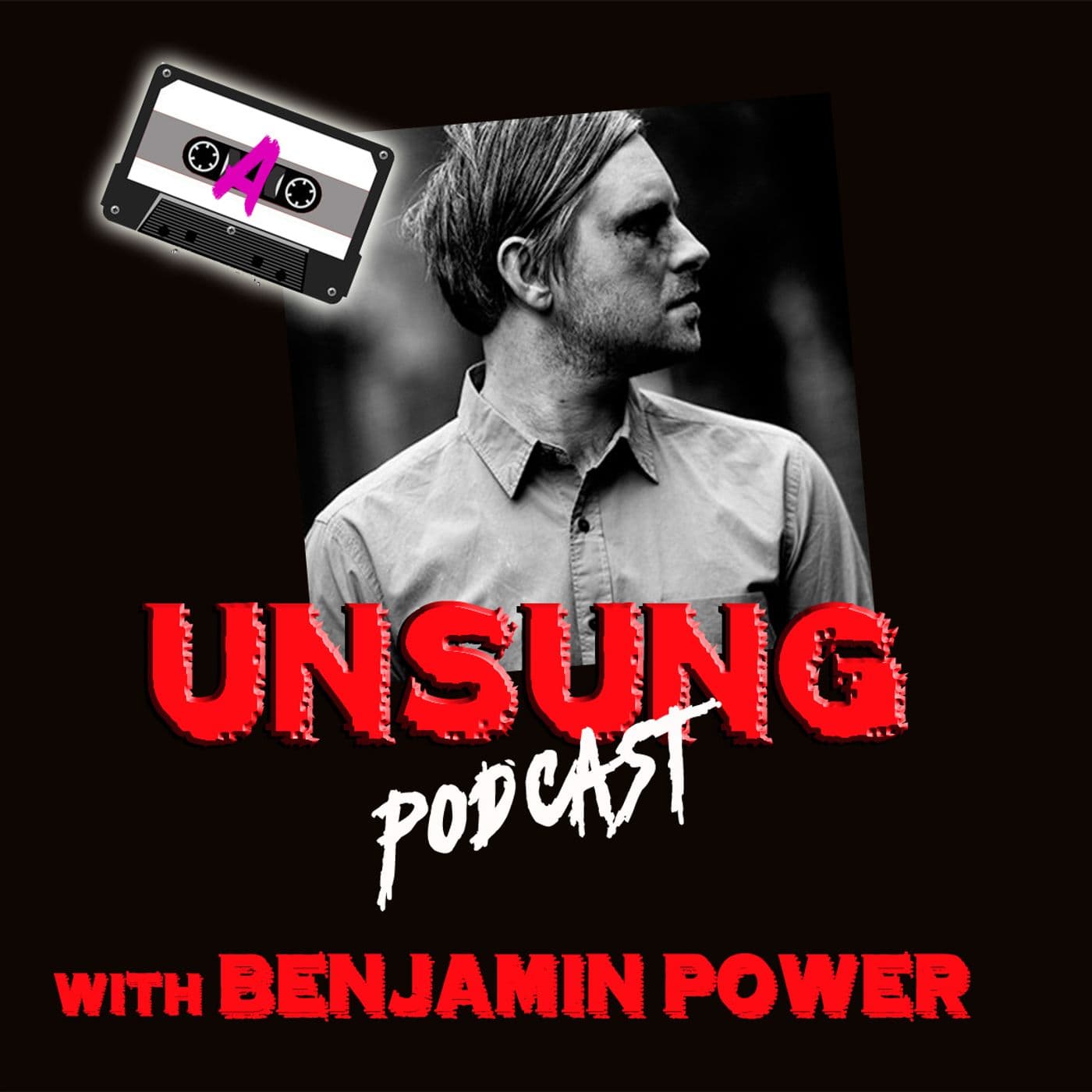
It’s taken more than a bloody year for us to arrange our second interview, but we did it! We promise not to wait so long for the next one. Promise. This week we sit with producer and musician Benjamin John Power, best known for his work in Fuck Buttons and Blanck Mass. In part 1 we talk early life, early influences, the health of electronic music, broken washing machines and sordid rap-metal pasts. Also, Chris raps. Which is a true feast for the eardrums. Mark is sadly absent from this episode as he’s was ill at the time for recording but don’t worry, you’ll hardly notice that he’s missing.
With Mark currently undertaking a road trip of the American Deep South, Chris and David thought this would be a fine time to talk about their own road trips, discussing some of their favourite tunes from playlists of old. They even trade some cool tour stories too, which is definitely worth the listen alone. And in true Unsung fashion Mark even finds some time to phone in his own comments. So this week, each of the lads take a turn at picking five songs that they feel are perfect road trip playlist fodder. And you can find the combined playlist below, if you want to listen along with the guys as you listen to the pod. We return to regular action next week.
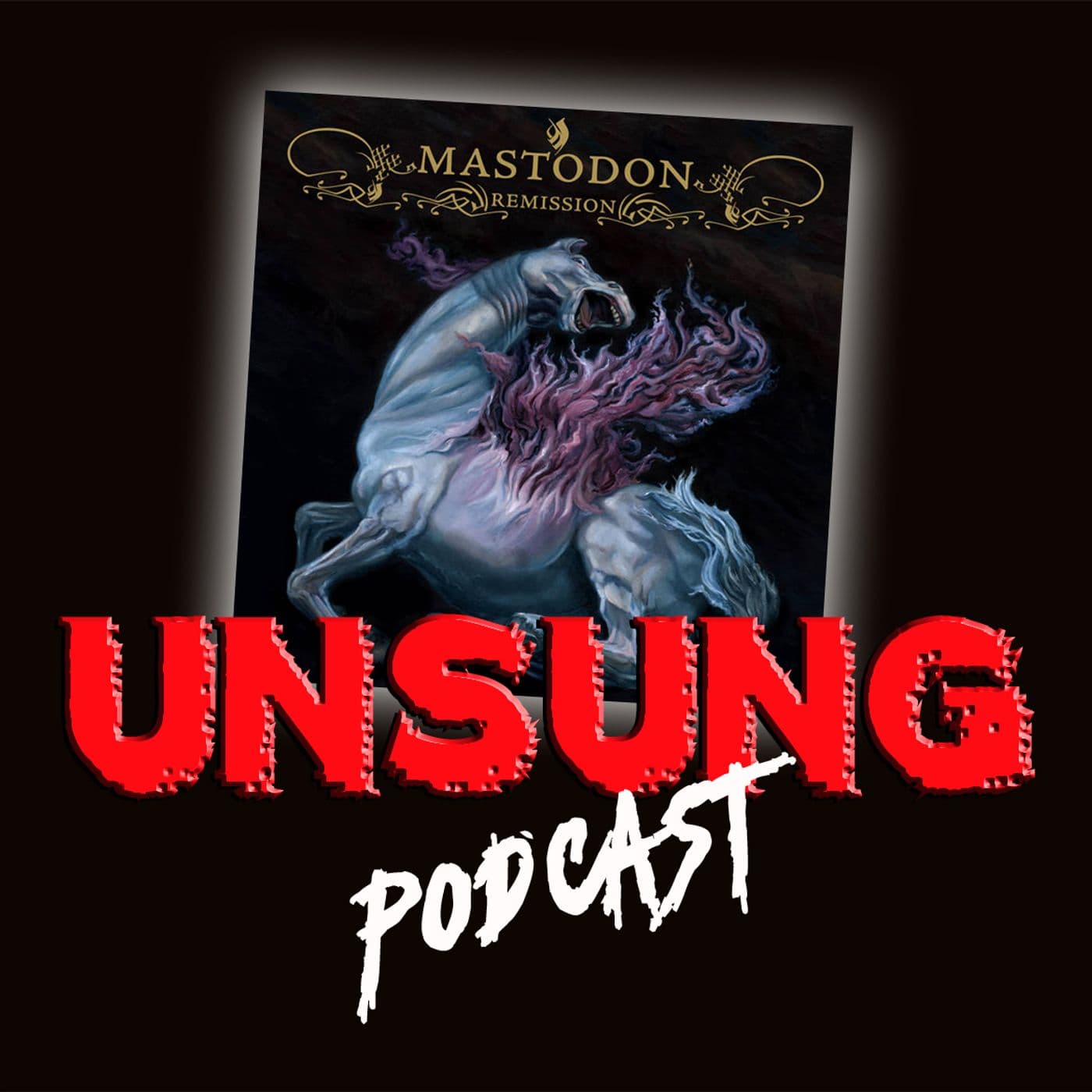
Purveyors of fine Southern Fried prog rock, Mastodon, are one of those bands who have slowly grown in stature with each album. Over the years, their sound has evolved, but the musicianship has remained nothing short of breathtaking. It’s rare you find a band that can play like fuck and continue pushing the limits of what they can do as their career progresses. Some will argue, as we do in this episode, that their earlier, heavier stuff is better, but that appears to be the minority opinion if record sales, tours, awards and accolades are anything to go by. Remission is their debut album, a masterwork in which they combine the speed of thrash with the twenty ton weight riffage one finds in sludge metal. There are also hints of the prog rock that they would later go on to embrace, yet as a statement, as the opening salvo of what has become a storied career, it heralds the arrival of something special. Many will say the two albums that follow this, Leviathan and Blood Mountain, constitute their best work. However, no on can deny that Remission is a fantastic start to a glittering career. Is this their Unsung classic? You know what to do.
When one considers the “golden age of hip-hop”, Public Enemy are rightly discussed as vital element of it. It’s a vitality that’s both earned and odd, as their acerbic, caustic, antagonistic, overtly political message may seem at odds with the kind of content their contemporaries were discussing. Yet when viewed as another facet in the rise, and dissemination, of the black culture that PE and their kin were at the forefront of in the late 80s, they can be viewed as part of a more complete picture that aimed to communicate the black experience in America at the time. Apocalypse 91… is the end of the band’s own “golden age”. Four albums in four years is a tall order for most acts, yet Public Enemy bring this period of their career to a staggering close with their fourth release, bringing things back down to a street level, and handing the sonic reins to The Bomb Squad’s proteges, The Imperial Grand Ministers of Funk. The result is that this sounds different from what came before, with a much more upfront edge, but the samples and production work are by no means watered down. On this episode we look extensively at PE’s early career, the controversy around the band, and wax lyrical on a whole bunch of other things besides. We know this band has another three great records, but in our view only two are unsung. Is this it?
O HAY Because we chopped this in two we decided to drop it on Tuesday instead of Friday. SURPRISE! In keeping with the usual “Ask a question, we’ll give the answer” theme of our Split 7” episodes we’re answering another question. This time, it’s one posed by Chris: who would be the worst band to tour with? It gives him an excuse to tell some of his own touring stories, which we think is the secret reason he chose this topic, but we’ll let him off with it. There’s some interesting choices in here, and some expected choices too. We hope you like it. Remember, you can subscribe at www.unsungpod.net/donate and get these episodes as bonus content on a regular basis. It’s fun, promise. As ever, if you have a funny/interesting topic you’d want to see us cover just let us know via your preferred method of communication: Facebook, Twitter, carrier pigeon, the comments etc.
This week David had an urgent family emergency and couldn’t join the proceedings, so we thought we’d shelf our Public Enemy discussion until his return. With Dave (mostly) out action, Chris and Mark decided to give the general listening public a little taste of what we offer our subscribers. Our Split 7” episodes is where you, the fans, give us a topic and we talk about it. This week we’ve chosen two, one by Mr. Ricky Stewart and one that we chose ourselves. Ricky’s topic was to see if we could pick albums who have had a run of three great albums in a row. Whilst our own choice is all about bands you would hate to tour with. David also manages to join us via the medium of WhatsApp voice memos, because we’re in the future after all. So yeah, we hope you like this episode. We enjoyed doing it. If you’d like hear more then all you gotta do go to www.unsungpod.net/donate and fling some cash at us. Any amount helps, and you’ll get access to our exclusive content. Everyone wins!
If, like the people on this podcast who are not Chris (i.e, most people), you fuck with Google and Search Engine Optimisation, you would know that Google likes it when you type a blog post that’s over 250 words. So now you know why that sentence above exists.. Seriously though, this week we’re discussing Italian jazz rock maestros Zu. Zu are an incredibly talented band. Since their first album 1999 they’ve gone onto create some of the most avant-garde jazz/rock music that you could imagine. It's a journey which has led them to the door of Mr. Mike Patton, the singer of Faith No More/Fantomas/Tomahawk/Mr. Bungle and, more to the point, the owner of the exceedingly weird Ipecac Records. Carboniferous is their debut release for Ipecac. It’s a challenging, doomy, metallic, jazzy, mathematical exercise in esoteric rock music. It explores as much territory as it possible for a band that contains a drummer, bassist and saxophonist, and from the word go it’s an exhilarating listen. On this episode we dive a little into their extensive back catalogue, talk about the collaborative nature of their music and even, EVEN, discuss jazz a little bit. The results are…interesting, to say the least. Is this their definitive album? As ever, you decide. Vote below and let us know.
We haven’t done a mixtape in a wee while so we thought fuck it, let’s do something completely different. This week we’re talking about the soundtracks from films that were commercial failures. There’s some surprisingly fertile ground in this genre, with some great films being considered box office flops, and some terrible films having great soundtracks or scores. The three of us take very different routes on this episode which one could definitely describe as good, bad and ugly. Chris chose the 1993 film Judgement Night, an average film which was an Emilo Estevez vehicle that strove to bust his Brat Pack image and cement him as a serious actor capable of taking on more gritty, adult material. The results are mixed. The soundtrack, however, is surprisingly good, with Immortal Records owner Happy Walters commanding some of the biggest rock and hip hop acts of the day to collaborate on a song. It’s a very interesting experiment. Mark chose the 1986 Prince car crash Under the Cherry Moon. An absolute disaster of a film - which Price plays a gigolo who attempts to swindle a rich heiress in the French Rivera - it received a commercial and critical drubbing. The soundtrack album though, Parade, is one of his best records and contains mega hit ‘Kiss’. And Weaver picked Under the Skin, the 2014 sci-fi art-house adored, Scarlett Johansson film which is perhaps best know as the one where she lures Glaswegian men into the back of a Transit van. It received a lot of critical acclaim but didn’t fare so well at the box office. The soundtrack was composed by London based singer/songwriter/composer/producer Mica Levi, and stands as the only proper score on our list. Which is the best? Well, you decide. We all thought the ones we picked were the best. Vote below.
Weezer are a hard band to like. We need to get this out of the way immediately: The Blue Album and Pinkerton are near flawless records, but there is no chance they will get nominated for inclusion in our discography. As Weaver states in this episode, if it were ten years ago then perhaps Pinkerton could be considered Unsung, but it’s now universally recognised that it’s equal to, if not better than, The Blue Album, so that’s a no go for us. It’s been a while since we did a big/popular artist, and Mark chose Weezer in order to discuss just how wildly their career swings from glorious to dreadful. But as it turns out, even people who like Chris and Dave who like Weezer had no idea that they were on album number 13. You might also be surprised to hear that, given that their fifth record Make Believe was so bad that even some die-hard fans deserted the band. Times have changed. Since that much maligned fifth album they have soldiered on, releasing a couple of good records and a few bad ones. The White Album is one of the good, seeing the band lean heavily on the Beach Boys in order to augment their signature pop-rock jams, whilst returning to the sunny sounds they so gloriously roared onto the scene with on their debut album. That’s not to say that this record stands tall alongside The Blue Album; it doesn’t, but what it does prove is that when Rivers and co really put their minds to it, they’re still capable of delivering wonderful, straight forward pop rock songs. As a band they’re also pretty fascinating. In true Unsung fashion we dig deep into their career and discover some wheat among the chaff. There’s also a particularly high brown nexus too, if you stick around to hear it. Is The White Album Weezer’s Unsung classic? Cast your vote and let us know.
Whilst D’Angelo’s R&B stylings weren’t exactly traditional, or even reflected the popular sounds of the time, Kelela makes him sound positively contemporary in comparison. Indeed, on her debut release she takes the Contemporary R&B rule book and throws it right out of the window. In fact, one could argue that she barely gave the damn thing a passing glance before she hurled into the street. Kelela’s music occupies far more esoteric, darker territory. Yes, there might be hints of 90s R&B in her vocals but it’s merely a nod to the past because what she does on Cut 4 Me is something altogether different. Assembling 9 producers for this record must have been no mean feat, but it sounds pretty well strung together. The dark, creepy, empty (in a good way) beats place her firmly in more experimental territory, producing a feel which is more akin to Frank Ocean than Alicia Keys. On this record she’s bringing in influences of bass, electro, grime and techno, completely shredding the blueprint for what R&B can or should be in the process. Many reviews called it “future R&B” and if you’re even remotely aware of the genre and its trapping, you’d be hard pressed to argue otherwise. Some of the people on this podcast are not at all remotely aware of the trappings of this genre, so when Weaver brings it to the table it has somewhat of a mixed reception. A die hard Kelela fan, he presents it for inclusion in the discography not just because he loves or because of the way it stands out and makes you think, but also because this record seems to have influenced, and continues influence, other alternative R&B artists, many of whom are mentioned in this episode. Along the way we discuss how more black artists are gaining prominence in alternative music circles, Chris devices a music game for you fans, and we unveil a new nexus. What do you think - should it be added into our discography? Vote below.
If you’re of a certain age, like your three esteemed hosts, there’s a fair chance you’ve heard the name The Eighties Matchbox B-Live Disaster. The smashed their way into the music press with this, their debut album, and a reputation for chaotic, enthralling on stage antics that captured the attention of music lovers and press alike. They also happened to pop onto the scene at the same time as a bunch of scuzzy garage rock bands, of which they sound absolutely nothing like. They arrived with the plaudits and credibility that some of those bands, like The Datsuns or The D4, hadn’t really shown. What’s more, their sound was just weird compared to what was going on at the time. They turned up, kicked the shit out of everyone, and stuck around to watch the scene pick up the pieces and vanish into the distance. And their reputation certainly wasn’t harmed by their strange look, either. ‘Horse of the Dog’ heralded the arrival of a truly strange, unique band who would later go on to release a further two albums which saw them showcase the whole gamut of their weirdness, moving away from bluesy, gothic psychobilly, to punk n roll, scuzzy desert rock and eclectic psyche. On this episode Chris lays bare his adoration for the band, and we cover the band’s back cat, talk about some of the weird support slots they picked up over their career, do a potted history of psychobilly and much more. Is ‘Horse of the Dog’ the best 80s Matchbox album? Vote on our Facebook page.
Grindcore is what happens when hardcore punks start listening to thrash and decide to slam both together and go faster. It’s extreme, uncompromising and sometimes overwhelming. Pig Destroyer are all of these things and more. Their third album ‘Terrifyer’ is often heralded as a landmark metal album. Many say it’s one of the most important grindcore albums ever written, whilst OG grindcore fans think it’s just not dirty enough. Spoiler alert: we agree with the former. We discuss the genre’s origins, touch on subgenres, dive into the various projects of Scott Hull and give Pig Destroyer’s discography a once over. We also touch upon J.R Hayes’ brilliant lyrics and Scott Hull’s exceptional playing. Is this their best album? Vote below.
Manchester Orchestra have been a band since high school. Which means Andy Hull has been making music, touring and selling actual goddamn records for around half his life. He’s the same age as a couple of us (not Chris) and it really does make you think about what could have been if us three music lovers hadn’t dicked about for so long and just sold out years ago. But alas, that was never in the cards. This week we’re talking about Manchester Orchestra’s third album, and major label debut, Simple Math. Along the way we go deep into their discography, with both Chris and Weaver displaying a large degree of ambivalence to just about everything. In fact, Weaver even crowdsources his opinion, such is his unfamiliarity with this band’s take on earnest emo music. You could say that such attitudes are becoming a feature of many of the episode that feature records picked my Mark… We also talk about how they managed to rise so quickly despite any apparent lack of major label involvement, and a bit more besides. Is this their best album? You decide. Vote on our Facebook page.
Indie darling and savvy industry operator Santi White has been involved in music than you might think. Formerly and A&R rep for Epic Records, she’d been producing and writing songs for other artists for years (as well as kicking around in a punk band for much of the early 00s) before her debut album dropped in 2008. The result of all that time working behind the scenes meant that Santi emerged with a polished, considered and eclectic record that belies its debut album status. Is it perhaps too carefully engineered? That’s one of the many things we discuss on today’s episode as we take a tour of her career thus far, whilst Chris and Weaver get into it a couple of different topics. It’s a pretty interesting discussion all round. As ever, it boils down to whether or not you think this album is worthy of inclusion in our discography. Vote below. Then do us a solid and tell all yr friends.
At some point, some journalist somewhere decided that “celtic fusion” was a genre, and subsequently placed the music of Martyn Bennett in it. What does it mean? Well, your guess is as good as ours. We can safely say though that Bennett’s fifth and final album ‘Grit’ is definitely a genre fusion of sorts. We’ve dedicated a fair amount of time to discussing Scottish artists and albums on this podcast, but we’ve yet to touch on traditional Scottish music. Martyn Bennett is very much from a folk/trad background, but his approach is way more modern and genre bending than most artists. ‘Grit’ is a fascinating album by a fascinating man. Musically, it perhaps sounds a little dated today, but it still has some massive tunes on it. This week Weaver and Chris get into the artist, the album, the context around it and even go on some interesting excursions about the Scottish traditional/folk scene as a whole. As ever, you decide if it makes it into our discography. Vote via Facebook.
We return to our regularly scheduled programming this week as we tackle a punk album which is difficult to categorise. A Wilhelm Scream originally started off as a skate punk band in the mid-90s, first under the name Koen before releasing two albums as Smackin’ Isaiah. As members rotated in and out the band’s sound started to change, and come the early 00s the band eschewed it’s old name and started to move away from skate punk entirely. If we were to take a stab at it, you could probably call them tech punk. Indeed, many have deemed them this over the years, and as such they’ve went onto influence a number of other bands who combine the technical skill and speed of metal with a hearty dose of skate punk. Imagine Bad Religion playing Iron Maiden riffs and you might come a little close to the band’s sound. This week we discuss the band’s third album (or fifth if you take into account the two records released under another name) ‘Career Suicide’. This 2007 release marked something of a departure for the band, where they decided to dump any post-hardcore and emo elements from previous outings and simply focus on riffs, speed and more riffs. We cover the band’s history and ponder whether the difficulty in categorising them may have had ramifications in terms of career “success” (whatever that means). Is this their best album? That is, as ever, up to you to decide.
This week we’re joined by friend of the pod Dr. Jason Costello, as we take a slight diversion for the usual format and discuss algorithms, Spotify and the future of music. It may come as a surprise to some people, but algorithmic music has been around in various forms since the 1950s. The first instance of computer-generated composition dates back to 1955-56, where Lejaren Hiller and Leonard Issacson at the University of Illinois used a high-speed computer to create the Illiac Suite. The piece itself was composed by a computer and later performed by a string quartet. So the concept of computer generated music pre-dates a lot of the music we all know and love. And computers have been used to create, and aid in the creation of music for decades. Similarly, algorithms have been used for many, many years to do any number of things. After all, an algorithm is simply a set of instructions that are executed in order to solve problems and complete tasks more efficiently. Algorithms are of course all the rage. They power everything from the computation of an individual’s paycheck by their employers, to the very backbone of the internet itself. A series of computer programs of varying levels and complexities that have become increasingly entwined in our daily lives. In fact, it may prove near impossible for many people live completely algorithm-free lives, such is the way computers regulate large parts of our society. With increasing advances in artificial intelligence, it should come is no surprise to learn that there many people out there who use algorithms and AI to compose entirely original music. In fact, you can even do yourself by signing up to Jukedeck. Whilst people are still experimenting with how to successfully create music which passes as being made by humans, computers are becoming ever more adept at spitting out music on command. Spotify and Big Data The vast majority of people who are reading this right now, almost everyone who listens to this podcast, is signed up to a streaming service. These services are super convenient, and extremely useful for getting you the media you want almost instantly. We won’t bore you by explaining how these work, but you’re no doubt aware of the way these services harvest data about your behaviours on their services. It’s why Spotify can create a daily mix that combines stuff you love with stuff you might not have heard; it’s why they can recommend what to put on a playlist after you add a handful of tracks. They know your preferences. That data works both ways, and it’s this data which makes up the powerful algorithms these services use to give you what you need before you even know you need it. This data can also be used in reverse to mine the preferences of individuals to create music. Music which may not necessarily be designed for you the individual, but could certainly be created by finding out the traits of the most popular tunes and crafting songs from that data. It’s not quite Terminator 2 of course, but it does raise many questions. Jason is on hand to field these questions as we get into how and why this is happening, and ponder on what the future holds for royalty free and incidental music. Along the way you will hear some examples of computer generated music, and some artists who have used such tools to create music that they have later went on to augment. We also chat a lot about how big data effects all the creative industries and so much more.
If you expected the mystery record, our first of 2019, to be a neo-soul album then kudos, you clearly read our minds. And if you did actually read our minds, good God was that a mistake. This week we’re a man down as David attends to some family business, but that’s ok! Not only do Chris and Mark talk about D’Angelo’s inventive third album ‘Black Messiah’, but they cover all the topics you love: race, religion, abortion, consent, Veganism, sex, money, drugs and alcohol. It’s a real rollercoaster of an episode. And yes, we were entirely sober. We also get down to the actual business of discussing D’Angelo’s career, the RnB stylings of his first two albums, his mysterious retreat from the public eye for 14 years in between ‘Voodoo’ and ‘Black Messiah’ and we attempt to do a little deconstruction of his reasons behind the huge gap between them. There’s also a couple of interesting nexuses, and Dave makes a miraculous appearance at the end to back Mark’s decision on this record. Have we finally lost the plot? You can decide. If this is how 2019 starts, lord knows how it’s going to end. Is ‘Black Messiah’ worthy of a place in our discography? Vote below.
We retreat to Scandinavia again this week, this time travelling further north than ever before in order to meet Goat. Whilst the band (allegedly) come from the Arctic Circle, the music couldn’t be further from the frozen north in sound. A strange fusion of psychedelic rock and afrobeat, ‘World Music’ plays like a 60s throwback. All at once intoxicating and rousing, it’s an assured debut by a mysterious, talented band. There’s everything from Can to Parliament found in here, alongside influence from a bunch of African artists. We touch upon all of this in today’s episode, and a lot more besides. Chris has compiled a playlist that serves as a brief intro to Afrobeat and more. Is this their best album? As ever, the decision is yours.
Once we’d finished our lengthy diversion into the Satanic territory of black metal, we thought we’d change direction entirely and cover another hip hop album. Cue Chris’ mild bemusement at such an alien genre. We briefly touched upon Danny Brown in our El-P episode, as he’d appeared on a Run the Jewels song, thus giving Mark his usual lazy nexus link. The truth is though, whilst David and Mark both immediately agreed upon this album when the suggestion of doing another hip hop was floated, further reflection on Danny Brown’s career proved troubling. Whilst both gents are fans of his work, Chris was left feeling cold due to the problematic (at best) content of some of the lyrics, particularly on earlier Danny Brown records. We reckon with all of that, wondering why such musical tropes are still acceptable today in the wake of the me too movement. It’s not all doom and gloom though; there’s a great deal of discussion around the sonic texture of the record, and why it stands apart not only in Danny Brown’s catalogue, but in hip hop as a whole. It’s a feisty, occasionally cantankerous, often insightful discussion around Danny Brown’s oeuvre and the language and register of hip hop as a whole. Is this Danny Brown’s best album? As ever, only you can decide.
After doing something new and splitting dear Tori Amos into two parts, we decided that we’d do another new thing. It just so happens that this new thing coincides with the 20th anniversary of …And You Will Know Us by the Trail of Dead’s second album ‘Madonna’. So to celebrate this occasion Chris decided that we should do a head to head between ‘Madonna’ and ‘Source Tags & Codes’. Weaver dutifully agreed, initially vowing to take the corner of ‘Madonna’ whilst Christ decided to fight the case of ‘Source Tags & Codes’. However, as the week of recording approached, it seemed that the boys had decided that they would switch albums because each had grown fond of the other’s record. So the result is Weaver arguing for ‘Source Tags & Codes’ and Chris is arguing for ‘Madonna’. Which of these is the best Trail of Dead album? Well, that’s totally up to you.
And so here we are, episode 59. Part two of our two part Tori Amos sorta kinda semi special. We never intended for this episode to expand into a two parter but as fans of the pod know, when Chris does his research he does his research so when it comes to an artist with a vast catalogue well…you get what you pay for. If what you pay for is a thorough discussion on the fourth Tori Amos album. Yes, this is what we promised from the start - an in depth dissection of ‘From the Choirgirl Hotel’. We are somewhat split on this one, but one of the things we definitely agree on is that this record definitely has some great songs on it. On this episode we discuss the album, where it sits in her discography and so much more. We also finally tackle the Dave Grohl Nexus, which is delightful. Is ‘From the Choirgirl Hotel’ the best Tori Amos album? Only you can decide. Vote on our Facebook page.
Every time we sit down to talk about an artist with a rather extensive back catalogue things end up escalating into a mammoth career retrospective. Yet, despite being fully aware of this we decided to try to talk about Tori Amos’ career in a brief, but thorough way, only to find that, by the time we had finished recording, the whole bloody thing ended up being a rather unwieldy 2 hours long. So, to spare both your sanity and ours, we decided to split this episode into two parts and put them out a week apart because hey, who doesn’t like a cliffhanger? Chris, unabashed Tori Amos fanboy, decided that her fourth album ‘From the Choirgirl Hotel’ was perhaps the most interesting overlooked album from her storied 25 year plus career, and put it forward for consideration for our discography. As an artist with 15 albums, the challenge was finding one which retained some of the classic, Tori Amos sound but pushed it in new, exciting ways, yet was still underappreciated. This was Chris’ choice. Despite our best efforts to keep things brief, the episode ended up ballooning and as a result part one focuses almost exclusively on her entire back catalogue. Sadly, it means that the Dave Grohl Nexus is missing this week as it falls over onto next week’s episode, but despite that omission we’re confident you’ll enjoy this whistle stop tour of one of this fascinating, eccentric artist. We’ll see you next week for the vote.
It’s hard to believe it’s taken us this long to get to a post-metal record, but here we are. Alongside Traindodge this is one of the more “obscure” records we’ve covered. *shels are a Trans-Atlantic project that comes from the minds of singer and guitarist Mehdi Safa and drummer Tom Harriman. If you’re even remotely familiar with the post-hardcore scene in the south of England you’ll know that this band come from impressive stock. Safa and Harriman formed *shels after the demise of Mahumodo, and over the years the project has included members of Eden Maine, Fireapple Red and Devil Sold His Sold. Their sound is expansive, and when it came to replicating in a live environment the line-up expanded, and at some points reached as many as 8 members on stage, including a trumpet player and three guitarists. It might seem excessive on paper, but once you become acquainted with the breadth and depth of their sound, it suddenly makes a whole lot of sense. So this week, Weaver brings their debut album “Sea of the Dying Dhow” into the show for our consideration. What follows is a whistle stop tour of post-metal spanning both sides of the Atlantic, and we go deep on the band, the genre and more. Is this the best of their two albums? Only you can decide. Vote below.
The mystery at the end of last week’s episode is a mystery no more. And Weaver didn’t even pick it, it was Mark in the end. We lied to you. We lied and we’re sorry. Instead of trying to reckon with some hot button sociopolitical issues like we did last week, this week we’re actually talking about The Bronx. A lot. We cover their entire discography (note: we did NOT cover Mariachi El Bronx, but they are mentioned) and try to figure out what they did to get signed to a major label so goddamn quickly. Conspiracy? A rare moment of an A&R guy actually caring about a band? Is it because they’re actually really good? All options are considered. Aside from rampantly speculating about how they got a major record deal so quickly, we also go on quite the trip with the Dave Grohl nexus, which this week encompasses Skrillex, Lady Gaga, Jane’s Addiction, Alanis Morrisette and of course, the singer of Nirvana himself, Chad Kroeger. It’s a rare moment of consensus from yer bois. Do you think this is the best album by The Bronx? The power is in your hands.
Happy new year folks! If you’re still with us after last week’s debacle then welcome back! This episode is a much more upbeat affair. It’s also 50% drunker. If you didn’t listen to part one, we highly recommend that you do. Nevertheless, the format is as follows: we answer questions you guys put to us and have a jolly good time disappearing up own arses. This week we’re talking about albums we can’t nominate for the discography due to how big they are; discussing which of the albums we’ve reviewed that we keep revisiting; our favourite song we’ve discovered, and our favourite Dave Grohl Nexus. There’s an edit of this episode which is pure nonsense. That’s how drunk it got. But Chris managed to pull it into something coherent. We hope 2019 is a great one for all y’all. We’re looking forward to doing some new stuff. Thanks for sticking with us.
Here’s a story. When you start a podcast you kinda want people to listen. I mean, we wouldn’t be making the bloody thing if we didn’t think we could offer something interesting and/or entertaining. You never really expect people to do it though, and so when you start to ask the people you didn’t expect to listen to give you money for the whole damn endeavour it feels a bit like daylight robbery. Yet, people listen. Not a lot, but enough. And then people donate. Not much, but a little. Then somehow, it begins to feel like a proper thing. Pride swells, hearts flutter and brains are completely baffled by people’s willingness and generosity for giving money to three guys who are probably still chancers. So we’d like to thank all of your for giving a shit about this like we do. As some may know, a while ago we put a post on Facebook saying that if someone would be daft enough to donate £100 we’d do an episode with them in their living room on a record of their choice. We didn’t think it’d actually happen, yet it did. The man? Dundonian legend Fraser Stewart. Some may know him from the band Fat Goth. In keeping with the very spirit of this podcast he chose an Unsung band with an Unsung record, pulling the album ‘I am Forever’ by a little known band from Oklahoma City called Traindodge. This is our thanks (?!) to him. And he takes on a wild ride as he talks about his connection to this band and their music. Also, he finally did a theme tune for the Dave Grohl Nexus and we must warn you - it’s so good it might actually break the internet. Is this the best Traindodge album? Vote below!
In the immortal words of Noddy Holder - it’s Christmas. As it’s the end of our first year we thought it was time to start a new tradition, using the final two weeks of the year to reflect on the last 52 weeks and answer a few fan questions in the process. That’s right, it's part one of the Unsung 2018 Xmas Xtravaganza. On this week’s episode we get a little drunk, a little lary and very self-aggrandizing as we talk about our favourite finds of the year. We also give out a few Christmas presents to ourselves as we each save an album that didn’t make it into the discography. Dave askes us what our favourite Wikipedia/research find of the year was and we wrap it all up by talking about our most overrated songs and albums of the year. It is indeed a time for joy. Unless you’re an LCD Soundsystem fan. In which case you might want to skip this one.
Well folks, we did it. We made it through 52 consecutive weeks without killing each other. Also, we didn’t miss an episode. Please send us high fives. We left last week’s episode on a bit of a cliffhanger as Chris hadn’t quite decided which Helmet record he was going to do, but when it came down to it there was only one choice - ‘Meantime’. The band’s second record, their major label debut and the record we got our name from. So I guess you now know who also came up with the name of the podcast. Anyway, we decided to go deep on Helmet’s discography and in the process we all came to some interesting, and different, conclusions on the band’s work. Want to know more? Listen. Yes, it’s another cliffhanger! You’ll need to listen to see what our individual opinions are. Helmet’s best album? Well, you decide. Vote below.
This week on the Unsung Podcast - three lads go off the rails. Weaver decides to pick Carly Rae Jepsen’s third album ‘Emotion’, then throws a curveball by saying the mini album of B sides she released after it is much better. So on this episode we talk about both. Chris is pissed off, throwing derision around the shop like it’s going out of style. Weaver remains staunch in his defense of the record, and Mark briefly loses his shit in the middle before deciding that this album is beige wallpaper. This episode is a bit wild, so we hope you enjoy the ride. You can vote on if this record deserves to be added into our discography below.
A lovely return to hip hop this week, as Mark nominates El-P’s fourth solo album ‘Cancer 4 Cure’ for inclusion in our discography. David and Mark go deep on El-P’s back catalouge, taking detours through the discographies of some Def Jux artists and giving some time Killer Mike’s ‘R.A.P Music’, which was produced by El-P and came out within weeks of this album. And what conversation about El-P and Killer Mike can be complete without mentioning Run the Jewels and the staggering success they’ve had over the past five years? We cover that too. Is ‘Cancer 4 Cure’ the best El-P record? That’s up for you to decide. Vote below.
Back to more conventional territory this week. Sort of. Mike Patton, in fact not just Mike Patton but every member of Tomahawk, has been involved in a vast number of musical projects over the years. With most of the Tomahawk releases, one could convincingly argue that the band are the fulcrum for some of their most “conventional” work. Whilst all have been involved in some of the most important records ever made, they’ve never quite produced anything like Tomahawk. Conventional wisdom amongst fans of the band dictates that the band’s self titled first album should take the crown as their best work. We’re here to argue differently. Yes, you read that right - we’re here to argue differently. All three of us. United in a rare moment of praise for an album. We dive into the band’s history and take a tour of their entire discography, briefly touching upon each individual artist’s history but never lingering on it too long, because each one of them has a record we’ll cover at some point in the future. So enjoy this tour of Tomahawk and their fantastic discography, then tell us - do you think it’s their best album? Vote below.
Nothing like a curve ball, eh? This week Weaver dives deep into his catalogue of dance album and produces the spell binding ‘Glass Swords’ by Glasgow’s very own Rustie. This is our first time we’ve ever covered a dance album and the results are…mixed. ‘Glass Swords’ is often cited as being one of the most important and influential electronic records of the decade. Dave leans heavily on this fact, whilst citing how it’s both bizarre and wonderful that artists like Rustie and Hudson Mohawke have helped to define the sound of trap music; no mean feat when you considered the distance between Scotland and the American deep south. Dave and Chris give us a whilst stop tour of the more esoteric side of UK dance music covering labels such as Numbers, LuckyMe, PC Music and Warp amongst others. Is ‘Glass Swords’ Rustie’s best work? Only you can decide. Vote below.
Due to some personal issues David couldn’t join us this week, which means that Rustie’s ‘Glass Swords’ has again been pushed back until next week. We didn’t think it’d be right to cover a record he chose without him. So Chris and Mark decided to try something a bit different. Threatin is ostensibly the solo project of LA based musician Jared Threatin. In November 2018 he and four sessions musicians embarked upon a European tour in support of the band’s debut album ‘Breaking the World’. Once they began their tour things took a turn for the strange. This week Chris and Mark dust off their old investigative journalism hats and take a look at the curious case of Jered Eames. Threatin, and the media shitstorm which followed, serves to highlight a a huge number of shady dealings that go on in the music industry on a regular basis. From those who take the mantra of “fake it til you make it” quite literally, to those at the very top of the music industry who have no qualms with using bots to enhance the figures of some of the world’s biggest artists, it’s clear this is not just an isolated case. So sit back and enjoy a deep dive into the career of a fictional band, and listen in wonder as we tell you just how messed up the internet can be for musicians of all kinds. Links: https://www.sickchirpse.com/guy-paid-thousands-pounds-tour-uks-most-prestigious-venues-play-nobody/ https://www.spin.com/2018/05/tidal-fake-streams-kanye-beyonce-investigation-300-million/ https://readwrite.com/2013/01/28/youtube-bot-vevo-videos-lady-gaga-spk/ https://medium.com/cuepoint/the-power-of-false-pretense-87f6cd4d0d31 https://williamsonsource.com/10-things-about-brentwood-we-bet-you-didnt-know-lace/ Whyte Lace commerical: https://www.youtube.com/watch?v=ZQwgVYzEEnQ
After the eclectic weirdness of Butthole Surfers things are taking quite a dark turn with Chelsea Wolfe’s fourth (or fifth depending on who you ask) album ‘Abyss’. It’s a heavy album. Musically, it’s heavy and muscular in an almost doomy way, and in terms of content it could give Robert Smith a run for this money. Chelsea plays with a lot of different influences on this record; the aforementioned heaviness of doom; unsettling industrial soundscapes; the bleak sparseness of neofolk; the chime of alt. rock; all of it is represented here and pulled together, and apart, in fascinating ways. On this episode Mark offers his reasoning behind choosing this over ‘Pain is Beauty’, whilst Weaver explains how he too found it hard to pick between the too. Chris defends ‘Hiss Spun’, whilst also giving us an insight into her past. As ever, the boys also take a tour of her discography, before taking strange detours into sleep paralysis, the puritanical streak of left and a bunch more wild and whacky sidebars. Also, the Dave Grohl Nexus falls apart in front of Mark as the other two bust out some truly impressive connections. Is this her best album? Only you can decide. Vote via our Facebook page and as ever, don’t forget to share it with your friends.
There are screeds and screeds dedicated to the Butthole Surfers. For most of their career they were a law unto themselves musically, and for a large part of their early career they were also a law unto themselves physically. Their 80s gigs are the stuff of legend, such was the level of disregard for human decency and safety. Yet most stories are bookended with just how good they were live. Not because of their on-stage antics - although we can imagine slight/massive fear for one’s health or life would certainly heighten the experience of seeing them - but because of how well they managed to play and sound in amongst the whirling maelstrom of noise, limbs, fire and nakedness that they brought to every venue they stumbled into. For the most part their records straddle the line between awesome genre bending songwriting and outright no-fucks-given avant-garde nonsense. And when we say nonsense we mean it in the very truest sense of the word. They were a band unconcerned with trends, and at many points, completely unconcerned with traditional songwriting in general. On this episode Chris picks their album Independent Worm Saloon because he feels it is the album where the Butthole Surfers embrace the tuneful directness that they frequently toyed with on previous records, whilst still maintaining their patented weirdness. Weaver reckons that Locust Abortion Technician is a better representation of the real Butthole Surfers, whilst Mark agrees with Chris. We dive deep into their history and discography here, so the episode is a little longer than usual but it’s also a lot of fun. Is this their best record? Only you can decide. Vote on our Facebook page below.
Whether you know them as purveyors of 80s synth pop goodness or pre-post rock (yes, we understand that pre-post rock is a strange way to put it) pioneers, Talk Talk have left an indelible mark on music. Bands from all genres cite their influence. From the likes of No Doubt to Interpol, Sigur Ros to AFI, Talk Talk’s influential status is resolute. Well, it’s resolute to most people. On this episode David gives us a stirring defence of this most obtuse of albums; a jazzy, experimental rock album which spends most of the time being minimal and mellow as opposed to bombastic and loud. We take a deep dive into their discography (which is mercifully small compared to some of the recent episodes), and ponder if this really was the beginning of post rock as we know it. Mark sits on the fence whilst Chris pulls out something of a face turn as he tackles the album from an intellectual point of view. Do you agree? Vote on our Facebook page. Also, if you can spare a second, tell a friend!
It’s punk-o-rama this week. Well, it’s not actually the punk-o-rama compilation or anything, but it is the first punk record we’ve covered a little while. Mark’s choice is ‘Black Sails in the Sunset’ by AFI, a band whose career has shifted in unexpected ways since their inception in 1991. From snotty skate punk to eyeliner soaked, Misfits aping goth-punk, straight through the mid 00s emo trend right up to their reinvention as a rock band with heavy synth-pop elements, AFI are an outfit who have followed their muse faithfully, never afraid to go in a different direction if the song demands it. Yet with such a fluid approach to genre as comes a mixed bag of success. 'Black Sails’ marks the midway point between their punk and goth vibes, channelling the Misifts but hinting at something more textured that seemed to lie just beyond. Mark attempts to make a case for why this is the best AFI record, before revealing how in depth analysis of it lead to a slight change of heart. Do you agree? Vote on our Facebook page. Also, if you can spare a second, tell a friend!
We all love this record. Let’s just get that out of the way right now. It stands out in Devin Townsend’s oeuvre as being perhaps the single most focused and heaviest thing he’s ever done. It’s tight, almost organic feeling, and not a single not feels wasted. Townsend’s back catalogue is massive, so in this episode we wrestle with it as best we can, all whilst returning to the drive of the man himself. His discography goes in just about every direction you can imagine, but each new path he treads he seems to do so in the most extreme way possible. Over the top, ambitious and with an immense sense of humour, we felt that this album is what best represents Devin Townsend. Do you agree? Vote on our Facebook page. Also, if you can spare a second, tell a friend!
One could say that W h o k i l l is, objectively speaking, a musically fascinating record. Whether or not these compositions and style resonate with you is a different matter. On this episode Chris picks this record and says it’s his “purest” musical choice yet. The reasons why are fairly clear - great hooks, weird song structures and composition that don’t feel overbearing, a multitude of different layers and textures, wonderful attention to detail and stunning production. However, on the other side of the fence, both Mark and Weaver find it difficult to grab on to. Both are able to appreciate the things that are happening on this record, and agree that Merrill and Nate are extraordinarily talented musicians, however they both felt there was nothing to latch on to here. We also return to the topic of cultural appropriation again, particularly as this is something which has followed the band around with each album. Is it possible to draw a line between what’s deemed as reverence and appropriation? We’re not sure. Is this the best example of tUnE-yArDs work? Should it be entered into our discography? Vote on our Facebook page!
Yourcodenameis:milo are one of the most fondly remembered bands which were part of the post hardcore influenced Britrock that made up the popular end of the British alternative music scene at the start of the century. And rightly so, they packed a ton of ideas into their music and were years ahead of most of their contemporaries when it came to the more technical aspects of the craft. This week we talk this album and the band’s history. Questions are asked about how they seemed to spring out of nowhere, releasing their music on major labels and then vanishing. Weaver gives us a history of the band and puts in an impassioned case for why this record needs to go into our discography. You can decide its fate by voting on our Facebook page.
Sometimes we talk about popular records on this podcast. By popular we mean “has sold a boatload of copies” and La Roux certainly falls into the category of having sold a boatload of copies. Indeed, the Mercury Award nominated, Grammy Award winning, platinum selling artist could also be comfortably described as popular in just about any capacity you care to think of. Chris, whilst not disagreeing with this (and to be fair we’ve touched on other albums which have sold as many if not more than that this record did), believes this record is overlooked because of its perception as a pop record. He puts in an impassioned shift here, explaining how this album is actually way more than the sum of its parts. Weaver fundamentally disagrees, and what follows is a truly interesting conversation on what popular music is, what our discography should or shouldn’t entail, and where we draw that line. We do also talk about some of the bangers on this album because there’s at least a few on it. Is this Unsung? You can let us know by voting on our Facebook page.
If you like hardcore/metalcore/mathcore/heavy music you know of Botch. You know how good this record is. You don't need us to convince you otherwise. If you haven't heard it, then you should rectify that immediately. Botch set the blueprint for modern metallic hardcore as we know it. Most bands since have taken a lot from this record. Listening to it now, especially if you haven't heard it before like Mark, sort of feels like walking into an old, pristine home and immediately feeling comfortable in your surroundings. For a band that only existed for 8 years, they sure left their mark on music. They've since scattered and went on to create a huge variety of music, some similar, some totally different to Botch. What you need to know here is that we unanimously agree on this record. On the episode we dive into their history before dissecting the record, revelling in its daring, brutal glory. Vote on our Facebook page.
More hip hop is good for the soul. Or something. This week we take on our third hip hop album in the form of Sage Francis' 'A Healthy Distrust'. This album, his second, was his first release on Epitaph records, marking the label's first foray into hip hop. Showcasing a darker sonic palette than his previous release, 'Personal Journalist', this record finds Sage doubling down on the political and personal content, whilst creating a dense, paranoid soundscape that captures the sound of a post 9/11 world very well. Chris remains the whitest guy in the room on this episode as Mark and Weaver do the driving, discussing his back catalogue and how his sound has evolved over the years. We also talk a little about cultural appropriation and wonder if the world really needs another three white guys talking about hip hop. Is this his best album? Only you can decide. Vote on our Facebook page.
To borrow a quote from the episode? "Why the fuck are we talking about Iron Maiden?" "Because they're fucking Iron Maiden!" It's a fair point. Can a band as big as Iron Maiden ever be Unsung? Weaver pulls out all the stops as he puts forward the case as to why the first Iron Maiden album is not only their unsung classic, but their best album without question. We really get into it with this episode. Chris hates Maiden and everything they stand for, whilst Mark, an unabashed Maiden fan, revels in the jousting and drops some knowledge of his own. The Foo Fighters' Nexus gets a bit fruity this week, and everyone agrees at how much of a massive arsehole Paul Di'anno is. Is this their best album? Is it even an unsung classic? Vote below.
Warren Ellis and co. have contributed quite a lot to the Australian musical landscape. Indeed, many would say that it is Ellis' penchant for Celtic rhythms and Eastern European grooves that gives Dirty Three an identity that stands apart from the weird, seemingly generic landscape or Australian music. His work with Nick Cave on both the Bad Seeds' music and film scores cements him as a kind of of neo-Western figure, a man whose singular drive and vision has expanded beyond the realms of rock music. His compatriots Mick Turner and Jim White stand in similar stead, adding to the mythos of the band, both of them standing alone as visionary musicians whose musical development has been chronicled on tape as part of this illustrious trio. No one can deny this band's talent. As individual players they are wonderful, as unit they are nothing short of sublime. Dirty Three craft music which is heartfelt, melancholic, textured and intelligent without being difficult. Both Chris and David agree that this is their defining moment. Should this be added to our discography? Vote below.
This week we're talking about yet another band with a huge, varied oeuvre. We try, god knows we try, to engage with all of it. You can be the judge of how successful we were. Boris have released something in the region of 24 albums in their 25 years career. That's a lot of records. Their genre hopping madness goes from drone to noise and everything in between. On this episode Chris and Weaver take the reigns despite it being Mark's choice. Mark makes a tit of himself by refusing to do any research, whilst Chris and Weaver dive deep on the band's discography. As to whether or not Pink is their best album, it really depends on what version of Boris you like. But in terms of demonstrating the breadth of what the band are capable of, Pink is a good starting point. Is it their defining statement though? Only you can vote and decide.
Richard D. James is perhaps one of the most prolific and elusive electronic artists ever. His discography is so vast that other work is often mistaken for his. He's been around for decades, yet very little is known about how. Most importantly though, he like to mess with people. AFX is a compilation of AFX and Aphex Twin songs. In his mind, the name he releases music under is irrelevant. We approached his back catalogue in the same way, so this episode is not about which AFX of Aphex Twin release is the best, it's about which Richard D. James release is his unsung classic. Weaver takes the reins and explains why 'Chosen Lords' is indeed his unsung classic, and also why it sits alongside some of his best work. Friends, we go deep on Mr. James' oeuvre. So buckle up.
Marnie Stern is an obscenely talented musician. That's probably something we should mention from the get go. Her guitar playing and songwriting nous is remarkable, and the result of her skill is four very good albums, most of which could be considered for out discography. However, Mark makes a case for her third self titled album as being the one which should be added to our canon of classic albums. Weaver enthusiastically agrees, whilst Chris gives some thoughts on why her second and fourth albums might be more worthy additions to the Unsung Discography of Classic Records than this. What do you think? Is Marnie Stern's self titled third album her definitive work, or do you think perhaps another record of hers should be considered? Vote on our Facebook page below.
In his somewhat short life, Jason Molina recorded a lot of music. In fact, as discussed in the podcast, he treated songwriting like a job, dedicating 8 hours a day to the craft. It completely explains why he was able to release something in the order of 16 albums and many EPs. This album is often considered his magnum opus. By his own reckoning, this was his crowning achievement and after 'The Magnolia Electric Co.' was complete, many of his band and friends recognised it as being a singular work of genius. To say his life took a tragic turn after this release is something of an understatement. Booze and the road took a weighty toll on his health and close relationships, and after many stints in rehab he was found dead in his apartment, a bottle close by and nothing but a cell phone in his pocket. He had suffered multiple organ failure brought on by ten years of acute, chronic alcoholism. He was 39 years old. It seems pertinent to mention this fact because this is a dark album. Musically, it's upbeat and at times quite buoyant, but underneath it, in the lyrics, there lies an almost palpable sense of melancholy. On this bumper episode we dive deep into his extensive discography and biography, ending it with a glorious appraisal of an album that we all feel has been disgustingly overlooked for far too long.
Mark and Weaver were fairly sure that Chris was trolling with this selection, but they couldn't be sure until they gave Moby's wacky, idiosyncratic fifth album 'Animal Rights' a spin. Results are...varied. To be sure, this is not like any other Moby album. There are guitars and shit. There's screaming. There's drums. It's like digital hardcore meets Nine Inch Nails with the occasional spattering of Moby's usual ambient self. This is a record that shouldn't exist. An oddity. A weird mole on the career of a guy is, by all accounts, a very nice man. Chris loved it. Mark and Weaver weren't convinced. Chris gives us some deep insight's into the mans catalogue and tries to make a case for this recording going into the discography on Moby's nice guy credentials alone. Regardless of whether or not you think this deserves a place in our discography, we all agree on one thing - you need to listen to this record. Because it's fascinating. Vote below.
Back to metal. Metal-ish. Metal...ish? Baroness started off as a sludge metal band and on this, their second album, start to bring in influences from other genres. Here, Mark makes the case for this at their best album. In all its cheesy, metal cliche, psychedelic, riffy glory. With a revolving door of musicians, John Dyer Baizley has remained the sole consistent member of the band, and perhaps that explains why the band's sound has changed so much over the years. Blue Record finds the band shifting away from the sludge metal found on Red and incorporating many other sounds from a vast array of genres. Most would say that Red is their best album, but Mark is here to convince you, Chris and Weaver otherwise. Weaver explains why he prefers Red and Chris professes downright contempt for this album. What do you think - is this their Unsung Classic? Vote below.
Surf vibes, garage rock vibes...simple songs delivered well? Not everyone thinks so. It's been a while since we've had a disagreement about an album and this one splits the group. Chris comes out swinging with some serious criticism of Best Coast, whilst David and Mark are happy to talk about how the record is just good, simple stuff. It's true, there is a lot to be said about Best Coast, their inception, the way their career has changed and so much more. We get into that and more. Is this the Best Coast album that should be in the discography? Do Best Coast even deserve a place in it? You can let us know by casting your vote below.
Godspeed You! Black Emperor don't really do brevity. They do epic, sweeping, often joyous, always elaborate, suites of music that are designed to move you. They're thorough, crafting songs with painstaking attention to detail. In keeping with the spirit of the band, we thought we'd do the same, so we present to your our longest episode yet. But trust us when we say that it's probably up there with our most interesting listens. We dive deep into the band's back catalogue, stopping along the way to talk about the politics of the band and yes, we do offer a take on some thorny subjects. With this band it's something that can often be inseparable from the way their music, and image, is presented, so it had to happen. The Foo Fighters Nexus also returns (jingle pending) and Chris has a full on GY!BE superfan nerdgasm, while Weaver whacks his politics degree on the table and Mark takes issue with the label "post-rock". This is a fun and captivating listen. We understand that the title of "best Godspeed album" is a contentious one, so we're intrigued to see if people agree with our decision to include this in our canon Unsung classics. Do you agree? Vote on our Facebook page.
Folks, we did it. We managed to find a hip hop record that Chris Cusack enjoyed. We're fairly sure that this is one of the signs of the apocalypse so we're probably just going to end the podcast here. Thanks to everyone who listened. Joking aside though, this is a screamer of an album. People have been drawing comparisons between punk and hip hop since...well, forever. The line between the two is drawn pretty clearly on this album. P.O.S himself was a punk kid, but growing up in the cultural and musical melting pot that is Minneapolis meant that there was a great deal of other influential music lurking just around the corner. Indeed, the diversity of the artists that come from the city is telling of the city's cultural and creative landscape. And did we mention that it was the home of Prince, perhaps one of the masters of genre-hopping? This is P.O.S third album, and like every album before or since, it's a singular musical, tonal entity in his oeuvre. He's artist that never wants to cover the same ground twice, and whilst we all couldn't necessarily agree on if each of his records are successful at melding together as many disparate influences as this one, we all certainly agreed that this is his best work. And we all agreed that this should indeed make it into our discography of unsung classics. Do you agree? Vote on our Facebook page.
The aforementioned unfortunate circumstances which led to last week's change of plan loom large over this week's episode. Cat Power's difficulties with her mental health are well documented, and we felt we needed to give this episode a little extra time to address not only those, but how musicians in general deal with their own personal demons. The original plan was to follow Episode 22 with Never Better by P.O.S. However we felt it right to change the order with recent circumstances in mind. We had decided that we would tackle this album way before the news of Scott Hutchison's tragic passing; it was simply a morbid coincidence that took us on the journey towards listening to, and discussing, an album which cover such topics. Weaver returns this week and all three of the guys sing the praises of this dark, sparse record. Chris makes a case as to why it is perhaps her best album, and as ever there's a Dave Grohl connection, as seems to be the case with most of our albums, which leads Mark to announce a new recurring feature. Look out for that in the weeks to come. Is this Cat Power's definitive work? You can let us know by casting your vote below.
This week we're doing things a little differently. Due to recent tragic events Mr Weaver could not join us this week, so Chris and Mark decided to pull the trigger on an idea we've been thinking about for ages and do a Scottish music themed mixtape. By sheer coincidence they separately picked two records by two bands from Dundee (and bands which shared a bassist, no less) and used it as platform to talk about Dundee's music scene in and of itself. It's a pretty fun episode. There's no vote this week, but you'll at least come out of this one knowing a little more about some of the awesome bands Dundee gave to the world.
Let's dive right back into the punk side of things here and talk about perhaps one of the most important punk bands around right now. Against Me! have had quite the career thus far. Dealing with every conceivable issue a band could face and then some. Mark gives us a pretty concise history of the band leading up to this record, and gives a little of what happened afterwards too. Chris then steers conversation towards into how punk songwriters that were once tied to a particular ethos have to reckon with their talent and the success it can or could possibly bring in order for them to further their careers. We cover the band's time on Fat Wreck, the period that led up to their signing with Sire and all of the nitty gritty details in between. There are many schools of thought on what the best Against Me! record is, and Mark makes a case for this underdog, unsung classic whilst Chris and Weaver remain firmly on the fence about the band and the record. It's a bit of a mixed bag, this episode. What do you think - is this the definitive Against Me! album? Let us know by voting on Facebook!
Aaron Funk has released a vertiable shed load of albums throughout his illustrious career. This, his 15th, is considered his definitive work. Weaver brings it to the table and tries to convince Mark and Chris that it is worthy of inclusion in our discography? Chris and Mark had never heard anything like this before, and thus approached it, and its frankly ridiculous concept, with a certain amount of trepidation. However, the sheer amount of work, and the general composition was enough to win them over. Weaver gives a pretty comprehensive overview of Venetian Snares' career and offers some thoughts on the breakbeat genre as a whole. Which makes pretty fascinating listening, we feel. But what do you think? Is this Aaron Funk's best work? Let us know by voting on Facebook!
Going from indie pop to noisy rock n roll? That's another thing we love to do on Unsung. This week we're getting torn in to 'Mclusky Do Dallas' by Mclusky. It's a record which has achieved a cult status amongst fans of the more angular side of British rock music, and it's positively brimming with attitude and energy. Over the years this record has made many a "best of" list, but it still goes shockingly underapprcaited by the world at large and frankly, that's a bit of a disgrace in our eyes. Cards on the table here - Mark and Chris adore this album. Weaver had never heard it before and was largely indifferent to it, which is sad but hey, he's his own man. Chris and Mark go into detail about this album, Falco's particular songwriting nous, Future of the Left, and Chris tells us just how wild these boys were live. Could this perhaps be some of Albini's best production work? We think it might be, but you are of course free to disagree. Is this the best Mclusky record? Do you agree? Let us know by voting via Facebook!
Before we started this podcast we knew that we’d cover Cave In. We collectively agreed that we would talk about ‘Jupiter’. We just didn’t think it’d be this soon. Tragedy struck the band recently when their bassist Caleb Schofield had his life cut short in a car accident. We never thought that such circumstances would come to us so soon - heroes of ours, or at least "rock stars" of our generation dying when we were all still in our 30s is something we never thought we'd experience. As a result we decided that we would do an entire Cave In retrospective whilst also arguing that this was indeed their best work. Do vote on our Facebook page and let us know if you agree.
Everything that needs to be said about Bjork has already been said. Her discography, like her talent, is vast, and unable to pass up the chance to talk about anything weird, we thought we’d say our piece. Weaver is a huge fan, and when quizzed about what album we should talk about he immediately picked ‘Vespertine’. Neither Chris or Mark were too familiar with her work, so the conversation in this episode is particularly interesting as Weaver once again drives the car. He gives us a pretty thorough appraisal of her discography whilst Chris drops a few patented knowledge bombs about her history, whilst also praising and asking questions about the way she chooses who to work with on each of her albums. Mark also expands on how he feels the album is like a big warm hug. We understand that Bjork has legions of fiercely devoted fans, so we’re really looking forward to seeing how people vote on this episode. Is ‘Vespertine’ her definitive statement? Is this her best record? If not, what other albums should we consider? You can let us know by voting on or Facebook page and if you disagree, drop us a comment and tell us why!
If you live in Scotland and are even remotely familiar with the indie scene, The Twilight Sad, alongside Frightened Rabbit, are a seemingly indomitable force. A band whose influence and position loom large over the country’s music landscape, and for the past decade their fanbase has only increased, their profile growing larger with every record. On this week’s episode Chris and Weaver take it right back to the beginning of the band’s journey, offering a fine appraisal of what they feel is the band’s best work – their 2007 debut album ‘Fourteen Autumns & Fifteen Winters’. Folky vocals clash with Phil Spector/shoegaze-esque walls of sound to create a cacophony which is equal parts melodic and yet still somehow slightly unsettling. The word ‘cinematic’ is used often overused when it comes to describing music, but in this instance, it is perhaps the best way to describe what The Twilight Sad do best. Chris and Weaver dig deep into the band’s history and discography on this episode, unravelling their journey towards being one of Scotland’s most high profile indie acts. Weaver offers a great commentary on how their music evolved after this, whilst Chris digs into the lore around the band and the album itself. Mark remains perennially unimpressed but hey, I suppose you can’t please everyone all the time. Hate mail can be directed his way. We know that this band have a legion of undying fans, and we know that they’re held in particularly high esteem by many in the indie scene. Should this album be added to our discography as their definitive record? Vote on our Facebook page and let us know.
You may get whiplash as we move from metal to indie/dream pop but that's just how we roll here at Unsung. Chris loves this album and he may very well have converted Mark and Weaver to his cause. The production, songwriting and sheer attention to detail on offer here make '23' quite the journey. Somewhat of a departure from the band's art rock roots, Chris offers some reasons as to why they may have chosen to go down this route with this record, and he delves quite extensively into their discography with the help of Weaver. Also, apparently this is a good record to DJ at club nights. So there's that. We adored this album and we think it should go into our discography. Do you agree? Let us know by voting via Facebook!
Meshuggah have been confounding fans and fellow musicians for over 30 years. Think about that for a second. Think about how long they’ve been in this game, and how much they’ve changed the game. Perhaps one of the most celebrated and lauded technical metal bands of our generation, their discography is replete with album after album of sheer quality. On this episode, our resident metalhead/Meshuggah super fan Weaver chose their fifth album ‘Catch ThirtyThree’ for discussion. In his eyes, they have reached no greater heights. We already know that many fans disagree. We sensed it the second we began to talk about it. Chris has some familiarity with the band and talks of how he almost killed himself when listening to this record in the gym. Mark is less familiar but like his co-hosts, found himself to be completely enthralled by this album. It’s punishing and violent, but clinical and precise with it. Is this the best Meshuggah album? Should we have picked something else, perhaps? We make no bones about the fact that this album received a lukewarm critical reception, but we stand by our decision. Do you agree, though? Let us know by voting on our Facebook page.
What do they put in the water in Sacramento? After chatting to Jonah Matranga and listening to Will Haven’s third album ‘Carpe Diem’, we’re left wondering what it is about that place which chucks out such genre bending bands like Will Haven, Far and Deftones. In our view, ‘Carpe Diem’ is the greatest expression of Will Haven’s unique songwriting talents. It’s always a struggle to accurately describe what this band sound like. Their preferred definition is ‘noise metal’ and we feel this is somewhat accurate. On this episode Chris and Weaver tell us just how important this album is to them. Weaver makes the bold assertation that this album is the distillation of everything he loves about music, and Chris professes his love for the weirdness of the record. On its surface it feels straight forward, but after a few minutes you realise that something is not quite normal. It has a feel, an atmosphere, which is all its own. Chris explains the mechanics behind their music and offers some thoughts on why this album in particular is the most complete Will Haven record yet. This podcast was once very different. We actually recorded once before then somehow manage to lose the file, and on this second go around the record had grown on Mark a lot. Initially he couldn’t really see why Chris and Weaver (and so many others) love this record, but the time in between the first take and the second had changed his mind quite dramatically, boldly stating that this record needs to go into our discography. How do you feel? Should ‘Carpe Diem’ by Will Haven be added into our discography? Listen and vote on our Facebook page.
Death Grips are something of a cultural phenomenon at this point. We regularly joke about the ‘alt-right’ on this show, and it seems that there’s even in people in that movement who like the band. Which is baffling to us, frankly. William Shatner aside, this debut mixtape is a force of nature. One could perhaps argue that since it’s not technically an album it probably shouldn’t be included in our discography. We’ll leave that for you to debate, but we feel it should be added without a doubt. Weaver shines in this episode. As an avowed Death Grips fan, he’s all over it. Dropping knowledge right left and centre. Chris finds an appreciated for them that he never knew he had, but also waxes lyrical on how their notorious off stage antics (cancelling shows, messing with record labels, courting controversy) could be perceived as being somewhat cynical. Is it all engineered? Or is it just plain art? Again, we’ll leave you to decide that. And to decided this – is this the best Death Grips release? Should it be added to our discography? There’s only one way to let us know, so go vote on our Facebook page. We’re excited to see what you guys think. This episode is a doozy.
It's not an obvious choice, but one of us feels that 'Cool to Be You' by the Descendents is their best album. Of course, not everyone agrees with that, but we do all agree on how this record is a good example of the exact reason this podcast exists - to celebrate unsung classics.
Our first "In Session" episode is with post-hardcore legend Jonah Matranga. In part one we discuss his back catalogue pretty extensively, stretching from the beginnings of Far right up until the present day.
‘Third’ by Portishead is a record which exudes the kind of artistic confidence that only seasoned artists have. It’s also dark. Really dark. We quite liked it, as things go. But should it be in our discography?
You know it. You've probably heard it. You're probably even vaguely familiar with the lore around it, but it's a record that just keeps on giving is responsible for the rise of one of alternative music's most popular, and enduring figures. Is 'The Downward Spiral' the definitive Nine Inch Nails record?
Often described as being a ‘slowcore’ band, there’s no doubt that Low’s 2002 album ‘Trust’ is nothing if not slow. But we think there’s a great deal of compelling, wonderful music to be found on this record. Do you think it should be added to our discography? Listen and vote, and voice your opinion.
If you know it, you know it. But if you don't know it, should you? Does this death metal classic deserve a place in the discography of all time classic albums? Or is has the much imitated sound been improved upon by others?
Harp powered prog-esque folk is the aim of the game this week, and Joanna Newsom's lush, spacious, ambitious 'Ys' is often considered to be a staggering piece of work. Should it be in our discography though? Only you can tell us.
Alan McGee likes this record, apparently. Which, depending on your opinion, either says it all or says nothing at all. You can listen to what we have to say and decide. We heard he sometimes talks about a really famous band he discovered once...
AV Club called this record "trip-hop's crowning achievement" and really, who are we to argue? 'Endtroducing' is perhaps one of the most influential electronic and hip hop records ever written. But not all of us see it that way, so strap in for lively discussion on this episode of Unsung.
Some argue that 'Violator' is some of the best work Depeche Mode has ever produced. Others beg to differ. With a catalogue of 14 albums, we ask if this record is the clearest representation of a legendary band with a storied career.
The Foo Fighters' first record is the sound of a man who just had a bunch of songs he felt people needed to hear. Is it their best album? It's something we talk about in depth on this episode.
Jane Doe by Converge is widely hailed as one of the best hardcore records ever made. On this episode we discuss its legacy, and ask if it's worthy of such high praise.
In episode one of Unsung our hosts dissect Idlewild's major label debut 'The Remote Part' and discuss why it should or should not be kept in a discography of great records.
This is a teaser for Episode one of the Unsung Podcast. Chris, David and Mark will discuss the ins and outs of Idlewild's major label debut 'The Remote Part' and then you guys will decide if it deserves to be inducted into our discography of amazing records. The show launches on December 15th 2017.
Coil have a reputation for being genuinely difficult: ritualistic, transgressive, the kind of band you approach the way you'd approach a locked door marked "occult correspondence, keep out." So it's a bit disarming that this episode opens with hand-written Christmas cards from Jhonn Balance and Peter "Sleazy" Christopherson, sent to a teenage psychiatric nursing student in Paisley who wrote to them out of genuine fandom. Coil, it turns out, wrote back. The student in question is Phil Eaglesham, or P6 as he is perhaps better known, formerly of Desalvo, Stretchheads and currently of OMO and Security. He's returning after breaking our brains once already with Cabaret Volatire, and this time he's turned up armed with decades of correspondence, first-hand context, and a refusal to let Coil calcify into myth. We trace the band from Jhonn Balance's teenage letters to Throbbing Gristle, through Psychic TV and the deliberately porous, ceremony-blurred confrontation of early industrial music, into the Temple of Psychic Youth and its uncomfortably close relationship to actual cult structure. We get into the brass dildos sent to record labels as a two-fingered thank-you-for-nothing. We get into AIDS-era queer culture, MDMA, and the particular kind of self-medicating grief that eventually caught up with Balance. And we get into why a band this steeped in the esoteric and apocalyptic was, underneath it, trying to build something more human and more DIY than the mysticism suggests. Jhon Balance himself suggested that Coil would forgotten within ten years after their end. They weren't. Whether that's a triumph of the work outlasting the intent, or proof that even planned obsolescence can't out-manoeuvre a good back catalogue, is something you can decide for yourselves. And we'll give you a bit of time to do that, because there's a whole second episode of this still to come next week. Highlights 00:00 – Welcome back, Phil Eaglesham 00:04 – Setting the scene: resources, Tony Dickey, and the Coil album map 00:06 – The letters: correspondence with a psychiatric hospital 00:10 – Reading list: England's Hidden Reverse and Everything Keeps Dissolving 00:14 – A quick word from our sponsors (that's you) 00:16 – Origins: Jhonn Balance, Throbbing Gristle, and teenage letter-writing 00:20 – Psychic TV forms, Warner Brothers money, and the 23 brass dildos 00:23 – Temple of Psychic Youth and its uncomfortable proximity to cult logic 00:27 – Coil as an alternative: queerness, esotericism, without the cult of personality 00:29 – Ecstasy, connection, and the AIDS-era comedown that became alcoholism 00:32 – "In ten years, nobody will remember" — legacy, reissues, and Mute Records 00:34 – Sleazy in Bangkok, and his death in 2010 00:39 – Peter Christopherson's design career: Hipgnosis, Pink Floyd, Sex Pistols 00:42 – The boy shop window, the leg, and the police raid 00:44 – Industrial music's roots in performance art and danger music
This week we sit down with Jon Zipp of The Zips — one of Glasgow's original 1977 punk bands — for a conversation that doubles as an oral history of Scottish punk. The Zips' story is a strange and charming one. Formed in '77, gigging by '78, split by the end of 1980 after two small-run EPs — 500 copies of the debut, sold out in six weeks — the band lay dormant for over two decades until a record collector tracked down the drummer via the West of Scotland phone book. It turned out The Zips' records had been bootlegged all over Europe, their EPs had become prized collectors' items, and a new generation of bands citing the Clash and Buzzcocks as influences had made the world safe for them again. They've been at it ever since, complete with a "Zips USA" franchise lineup, European squat tours. But the real revelation of this episode is John's first-hand account of Glasgow's infamous punk "ban". In the late 1970s, Glasgow City Council — having decided after a Stranglers gig at the City Hall that the city "had enough hooligans without importing them from down south" — made it known that any pub or venue hosting punk bands risked losing its licence. The effect was chilling: a generation of would-be Glasgow punk bands strangled at birth, touring acts like Elvis Costello turned away on the day of the show, and a city now famed as one of the great music capitals of the world temporarily hostile to the most vital music of its era. Along the way we get John's reflections on punk's flirtation with fascist imagery and provocation, why John Lydon is his biggest disappointment (and Paul Weller one of his quiet triumphs), the surprising resurgence of very young audiences going wild for original 77-style punk, and a truly outrageous tale of how, with his post Zips band in the 80, how he blagged — via the Mitchell Library's phone books and Harvey Goldsmith's office — onto a 30,000-capacity bill at Ibrox with Rod Stewart in 1983.
We reach into the vault this week to extra an old bonus episode that has a fairly unique format we liked to called the Split 7". In this episode, we talk build our own festival line ups. ORIGINAL SHOW NOTE We’re going to be 4 years old soon and for pretty much every single week of those 4 years (with the sole of exception of around this time last year when a technical issue made us lose an entire episode) we’ve been able to release an episode a week. However, this week we just couldn’t. Some life things got in the way and we had to take care of that. We couldn’t just leave everyone hanging though, so we decided to reach way back into our vault of bonus content and excise this little gem from back in October 2019. One of our subscribers, Chris Hynd, asked us what our perfect festival line-up would be and we duly obliged. So enjoy as Chris, Mark and Dave talk about who would play their festivals. We will return next week with special guest Neil from The Accordion Podcast as we talk about Finelines by My Vitrol.
In this interview, Mark Davyd, founder and CEO of Music Venue Trust, mentions the "famous" and famously misattributed Hunter S. Thompson quote about the music industry. It goes "The music business is a cruel and shallow money trench, a long plastic hallway where thieves and pimps run free, and good men die like dogs. There's also a negative side." It's now common knowledge that Thompson didn't actually say this, or at the very least if he did it wasn't about the music industry. Mark acknowledges as much in this interview. And yet, it remains a perfect summation of the music industry at large even today, and in this interview Mark expounds upon that at length. In April 2026 he unleashed a series of 4 Substack posts which shone a light on the dodgy dealings of the UK's performing rights body PRS for Music. In them, he details how each year millions of pounds earmarked for artists who perform in grassroots music venues is "held" by PRS because they are unable to attribute it to anyone — ostensibly because many of the artists who are due it have never signed up to PRS, and thus the money goes unclaimed. After 3 years, this money is then distributed to the largest music publishers and most successful songwriters in the world. The true figure is difficult to ascertain due to the opaque nature of PRS' reporting, but it is estimated to be around £18m — more than the combined profit generated by all 800+ grassroots music venues in the UK each year. What's happening is, in effect, a reverse Robin Hood scenario where huge amounts of money are being transferred to the most high-profile, wealthiest musicians and publishers. In this episode we dive deep into those 4 articles with Mark, getting to the heart of all that is rotten with the current PRS model, the organisation's response, and some suggestions for how it might be fixed. You can read Mark's articles here: Part 1: https://markdavyd.substack.com/p/prs-for-music-and-the-grassroots Part 2: https://markdavyd.substack.com/p/prs-for-music-and-the-grassroots-5a0 Part 3: https://markdavyd.substack.com/p/prs-for-music-and-the-grassroots-618 Part 4: https://markdavyd.substack.com/p/prs-for-music-and-the-grassroots-3d9 Highlights: 00:00 Grassroots Cash Grab 00:24 Meet the Hosts 01:46 What Music Venues Trust Does 03:30 COVID Crisis Response 07:23 Venue People Helping Venues 09:16 Why PRS Matters Here 12:45 How PRS Works 16:02 Unclaimed Royalties Problem 21:35 Archaic Setlist System 23:22 Tariff LP vs Tariff P 27:35 Real World Money Example 30:40 Show Me the Money 32:00 Unclaimed Royalties Black Box 32:58 Venue Economics And Losses 34:00 Rules Court Case And Publishers 35:53 Broken Reform Promises 39:20 Why PRS Won't Change 42:00 Estimated Bills And CCJs 44:44 Scale Of Grassroots Impact 48:18 Audio Recognition Solution 55:08 PRS Rebuttals And Backlash 59:16 Wrap Up And Where To Read
This week's episode is another FROM THE VAULT as we travel back to one of our (sadly) many episodes that were recorded during the pandemic. This one is actually a condensing of two episodes on the weird/genius/odd/interesting music, and personality, of pianist Lubomyr Melnyk. Enjoy! Chris has been chomping at the bit to do this Lubomyr Melnyk album for a while. In fact, some may even remember that he brought it up during our Pandemic Mixtape. Well, the time has come to finally tackle this post-classical/minimalist work and in doing so we absolutely had to cover his…interesting thoughts on musical philosophy. Which cascades into his questionable thoughts on the actual science of how sound works. Which takes us down a big old rabbit hole, as I’m sure you can imagine. All of this to say that it takes us a while to get to the album as a result. Also, the dude’s done like 20+ albums (although we don’t cover all of them) so that’s another whole thing we had to deal with. We also talk about continuous music (the genre he reckons he’s in…of which he is the only practitioner), his incredible piano playing speed and a bunch more things. Our voyage into continuous music comes to a close as we dig into Lubomyr Melnyk’s eighteenth (!) album Corollaries. For the unfamiliar, Melnyk categorises his style as being something almost beyond classical music, yet this release sees him team up with neoclassical composers Nils Frahm and Peter Broderick. This album seemed to give Melnyk a new lease of life; upon getting together with Frahm and Broderick he stated “Where were you in my thirties?”, a statement that stands in stark contrast to his general aversion to playing with other musicians in the years before. There’s a lot to be said about Melnyk’s playing, and I think we cover most of that in the episode. Once again, potato quality audio from Mark but hey, it isn’t terrible.
THIS WEEK ON FROM THE VAULT we revisit episode 25 and our dive into Never Better by P.O.S. It's a great example of what this podcast does best, and we hope you dig this episode if you haven't heard it before. In the intro Mark talks a little about what's happened to P.O.S since too, specifically around the allegations made against him in 2020, his apology, and where he is now. Original shownotes follow: Folks, we did it. We managed to find a hip hop record that Chris Cusack enjoyed. We're fairly sure that this is one of the signs of the apocalypse so we're probably just going to end the podcast here. Thanks to everyone who listened. Joking aside though, this is a screamer of an album. People have been drawing comparisons between punk and hip hop since...well, forever. The line between the two is drawn pretty clearly on this album. P.O.S himself was a punk kid, but growing up in the cultural and musical melting pot that is Minneapolis meant that there was a great deal of other influential music lurking just around the corner. Indeed, the diversity of the artists that come from the city is telling of the city's cultural and creative landscape. And did we mention that it was the home of Prince, perhaps one of the masters of genre-hopping? This is P.O.S third album, and like every album before or since, it's a singular musical, tonal entity in his oeuvre. He's artist that never wants to cover the same ground twice, and whilst we all couldn't necessarily agree on if each of his records are successful at melding together as many disparate influences as this one, we all certainly agreed that this is his best work. And we all agreed that this should indeed make it into our discography of unsung classics.
This week we're throwing back to June 2018, when this pod was only six months old. Things were simpler - the research was less onerous, episodes were shorter (this would easily be a two parter these days), Dave was still part of the crew and the world wasn't ending... Godspeed You! Black Emperor don't really do brevity. They do epic, sweeping, often joyous, always elaborate, suites of music that are designed to move you. They're thorough, crafting songs with painstaking attention to detail. In keeping with the spirit of the band, we thought we'd do the same, so we present to your our longest episode yet. But trust us when we say that it's probably up there with our most interesting listens. We dive deep into the band's back catalogue, stopping along the way to talk about the politics of the band and yes, we do offer a take on some thorny subjects. With this band it's something that can often be inseparable from the way their music, and image, is presented, so it had to happen. The Foo Fighters Nexus also returns (jingle pending) and Chris has a full on GY!BE superfan nerdgasm, while Weaver whacks his politics degree on the table and Mark takes issue with the label "post-rock". This is a fun and captivating listen. We understand that the title of "best Godspeed album" is a contentious one, so we're intrigued to see if people agree with our decision to include this in our canon Unsung classics.
WELCOME BACK TO FROM THE VAULT. That's right, on our off weeks we'll be pulling an episode from our extensive vault that we love and we think is somewhat relevant to goings on in the modern era. And our latest episode is about Pashka by Shortparis. An episode which has been through into sharp relevance by the recent death of singer Nikolai Komyagin, who passed away in mysterious circumstances on Feb 20th 2026. We hope you enjoy. This week we’re joined by American artist and academic Rebecca Yurivna to talk about the Russian band Shortparis. Shortparis is a Russian experimental rock band hailing from the city of St. Petersburg. The band was formed in 2012 and musically, the band are quite difficult to catagorise. They take in elements of post-punk, electronic, and avant-garde music with traditional Russian folk melodies and lyrics. Their sound is quite unique, and is characterized by intense vocals, complex instrumentation, and a theatrical stage presence. More recent albums are almost exclusively sung in Russian, with the occasional lapse into English and French peppered throughout their career. Chris is fairly new to this band, as are Mark and Rebecca, so it was fun to get under their skin. We also chat about their political stance, which until the recent Russo-Ukrainian war, was somewhat ambiguous in their music. This often contrasts with their videos, which are more overt in their pro-LGBT+, almost anti-Russian stance. Indeed, they’ve become quite outspoken critics of Russia snice the war. In this episode we go through all of their records whilst also touching on the political situation in Russia today, and take a quick look at some other protest music that has cropped up in Russia since the war. Check out Rebecca’s music here, and give her a wee follow on Instagram here. It was great to have her on the show. Hopefully we can link up again soon! Let us know what you think of Shortparis on Facebook, Twitter or Instagram.
This week we've got a really fascinating chat with Stewart Home. Originally a punk in London in the early days of the movement, he's since forged a career as a musician, author and visual artist. In this interview we talk at length about his early days as a punk in London in the late 70s and early 80s, and dig into how his own perception of the genre has helped to inform his outlook on music ever since. We dig into his 1994 treatise on punk rock, Cranked Up Really High, discussing his rather unique take on the genre and its legacy—including his controversial argument that punk rock wasn't actually influenced by Situationism. Naturally, conversation drifts into how right-wing oi! music grew out from the genre, touching on figures like Ian Stuart, Skrewdriver, and the uncomfortable middle-class origins of many prominent fascist punk bands. From there, we tie things into his latest book, Fascist Yoga: Grifters, Occultists, White Supremacists, and the New Order in Wellness, which takes a close look at the origins of modern yoga, uncovering the grifters and white supremacists who sat at the heart of the movement as it grew throughout the mid to late 20th century. In it, he argues that yoga served as a blueprint for the tactics and ideology that permeate the modern wellness movement—and traces the pipeline from 1960s counterculture libertarianism to today's anti-government conspiracism. Which, once again, leads into the far-right. Because, y'know, that's what we do. We thoroughly recommend both books: Cranked Up Really High is available to read fully on his website. Fascist Yoga: Grifters, Occultists, White Supremacists, and the New Order In Wellness currently available at all good booksellers, published by Pluto Press. Highlights: 00:20 Welcome to the Show 02:36 Stuart's Journey and Punk Rock Insights 12:05 The Evolution of Punk Rock 17:40 Fascism and Music: A Complex Relationship 20:53 David Bowie and the National Front 31:38 The Intersection of Esotericism and Fascism 34:28 The Evolution of Link Records and Skrewdriver's Iconography 36:17 Boyd Rice and the Punk Scene 39:01 Tony Wakeford and the Controversies of Sol Invictus 42:17 The Working Class Roots of Metal and Neo-Folk 46:18 The Rise of Neo-Nazi and Fascist Music 50:55 The Intersection of Wellness Culture and Alt-Right Ideologies 56:34 The Role of Doubt and Disinformation in Modern Politics 01:00:58 The Punk Rock Influence on Chan Culture 01:06:48 Conclusion and Final Thoughts
Ah yes, the gooch of the year. Or the barse if you're so inclined (or perineum if you want to keep it medical). Long time fans will know that every Xmas we usually have a massive blow out where we answer fan questions. Well, we did that this year too! Part one is available to our Patreon subscribers, and you can still listen to it here: www.pateron.com/unsungpod hell, we won't even begrudge you signing up for a month just hear it before leaving. As part of that we usually chuck in our favourites of the year, but in 2025 we've decided to break that out into a standalone episode for general release. So now everyone gets to hear our slightly tipsy opinions on our favourite records, gigs and Scottish acts from 2025. Also, as is tradition, Dave has resurrected himself to join us on this most holy of holidays. We miss you Dave! But yes, this is the Best of 2025 edition of Unsung. We'll have a third episode of this entire Xmas debacle dropping for subs later this week, which you can find on the above linked Patreon. It is...drunken. To say the least. ANYWAY ENJOY. HOPE YOU HAD A GREAT XMAS AND HAVE A WONDERFUL 2026. KTHXBAI.
This week, we're joined by Anthony Sahyoun, member of the Lebanese experimental band SANAM, for a conversation that extends far beyond music. Recorded just before the band's autumn European tour, we explore their unique sound—a compelling blend of Arabic traditional forms, post-rock, noise, and electronic elements that defies easy categorisation. SANAM's origins trace back to an improvisational festival in Beirut, where musicians from different scenes were brought together to play with Faust's Hans Joachim Irmler. What started as a three-day residency evolved into something far more substantial, resulting in two critically acclaimed albums that seamlessly weave microtonal Arabic melodies with contemporary Western experimental music. We discuss the realities of being a touring band from Lebanon, where you can't simply jump in a van and drive to neighbouring territories. Anthony candidly shares what it's like to perform abroad whilst your homeland faces ongoing conflict, from the 2020 Beirut port explosion to the recent pager attacks. Including what the difference is between being home during crises versus worrying from afar. We also delve into Beirut's vibrant but precarious cultural scene, touching on everything from the city's techno resurgence to the tragic story of Mashrou' Leila and the harassment that led to their disbandment. Anthony offers thoughtful perspectives on LGBTQ+ issues in Lebanon, explaining how religiosity became weaponised during the civil war and how political thugs use marginalised communities as pawns in power struggles. And well, as long terms fans know, we inevitably chat about streaming and the ethics of it. Which is something we've spoken a lot about lately (and will probably speak more about in future too...). Anthony doesn't hold back, expressing a preference for people to steal music rather than stream it—a radical but consistent stance given the military-industrial complex's connections to major tech platforms. It's refreshing to hear an artist speak so frankly about these contradictions. Anthony is engaging, thoughtful, and occasionally righteously angry throughout this interview, and we had a great time chatting to him. We thoroughly recommend you check out the band's music on Bandcamp and on catch a show in Italy or the UK this November and December: Highlights: 00:00 Introduction 00:24 Anthony Sahyoun's Background and Band Introduction 01:31 First Meeting and Early Performances 03:10 Formation and Evolution of the Band 07:06 Musical Style and Influences 11:07 Recording the First Album 12:45 Cultural and Musical Context 32:42 Recording the Second Album 37:28 Touring Challenges and Experiences 41:19 Life in Lebanon and Touring Challenges 42:19 Impact of Global Events on Performances 45:49 Choosing the Right Label 48:02 Lebanese Music Scene and Cultural Representation 51:40 Food and Comfort on Tour 54:47 Beirut's Music and Nightlife 01:05:16 LGBTQ+ Issues and Political Climate 01:13:50 Streaming Platforms and Ethical Dilemmas 01:22:51 Concluding Thoughts and Upcoming Shows
A few months ago we covered Tanz, Grozny Tanz by Yacøpsæ and if you listened to that episode, we mentioned how we'd reached out to the band for some info. They didn't get back to us in time, but band member Stoffel was keen to hear the podcast, so we sent him a link to it. Luckily he was a fan, but there was a few points he wanted to clear up. After arranging a short Q&A with the input of our subscribers, we managed to pull together this wee episode based on his responses. The result is a fun, insightful episode on Yacøpsæ directly from the mouth of the band. Enjoy. We'll be back next week with some a lovely covermount!
This week, much like last week, wanted to provide a vault episode that was a contrast to Thursday, and you can't get much further away from Thursday than La Roux. Chris is a huge fan of this album and because Dave and Mark couldn't quite believe that, this record and episode continually gets referenced on various episodes. It's just so improbable, when you think about it. So it's a really good one to revisit. Hope ye enjoy!
Turns out that Chris and Mark are big wrestling fans. Mark moreso than Chris, but still, probably something only die hard fans of the pod are aware of. That's not the reason we did an episode on Rick Derringer's Real American though (otherwise known as Hulk Hogan's theme song). It's because the song is great and comes with a pretty mad story. So yes, please enjoy this foray into one of our rarely visited alternate formats called Unsong.
Just over 6 years ago we came up with an idea. Well, Chris did, to be precise. What if we do an episode where we each pick an album and then put them head to head, with the public deciding which one is best. That's how our mixtape was born. Since then, it's kinda moved away the format of each of us picking an album and backing it, and started to become more of a deep dive into a specific genre or theme. But this is how it begun. Unsung was barely 6 months old at this point. Indeed, this episode is just over 6 years old as of the time of publishing. We've tried a few different things over the years. Changed the format in various ways and pushed it to see how it would break. This is one of the ideas that really stuck. This episode also makes a great companion to the nu metal focused covermount we did last week. It's also one of our most popular, and silliest, episodes. We hope you enjoy.
The covermount CD is certainly a relic from a bygone era. We actually have a bag full of them, all acquired through various means, none of them worth anything. But when was the covermount CD, or tape born, why, and what were the political and economic factors involved in magazines creating them, and artists getting on them? We break it all down in our episode on the history of the covermount CD with our good friend Crag Carrick, all the way from the land of Oz.
Born from a fever dream, Mark had the idea to review records found in poundland. You used to be able to get some primo garbage for a quid. Sadly, you can no longer buy CDs in poundland but the memory lives on. To that end, we thought it'd be fun to revisit the first in our series called Sound is a Pound. And on episode one, we reviewed Onka's Big Moka by Toploader. Very funny stuff. Dig in.
We've been on a real run of pulling out shows from 2019 recently and it seems the trend is not gonna break this week. We decided that we'd double down on the heavy, dirty misery of Yacøpsæ and revisit our episode on Pig Destroyer. Y'know, a proper grindcore band.
We're throwing it back to Sept 2019 on this episode, as Chris talks about an album he adores - Shaking the Habitual by The Knife. This was the band/act that Karin was in before they did Fever Ray and it is very very good indeed. Hope you dig this look back!
The pandemic was still stalking the world when we recorded this episode, so you'll have to bear with the sound quality. It's decent, mind, but recorded remotely. Anyway, this was, until recently, our only flirtation with a Saddle Creek artist so we thought it fittings to bring this one out of the vault. We do talk a little about the label, Bright Eyes and Desaparecidos but not at any real length. We do go down the well on Cursive in a big way, though. So, enjoy!
Calling in our good friend Crag from Australia, we chat about the covermount CD from a 1998 issue of Kerrang! The CD is called, obviously, Radio Kerrang! Vol. 5 and it has an intro from the Deftones and an exclusive Soulfly track on it. Remember how bad nu-metal could be at times? Well, it's all on display in this pearler of a collection. Relive it, or live it for the first time, in FROM THE VAULT episode 6.
Turbofolk is heavy. Not musically. Thematically. You'll notice that, if you've made it through both episodes, that Side B ends with Weezer, so for this week's From the Value episode we thought, let's go back to that episode! The band have a massive back catalogue. One which has only grown since. It's a tough listen at times, but we did it. Rumour has it that Mark still hasn't fully recovered from the near lethal amount of Weezer he had to imbibe for this episode. And he's a fan! What's the half life of that stuff anyway? Who knows. Anyway. Let's go back to the Before Times of 2019 and chat about Weezer (White Album) by Weezer.
Four people with a bunch of songs each is, as it turns out, a whole lot of songs to talk about. That's why Mitch's Movie Mixtape is split into two parts. Across both episodes, the first of which you can find here, we chat about our favourite needle drops in films. We also talk about why they work and also chat more generally about film. Mark even drops some film theory on these poor folks.
With our levels of existential dread reaching the normal level following our episodes on The Haxan Cloak, we thought we'd stick on the movie theme but go in a completely different direction for this week's From the Vault episode. We're going back to pandemic times and revisiting our excellent two part movie mixtape with our good friend Mitch Bain. We chat about our favourite needle drops in films in Side A. Genuinely hilarious stuff. Go listen!
This week's From the Vault episode is from the pre-pandemic days when we were starting to get into the flow of how this show goes. There's still a few rough edges, but the dynamic and banter are all here. There's some particularly spirited debate in this episode where Chris talks about one of his favourite albums ever and Mark absolutely detests every single note of it. But hey, that's one of the things that makes this show so much fun to listen. And so little fun to actually record... There's also a tangential link to R.E.M. in this episode too, so it really does all tie together this week. Any suggestions of episodes you'd like to see us pull from the vault? Let us know!
2017 was a much simpler time. Both for society and for this podcast. Every Thursday we'll be putting out an old episode and to mark the occasion we thought it'd be good to revisit the very first episode: The Remote Part by Idlewild. The episode lengths were shorter, we were all younger, fresher, more naive. Oh and we still had three hosts. Dave was a fixture from the very beginning and we miss him dearly. We used to record four episodes in one night at a friend's recording studio in the south side of Glasgow. We also miss that place dearly, too. We also didn't do as much of a deep dive into our chosen artist like we do now. Like we said, a simpler time. Hope you enjoy this insight into the early days of Unsung.
We’ve taken a week off this week because we had a bunch of admin stuff to catch up with at Unsung HQ, but we will return next week with something real fun. This week we thought unlock a Patreon bonus episode, and it is the latest instalment of our Sound as a Pound series. The concept is simple: we each buy an album from Poundland for our fellow two hosts and then we must listen to it and report back. On this episode Mark has A Grand Don’t Come for Free by The Streets, Chris has Razorblade Suitcase by Bush and Dave has The Defamation of Strickland Banks by Plan B. So it’s a real gauntlet of nonsense for each of us this week. Dave gets raging at how beige Plan B is, Mark is weirdly enamoured by The Streets and Chris…well he was a big grunge fan back in the day so you can imagine how it goes for him and Bush. If you thought this was brutal, wait until you hear next as we fulfil a longstanding promise to Mark’s flatmate and enter the doldrums of early 00s nu metal/post grunge. You’ll love it. Just a reminder to all of those who missed it: we’ve started a record club! That’s right, we’ve updated our Patreon and you can now get hand curated records delivered to you every month by signing up to our the Unsung Record Club. Find out more here.
Hello, Unsungers! We hope you had an excellent festive season. We’ve been hyping some changes to the subscription levels for a few months. So here goes. We feel that via our extended musical family (that’s you), Unsung has the potential to materially help under-recognised artists whilst also becoming a more interactive experience for yourselves. First and foremost, all of our main shows will remain free. Unsung is available to anybody that wants and can access it. You are under no obligation to pay and, as we have said many times, if you can’t afford the commitment but want to show your appreciation, reposts, shares and simple word of mouth go a long long way. Anyway… first off, we’re simplifying our Patreon tiers and reducing the number of options to three from Feb 1st 2022. (please note, prices do not include VAT) In Tier 1, you can pay £4 a month and get the same bonus episodes and early access you’ve become accustomed to. We know a lot of people subscribe around this level, and our recent survey of listeners has shown that most people are happy to pay a minimum of £4 a month (less than £1 per episode). So, this is the new minimum tier. Next : introducing The Unsung Record Club. This is the new bit. We talk about a lot of great records on the show, many of which are damn near impossible to find, or which you might otherwise never encounter. Both of the options here mean that, for your subscription, in addition to all the features of Tier 1, you also get to look forward to specially selected albums, EPs and singles (some very limited edition) dropping into your inbox or - in the case of the ballers in Tier 3 - even your real life mailbox! Exciting eh? A little present to yourself once a month and a way to show support for the podcast, the underground music scene and also discover new mind-blowing art. So, in Tier 2 - The Digital Club, for £15 a month (all territories), you get all the features of Tier 1, plus we will send you at least one digital album by a specially chosen unsung artist/label. Those albums will be purchased directly from artists/labels and will all be releases that we consider unsung, thus benefiting their creators and (hopefully), the audience. We will also throw in the occasional freebie that we think you might like. In Tier 3 - The Analogue Club, for £34 a month (UK), £42 (Europe) or £50 (rest of world), we will send you one vinyl unsung album* from an unsung artist/label AND one digital release**. This price includes all postage and packaging via Royal Mail. *see DETAIL #9 below **see DETAIL #10 below Next, since not everyone has the same taste… Each month you can either put your fate in our hands and take pot-luck, or choose a specific flavour curated by the show-hosts. This means reaching into the… Bucket o’ Chris: If you know the show you know the script. A release from a band in the alt rock, noise rock, electro, post punk and post rock genres (and all sub genres therein). Bucket o’ Mark: A release tending to be from a band in the punk, hardcore, hip hop, folk, acoustic, country and perhaps even some crusty/metal genres (and all sub genres therein). There will be no Prince and very little pop punk. There may be some funk though. Bucket o’ Dave: A release from the pop, dance, metal, doom, experimental and electronic genres (and all sub genres therein). Bucket o’ Pals: Selections curated by our regular guest hosts. So those are the basics. If you want a little more detail including an explanation of the thinking behind the new record club …read on. DETAILS 1: There are so many terrific artists and imprints putting out amazing material without worldwide distro, making it likely you will never encounter them. Our ability to buy in bulk for this Record Club means we can actually put some cash in their pockets. 2. There are many
Well, it was going to strike one of us down eventually. It just so happened to coincide with our fourth birthday and our 200th episodes… That’s right folks, one of us went got the ‘rona. Chris was struck down with COVID-19 just a few days before we were due to record our Xmas special on December 10th and as a result, we were left with no episode, and our plans to release our 200th episode on our 4th birthday were deposited right in the bin. But fear not. We have something else for you. Something new. Something hilarious. A while ago we decided to listen to and critique our own music. So each of us sought out our the first demos from our first bands (Dave had to RIP HIS from a CD!) and thought it’d be funny to tear them apart. After we recorded the episode, we promptly forgot about it until recently. So here it is - the three us listen to, and pass judgement on, the following three demos: Dead or American (from Chris), Always Until Victory (from Mark) and Dimmer (from Dave). We had a lot of fun doing this and we want to do more. Would you like to send us your first demo so we can review it? If so, get in touch! Enjoy!
We’re going to be 4 years old soon and for pretty much every single week of those 4 years (with the sole of exception of around this time last year when a technical issue made us lose an entire episode) we’ve been able to release an episode a week. However, this week we just couldn’t. Some life things got in the way and we had to take care of that. We couldn’t just leave everyone hanging though, so we decided to reach way back into our vault of bonus content and excise this little gem from back in October 2019. One of our subscribers, Chris Hynd, asked us what our perfect festival line-up would be and we duly obliged. So enjoy as Chris, Mark and Dave talk about who would play their festivals. We will return next week with special guest Neil from The Accordion Podcast as we talk about Finelines by My Vitrol.
Two episodes in a week?! Yes, this week herald’s the return of our Sound is a Pound feature! In it, we each go to the pound shop, by two albums each and then gift them to one another. And boy we have some real doozies for you. NOTE: This is actually BONUS CONTENT - y’know the kind of thing we give to our subscribers on a regular basis. if you like this and want to hear more, consider signing up to our Patreon. So what albums are we covering this week? Well, we’re going to take you on a whistle stop tour of some primo £1 albums such as: Mosley Shoals by Ocean Colour Scene Trailer by Ash God Shuffled His Feet by Crash Test Dummies They are, by all accounts, quite the selection. We had real fun with this one, even if there was no outright anger for any of them. We hope you enjoy it! We return to our regularly scheduled programming next week. Dave is bringing Paranoid and Sunburnt by Skunk Anansie to the table. It is delicious.
We were on holiday this week so we’ve gone deep into our catalogue of bonus content and unearthed the very first in a series that we’re calling Unsong. If you like what you hear, consider subscribing here. It’s basically THE UNSUNG SINGLES CLUB. In it, we breakdown a single song to talk about why it works so well. On this episode, Weaver has chosen Blessings Upon the Throne of Tyranny by Dimmu Borgir. TRVE KVLT BLACK METAL. Taken from the Norwegian black metallers’ fifth album Puritanical Euphoric Misanthropia it’s as pure an example of “symphonic black metal” as you’ll get. Complete with electro interlude and mental piano sounds. Let us know what you think of this episode. We’re doing more of these in future and we enjoyed the hell out of this! We're welcome to lots of feedback on this. Wanna see more of it? Can we do it differently? What can we improve? Bring on your comments! We’ll have ANOTHER EPISODE coming your way this Wednesday too, so keep your eyes on your feeds…
It sure took us a wee while to get around to doing another interview, eh? Well, we’re taking steps to resolve that and (hopefully) bring you more in future. The first of those steps is this two parter with the influential Steve Von Till. The truth is that we weren’t actively planning interviews - it was just one of those things where we would occasionally float the idea of doing one but would never follow it up. So when we got asked if we’d like to interview SVT, being fans of Neurosis, we thought we’d be daft to pass up the chance to do it. And the rest is history. Steve has a new solo album landing on August 7th called No Wilderness Deep Enough. We won’t say much about the album itself in this here blog (cause you totally need to listen to the podcast to get the lowdown) but suffice to say, it’s rather good, and also a bit of a different vibe for him. Alongside the new album he’s releasing his first collection of poetry called Harvestman: 23 Untitled Poems and Collected Lyrics. It’s very good. We also chat about it on this very episode. Steve fills us in in on the inspiration for the album and poetry book, and as is tradition with out interviews, we chat to Steve about some of his back catalogue. Part two will drop later this week. We’re stoked to share this with you. Enjoy!
Chris was ill this week so we were unable to record. As a result, we thought we'd share with you an episode that, until now, was for subscribers only. This is the first episode of our subscriber’s only series called the Unsung Split 7”. As this is our first episode, we decided that we would pick an album by a band we’ve previously nominated that’s actually terrible. The hope is that after this you guys will ask us some questions or give us some topics to discuss and we’ll do our best to tackle them. Enjoy
This is…three weeks late? We apologise. In our quest to offer you PREMIUM CONTENT at ROCK BOTTOM prices we’ve slung together the second episode of our new feature Sound is a Pound. This week, David takes the reins and dives deep into the Poundland catalogue to produce something which one can definitely describe as an album.
SURPRISE! Here’s a brand new thing that we hope to make into a new thing. Inspired by random nonsense found in Poundland, we’ve decided it could be entertaining to see what music we can get for exactly One Great British Pound. We will then do a slightly humorous super fast Unsung-lite review of the album in question before deciding if it’s worth keeping or heading straight for the nearest rubbish bin. In Poundland, you sometimes get something good (if you dig hard enough you can actually find something decent in there!) or something not so good (we found a lot of Athlete). As it turns out, the media you find in Poundland is all second hand and is provided courtesy of MusicMagpie. So the quality can…vary wildly. Other stores are available. Chris decided to take the first shot at this and sauntered into Poundland, proudly returning with…well, we won’t spoil it here but it’s worth a listen trust us. If you like this let us know! Our plan is to do these super short episodes on a regular basis and if you want to submit your own £1 album, get in touch and we’ll tell you where to send it. We’d genuinely love it if you did that!
Last week we gave you the history. This week we give you the music. Specifically, our own unsung black metal albums. We run the gaumt from OG trve kvlt Black Circle made Norwegian Black Metal, to the more recent third wave hipster fare. Along the way we touch on other stuff from different periods too. It’s quite a journey. Look, we can’t pretend the albums we picked aren’t problematic. There are of course many musicians involved in black metal and it’s myriad of subgenres who are not problematic. Yet somehow the lore around this music means that people who like the tunes are often drawn to the more outlandish figures. You can make up your own mind of course - and we’d forgive you if you think talking about records from guys who have done some fucked up stuff is a bit too much for you. All we ask is that you take some time to listen to the music for music’s sake. At least then you can be safe in the knowledge that you’ve given it a bash, even if separating art and artist is more difficult for some than it is for others. In the end, as ever, only you can decide. Vote below. And do tell/tag a friend. Thank you.
Praise be to The Dark Lord himself, for this week we take on the most unholiest of unholy music, and we do it in the only way we know how - with our now patented combination of cynicism, amazement and mild disdain. We’ve promised this for a while and a few people have been asking us for it, so here it is. It’s dark. Super dark. But it’s also fun. Maybe? This is going to offend people. Not because we say anything offensive, but mostly because black metal music is aurally and sometimes (but not always) ideologically offensive. We’ll be talking about some of the worst people we’ve ever discussed on this podcast (there’s a whole lot of murder and neo-Nazism) but it’s all absolutely pertinent to the topic at hand. But hey, the music often good, which leads us to really discuss boundaries of where one draws the line between art and artist. So strap in and come with us on this darkest, heaviest, dirtiest and longest of journeys. Next week: we pick our three albums and you guys get to vote!
Usually we like to wait a few days before dropping another part of an episode, but this one is proving so hot that we decided to drop it earlier. On this episode we chat with Breagha Cuinn from the band Bratakus, as she gives us a slightly different take on riot grrl compared to Anna. Then we talk about our individual choices for the discography. Chris chooses 'Fontanelle' by Babes in Toyland; David goes for 'Bricks are Heavy' by L7 and Mark decides on 'Dig me Out' by Sleater-Kinney. We also have a Foo Fighters Nexus that ties two out of our three albums together in one fell swoop, and we get to grips with how technically both Babes and Toyland and L7 aren't really riot grrl bands at all in many people's eyes. You can vote on our website.
In a change to our regularly scheduled programming, here is the first part of our Riot Grrl Mixtape. That's right, three straight white man are going to pontificate about Riot Grrl because we're utterly confident that has NEVER happened on a podcast before. In all seriousness, we'd been trying to get this episode off the ground for a while but we found it very difficult to get women to come on and talk about it. In the end, we managed to record two interviews with two different stances on the movement. Joining us on this episodeise DJ Anna Goldthorp, giving us her opinion on the politics and music of the scene. We hope this inspires other women to want to come and chat to us about this because we know that, as men, there's only so much that we can understand about riot grrl and the politics of if. As a feminist movement, and one we agree with, we know it's important to get a pluarlity of opinions on this scene. So if you'd like to add your voice to this dialogue, drop us an email or a message via Facebook. In part one we discuss the origins of the movement, how it played out and talk about some of its key bands and individuals.
We highly recommend checking out part one before you get into this episode. It provides some much-needed context to grunge as a musical and cultural phenomenon. On part two of the Grunge Mixtape Chris, David and Mark pick their three albums and make each their case as to why it’s the best representation of grunge music. David goes first and explains why Badmotorfinger by Soundgarden is not just his favourite grunge record, but the best one out there. From Cornell’s wail to the signature Soundgarden heavy weirdness, this is perhaps one of the heaviest grunge records this side of Alice in Chains and Melvins. Mark picks Superfuzz Bigmuff by Mudhoney, breaking down how it’s the most important grunge album not only because it was one of Kurt Cobain’s favourite albums ever, but how its sound is perhaps the purest sonic representation of grunge. Chris goes all in on Live Through This by Hole. Courtney Love has garnered a lot of hate and conspiracy theories over the years but the songwriting on this record is simply brilliant, and Chris tells us why this should be nominated above all the others. There’s laughs, there’s spirited debate, there’s a cliff Mark falls of when the painkillers kick in, and there’s more poor banter around the Mark Yarm/Mark Arm issue. This episode has it all. Due to the nature of Facebook you can’t vote over there this week, but you can vote using the handy poll below, so get to it!
It's the moment you've all be waiting for. Well, that some of you have been waiting for. Maybe only a few of you, now that we think about it. That's right, it's time for our Grunge Mixtape. This is part one, where we dive deep into the history of grunge, its formation in the Aberdeen and Seattle, the key players, and how it change, evolved and became more corporate. We talk about some of the most influential artists of the time, and we even talk about the fashion and how it took on a largely different from in the second and third wave. We recorded this live at The Flying Duck in Glasgow and a great time was had by all. There were laughs. There were painkillers. There was some messed up synth versions of grunge classics and there was, of course, a bit of banter.
If you’re expecting us to wax lyrical on how rubbish nu metal was then you’re going to be a little disappointed. The key thing we learned from doing this episode is that yes, while there was indeed a crazy amount of garbage music floating around at the time (and honestly, what makes that any different to any other era of music?), nu metal represents alternative music’s last great mainstream hurrah. It was a time when major labels would throw money at bands with downtuned guitars, melodic choruses and screaming. It was a moment in history where literally millions of people thought it was acceptable to fuse hip hop with metal music in the most dull-headed fashion. Yet, despite all that, it could also be seen as the biggest swindle rock ever pulled on mainstream music. Nu metal was responsible for so much good and bad that we felt it was probably time to separate the wheat and chaff. Much of it has not aged well, and you might be surprised at some of the things we say in this episode, but make no mistake about it – for Mark and Weaver, nu metal is responsible for their love of metal music. Both reflect on this a lot, and actually talk about the stuff they liked from that period. Chris was in a touring band at the time nu metal had reached its zenith, so he offers a grassroots perspective on just how popular it was in scenes up and down the country. He also finds time to drop some sick Slipknot and Linkin Park knowledge on us, which is nice. There’s so much to cover – it was popular for about a decade – and we only really scratch the surface. We’ve chosen three albums that we think are the most important nu metal records. Go listen and vote and tell us which one makes it into our discography.
It's part three of our chat with Jonah Matranga. We felt bad for taking up like three hours of his day to do this, but we found out some fascinating things. Like how Chris Cusack likes Kiss. And how Jonah, Mark and Weaver don't. We try to get to the bottom of this baffling facet of Chris' music taste and along the way we talk about power dynamics in the music industry, the Bay City Rollers, sexual abuse in the music industry and much more. Chris also claims that the best Kiss album is 'Greatest Kiss' and the rest of the boys argue that they simply don't have as many popular songs as people, and Chris, thinks.
Our second "In Session" episode is with post-hardcore legend Jonah Matranga. In part two we asked him to pick three records he thinks are unsung classics and we got into an interesting discussion about Neil Young, not giving a fuck about how popular you are, and how KRS-One may very well be some kind of modern day prophet.